
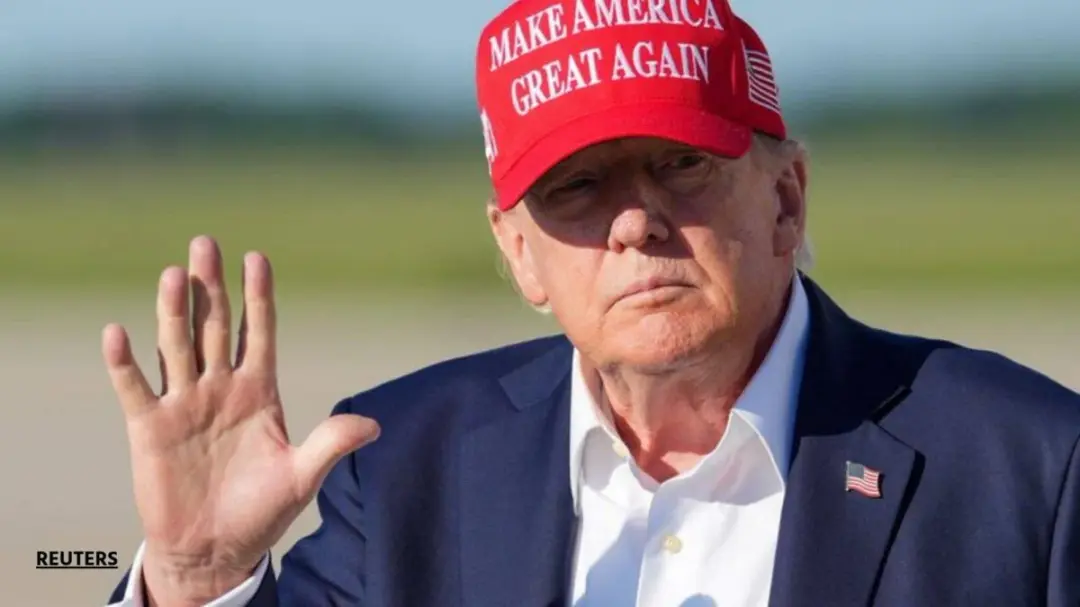
India's trade defence against repeated US tariff pressure explained
US President Donald Trump has used tariff threats to press India over its purchases of Russian crude. A 25% baseline tariff in July 2025 was followed by an additional 25% penalty on August 6, taking the total to 50%. India's MEA called it "unfair, unjustified and unreasonable". After a Modi-Trump call on February 2, 2026, tariffs were cut to 18%. On September 16, 2026, the US House passed a bill authorising tariffs up to 100%.
Source
News18 — India · read the original report ↗
Desk check · some claims need care
What the desk checked (5)
- US House passed the Lindsey O. Graham Sanctioning Russia and Iran Act of 2026 on September 16, 2026, authorising tariffs up to 100% on major importers of Russian energy — Specific date and bill name appear in source; presented as fact without direct document citation.
- Trump imposed a 25% baseline tariff in July 2025 and an additional 25% penalty on August 6, 2025, totalling 50% — Figures and dates appear in source; attributed to Trump's executive order, no document link given.
- India's MEA called the tariffs 'unfair, unjustified and unreasonable' and on September 17, 2026 said it had 'noted' the US bill — Directly attributed to the Ministry of External Affairs in the source.
- Tariffs cut to 18% after a February 2, 2026 Modi-Trump call, with a $500 billion trade goal by 2030 — Trump's Truth Social claim on Russian oil halt is unconfirmed by New Delhi, per source's own account.
- 45% of Indian goods entering the US were shifted into exempt categories by mid-2026; Russian crude imports hit an 11-month high by April 2026 — Attributed only to unnamed 'experts'; no data source named.
Analysts’ view opinion
This is less a trade dispute than a story of domestic political incentives on both sides. For Trump, tariffs are a demonstration of leverage; for the Modi government, the narrative of not bending to external pressure is politically profitable — which is why the language of energy security for 1.4 billion people keeps recurring. Even after the February 2026 understanding brought tariffs to 18%, the two sides described it differently — Trump announcing an end to Russian oil purchases, Delhi staying silent on that — a sign both leaders want to sell different messages to their own audiences.
- Because the 50% tariff hit labour-intensive sectors like textiles, gems and jewellery and seafood, the dispute carries a clear jobs and regional-politics dimension inside India.
- Cutting duties on symbolic American goods such as Harley-Davidson motorcycles and bourbon was a low-political-cost way to hand Trump a 'win' while shielding core sectors.
- The US Supreme Court's 6–3 ruling, followed by Trump's pivot to Section 122, shows there are institutional limits on his tariff powers but also that he can find alternative routes.
- The removal of an amendment explicitly naming India from the September 16, 2026 bill suggests some reluctance in Congress about openly targeting Delhi.
- Washington's waivers during the Hormuz crisis reinforced Delhi's bet that US inflation politics, not rhetoric, ultimately sets the pressure level.
What to watch — Watch whether the bill clears the Senate and is signed, and whether Trump actually uses the 100% authority or keeps it as a bargaining chip for another round of bilateral talks.
The story does not establish what, if anything, India actually committed on Russian oil in the February call, nor does it confirm the bill's fate in the Senate or the reported 500% penalty speculation.
Deep dive
Research brief · 8 facts · 9 dates · exam-readyThe brief
Context
In his second term, US President Donald Trump has repeatedly used steep tariff threats as economic coercion against India, chiefly over New Delhi's continued purchase of discounted Russian crude oil and its high import duties. Starting with a 25% baseline tariff in July 2025 and an extra 25% "Russian oil" penalty on August 6, 2025, the total reached 50%, hitting labour-intensive Indian exports. India refused to abandon Russian oil, citing energy security for 1.4 billion people, and instead built a defence playbook of legal relief in US courts, calculated trade concessions, new free trade pacts and export restructuring. By September 2026 the pressure had revived, with the US House passing a bill authorising tariffs of up to 100% on large importers of Russian energy.
Key facts
- July 2025: Trump announced a 25% baseline tariff on Indian exports, citing India's high duties and "obnoxious non-monetary trade barriers".
- August 6, 2025: Trump signed an executive order adding a 25% penalty tariff, taking the total on Indian goods to 50%, accusing India of "fueling the war machine" in Ukraine.
- India's MEA called the move "unfair, unjustified, and unreasonable" and refused to halt Russian oil purchases, citing energy security for 1.4 billion people.
- The 50% levy triggered widespread export order cancellations in textiles, gems, jewellery and seafood; by late 2025 India's Russian oil imports fell to a 38-month low.
- February 2, 2026: A Modi-Trump phone call produced an interim breakthrough; Trump announced tariffs would be slashed to 18%, and claimed India would buy over $500 billion of US goods.
- Days later the US Supreme Court ruled 6-3 that certain broad emergency tariff powers (IEEPA-based) were invalid; Trump used Section 122 of the Trade Act of 1974 to lock in a baseline 10% tariff.
- Early 2026: An Iranian blockade of the Strait of Hormuz spiked oil prices; the US issued temporary exemptions, and India's Russian crude imports hit an 11-month high by April 2026.
- September 16, 2026: The US House passed the Lindsey O. Graham Sanctioning Russia and Iran Act of 2026, authorising tariffs up to 100% on the largest importers of Russian energy; an amendment naming India was dropped.
Timeline
- July 2025Trump announces a 25% baseline tariff on Indian exports after months of trade negotiations.
- August 6, 2025Executive order adds a 25% penalty tariff over Russian oil purchases, total 50%; MEA calls it unfair, unjustified and unreasonable.
- Late 2025India's Russian oil imports fall to a 38-month low; India ramps up trade agreements with the EU and alternative markets.
- February 2, 2026Modi-Trump phone call; Trump says tariffs cut to 18% and claims a $500 billion US goods purchase commitment.
- Days after February 2, 2026US Supreme Court rules 6-3 against broad emergency tariff powers; Trump invokes Section 122 of the Trade Act of 1974 for a 10% baseline tariff.
- March-April 2026Iran war crisis and Hormuz blockade; US issues temporary waivers; India's Russian crude imports hit an 11-month high by April 2026.
- Mid-202645% of Indian goods entering the US shifted into categories legally exempt from Trump's emergency duties, per experts.
- September 16, 2026US House of Representatives passes the Lindsey O. Graham Sanctioning Russia and Iran Act of 2026 authorising up to 100% tariffs.
- September 17, 2026India's MEA says it has "noted" the US bill but will take all necessary actions to guarantee national energy security.
Who has a stake
- Government of India / Ministry of External Affairs — Defending strategic autonomy and energy security for 1.4 billion citizens while avoiding a full-blown trade war with the US.
- US President Donald Trump — Using tariffs as coercive leverage over India's Russian oil purchases and trade barriers; must also manage domestic inflation.
- Indian exporters in textiles, gems, jewellery and seafood — Labour-intensive sectors hit by order cancellations under the 50% levy; dependent on exemptions and alternative markets.
- US Congress (House of Representatives) — Passed the Lindsey O. Graham Act of 2026 authorising up to 100% tariffs on major Russian energy importers.
- US Supreme Court — Ruled 6-3 that certain broad emergency tariff powers were invalid, giving India temporary economic breathing room.
- Global Trade Research Initiative (GTRI) — Domestic trade body advising New Delhi to hold firm and avoid unilateral concessions to Washington.
- EU, UK, Oman and other FTA partners — Alternative duty-free markets that reduce Indian exporters' dependence on the US consumer market.
Why it matters
Tariffs have become an instrument of geopolitical coercion, testing whether India can sustain strategic autonomy in foreign and energy policy without crippling its export economy. Experts warn a 100% tariff, if signed into law, would heavily damage India's trade balance and the rupee. The episode also shows how legal challenges in the US, global oil shocks and diversified trade pacts can blunt unilateral tariff pressure.
UPSC angle
Prelims pointers
- 25% baseline tariff (July 2025) + 25% penalty tariff (August 6, 2025) = 50% total on Indian exports.
- Lindsey O. Graham Sanctioning Russia and Iran Act of 2026 passed by the US House on September 16, 2026; authorises tariffs up to 100% on largest importers of Russian energy.
- US Supreme Court struck down broad emergency tariff powers (IEEPA) 6-3; Trump then used Section 122 of the Trade Act of 1974 for a 10% baseline tariff.
- India's Russian oil imports: 38-month low in late 2025; 11-month high by April 2026 after US waivers during the Hormuz crisis.
- February 2, 2026 Modi-Trump call: tariffs cut to 18%; India acknowledged a $500 billion bilateral trade goal by 2030.
- India signed FTAs with Oman and the UK, with progress on the EU; by mid-2026, 45% of Indian goods entering the US were in exempt categories.
Mains framing
The repeated US tariff offensive against India — 25% in July 2025, doubled to 50% on August 6, 2025, reduced to 18% after the February 2, 2026 Modi-Trump call, and now the threat of up to 100% under the House-passed Lindsey O. Graham Act of 2026 — illustrates the weaponisation of trade policy against a partner exercising strategic autonomy. The trigger was India's procurement of discounted Russian crude, which Washington framed as financing the Ukraine war, while New Delhi framed affordable fuel for 1.4 billion people as a non-negotiable sovereign duty and pointed to Western double standards. The costs were real: cancelled export orders in textiles, gems, jewellery and seafood, and warnings of damage to the trade balance and rupee. India's response was layered rather than retaliatory: refusing to concede on energy, waiting out executive actions until the US Supreme Court invalidated broad emergency tariff powers, leveraging the structural fact exposed by the Hormuz blockade that cutting India off from Russian oil would raise US inflation, offering calibrated concessions such as lower duties on Harley-Davidson motorcycles and bourbon and a $500 billion trade goal by 2030, and hedging through FTAs with Oman, the UK and the EU plus shifting 45% of US-bound goods into exempt categories. The way forward, as GTRI advises, is to hold firm against unilateral concessions while deepening market diversification and export competitiveness.
Key terms
- Lindsey O. Graham Sanctioning Russia and Iran Act of 2026
- US bill passed by the House on September 16, 2026, authorising the President to impose tariffs up to 100% on the largest importers of Russian energy.
- IEEPA (International Emergency Economic Powers Act)
- US law under which Trump's broad tariffs were imposed; the Supreme Court struck down those emergency tariff powers 6-3 in 2026.
- Section 122, Trade Act of 1974
- US provision Trump used after the Supreme Court ruling to lock in a scaled-back baseline 10% global tariff.
- Strategic autonomy
- India's stance of taking independent foreign policy and energy decisions despite external pressure, reiterated by the MEA on September 17, 2026.
- Global Trade Research Initiative (GTRI)
- Indian trade research body that advised New Delhi to hold firm and avoid unilateral concessions to Washington.
- Strait of Hormuz blockade
- Iranian blockade during the early 2026 conflict that spiked global oil prices and forced the US to issue temporary oil purchase exemptions.
Practice questions
- Critically examine how India balanced energy security with export interests in responding to US tariff pressure between July 2025 and September 2026.
- "Tariffs are increasingly instruments of geopolitical coercion rather than trade policy." Discuss with reference to India-US trade relations since 2025.
- Evaluate the effectiveness of trade diversification through FTAs and product exemptions as a defence against unilateral tariff action by a major partner.
Grounded only in the source report — figures and dates are the source's, not inferred.