
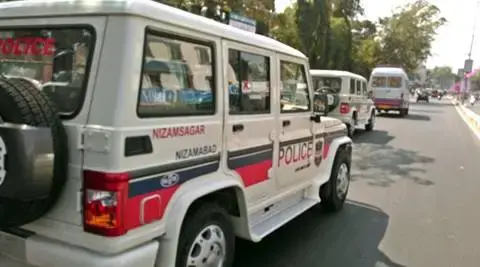
Mahabubnagar police begin gender sensitivity training for constables
Mahabubnagar Police in Telangana on Tuesday launched a gender sensitivity training, Gender Fellowship for Constable Officers, to curb sexist interrogation and moral judgements on women survivors of violence. SP Rema Rajeshwari said the aim is a gender-sensitive force and accountable reporting of crime against women. Run with Delhi-based People for Parity, 30 constables were initially picked; the training ends in May. The district recorded 89 rape cases in 2015 and 71 in 2016. The trained constables will later train counterparts in each police station.
Source
Mahabubnagar — crime · read the original report ↗
Desk check · compared with the source
What the desk checked (5)
- Mahabubnagar Police launched a 'Gender Fellowship for Constable Officers' training on Tuesday. — Attributed in the source to the district police and SP Rema Rajeshwari; no independent documentation cited.
- The training is run in partnership with Delhi-based organisation People for Parity (PFP). — Stated in the source without further attribution or PFP comment.
- 30 constables were initially selected and the training ends in May. — Figure and timeline appear in the source; consistent internally.
- District recorded 89 rape cases in 2015 and 71 in 2016, among other crimes against women. — Year-wise figures appear in the source; no source document or police release named.
- The 30 constables will train counterparts in each police station after the fellowship. — Direct quote attributed to SP Rajeshwari.
Analysts’ view opinion
On the surface this is an internal police training programme; politically, it is a district administration taking the initiative on one of the most electorally sensitive subjects in Indian public life — women's safety. SP Rema Rajeshwari citing the district's own case numbers as the trigger is itself a political signal: instead of managing the optics of crime data, the choice has been to change how first responders behave. If it works, a state government can plausibly claim it as evidence of a women's safety agenda; if it falters, the accountability stays local.
- Crime against women cuts across party lines as an electoral vulnerability, which makes low-cost, high-visibility initiatives like this attractive to governments.
- Publicly stating that 89 rape cases were recorded in 2015 and 71 in 2016 runs against the more common instinct to downplay numbers, and reads as an acknowledgement of the problem.
- Partnering a Delhi-based NGO, People for Parity, is a notable police–civil society collaboration, though outside involvement in police training can draw objections from some quarters.
- The train-the-trainer design — 30 constables seeding every station — is cheap and scalable, but whether it shifts entrenched attitudes inside the force is an open question.
- Reform driven by an individual officer's initiative rarely outlives transfers unless it is absorbed into policy, which is the real test of durability here.
What to watch — Watch whether the promised station-by-station rollout actually happens after the fellowship ends in May, and whether state police leadership or the government adopts the model beyond Mahabubnagar.
The story records only the launch of the training; it establishes nothing about state government involvement, funding, political reactions, or the programme's eventual results.
Deep dive
Research brief · 8 facts · 4 dates · exam-readyThe brief
Context
Mahabubnagar district police in Telangana have launched a structured gender sensitivity programme for constables, who are usually the first responders when a woman walks into a police station to report violence. The initiative, called Gender Fellowship for Constable Officers, was begun on a Tuesday in partnership with the Delhi-based organisation People for Parity (PFP). Superintendent of Police Rema Rajeshwari said the volume of crime against women (CAW) cases recorded in the district prompted the training, which aims to end sexist interrogation and moral judgement of survivors and to build an accountable reporting system.
Key facts
- Mahabubnagar Police launched the 'Gender Fellowship for Constable Officers' on Tuesday to curb sexist interrogation and moral judgements on women survivors of violence.
- The training is run in partnership with People for Parity (PFP), a Delhi-based organisation.
- Initially 30 police constables were selected; the fellowship ends in May and includes various action projects.
- The module includes PUKAR (a call for help), focused on capacity building of police to handle Violence Against Women (VAW) cases.
- District CAW data for 2015: 29 murders, 9 dowry deaths, 33 abetment to suicide, 48 kidnapping, 89 rape, 135 outraging modesty, 91 harassment cases.
- District CAW data for 2016: 26 murders, 5 dowry deaths, 40 abetment to suicide, 51 kidnapping, 71 rape, 131 outraging modesty, 172 harassment cases.
- Training themes include 'Asking for it', 'All is well', 'Its not a crime!' and 'Staying dumb', delivered via skits and group discussions by the PFP team.
- SP Rema Rajeshwari said the 30 trained constables will train their counterparts in each police station after the fellowship, making it a continuous effort.
Timeline
- 2015District records 89 rape, 135 outraging modesty, 91 harassment, 48 kidnapping, 33 abetment to suicide, 9 dowry death and 29 murder cases.
- 2016District records 71 rape, 131 outraging modesty, 172 harassment, 51 kidnapping, 40 abetment to suicide, 5 dowry death and 26 murder cases.
- Tuesday (launch day)Mahabubnagar Police initiate the Gender Fellowship for Constable Officers with 30 constables, with People for Parity.
- MayThe fellowship training is scheduled to conclude, after which trained constables will train counterparts in each police station.
Who has a stake
- Mahabubnagar district police — Seeks a gender-sensitive force and a robust, accountable reporting system for crime against women.
- Police constables (first responders) — 30 are being trained in empathetic communication, laws on CAW and dos and don'ts; they will later train colleagues.
- SP Rema Rajeshwari — Initiated the training citing the number of CAW incidents in the district; owns its continuity.
- Women survivors of violence — Stand to gain sensitive reporting, information on rights and support services, and freedom from moral judgement.
- People for Parity (PFP), Delhi — Partner organisation designing and delivering the modules, skits and group discussions.
Why it matters
Constables are the first point of contact for most women reporting violence, so their attitudes decide whether a complaint is registered, trivialised or dropped. By training first responders on the sex-gender distinction, forms of violence against women and survivors' rights, the district links crime data to a behavioural fix inside the force. The cascade design, where 30 trained constables train peers in every police station, is an attempt to institutionalise the change rather than treat it as a one-off workshop.
UPSC angle
Prelims pointers
- Gender Fellowship for Constable Officers: gender sensitivity training launched by Mahabubnagar Police, Telangana.
- Partner organisation: People for Parity (PFP), based in Delhi.
- PUKAR ('a call for help') module: capacity building of police to handle Violence Against Women (VAW) cases.
- Mahabubnagar SP Rema Rajeshwari led the initiative; 30 constables in the first batch, ending in May.
- Rape cases in the district fell from 89 (2015) to 71 (2016), while harassment cases rose from 91 to 172.
- Training themes: 'Asking for it', 'All is well', 'Its not a crime!', 'Staying dumb'.
Mains framing
The Mahabubnagar experiment locates a key bottleneck in access to justice for women not in the statute book but in the attitudes of the first responder. High reported volumes of crime against women in the district (89 rape cases in 2015, 71 in 2016; harassment cases rising from 91 to 172) coexist with practices the training seeks to end: sexist interrogation and moral judgement of survivors, trivialisation of domestic violence, letting off male offenders in eve-teasing, stalking and cyber crime cases, and withholding information about rights and support services. The response is pedagogic rather than punitive: distinguishing sex from gender, mapping forms of violence, breaking stereotypes the constables themselves hold, and building skills for empathetic communication through skits and group discussions with People for Parity. The design's strength is its cascade and continuity, with 30 trained constables to train peers in every police station; its test will be whether attitudinal training translates into better FIR registration and survivor support, and whether it is sustained beyond the fellowship's May conclusion. Any wider lessons for police reform, beyond what the district police state, are not stated in the source.
Key terms
- Gender Fellowship for Constable Officers
- Mahabubnagar Police training programme for constables to respond sensitively to women survivors of violence.
- Crime Against Women (CAW)
- Umbrella category used by police for offences such as rape, dowry death, outraging modesty, harassment and stalking.
- Violence Against Women (VAW)
- Forms of violence directed at women; the PUKAR module builds police capacity to handle such cases.
- PUKAR
- Literally 'a call for help'; training component emphasising capacity building of police in VAW cases.
- People for Parity (PFP)
- Delhi-based organisation partnering the district police to deliver the gender sensitivity modules.
- First responder
- The police personnel, here constables, who first receive and handle a survivor's complaint.
Practice questions
- Why are constables, as first responders, critical to the reporting of crime against women? Discuss with reference to the Mahabubnagar gender fellowship model.
- Rape cases in Mahabubnagar fell from 89 in 2015 to 71 in 2016 while harassment cases rose from 91 to 172. How should such crime data be read while assessing police responsiveness?
- Evaluate the 'train the trainer' cascade approach adopted by Mahabubnagar Police as a way to institutionalise gender sensitivity in a police force.
Grounded only in the source report — figures and dates are the source's, not inferred.