
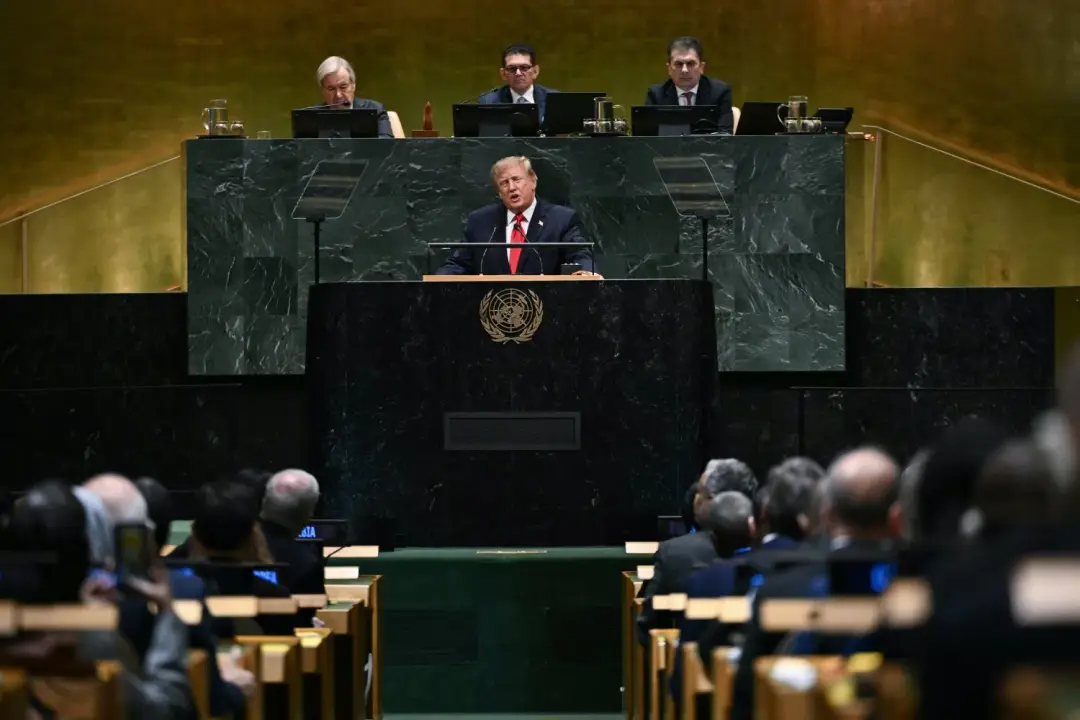
Mike Waltz to discuss US foreign policy on FP Live
U.S. Ambassador to the United Nations Mike Waltz will discuss the Trump administration's foreign policy in a wide-ranging Foreign Policy Live conversation. Foreign Policy said Waltz has publicly explained and defended policies on Iran, Venezuela and Sudan. The discussion will examine Washington's changing global role as the White House pulls back from multilateral institutions, withdrawing from more than 30 U.N. entities and cutting the organisation's budget. Editor in chief Ravi Agrawal hosts the session on September 30, 2026, at 10:00am ET.
Source
Foreign Policy · read the original report ↗
Desk check · compared with the source
What the desk checked (5)
- Mike Waltz is the U.S. ambassador to the United Nations and previously served as Trump's national security advisor. — Stated in the source's speaker biography; internally consistent.
- The White House has withdrawn from more than 30 U.N. entities and cut the organisation's budget. — Figure appears in the source's event description but no supporting source or date is given.
- Waltz has publicly explained administration policies on Iran, Venezuela and Sudan. — Characterisation by the publisher; no specific statements or sources cited.
- The FP Live interview is hosted by editor in chief Ravi Agrawal and scheduled for September 30, 2026, 10:00am ET. — Date and host appear in the source listing; event is forthcoming, not yet reported content.
- Waltz represented Florida for three terms in the U.S. House and is a retired Army colonel. — From the source biography; unverified externally.
Analysts’ view opinion
This is more than a routine interview listing — it is a platform for Washington to publicly explain how it is redefining its global role while pulling back from more than 30 U.N. entities and cutting the organisation's budget. That the case is being made by Mike Waltz, the U.S. ambassador to the U.N. and a former national security advisor and Pentagon defence policy director, signals that the administration wants the retrenchment read as a deliberate strategic choice rather than a retreat. The very files he is expected to address — Iran, Venezuela, Sudan — are ones where U.N. machinery is usually indispensable, which exposes the central tension in the approach.
- Pulling back from multilateral bodies can be read not merely as cost-cutting but as a deliberate shift of influence toward bilateral and coalition channels.
- Where U.S. funding and participation recede, broader diplomatic experience suggests other major powers can fill the space through staffing, leadership posts and agenda-setting.
- On files like Iran and Sudan, sanctions monitoring, humanitarian access and peacekeeping run through U.N. structures, so stepping back may constrain Washington's own toolkit.
- Waltz's military and national-security background points to a defence of the policy framed in terms of security outcomes rather than institutional diplomacy.
- For allies the message cuts both ways: they will seek clarity on where U.S. commitment holds, while anticipating pressure on burden-sharing.
What to watch — Watch whether the September 30 conversation specifies which institutions the U.S. will stay in and on what conditions it might return — that is the signal other capitals need to recalibrate their own strategies.
This is an announced event listing only; the story does not establish what Waltz will actually say, the full list of withdrawals, or their measurable effects.
Deep dive
Research brief · 8 facts · 5 dates · exam-readyThe brief
Context
Foreign Policy magazine's live interview series, FP Live, is hosting U.S. Ambassador to the United Nations Mike Waltz for a wide-ranging conversation on the Trump administration's foreign policy. Waltz, a former national security advisor to President Donald Trump and a three-term U.S. Representative from Florida, has emerged as one of the administration's most visible spokespeople, defending its positions on Iran, Venezuela and Sudan. The conversation is framed around how Washington's global role is changing as the White House pulls back from multilateral institutions, including withdrawing from more than 30 U.N. entities and cutting the organisation's budget. FP editor in chief Ravi Agrawal hosts the session on September 30, 2026 at 10:00am ET.
Key facts
- The White House has withdrawn from more than 30 U.N. entities and cut the organisation's budget, according to Foreign Policy.
- Mike Waltz is the U.S. ambassador to the United Nations and previously served as President Donald Trump's national security advisor.
- Waltz represented Florida for three terms in the U.S. House of Representatives and is a retired Army colonel with combat tours in Afghanistan, the Middle East and Africa; he also worked as a defense policy director at the Pentagon.
- Waltz has publicly explained and defended administration policies on Iran, Venezuela and Sudan.
- The FP Live conversation with Waltz is scheduled for September 30, 2026, at 10:00am ET, hosted by FP editor in chief Ravi Agrawal.
- Ravi Agrawal has been FP editor in chief and FP Live host since joining in 2018; he earlier spent over a decade at CNN, including as New Delhi bureau chief, and wrote 'India Connected'.
- At FP's Tech and AI Forum on the sidelines of the U.N. General Assembly, Nobel Peace Prize laureate (2021) Maria Ressa spoke on September 22, 2026 about AI and Big Tech.
- World Bank President Ajay Banga told FP on September 21, 2026 that developing countries are on track to create only a third of the roughly 1.2 billion jobs they need.
Timeline
- September 8, 2026Marsh CEO John Doyle tells FP Live that premiums for tankers transiting the Strait of Hormuz have jumped 10 to 40 times since the Iran war broke out.
- September 15, 2026FP Live airs an Ask-Me-Anything edition after Ravi Agrawal returns from a trip to Kyiv, taking questions on Ukraine, the Middle East and the global economy.
- September 21, 2026World Bank President Ajay Banga discusses the developing world's jobs gap of about 1.2 billion jobs on FP Live.
- September 22, 2026Maria Ressa speaks to FP Live at FP's Tech and AI Forum on the sidelines of the U.N. General Assembly.
- September 30, 2026, 10:00am ETAmbassador Mike Waltz joins FP Live for a wide-ranging conversation on U.S. foreign policy.
Who has a stake
- United Nations and its agencies — Faces U.S. withdrawal from more than 30 U.N. entities and cuts to its budget, affecting its funding and operational capacity.
- Trump administration / White House — Is redefining Washington's global role by pulling back from multilateral institutions; needs to explain and defend that shift publicly.
- Ambassador Mike Waltz — As the administration's most visible spokesperson at the U.N., he must justify policies on Iran, Venezuela, Sudan and the multilateral pullback.
- Iran, Venezuela and Sudan — Are the subjects of contested U.S. policies that Waltz has publicly defended.
- Foreign Policy / FP Live and its subscribers — Provide the platform for scrutiny; only FP subscribers may submit questions for FP Live interviews.
- Developing countries — Per the World Bank's Ajay Banga, are on track to create only a third of the roughly 1.2 billion jobs they need, making multilateral funding critical.
Why it matters
The U.S. is the U.N.'s most consequential member, so an American withdrawal from more than 30 U.N. entities plus budget cuts reshapes how global crises from Iran to Sudan are managed. For countries like India that rely on multilateral forums for development finance, peacekeeping and rule-making, a thinner multilateral architecture shifts diplomacy towards bilateral and plurilateral bargaining.
UPSC angle
Prelims pointers
- Mike Waltz: U.S. Ambassador to the United Nations; earlier President Trump's national security advisor and three-term Congressman from Florida.
- Source claim to remember: the White House has withdrawn from more than 30 U.N. entities and cut the U.N. budget.
- Ravi Agrawal: editor in chief of Foreign Policy, host of FP Live, author of 'India Connected'; ex-CNN New Delhi bureau chief.
- Maria Ressa won the Nobel Peace Prize in 2021; she spoke at FP's Tech and AI Forum on the U.N. General Assembly sidelines.
- Ajay Banga heads the World Bank; it estimates developing countries need about 1.2 billion jobs but are on track for only a third.
- Strait of Hormuz: tanker insurance premiums rose 10 to 40 times after the Iran war broke out, per Marsh CEO John Doyle.
Mains framing
The scheduled FP Live conversation with U.S. Ambassador to the U.N. Mike Waltz crystallises a larger question: what happens to multilateralism when its principal financier and architect retreats from it? The source records a White House pullback from more than 30 U.N. entities along with cuts to the organisation's budget, even as Waltz simultaneously defends assertive American positions on Iran, Venezuela and Sudan — suggesting not isolationism but a substitution of unilateral and transactional action for institutional process. The implications run in several directions: U.N. agencies lose funding and convening authority; crisis theatres such as Sudan risk reduced humanitarian and mediation capacity; and, as the World Bank's Ajay Banga's figure of a shortfall against roughly 1.2 billion jobs needed in developing countries indicates, development financing gaps widen just as demand peaks. Market signals underline the cost of disorder — tanker insurance premiums through the Strait of Hormuz rising 10 to 40 times after the Iran war. A way forward, on the evidence in the source, lies in middle powers and emerging economies filling the credibility and funding gap, mobilising private capital as the World Bank is attempting, and pressing for U.N. reform that makes continued great-power participation worthwhile rather than optional.
Key terms
- FP Live
- Foreign Policy magazine's live interview series, hosted by editor in chief Ravi Agrawal; only FP subscribers can submit questions.
- U.S. Ambassador to the United Nations
- Washington's permanent representative at the U.N., currently Mike Waltz, who articulates and defends U.S. positions there.
- Multilateral institutions
- Bodies where many states cooperate on shared rules and problems, such as U.N. agencies and the World Bank, which the White House is stepping back from.
- U.N. General Assembly
- The U.N.'s plenary body of member states; FP held its Tech and AI Forum on its sidelines in September 2026.
- Strait of Hormuz
- Key oil shipping chokepoint where tanker insurance premiums rose 10 to 40 times after the Iran war broke out.
- National security advisor
- The U.S. President's top aide on security policy; a post Waltz held before becoming U.N. ambassador.
Practice questions
- Critically examine the consequences for global governance when a leading power withdraws from multilateral institutions, using the reported U.S. pullback from over 30 U.N. entities as a reference point.
- "Retreat from multilateralism does not mean retreat from the world." Discuss with reference to simultaneous U.S. activism on Iran, Venezuela and Sudan.
- How should developing countries respond to shrinking multilateral funding, given the World Bank's estimate that they will create only a third of the roughly 1.2 billion jobs they need?
Grounded only in the source report — figures and dates are the source's, not inferred.