
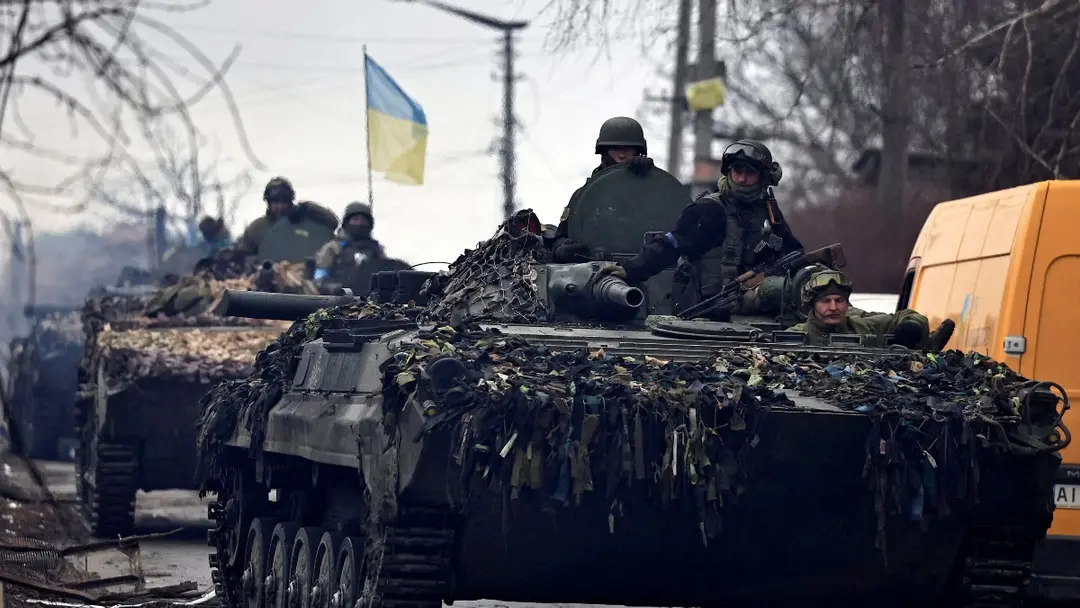
Ukraine's Operation Vivaldi raises corps reform question for India
Operation Vivaldi, launched by Ukraine's 3rd Army Corps around Lyman in May 2026, shows how an offensive is conducted on a battlefield saturated with drones, electronic warfare and artillery, writes Brigadier Anil Raman (retd). Ukrainian strikes hit logistics and command posts about 50 km, later 120 km, into the Russian rear. With India raising four Integrated Battle Groups under XVII Corps, each over 5,000 strong, he asks whether corps headquarters need a corresponding redesign.
Source
ThePrint — India · read the original report ↗
Desk check · some claims need care
What the desk checked (5)
- Ukraine's 3rd Army Corps launched Operation Vivaldi around Lyman in May 2026. — Attributed in the source to Ukrainian and Western reports; date appears in source but is not independently sourced.
- Ukrainian strikes reached about 50 km into the Russian rear and later around 120 km, within a 'middle-strike' concept spanning 30-200 km. — Figures appear in the source; no specific report cited for them.
- Ukraine's 3rd Corps says a 'Protective Drone' electronic warfare system neutralised about 20,000 Russian drones. — Attributed to the Ukrainian 3rd Corps and expressly described in the source as an unverified wartime claim.
- India is moving toward four IBGs under XVII Corps, each with more than 5,000 personnel, plus a corps-level fire support group. — Stated by the author, a retired brigadier and research fellow; no official document cited.
- Russia's 20th and 25th Combined Arms Armies spent about 20 months advancing toward Lyman. — Figure appears in source, based on cited Ukrainian and Western reporting.
Analysts’ view opinion
The core lesson of Ukraine's Operation Vivaldi around Lyman is not about weapons but about organisation. On a battlefield saturated with drones, electronic warfare and persistent surveillance, an offensive works only when information superiority, localised drone superiority, degradation in depth and the breach-manoeuvre-exploitation sequence run as parts of a single campaign — and the burden of orchestrating all that falls on the corps headquarters. As India raises four IBGs under XVII Corps and thins out the divisional layer, the question posed by Brigadier Anil Raman (retd) is the right one: having redesigned the manoeuvre formation, does India also need to redesign the command formation above it?
- Because the IBG model compresses the divisional layer, the surviving corps headquarters inherits far more of the intelligence fusion, targeting, UAS/EW control and reserve management load — making this an organisational reform question, not merely a doctrinal one.
- Strikes reaching first about 50 km and then roughly 120 km into the Russian rear against logistics, fuel and command posts show that degradation in depth belongs to armies with real capability in the 30–200 km 'middle-strike' band.
- A key lesson is attacking the adversary's drone enterprise as a network of aircraft, operators, logistics and command, not as individual platforms; hitting fuel and power degrades the EW and unmanned battle at the same time.
- Drone superiority is local and temporary — hours to somewhat longer around the chosen breach point — which is precisely why the speed of breach and exploitation is decisive.
- Close air support, whose salience appears to have faded in recent Indian threat and platform calculations, returns to the tactical battle in unmanned form, closely tied to ground manoeuvre.
What to watch — Watch whether the IBG rollout under XVII Corps is accompanied by corps-level structures — the planned fire support group, intelligence-targeting fusion, dedicated drone and EW control, and wider delegated decision authority.
This is an observational analysis: Vivaldi's battlefield results and the claim that around 20,000 Russian drones were neutralised are Ukrainian wartime assertions that remain independently unverified, and the story does not establish that the Indian Army has decided on any corps headquarters restructuring.
Deep dive
Research brief · 8 facts · 5 dates · exam-readyThe brief
Context
Operation Vivaldi is an ongoing Ukrainian offensive around Lyman, a road and rail junction in eastern Ukraine, launched by Ukraine's 3rd Army Corps in May 2026 after Russian forces spent roughly 20 months pressing toward the town. Writing in the opinion pages, Brigadier Anil Raman (retd) of The Takshashila Institution analyses how the operation combined information superiority, localised drone superiority, deep strikes, breach and exploitation on a battlefield saturated with drones, electronic warfare, mines and persistent surveillance. He uses the case to ask a question for the Indian Army: as it raises Integrated Battle Groups (IBGs) — brigade-sized, self-contained formations that thin out the divisional layer — must the corps headquarters above them also be redesigned? The article stresses that Ukrainian claims from the operation remain wartime claims.
Key facts
- Ukraine's 3rd Army Corps launched Operation Vivaldi around Lyman in May 2026.
- Russia's 20th and 25th Combined Arms Armies had spent around 20 months advancing toward Lyman, a key road and railway junction, and had formed a salient north of the city.
- Ukrainian deep strikes on Russian logistics, fuel, ammunition, command posts, communications, EW and drone infrastructure initially reached about 50 km into the Russian rear, later extending to around 120 km.
- Ukraine's 'middle-strike' concept covers the 30-to-200-km band between tactical FPV drones and longer-range strategic systems.
- Participating formations included the 60th and 66th Mechanised Brigades, the 125th Heavy Mechanised Brigade, a battalion tactical group of the 3rd Assault Brigade, reconnaissance, anti-tank and special operations units.
- Ukraine's 3rd Corps says a 'Protective Drone' electronic warfare system neutralised around 20,000 Russian drones during the operation — a Ukrainian wartime claim.
- Heavy bomber drones were used to carry unmanned ground vehicles and release them deep behind Russian lines to attack logistics and other targets.
- India is moving toward four IBGs under XVII Corps, each of more than 5,000 personnel integrating infantry, artillery, engineers, logistics, maintenance and medical support, with a fire support group planned directly under corps HQ.
Timeline
- Roughly 20 months before the operationRussia's 20th and 25th Combined Arms Armies advance toward Lyman, establishing a salient north of the city and using infiltration tactics around Ukrainian defences.
- Before the ground assaultUkraine shapes the battlefield: strikes about 50 km into the Russian rear, targets Rubicon drone organisation, EW and counter-UAS operations, information discipline and deception.
- May 2026Ukraine's 3rd Army Corps launches Operation Vivaldi around Lyman with several mechanised, assault and specialist formations plus substantial unmanned systems.
- As the operation developsStrike campaign extends to around 120 km; localised drone superiority created for breach and manoeuvre.
- SubsequentlySignificant Ukrainian tactical gains around Lyman; Russian forces redeploy toward the Zherebets River.
Who has a stake
- Ukraine's 3rd Army Corps — Commands the offensive through several brigades and specialist units while coordinating drones, EW, deep fires and logistics.
- Russian 20th and 25th Combined Arms Armies — Lose ground around Lyman after a 20-month advance; forced to redeploy toward the Zherebets River.
- Russia's Rubicon drone organisation — Targeted as a network — its logistics, ammunition, launch sites and experienced operators attacked.
- Indian Army / XVII Corps — Raising four IBGs of over 5,000 personnel each; faces the question of whether corps HQ needs a matching redesign.
- Indian corps headquarters (as an institution) — With the divisional layer thinned, must handle intelligence fusion, targeting, UAS and EW control, reserves and sustainment directly.
- Brigadier Anil Raman (retd), The Takshashila Institution — Author framing Vivaldi as a case study for the next stage of India's IBG reform; views stated as personal.
Why it matters
Vivaldi shows that on a sensor-saturated battlefield, manoeuvre depends on temporary, local advantages in information and drone control, and on degrading the enemy's logistics and command far behind the front. For India, which is restructuring its fighting formations into IBGs, the lesson is that reducing intermediate headquarters raises, not lowers, the demands on the headquarters that remain. How the corps HQ is organised to fuse intelligence, control drones and EW, and sustain several IBGs will shape whether the reform delivers combat effect.
UPSC angle
Prelims pointers
- Operation Vivaldi: Ukrainian offensive around Lyman launched by the 3rd Army Corps in May 2026.
- Lyman is described as an important road and railway junction; Russian forces later redeployed toward the Zherebets River.
- Ukraine's 'middle-strike' concept spans the 30–200 km range between tactical FPV drones and strategic systems.
- India's IBGs: four planned under XVII Corps, each over 5,000 personnel, with a fire support group directly under corps HQ.
- IBG model reduces the divisional layer, giving corps HQ a direct link to brigade-sized self-contained formations.
- Claim of about 20,000 Russian drones neutralised by the 3rd Corps 'Protective Drone' EW system is an unverified Ukrainian wartime claim.
Mains framing
Operation Vivaldi illustrates how contemporary offensives are executed on battlefields saturated with drones, electronic warfare, mines, artillery and persistent surveillance: information superiority becomes an operational precondition for movement, drone superiority is sought locally and temporarily around the point of breach, and degradation in depth — strikes 50 km and then 120 km into the rear against fuel, ammunition, command posts, communications, EW and drone infrastructure — shapes both the conventional and the unmanned battle. Vivaldi also shows novel integration, such as heavy bomber drones delivering unmanned ground vehicles behind enemy lines, and it restores the relevance of persistent close air support in unmanned form, a function the article says has received less Indian attention in recent years. The implication for India is organisational rather than merely technological: the IBG concept has redesigned the manoeuvre formation and thinned the intermediate divisional layer, which concentrates responsibility on the corps headquarters for building the operational picture, choosing where to concentrate effort, coordinating deep fires and unmanned systems, managing EW, synchronising several brigades, controlling reserves and sustaining the operation. The way forward suggested is to examine corps-level headquarters organisation, intelligence fusion, targeting, UAS and EW control, communications, logistics, reserve management and decision-making authority, so that several IBGs can function as one coherent offensive system — while treating Ukrainian wartime figures with due caution.
Key terms
- Integrated Battle Group (IBG)
- Indian Army's brigade-sized, relatively self-contained formation integrating infantry, artillery, engineers, logistics, maintenance and medical support; four planned under XVII Corps, each over 5,000 strong.
- Middle-strike
- Ukrainian concept for strikes in the 30–200 km band, between short-range tactical FPV drones and long-range strategic systems.
- Localised drone superiority
- Concentrating reconnaissance and strike drones, counter-UAS and EW around a chosen sector to gain a temporary advantage enabling breach and manoeuvre.
- Degradation in depth
- Attacking logistics, fuel, ammunition, command posts, EW and reinforcement routes deep in the enemy rear to weaken the forward defence and its reserves.
- Rubicon
- Russian drone organisation whose logistics, ammunition, launch sites and experienced operators Ukraine targeted during the operation.
- Unmanned ground vehicle (UGV)
- Ground robot used for tasks such as attacking logistics; in Vivaldi, delivered deep behind Russian lines by heavy bomber drones.
Practice questions
- What does Ukraine's Operation Vivaldi reveal about the role of information and drone superiority in enabling ground manoeuvre on a sensor-saturated battlefield?
- India's Integrated Battle Groups redesign the manoeuvre formation. Examine whether corps headquarters require a corresponding organisational and functional transformation.
- Discuss how deep strikes against logistics, fuel and drone infrastructure affect both the conventional and the unmanned battle, drawing on the Lyman operations.
Grounded only in the source report — figures and dates are the source's, not inferred.