
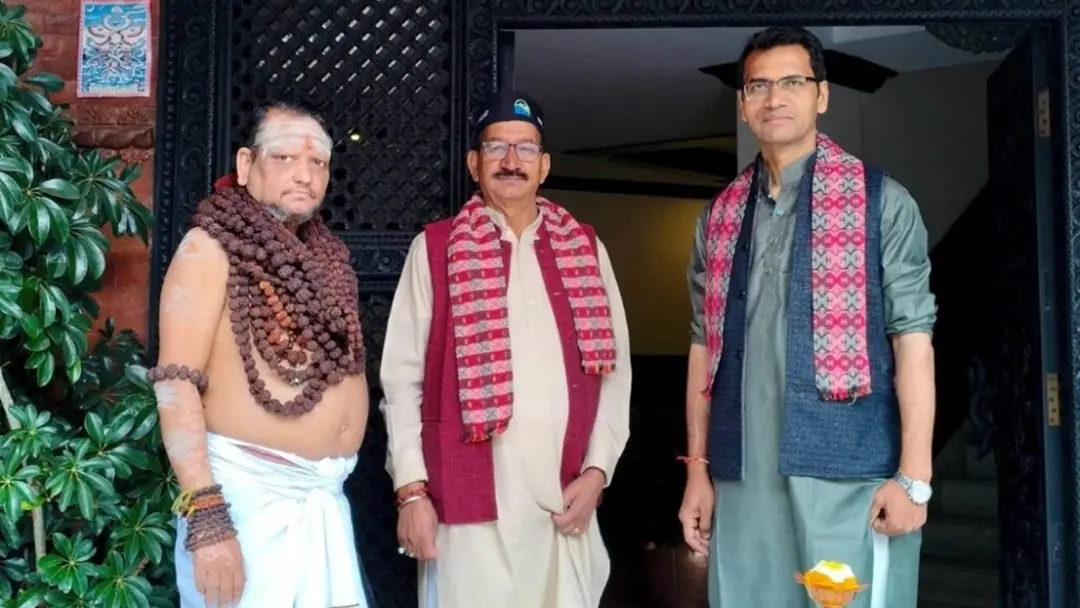
Uttarakhand plans Rudraksh farming policy to curb hill migration
The Uttarakhand government has directed its Horticulture Department to frame a Rudraksh cultivation policy to create income sources in hill districts and check migration. An August 31 notification sought a proposal on cultivation methods, farm management, post-harvest processing, marketing and soil suitability. It follows a four-member delegation's March study visit to Nepal and a 197-page report. Pauri, Tehri, Rudraprayag, Chamoli, Almora and Bageshwar were listed as high-potential districts, with 10,000 hectares targeted by 2047.
Source
Indian Express — India · read the original report ↗
Desk check · compared with the source
What the desk checked (5)
- Uttarakhand government directed the Horticulture Department to draft a Rudraksh cultivation policy via an August 31 notification. — Attributed in source to a letter signed by Under Secretary Sandeep Sharma addressed to the Director of Horticulture and Food Processing.
- China accounts for 63.7% of recorded Rudraksh exports, the US 19.3%. — Figures appear in source, cited to customs data quoted in the delegation's presentation; not independently verifiable here.
- China's 2025 Rudraksh imports estimated at $100.8 million against India's import bill of $20.14 million. — Presented in source as an estimate in a table in the government presentation.
- A single mature tree can yield 1,000-2,000 beads a year, earning Rs 10,000-40,000; 20 trees could fetch Rs 2-8 lakh annually. — Projection stated in the 197-page report cited by the source, not verified outcomes.
- Target of 10,000 hectares and 10 million trees by 2047 with up to 150,000 rural jobs. — Target figures appear in the report described in the source.
Analysts’ view opinion
This looks like a horticulture scheme but is really an attempt to create a "cash-generating asset" in the hills — and choosing a crop that wildlife does not eat, needs little upkeep and has export demand is economically logical. The catch is timing: the tree does not fruit for six to eight years and takes about a decade to peak, which means roughly ten years of no income for the farmer. The plan fills that gap with the central rural employment guarantee scheme and free or subsidised saplings, so the public purse absorbs the early risk while returns arrive very late.
- The report's income maths — Rs 2-8 lakh a year from 20 mature trees against the Rs 10,000-15,000 a month a city migrant typically saves — only holds at maturity, not during the barren years.
- The demand case rests heavily on exports: the presentation puts China at 63.7% and the US at 19.3% of recorded Rudraksh exports, while over 95% of India's own imports come from Indonesia and Nepal, making this both an import-substitution and an export play.
- Leaning on one dominant buyer is a price risk — the story does not establish whether prices hold once supply scales towards 10,000 hectares and 10 million trees alongside established Nepali and Indonesian competition.
- Headline examples like a 29-mukhi bead valued around Rs 1.5 crore signal market enthusiasm, but farmer economics rest on the common five-faced bead at a conservative Rs 10-20 wholesale — the two should not be conflated.
- Certification is a genuine economic hazard: if Bhadraksh saplings are indistinguishable from Rudraksh until fruiting begins two to four years in, a wrong planting can cost a household a decade.
What to watch — Watch whether the Horticulture Department's proposal includes a sapling certification system, income support through the non-fruiting years, and funded marketing and value-addition links — the scheme's economics turn on these.
The story does not establish an approved policy or any budget allocation; the income, jobs and market figures are proposals in the expert team's report, not independently verified outcomes.
Deep dive
Research brief · 8 facts · 4 dates · exam-readyThe brief
Context
Uttarakhand, known as "Dev Bhoomi", has for decades lost population from its hill districts to Dehradun, Delhi and other cities, a trend its own migration commission links partly to unviable farm incomes, wildlife crop damage and fragmented landholdings. The state government now wants to turn Rudraksh — the seed used for prayer beads revered by Hindus and Buddhists — into a cash crop that gives hill families an income and a reason to stay. On August 31, the Agriculture and Farmers Welfare department directed the Horticulture Department to frame a formal Rudraksh cultivation policy. The move follows Tehri MLA Kishore Upadhyay's request to Chief Minister Pushkar Singh Dhami and a four-member delegation's March study visit to Nepal's Rudraksh belt.
Key facts
- An August 31 notification signed by Under Secretary Sandeep Sharma asked the Director of Horticulture and Food Processing to submit a proposal on cultivation methods, farm management, post-harvest processing, marketing and soil suitability.
- A four-member delegation, including MLA Kishore Upadhyay, Rudraksh expert Prince Agrawal and agricultural scientist Ramesh Singh Pal, visited Bhetedhar and Dingla in Nepal's Bhojpur district from March 23 to 29.
- Findings were compiled in a 197-page technical report and a presentation, 'Strategic Introduction of Rudraksha Cultivation in Uttarakhand', given to CM Dhami in July.
- Citing customs data, the report says China accounts for 63.7% of total recorded Rudraksh exports and the United States 19.3%.
- China's 2025 Rudraksha imports are estimated at $100,800,000, about five times India's import bill of $20,140,000, over 95% of which comes from Indonesia and Nepal.
- Pauri, Tehri, Rudraprayag, Chamoli, Almora and Bageshwar were listed as 'high potential' districts; Nainital, Champawat, Pithoragarh and hill Dehradun as 'moderate potential'.
- Rudraksh trees do not fruit for six to eight years and take about 10 years to reach peak production; a mature tree yields 1,000-2,000 beads a year worth Rs 10,000-40,000 at Rs 10-20 per five-faced bead.
- The target is 10,000 hectares under Rudraksh by 2047, with 10 million trees, 50,000-70,000 farmers and up to 150,000 rural jobs.
Timeline
- March 23-29Four-member Uttarakhand delegation visits Bhetedhar and Dingla in Nepal's Bhojpur district and collects soil samples for comparison with Uttarakhand sites.
- July197-page technical report and presentation 'Strategic Introduction of Rudraksha Cultivation in Uttarakhand' presented to Chief Minister Pushkar Singh Dhami.
- August 31Agriculture and Farmers Welfare department notification directs the Horticulture Department to frame a Rudraksh cultivation proposal.
- By 2047Target of 10,000 hectares under Rudraksh with 10 million trees and up to 150,000 rural jobs.
Who has a stake
- Hill district farmers and families — A possible cash-generating asset; a family managing 20 mature trees could earn Rs 2 lakh to Rs 8 lakh a year, against Rs 10,000-15,000 a month saved by a city migrant.
- Uttarakhand Horticulture and Food Processing Department — Must frame the cultivation policy and supply saplings free or at subsidised rates.
- Agriculture and Farmers Welfare department (Under Secretary Sandeep Sharma) — Issued the August 31 directive and will receive the departmental proposal.
- Chief Minister Pushkar Singh Dhami and Tehri MLA Kishore Upadhyay — Political ownership of the plan; Upadhyay requested it and was part of the Nepal delegation.
- Women's self-help groups and rural youth — Proposed training in cleaning, grading, oiling beads, stringing prayer beads, silver-capping and packaging, which pays more than selling raw beads.
- Nepal and Indonesia exporters — Currently dominate large-scale commercial Rudraksh production that Uttarakhand hopes to compete with.
Why it matters
Out-migration from Uttarakhand's hills has emptied villages into what scientist Ramesh Singh Pal calls "ghost villages", and conventional crops fail because of wildlife damage and tiny holdings. Rudraksh is being pitched as a wildlife-proof, low-maintenance, high-value crop tied to a large export market that India currently imports from rather than supplies. But with a six-to-eight-year wait before fruiting and a look-alike species risk, the policy's success depends on bridging incomes and quality control in the interim.
UPSC angle
Prelims pointers
- Uttarakhand is called Dev Bhoomi; Rudraksh seeds are used for prayer beads revered by Hindus and Buddhists.
- August 31 notification: Agriculture and Farmers Welfare department directed the Horticulture Department to draft a Rudraksh cultivation policy.
- China is the world's largest Rudraksh importer, at 63.7% of recorded exports; the US is second at 19.3%.
- Nepal's Rudraksh belt: 600-2,000 m altitude, 25-30°C, 1,500-2,500 mm rainfall; Uttarakhand's proposed zone: 500-1,800 m, 22-35°C, 1,000-2,200 mm.
- High-potential districts: Pauri, Tehri, Rudraprayag, Chamoli, Almora, Bageshwar. Moderate: Nainital, Champawat, Pithoragarh, hill Dehradun.
- Bhadraksh is a different species of the same genus, indistinguishable from Rudraksh saplings until fruiting begins after two to four years.
Mains framing
Uttarakhand's proposed Rudraksh cultivation policy is an attempt to attack hill out-migration at its economic root: the expert presentation identifies the "wildlife menace", "fragmented, low-yield holdings" and "lack of cash-generating assets" as core drivers, and argues Rudraksh answers all three since it is not eaten by wildlife, needs little maintenance once established, and has a large unmet domestic and export market. The demand case rests on China, the largest importer at 63.7% of recorded exports, with estimated 2025 imports of $100.8 million against India's own import bill of $20.14 million, more than 95% of it from Indonesia and Nepal, indicating that a producer state with comparable soil and climate has captured no share of the trade. The constraints are equally clear: a six-to-eight-year gestation before fruiting and about ten years to peak yield, and the risk of the look-alike Bhadraksh being substituted for genuine Rudraksh, which has undermined earlier unorganised attempts. The plan's way forward is therefore staged — using the Centre's rural employment guarantee scheme to fund pit-digging, planting and fencing labour for the first three years, free or subsidised saplings from the Horticulture Department, and later value-addition training for women's self-help groups and youth in grading, oiling, stringing, silver-capping and packaging, which the report says pays significantly more than raw bead sales. Scaling to 10,000 hectares and 10 million trees by 2047 will hinge on certified planting material, transparent price discovery and market linkage rather than plantation targets alone.
Key terms
- Rudraksh
- Seed used to make prayer beads, revered by Hindus and Buddhists, also credited with medicinal value in Ayurveda.
- Mukhi
- The number of lobes or ridges on a Rudraksh bead; the delegation saw a rare 29-mukhi bead in Nepal priced around Rs 1.5 crore.
- Bhadraksh
- A different species of the same genus as Rudraksh, whose saplings look identical and are often mistaken or substituted for it.
- Migration commission
- Uttarakhand body that has tracked out-migration from hill districts and linked it to weak farm incomes, wildlife damage and fragmented holdings.
- Ghost villages
- Term used by scientist Ramesh Singh Pal for Uttarakhand hill villages emptied by migration, with land lying unused.
- Rural employment guarantee scheme
- Central scheme the plan proposes to use to fund labour for pit-digging, planting and fencing in the first three years of plantations.
Practice questions
- Discuss how horticultural diversification towards high-value crops such as Rudraksh can address out-migration from Uttarakhand's hill districts, and identify the risks in such a strategy.
- The proposed Rudraksh policy relies on a six-to-eight-year gestation crop. Examine the institutional and financial support mechanisms needed to sustain small hill farmers through this period.
- India imports Rudraksh worth $20.14 million while China imports about five times as much. Analyse what this reveals about India's ability to convert cultural and religious commodities into export value.
Grounded only in the source report — figures and dates are the source's, not inferred.