
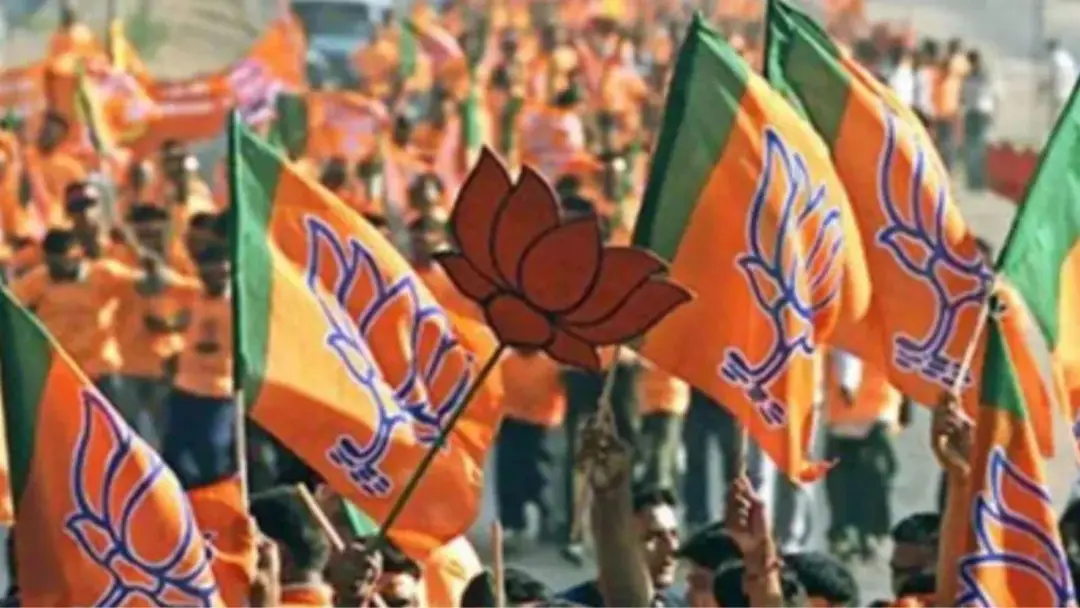
Punjab BJP to launch 13-day 'Nasha Mukt Yatra' ahead of 2027 polls
The Punjab BJP will launch a 13-day 'Nasha Mukt Yatra' on Friday with a convoy of over 100 vehicles, ahead of the 2027 Assembly elections. Four yatras starting simultaneously from Pathankot, Fatehgarh Sahib, Fazilka and Talwandi Sabo will cover nearly 4,000 km and all 117 Assembly constituencies before converging in Jalandhar on September 30, where Union Home Minister Amit Shah is expected to address a concluding rally. At a Chandigarh programme, over 50 affected families shared their experiences.
Source
Indian Express — Cities · read the original report ↗
Desk check · some claims need care
What the desk checked (4)
- Punjab BJP will launch a 13-day 'Nasha Mukt Yatra' with over 100 vehicles, covering nearly 4,000 km and all 117 Assembly constituencies — Figures appear in the source as reported programme details; no independent verification possible
- Four yatras start from Pathankot, Fatehgarh Sahib, Fazilka and Talwandi Sabo on September 18-21 and converge in Jalandhar on September 30 — Dates, places and flag-off leaders (Nitin Nabin, Rekha Gupta, Arjun Meghwal, Shivraj Singh Chouhan) are stated in the source; Amit Shah's concluding rally is described as expected
- Over 50 families affected by drug addiction and drug-related deaths shared experiences at a Chandigarh programme — Figure appears in source; described as part of the 'Mavan Mangdian Jawab' event
- Prisons have become safe havens for drug smugglers and CM Bhagwant Mann inducted gangsters into AAP — Allegation explicitly attributed to former Punjab BJP president Sunil Jakhar; no response from AAP or the government in the source
Analysts’ view opinion
The BJP's persistent weakness in Punjab has been the absence of a ground-level organisational network, and a 13-day yatra touching all 117 constituencies is essentially an attempt to build one under the cover of an anti-drugs campaign. Without an alliance with the Akali Dal, the party's strategic aim is to occupy the space of the principal alternative to the AAP government before the Congress does. The line-up of central leaders flagging off each leg, and Amit Shah expected at the concluding rally, signals this is a campaign the national leadership is investing in, not a routine state unit exercise.
- Simultaneous starts from Pathankot, Fatehgarh Sahib, Fazilka and Talwandi Sabo look designed to give equal weight to Majha, Malwa and Doaba rather than concentrating on any one region.
- The presence of Nitin Nabin, Rekha Gupta, Arjun Meghwal, Shivraj Singh Chouhan and finally Amit Shah shows how seriously the central leadership is treating Punjab.
- Foregrounding testimonies from over 50 affected families at the 'Mavan Mangdian Jawab' event is an effort to shift the issue from partisan allegation to emotive public movement.
- A mother's remark that families want freedom from chitta rather than free schemes is a direct strike at AAP's welfare-centric political model.
- Jakhar's charges that prisons shelter smugglers and that AAP inducted a man he described as a gangster-turned-politician suggest law and order will be a core 2027 plank — though AAP can counter by pointing to its own anti-drug actions.
What to watch — Watch the turnout and Amit Shah's messaging at the Jalandhar rally on September 30, and how the Akali Dal, Congress and AAP respond to the yatra.
The story does not establish what public response the yatra will draw or whether it will translate into vote share for the BJP in Punjab, and Jakhar's allegations remain allegations with no AAP response recorded here.
Deep dive
Research brief · 8 facts · 7 dates · exam-readyThe brief
Context
The Punjab BJP is converting its anti-drug campaign into a statewide political mobilisation ahead of the 2027 Assembly elections. It is launching a 13-day 'Nasha Mukt Yatra' with four simultaneous yatras covering all 117 Assembly constituencies, capped by a rally in Jalandhar expected to be addressed by Union Home Minister Amit Shah. The yatra follows a 'Mavan Mangdian Jawab' (Mothers Demand Answers) programme in Chandigarh where over 50 families affected by drug addiction and drug-related deaths shared testimonies, with BJP leaders attacking the AAP state government led by CM Bhagwant Mann.
Key facts
- The 13-day 'Nasha Mukt Yatra' is set to launch on Friday with a lead vehicle heading a convoy of over 100 vehicles.
- Four yatras will start simultaneously from Pathankot, Fatehgarh Sahib, Fazilka and Talwandi Sabo.
- The yatras will collectively cover nearly 4,000 km and all 117 Assembly constituencies of Punjab.
- They will converge in Jalandhar on September 30, where Union Home Minister Amit Shah is expected to address a concluding rally.
- Flag-offs: Pathankot on September 18 by BJP national president Nitin Nabin; Fatehgarh Sahib on September 19 by Delhi CM Rekha Gupta; Fazilka on September 20 by Union Law Minister Arjun Meghwal; Talwandi Sabo (Bathinda) on September 21 by Union Agriculture Minister Shivraj Singh Chouhan.
- At the 'Mavan Mangdian Jawab' programme in Chandigarh on Thursday, over 50 affected families from across Punjab shared their experiences.
- Punjab BJP president Kewal Singh Dhillon said the party would turn the drug issue into a people's movement: 'This pain has reached every household in Punjab today.'
- Former Punjab BJP president Sunil Jakhar alleged prisons had become safe havens for drug smugglers and accused CM Bhagwant Mann of inducting gangsters into the party, citing the induction of Gurpreet Singh Sekhon into AAP.
Timeline
- Thursday (before the launch)'Mavan Mangdian Jawab' (Mothers Demand Answers) programme held in Chandigarh; over 50 affected families give testimonies.
- September 18First yatra flagged off from Pathankot by BJP national president Nitin Nabin.
- September 19Second yatra flagged off from Fatehgarh Sahib by Delhi Chief Minister Rekha Gupta.
- September 20Third yatra flagged off from Fazilka by Union Law Minister Arjun Meghwal.
- September 21Fourth yatra flagged off from Talwandi Sabo, Bathinda, by Union Agriculture Minister Shivraj Singh Chouhan.
- September 30Four yatras converge in Jalandhar; Union Home Minister Amit Shah expected to address the concluding rally.
- 2027Punjab Assembly elections, ahead of which the campaign is being run.
Who has a stake
- Punjab BJP — Seeks to build a statewide people's movement on the drug issue and expand its footprint across all 117 constituencies before the 2027 polls.
- Aam Aadmi Party government in Punjab (CM Bhagwant Mann) — Faces BJP allegations of dereliction on drugs, prisons sheltering smugglers, and inducting gangsters such as Gurpreet Singh Sekhon.
- Families affected by drug addiction — Over 50 families narrated deaths and addiction; a mother from Abohar said they want freedom from chitta, not free schemes.
- BJP central leadership — Amit Shah, Shivraj Singh Chouhan, Arjun Meghwal, Nitin Nabin and Delhi CM Rekha Gupta lend national heft to the Punjab campaign.
- Voters in Punjab's 117 Assembly constituencies — The drug crisis is being framed as the central electoral issue for 2027.
Why it matters
Drug addiction in Punjab is being elevated from a public health and law-and-order concern into the BJP's core electoral plank for 2027, with victims' families placed at the centre of the messaging. The deployment of central ministers and the party's national president signals a serious BJP push in a state where it has historically been a junior player. It also sharpens the contest with AAP over governance, policing and prisons.
UPSC angle
Prelims pointers
- Punjab has 117 Assembly constituencies; the next Assembly elections are due in 2027.
- 'Nasha Mukt Yatra': 13-day Punjab BJP campaign, four yatras covering nearly 4,000 km, converging at Jalandhar on September 30.
- Yatra start points: Pathankot, Fatehgarh Sahib, Fazilka and Talwandi Sabo (Bathinda).
- Nitin Nabin is named as BJP national president in the source; Kewal Singh Dhillon is Punjab BJP president.
- 'Mavan Mangdian Jawab' (Mothers Demand Answers): BJP programme in Chandigarh with over 50 drug-affected families.
- 'Chitta' is the local term used for the synthetic drug referred to by an affected mother from Abohar.
Mains framing
Punjab's drug crisis, long a socio-economic and public health emergency, is being restructured as a political mobilisation: the BJP's 13-day 'Nasha Mukt Yatra', spanning nearly 4,000 km and all 117 Assembly constituencies, converts victim testimony into campaign narrative ahead of the 2027 Assembly elections. The causes cited in the campaign are governance-related — alleged state dereliction, prisons described by Sunil Jakhar as safe havens for smugglers, and the political accommodation of persons with criminal reputations, as in the alleged induction of Gurpreet Singh Sekhon into AAP. The implications are twofold: it raises the salience of demand-side realities voiced by families, including the Abohar mother's statement that they seek 'freedom from chitta' rather than free schemes, and it tests whether a national party with limited Punjab presence can convert an emotive issue into electoral traction, with Amit Shah, Shivraj Singh Chouhan, Arjun Meghwal, Nitin Nabin and Rekha Gupta deployed. The way forward, on the evidence of the source, lies in translating movement-style mobilisation into verifiable action on supply interdiction, prison reform and de-addiction support rather than campaign rhetoric alone.
Key terms
- Nasha Mukt Yatra
- Punjab BJP's 13-day anti-drug roadshow: four yatras, over 100 vehicles, nearly 4,000 km, all 117 constituencies.
- Mavan Mangdian Jawab
- 'Mothers Demand Answers' — BJP programme in Chandigarh where over 50 drug-affected families gave testimonies.
- Chitta
- Local term for the drug referred to by an affected mother from Abohar who sought 'freedom from chitta'.
- Rath
- The lead vehicle of the yatra convoy, in which main leaders travel, with local district vehicles following.
- AAP (Aam Aadmi Party)
- Party in power in Punjab under CM Bhagwant Mann, accused by BJP leaders over drugs and gangster inductions.
Practice questions
- Examine how public health crises such as drug addiction get converted into electoral platforms, using the Punjab BJP's 'Nasha Mukt Yatra' as a case study.
- Critically assess the allegations that prisons act as safe havens for drug networks, and discuss institutional reforms needed in state prison administration.
- Discuss the role of victim testimony and movement-style mobilisation ('Mothers Demand Answers') in shaping state-level political agendas in India.
Grounded only in the source report — figures and dates are the source's, not inferred.