
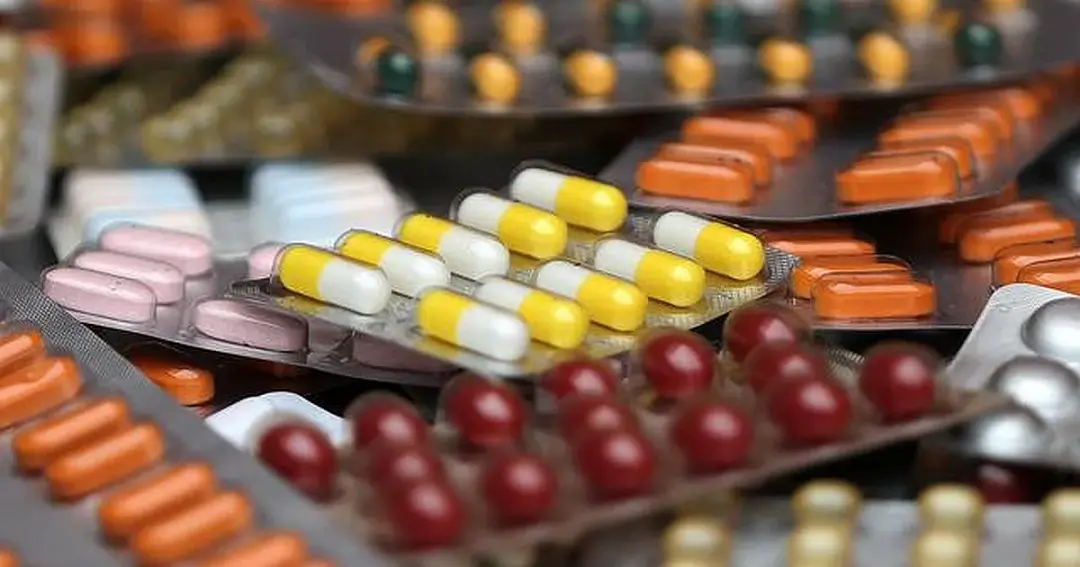
Bengaluru healthcare firm owner arrested in fake drug racket probe
Karnataka Health Minister U T Khader said the probe into an interstate counterfeit drug racket has led to the arrest of a Bengaluru healthcare firm owner. On August 18, officials raided a farmhouse near Bidadi Toll Gate and seized suspected fake and expired medicines worth nearly Rs 5 crore. Preliminary findings indicate cheap bulk drugs from Telangana and Himachal Pradesh were refilled and relabelled as premium imported brands. A six-member SIT is investigating.
Source
Health — J. P. Nadda · read the original report ↗
Desk check · compared with the source
What the desk checked (5)
- Owner of a Bengaluru healthcare firm arrested in an interstate counterfeit drug racket probe. — Attributed to Health Minister U T Khader; name of firm or accused not given in source.
- Fake and expired medicines worth nearly Rs 5 crore seized in an August 18 raid at a farmhouse near Bidadi Toll Gate. — Figure and date appear in the source, attributed to Khader.
- Cheap bulk drugs were procured from Telangana and Himachal Pradesh, refilled and relabelled as premium imported brands. — Described as preliminary investigation finding, attributed to the minister; not independently established.
- A six-member SIT headed by a senior IPS officer was constituted on August 19 after discussion with CM D K Shivakumar and Home Minister Priyank Kharge. — Attributed to Khader; officer's name not specified in source.
- Khader wrote to Union Health Minister JP Nadda seeking CDSCO and central agency support. — Attributed to the minister; no independent confirmation in source.
Analysts’ view opinion
Legally, this is a case that sits at the intersection of drug-regulation law and ordinary criminal law: refilling cheap bulk drugs into new vials and passing them off as premium imported brands, as the preliminary probe alleges, is the classic fact pattern for spurious-drug and cheating/forgery offences, and India's drug law treats adulterated or spurious medicines as among its gravest offences precisely because of the risk to life. The arrest of the firm's owner is only the first procedural step; the harder legal work is proving the chain — who manufactured, who relabelled, who supplied — to a criminal standard. The alleged supply of counterfeit ICU injections, if established, is what would move this from a regulatory infraction towards charges carrying the heaviest penalties.
- The story reports allegations from a preliminary investigation and a minister's statement, not proven facts — guilt is a matter for a court, and the accused retains the presumption of innocence.
- Because the alleged sourcing spans Telangana and Himachal Pradesh, jurisdiction and coordination between state drug authorities and the central regulator become central procedural questions, which is likely why central agency support has been sought.
- Prosecutions in spurious-drug cases usually turn on laboratory analysis of the seized stock and an unbroken chain of custody from seizure to test report; the story does not state that testing is complete.
- Enforcement powers over drug manufacture and labelling and licensing consequences for the firm can proceed in parallel with the criminal case, but each has its own standard of proof and appeal route.
- Ministerial statements promising the 'harshest punishment' are political messaging; sentencing is a judicial function and depends on the specific charges ultimately framed and proved.
What to watch — Watch for the actual charges and sections invoked in the SIT's filings, whether the seized samples are formally certified as spurious after laboratory testing, and whether the case is extended beyond the arrested owner to manufacturers and distributors in other states.
The story does not establish what specific offences have been charged, whether the seized medicines have been laboratory-confirmed as counterfeit, or whether any patient actually received the alleged fake drugs.
Deep dive
Research brief · 8 facts · 4 dates · exam-readyThe brief
Context
Karnataka's Health Minister U T Khader has disclosed an interstate counterfeit drug racket in which cheap bulk drugs were allegedly repackaged and sold as premium imported brands, including injections used in ICUs. The trail began with an August 18 raid on a farmhouse near Bidadi Toll Gate by the state Health & Family Welfare Department and the Karnataka Food Safety and Drug Administration, where suspected fake and expired medicines worth nearly Rs 5 crore were seized. A six-member Special Investigation Team headed by a senior IPS officer is probing the network, and the owner of a Bengaluru healthcare firm has been arrested. The minister has sought help from Union Health Minister JP Nadda and the CDSCO to trace the supply chain nationally.
Key facts
- On August 18, the Karnataka Health & Family Welfare Department and the Karnataka Food Safety and Drug Administration raided a farmhouse near Bidadi Toll Gate.
- Suspected fake and expired medicines worth nearly Rs 5 crore were seized in the Bidadi raid.
- The probe has led to the arrest of the owner of a healthcare firm in Bengaluru, according to Khader.
- Preliminary findings show cheap bulk drugs were procured from manufacturing hubs in Telangana and Himachal Pradesh.
- The drugs were refilled into new vials at the Bidadi facility and relabelled as premium imported brands of multinational companies.
- On August 19, a six-member SIT headed by a senior IPS officer was constituted, including officers of the Food Safety & Drug Administration and Commercial Taxes Departments.
- The full list of spurious and counterfeit drugs has been communicated to the Union government and all states.
- Every hospital and nursing home in Karnataka has been directed not to use the seized medicines.
Timeline
- August 18Health & Family Welfare Department and Karnataka Food Safety and Drug Administration raid a farmhouse near Bidadi Toll Gate; fake and expired medicines worth nearly Rs 5 crore seized.
- August 19After discussion with Chief Minister D K Shivakumar and Home Minister Priyank Kharge, a six-member SIT headed by a senior IPS officer is constituted.
- Not dated in the sourceKhader writes to Union Health Minister JP Nadda seeking support of CDSCO and central regulatory agencies to map the supply chain.
- Not dated in the sourceOwner of a Bengaluru healthcare firm arrested; SIT investigating suspected supply of counterfeit medicines and ICU injections to hospitals and clinics in Bengaluru.
Who has a stake
- Patients, especially ICU patients — Risk of being administered counterfeit injections and medicines relabelled as premium imported brands.
- Karnataka Health Minister U T Khader — Leading the disclosure and crackdown; has promised to place complete findings before the public.
- Karnataka Food Safety and Drug Administration — Conducted the raid and has officers on the SIT; responsible for drug quality enforcement in the state.
- Six-member SIT headed by a senior IPS officer — Tasked with the interstate investigation into the network's supply to hospitals and clinics.
- Hospitals and nursing homes in Karnataka — Directed not to use the seized medicines; may have unknowingly administered counterfeit drugs.
- Union Health Minister JP Nadda and CDSCO — Asked to support mapping of the supply chain and stop nationwide distribution.
- Telangana and Himachal Pradesh drug manufacturing hubs — Named as sources of the cheap bulk drugs allegedly used in the racket.
Why it matters
Counterfeit injections reaching ICU wards strike at the most vulnerable patients, where a substandard dose can be fatal and detection is hardest. The case, described by the minister as one of the biggest crackdowns of its kind in the country, exposes how bulk drugs sourced across state lines can be relabelled as premium imported brands, making drug regulation a national rather than a state problem.
UPSC angle
Prelims pointers
- CDSCO (Central Drugs Standard Control Organisation) is India's central drug regulatory agency, whose support Karnataka has sought.
- Bidadi, near Bengaluru, was the site of the August 18 raid; seizure valued at nearly Rs 5 crore.
- The six-member SIT constituted on August 19 is headed by a senior IPS officer and includes Food Safety & Drug Administration and Commercial Taxes officers.
- Bulk drugs were allegedly sourced from manufacturing hubs in Telangana and Himachal Pradesh.
- Karnataka Health Minister: U T Khader; Chief Minister named in the source: D K Shivakumar; Home Minister: Priyank Kharge; Union Health Minister: JP Nadda.
Mains framing
The Bidadi counterfeit drug case illustrates the structural weaknesses in India's drug supply chain: cheap bulk drugs sourced from manufacturing hubs in one state can be refilled into new vials in another and passed off as premium imported brands of multinational firms, with ICU injections among the targets. The causes visible in the source are the profitability of relabelling, the interstate dispersion of manufacture, repackaging and distribution that defeats single-state enforcement, and the difficulty hospitals face in authenticating branded imports. The implications are direct patient harm, erosion of trust in hospital procurement, and reputational damage to legitimate manufacturers. Karnataka's response offers a template: a rapid multi-agency raid, an SIT within a day headed by a senior IPS officer with drug regulators and commercial tax officials on board, circulation of the list of spurious drugs to the Union government and all states, an advisory to hospitals and nursing homes not to use the seized stock, and a formal request to the Union Health Minister for CDSCO support to map the supply chain. The way forward suggested by the case is coordinated centre-state tracing of every link in the network and deterrent punishment, since distribution is nationwide even if the seizure is local.
Key terms
- Counterfeit or spurious drug
- A medicine falsely presented as a genuine brand; here, cheap bulk drugs refilled into new vials and labelled as premium imported brands.
- Special Investigation Team (SIT)
- A dedicated multi-agency probe team; the six-member SIT here is headed by a senior IPS officer with drug regulation and commercial tax officers.
- CDSCO
- Central Drugs Standard Control Organisation, the central regulatory agency whose help Karnataka sought to map the network's supply chain.
- Karnataka Food Safety and Drug Administration
- State agency that, with the Health & Family Welfare Department, raided the Bidadi farmhouse on August 18.
- Bulk drug
- The active pharmaceutical raw material sourced cheaply, here from hubs in Telangana and Himachal Pradesh, before repackaging.
Practice questions
- The Bidadi counterfeit drug case shows that drug regulation in India cannot be enforced state by state. Discuss with reference to the role of the CDSCO and state drug administrations.
- What institutional mechanisms did Karnataka use to respond to the counterfeit drug racket, and what do they reveal about the strengths and gaps in India's pharmaceutical enforcement architecture?
- Counterfeit medicines reaching ICU wards raise questions of both criminal liability and hospital procurement accountability. Examine.
Grounded only in the source report — figures and dates are the source's, not inferred.