
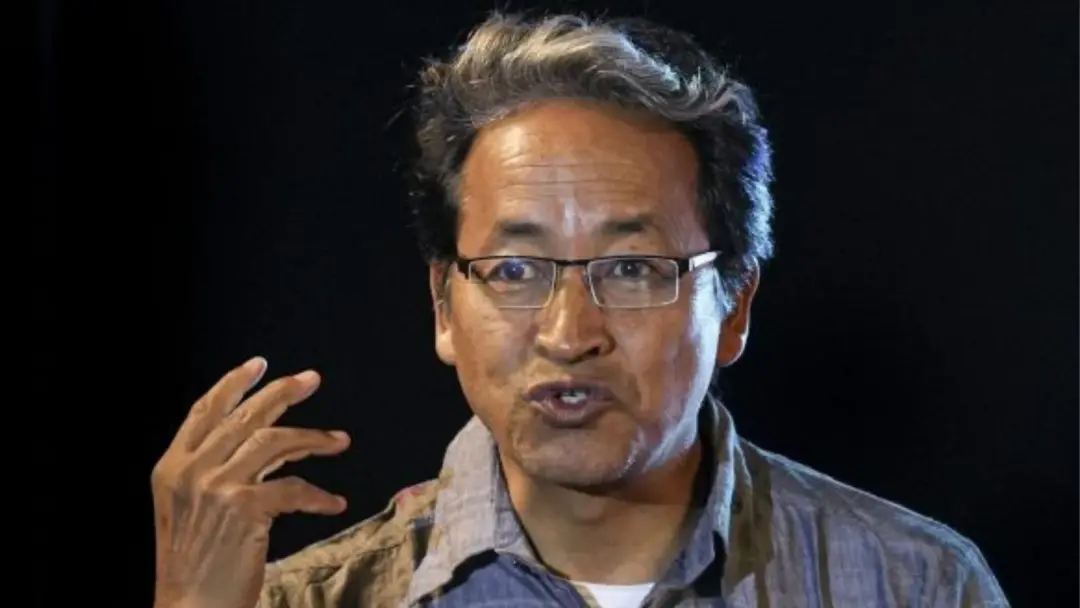
Wangchuk to lead 20-km Ladakh padayatra on September 23
Climate activist Sonam Wangchuk said a 20-km padayatra will start on September 23 from Kharoo village in Leh, shortened from an originally planned Kargil start because of the changing season. Speaking to The Indian Express, he said the march honours those killed, injured or jailed in the September 24, 2025 Leh violence, in which four people died. He sought release of the judicial inquiry report, called compensation of Rs 15 lakh for the dead and Rs 1-3 lakh for the disabled an insult, and demanded an elected assembly under Article 371.
Source
Indian Express — India · read the original report ↗
Desk check · some claims need care
What the desk checked (5)
- A 20-km padayatra will begin on September 23 from Kharoo village in Leh, shortened from an original Kargil start due to changing weather. — Attributed to Wangchuk in the interview; no independent confirmation in source.
- The September 24, 2025 violence in Leh left four people dead and the UT administration ordered a judicial inquiry. — Stated as fact by the source article; no official document cited.
- Compensation was Rs 15 lakh for those killed and Rs 1-3 lakh for the permanently disabled. — Figures cited by Wangchuk; not attributed to an official order in the source.
- Security personnel fired with AK-47s without orders. — Allegation by Wangchuk, unverified and contested; requires editorial caution.
- Demands have been scaled down from statehood and Sixth Schedule to an arrangement under Article 371 with an elected assembly. — Attributed to Wangchuk's account of negotiations; no government statement quoted.
Analysts’ view opinion
Ladakh's movement is now doing two political jobs at once: fixing last September's violence into a memory politics (Shaheed Diwas, a "martyrs' month") while keeping its scaled-down demand — an elected assembly under Article 371 — on the negotiating table. The march being cut to 20 km may look like a loss of momentum, but the anniversary, the unreleased judicial inquiry report and the compensation grievance together hand Wangchuk the moral high ground. From the Centre's side there are stated arguments about strategic sensitivity on the border and Ladakh's revenue capacity; but buying time by scheduling yet another meeting in October risks deepening the distrust it is trying to manage.
- The timing matters more than the distance — by anchoring the agitation to the September 24 anniversary, Wangchuk converts grief into sustained political pressure.
- A judicial inquiry report still unpublished after a year turns transparency itself into the sharpest weapon against the administration; releasing it or withholding it both carry a political cost.
- The retreat from full statehood and the Sixth Schedule to an Article 371 arrangement signals pragmatism, but if the concession yields nothing, pressure will fall on Ladakh's own leadership as much as on Delhi.
- Framing compensation as a question of equal citizenship and dignity, rather than of arithmetic, is a politically potent move that is hard to answer with administrative logic.
- Invoking Arunachal Pradesh lets him contest the "strategic border region" argument using the Centre's own precedent, shifting the burden of justification back to New Delhi.
What to watch — Watch whether the proposed October meeting produces a concrete timeline for the Article 371 arrangement and whether the inquiry findings are made public — that will decide if the movement stays at the table or returns to the streets.
The story rests largely on Wangchuk's own account; it does not carry the Centre's or the UT administration's response to his claims about firing orders, security lapses and pre-emptive restructuring, nor does it establish what the inquiry actually found.
Deep dive
Research brief · 8 facts · 7 dates · exam-readyThe brief
Context
Ladakh became a Union Territory without a legislature after the reorganisation of Jammu and Kashmir, and local leadership has since demanded statehood and Sixth Schedule protections. On September 24, 2025, violence in Leh during agitation for these demands left four people dead, and the UT administration ordered a judicial inquiry. A year later, climate activist Sonam Wangchuk has announced a 20-km padayatra on September 23 from Kharoo village in Leh, telling The Indian Express it is both a memorial and a demand for the release of the inquiry report, better compensation and an elected assembly under Article 371.
Key facts
- A 20-km padayatra is scheduled for September 23, starting from Kharoo village in Leh, at a stupa built by villagers in memory of those who died.
- The march was originally planned to leave Kargil on September 10 but was shortened due to the changing season/weather.
- The September 24, 2025 violence in Leh left four people dead; the UT administration later ordered a judicial inquiry.
- Wangchuk says the inquiry report has not been made public even after one year, and demands it to establish why firing took place and who was responsible.
- Compensation cited: Rs 15 lakh for those killed and Rs 1-3 lakh for those permanently disabled, which Wangchuk called 'an insult'; he compared it to Rs 1 crore discussed for NEET exam suicides.
- Wangchuk alleged there were no firing orders and that AK-47s were used, contrasting this with pellet guns used at Jantar Mantar.
- September has been designated 'martyrs' month' and September 24 will be observed as Shaheed Diwas, the first anniversary of the violence.
- Original demands were full statehood and Sixth Schedule inclusion; what is now on the table is a tailor-made arrangement under Article 371 with an elected assembly but short of statehood.
Timeline
- 1986 (as cited by Wangchuk)Arunachal Pradesh, earlier a UT, was granted full statehood on the argument that a strategic border region must have democracy.
- September 24, 2025Violence in Leh during the agitation for Ladakh's safeguards leaves four people dead; a judicial inquiry is later ordered.
- September 10 (planned)Padayatra was originally to begin from Kargil, but was not held as scheduled after a meeting in Delhi was called.
- September 22, 2026Wangchuk gives an exclusive interview to The Indian Express detailing the march and demands.
- September 2320-km padayatra to begin from Kharoo village, Leh.
- September 24Shaheed Diwas to be observed, marking the first anniversary of the Leh violence.
- OctoberNext meeting with the Centre scheduled — after martyrs' month ends, per Wangchuk.
Who has a stake
- Sonam Wangchuk — Climate activist leading the padayatra; demands release of the judicial inquiry report, higher compensation and an elected assembly under Article 371.
- Families of the four killed and the injured/jailed — Seek accountability for the firing and compensation they consider adequate; currently offered Rs 15 lakh and Rs 1-3 lakh respectively.
- Union government / Centre — Has argued statehood for Ladakh could affect strategic interests in the border region; held a Delhi meeting and scheduled another in October.
- Ladakh UT administration — Ordered the judicial inquiry into the September 24, 2025 violence; faces demands for its publication.
- Security forces — Wangchuk alleges firing without orders using AK-47s; inquiry findings could establish shortcomings.
- Ladakh's local population and ecology — Wangchuk says irreversible changes in land, industries, tourism and local governance are being made before an elected assembly is set up.
Why it matters
The dispute goes beyond a protest march: it concerns whether a strategically located, ecologically fragile Union Territory gets an elected legislature and constitutional safeguards over land and culture. Non-publication of a judicial inquiry report into firing that killed four citizens raises questions of transparency and accountability of security forces. Wangchuk also links local democratic representation to Himalayan ecology, which he says affects water for populations across North India and beyond.
UPSC angle
Prelims pointers
- Ladakh is a Union Territory; demands include full statehood and inclusion in the Sixth Schedule of the Constitution.
- Article 371 provides for special provisions for certain states; a 'tailor-made' arrangement under it is now on the table for Ladakh, per the source.
- Sixth Schedule provides for administration of tribal areas, guaranteeing local say in land and resource decisions.
- September 24, 2025 Leh violence: four dead; judicial inquiry ordered by the UT administration.
- Compensation cited: Rs 15 lakh (killed), Rs 1-3 lakh (permanently disabled).
- Arunachal Pradesh, earlier a UT, was granted full statehood in 1986 (as cited in the source) despite being a strategic border region.
Mains framing
The Ladakh agitation illustrates the tension between national security framing of border regions and the democratic aspiration for representative self-government. Since the creation of the UT, local leadership has scaled down from full statehood and Sixth Schedule inclusion to a tailor-made Article 371 arrangement with an elected assembly, reportedly because New Delhi cites insufficient revenue for statehood; yet Wangchuk argues that major restructuring of land, industry, tourism and local governance is being pushed through before any elected assembly exists, making the changes irreversible and breeding distrust. The unpublished judicial inquiry into the September 24, 2025 firing that killed four, and compensation of Rs 15 lakh and Rs 1-3 lakh that the movement calls insulting, sharpen the accountability question, as does the allegation of AK-47 use without firing orders compared with pellet guns at Jantar Mantar. The ecological argument — that Himalayan water sustains vast downstream populations and that commercialisation without local consent is risky — links representation to environmental governance. A way forward would centre on releasing the inquiry findings, revisiting compensation, holding time-bound and substantive talks rather than successive meetings, and settling the constitutional safeguard architecture before administrative restructuring proceeds; the precedent of Arunachal Pradesh's statehood is cited to counter the strategic-sensitivity argument.
Key terms
- Padayatra
- A protest or commemorative march on foot; here a 20-km march from Kharoo village in Leh on September 23.
- Sixth Schedule
- Constitutional provision for administration of tribal areas that, per Wangchuk, guarantees local people a say in how their region is managed.
- Article 371
- Constitutional provision for special arrangements; Ladakh's leadership now seeks a tailor-made version with an elected assembly short of statehood.
- Shaheed Diwas (Ladakh)
- September 24, to be observed as the first anniversary of the 2025 Leh violence; September is designated martyrs' month.
- Judicial inquiry commission
- Inquiry ordered by the Ladakh UT administration into the September 24, 2025 firing; its report is yet to be made public.
Practice questions
- Examine the constitutional options available for granting greater self-governance to Ladakh, comparing the Sixth Schedule route with a tailor-made arrangement under Article 371.
- 'Strategic sensitivity of border regions and democratic representation are not mutually exclusive.' Critically evaluate with reference to Ladakh and the precedent of Arunachal Pradesh.
- Discuss why timely publication of judicial inquiry reports into incidents of police firing is essential for public trust, using the September 24, 2025 Leh violence as a case study.
Grounded only in the source report — figures and dates are the source's, not inferred.