
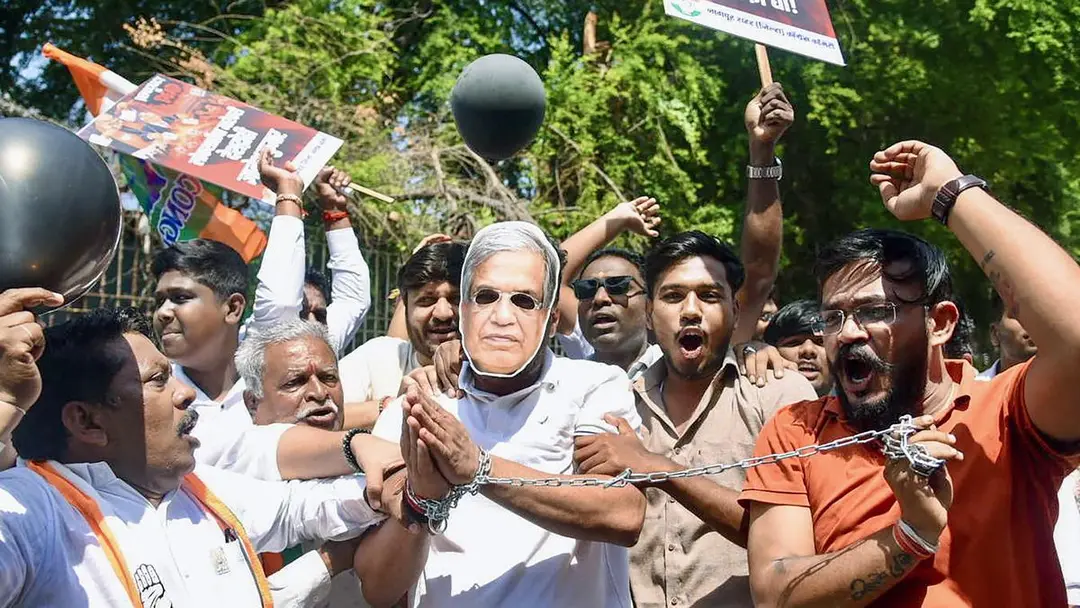
Congress protests across Maharashtra seeking CEC's removal
The Congress held protest marches across Maharashtra on Monday demanding the removal of Chief Election Commissioner Gyanesh Kumar and action against him. Demonstrations took place outside district collectorates, including in Pune, Nagpur, Nashik, Kolhapur, Solapur, Thane, Amravati and Chhatrapati Sambhajinagar, with memoranda submitted to collectors. The party alleged irregularities in electoral rolls and the Special Intensive Revision, citing deletion of over 13 crore names from draft rolls across 30 states and Union Territories. The ECI said its decisions were unanimous.
Source
The Hindu — Cities · read the original report ↗
Desk check · some claims need care
What the desk checked (5)
- Congress held protest marches outside district collectorates across Maharashtra on September 28, 2026, demanding CEC Gyanesh Kumar's removal and arrest. — Attributed to the Maharashtra Congress in the source; district list and participating leaders named.
- Election Commissioners Sukhbir Singh Sandhu and Vivek Joshi formally objected at least 14 times in 10 months to electoral-roll decisions taken without their knowledge or approval. — Attributed in the source to an Indian Express investigation; not independently verified here.
- More than 13 crore names were deleted from draft electoral rolls during the SIR across 30 states and Union Territories. — Figure cited by Congress and reported by Indian Express; the source explicitly notes it does not by itself establish that deletions were improper.
- Electoral-roll revisions under Gyanesh Kumar benefited the ruling BJP. — Congress allegation, unproven; must be reported as a party claim.
- The ECI said the internal notes were part of normal decision-making and its decisions were unanimous. — Attributed to the ECI in the source; provides required balance.
Analysts’ view opinion
The Congress has shifted its fight with the Election Commission from Delhi press statements to district-level street agitation — dharnas outside collectorates across Maharashtra, with MPs and former ministers fronting them, signal an organised political campaign rather than a spontaneous outburst. The party reads the reported internal objections by two Election Commissioners as fresh corroboration of its long-running 'vote theft' narrative; the ECI has pushed back, calling the notes part of normal internal decision-making and its decisions unanimous. The choice of Maharashtra is not incidental — the Congress and Shiv Sena (UBT) have questioned electoral rolls there for some time.
- Memoranda to collectors and effigy protests point to a mobilisation strategy aimed at energising cadre, rather than a primarily legal or institutional route.
- Targeting an institution cuts both ways: it pays off if framed as a demand for transparency, but risks looking like a pre-emptive excuse for electoral defeat.
- Rahul Gandhi and Uddhav Thackeray converging on the same demand gives Opposition coordination in Maharashtra a ready-made common plank.
- The figure of over 13 crore deletions is a politically potent slogan, but as the story itself notes, it does not by itself establish that the deletions were improper.
- Because removing a CEC is constitutionally onerous, the demand is likely to function as political messaging more than an achievable outcome.
What to watch — Watch whether the agitation spreads beyond Maharashtra and into Parliament, and whether INDIA bloc partners move to a joint programme of action.
The story does not establish that electoral-roll revisions were irregular or that they benefited any party — those remain Congress allegations, which the ECI has rejected.
Deep dive
Research brief · 8 facts · 5 dates · exam-readyThe brief
Context
The Congress has escalated a nationwide-style agitation against Chief Election Commissioner Gyanesh Kumar, alleging irregularities in electoral rolls and in the Special Intensive Revision (SIR) of rolls. The trigger was an Indian Express investigation reporting that Election Commissioners Sukhbir Singh Sandhu and Vivek Joshi had formally objected at least 14 times over 10 months to roll-related decisions taken, they said, without their knowledge or approval. The Election Commission of India has said such internal notes are part of normal decision-making and that its decisions over the period were unanimous. On September 28, 2026, Congress held protest marches outside district collectorates across Maharashtra demanding Mr. Kumar's removal and arrest.
Key facts
- Congress held protest marches across Maharashtra on Monday, September 28, 2026, demanding CEC Gyanesh Kumar's removal and arrest.
- Protests were held outside district collectorates including Pune, Nagpur, Nashik, Kolhapur, Solapur, Thane, Amravati and Chhatrapati Sambhajinagar; memoranda were submitted to collectors.
- An Indian Express investigation reported Election Commissioners Sukhbir Singh Sandhu and Vivek Joshi formally raised objections at least 14 times over the past 10 months.
- The objections covered addition and deletion of voters, changes to Form 6, appeals on electoral-roll decisions and control over the voter database; some notes called steps "unauthorised" or "illegal".
- The ECI said the notes were part of normal internal decision-making and that its decisions over the period were unanimous.
- Congress cited deletion of more than 13 crore names from draft electoral rolls during the SIR across 30 states and Union Territories.
- The source notes the 13-crore figure by itself does not establish that the deletions were improper.
- Leaders who joined included Satej Patil (Kolhapur), MP Praniti Shinde (Solapur), Yashomati Thakur and MP Balwant Wankhade (Amravati), MP Kalyan Kale (Chhatrapati Sambhajinagar), and former MP Kumar Ketkar (Thane).
Timeline
- Over the past 10 months (as reported)Election Commissioners Sandhu and Joshi formally raise objections at least 14 times to electoral-roll decisions and orders.
- Before the protestsAn Indian Express investigation reports the internal objections, prompting Opposition parties to renew attacks on the CEC and the poll body.
- After the reportOpposition leaders including Rahul Gandhi and Uddhav Thackeray seek action against Gyanesh Kumar; the ECI rejects the suggestion that its decisions were not collective.
- Monday, September 28, 2026Congress holds protest marches outside district collectorates across Maharashtra, submits memoranda, and parades effigies in Amravati and Thane.
- September 29, 2026Report published; Maharashtra Congress says it will continue and intensify the agitation until Kumar is removed.
Who has a stake
- Chief Election Commissioner Gyanesh Kumar — Faces Congress demands for removal and arrest over alleged electoral-roll irregularities and SIR conduct.
- Election Commission of India — Its institutional credibility and claim of collective, unanimous decision-making are under public challenge.
- Election Commissioners Sukhbir Singh Sandhu and Vivek Joshi — Reported to have objected at least 14 times that decisions were taken without their knowledge or approval.
- Maharashtra Congress and its MPs/leaders — Leading the street agitation; has said it will intensify protests until action is taken.
- BJP — Congress alleges electoral-roll revisions under the CEC benefited the ruling party.
- Voters whose names were deleted — More than 13 crore names were removed from draft rolls during the SIR across 30 states and UTs.
- District collectors in Maharashtra — Received memoranda as electoral administration officials at the district level.
Why it matters
The dispute goes to the heart of whether India's election machinery functions as a collective constitutional body or is driven by one office-holder, and whether electoral rolls — the foundation of every election — are being revised fairly. With more than 13 crore names reported deleted from draft rolls during the SIR, the accuracy of the voter list has become a live political battleground. Public trust in the ECI, which depends on being seen as impartial, is directly at stake.
UPSC angle
Prelims pointers
- Gyanesh Kumar is the Chief Election Commissioner named in the story; Sukhbir Singh Sandhu and Vivek Joshi are the two Election Commissioners.
- SIR stands for Special Intensive Revision of electoral rolls.
- Congress cited over 13 crore deletions from draft electoral rolls during SIR across 30 states and Union Territories.
- Form 6 is the form linked to voter enrolment; changes to it were among the objections raised internally in the ECI.
- The reported internal objections numbered at least 14 over 10 months, per an Indian Express investigation.
- Maharashtra protest districts named include Pune, Nagpur, Nashik, Kolhapur, Solapur, Thane, Amravati, Chhatrapati Sambhajinagar, Chandrapur, Nanded, Latur, Beed and Palghar.
Mains framing
The agitation against the CEC reflects a deeper contest over the credibility of electoral-roll revision in India. The immediate cause is a reported pattern of internal dissent within the Election Commission — at least 14 formal objections in 10 months by two Election Commissioners over voter additions and deletions, Form 6 changes, appeals and control of the voter database, with some notes describing steps as "unauthorised" or "illegal" — combined with Congress's charge that more than 13 crore names were deleted from draft rolls during the SIR across 30 states and UTs. The ECI's defence is that internal notes are part of normal deliberation and that final decisions were unanimous, and it disputes the inference that differences imply non-collective functioning. The implications are institutional: a multi-member commission derives legitimacy from visible collegiality, and allegations that one member acted without others' approval damage that perception regardless of whether any deletion is shown to be improper — a caveat the source itself records about the 13-crore figure. The way forward, on the evidence available, lies in transparency about how roll-revision decisions were taken and recorded, and in grievance redress for voters removed from draft rolls, rather than in street protest alone. Aspirants should note the distinction between a contested administrative process and proven wrongdoing.
Key terms
- Special Intensive Revision (SIR)
- The electoral-roll revision exercise during which, as cited by Congress, over 13 crore names were deleted from draft rolls across 30 states and UTs.
- Chief Election Commissioner (CEC)
- Head of the Election Commission of India; the post held by Gyanesh Kumar, whose removal the Congress demands.
- Election Commissioners
- The other members of the multi-member ECI; here Sukhbir Singh Sandhu and Vivek Joshi, who reportedly recorded objections.
- Form 6
- The voter enrolment form; changes to it were among the matters over which internal objections were reportedly raised.
- Draft electoral roll
- The provisional voter list published during revision, from which the disputed deletions were reported.
- Memorandum to district collector
- Written representation submitted by protesters to district administration heads, used here to demand the CEC's removal.
Practice questions
- Does the reported pattern of internal objections within the Election Commission of India undermine its claim of unanimous, collective decision-making? Discuss with reference to the functioning of a multi-member constitutional body.
- Electoral rolls are the foundation of electoral democracy. Examine the challenges posed by large-scale deletions during intensive revision exercises and suggest safeguards for affected voters.
- Critically evaluate the use of street agitation by political parties to press demands against constitutional functionaries. What institutional alternatives exist?
Grounded only in the source report — figures and dates are the source's, not inferred.