
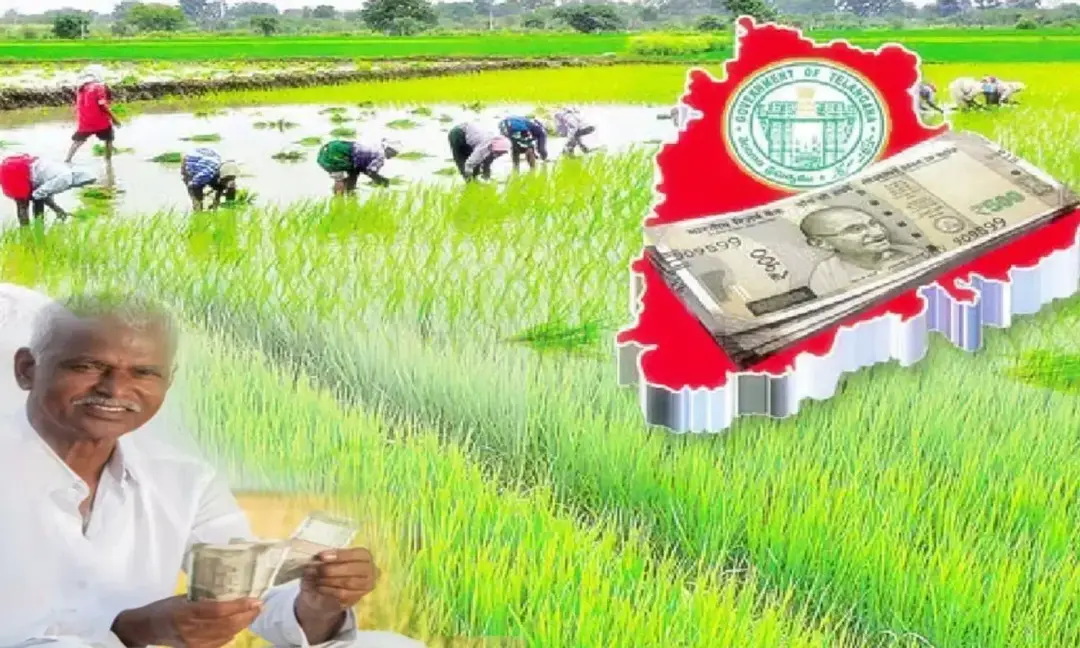
Telangana releases third phase of Rythu Bharosa funds
The Telangana government has released the third phase of Rythu Bharosa farm investment support. Agriculture Minister Tummala Nageswara Rao said Rs 1,330.32 crore is being credited through direct benefit transfer to 6.39 lakh farmers holding three to four acres. In the first phase, 44.28 lakh farmers with up to two acres received Rs 2,482 crore. So far 61.35 lakh farmers have received Rs 5,402.37 crore. Chief Minister Revanth Reddy released the funds at Shilpakala Vedika, Hyderabad.
Source
Rythu Bharosa (TS) · read the original report ↗
Desk check · compared with the source
What the desk checked (5)
- Third phase covers farmers holding 3 to 4 acres, with Rs 1,330.32 crore credited to 6.39 lakh farmers via DBT. — Attributed in source to Agriculture Minister Tummala Nageswara Rao; figures appear in source.
- First phase gave Rs 2,482 crore to 44.28 lakh farmers with up to two acres. — Figure appears in source, attributed to the minister's statement; no official document cited.
- Total so far is Rs 5,402.37 crore to 61.35 lakh farmers. — Attributed to the minister; internally consistent with the phase-wise figures given.
- CM Revanth Reddy released the funds at Shilpakala Vedika, Hyderabad. — Stated in source as already known; no separate sourcing given.
- Remaining eligible farmers will receive funds in phases soon. — Attributed to the state agriculture department; forward-looking statement, not verifiable.
Analysts’ view opinion
By routing Rs 1,330.32 crore to 6.39 lakh farmers in the third tranche, Telangana is sticking to a landholding-tiered, targeted-transfer design rather than a single universal payout. Economically, cash arriving around the input-buying cycle should ease reliance on high-cost informal credit and lift some rural consumption at the margin. But even after Rs 5,402.37 crore to 61.35 lakh farmers, the department says eligible farmers remain — so the scheme's full fiscal cost is still an open number.
- Staggered, acreage-based release suggests the state is managing treasury cash flow by spreading the burden rather than absorbing it in one go.
- The DBT route cuts intermediary leakage, but benefits accrue to the recorded landowner — where tenant farmers sit in this arithmetic is not stated in the story.
- Tranche one gave Rs 2,482 crore to 44.28 lakh farmers, while tranche three gives Rs 1,330 crore to just 6.39 lakh — a mechanically higher per-head amount as acreage rises.
- Investment support of this kind typically flows into seed, fertiliser, labour and fuel, so local input dealers and rural retail are indirect gainers.
- Welfare outlays at this scale compete with capital spending such as irrigation and market infrastructure — an ongoing policy trade-off, not a free lunch.
What to watch — Watch the timing and size of the remaining tranches for larger holdings, and how the scheme's annual total is accommodated within the state's fiscal arithmetic.
The story does not establish the per-acre rate, the scheme's full annual cost, how it is financed, whether tenant farmers qualify, or how many eligible farmers are still pending — nor does it offer data proving any effect on yields or farm incomes.
Deep dive
Research brief · 8 facts · 4 dates · exam-readyThe brief
Context
Rythu Bharosa is the Telangana Congress government's farm investment support scheme, under which eligible farmers receive money directly into their bank accounts through Direct Benefit Transfer (DBT). The government is releasing funds in phases, prioritising farmers with smaller landholdings first. Chief Minister A. Revanth Reddy formally released the funds at Shilpakala Vedika in Hyderabad, after which crediting to farmers' accounts began. With the first two phases complete, the state has now started the third phase covering farmers holding three to four acres.
Key facts
- Third phase of Rythu Bharosa covers farmers holding between 3 and 4 acres of cultivable land across Telangana.
- Rs 1,330.32 crore is being credited in the third phase to 6.39 lakh farmers through DBT, per Agriculture Minister Tummala Nageswara Rao.
- First phase: 44.28 lakh farmers with up to two acres received Rs 2,482 crore.
- Second phase covered small and marginal farmers with holdings up to three acres (amount not stated in the source).
- Cumulatively, including the third phase, 61.35 lakh farmers have received Rs 5,402.37 crore under Rythu Bharosa.
- CM Revanth Reddy released the funds at Shilpakala Vedika, Hyderabad.
- CM said in '30 months of Praja Palana' the government has made farmers hold their heads high, turning farming from a loss-making activity into a 'festival'.
- The Agriculture Department said remaining eligible farmers will get the support in phases soon.
Timeline
- Earlier (first phase)Rs 2,482 crore released to 44.28 lakh farmers owning up to two acres.
- Subsequently (second phase)Support extended to small and marginal farmers with up to three acres.
- Latest (third phase)CM Revanth Reddy releases funds at Shilpakala Vedika, Hyderabad; Rs 1,330.32 crore being credited to 6.39 lakh farmers with 3-4 acres.
- AheadAgriculture Department says remaining eligible farmers will be credited in phases shortly.
Who has a stake
- Farmers with 3-4 acres in Telangana — 6.39 lakh such farmers are the direct beneficiaries of the Rs 1,330.32 crore third-phase release.
- Small and marginal farmers (up to 2 and up to 3 acres) — Prioritised in the first two phases; 44.28 lakh farmers with up to two acres got Rs 2,482 crore.
- Telangana government / Congress dispensation — Rythu Bharosa is central to its farmer-welfare claim; CM cites 30 months of 'Praja Palana'.
- Agriculture Department and Minister Tummala Nageswara Rao — Responsible for phased identification of eligible farmers and DBT crediting.
- Farmers still awaiting payment — Department has promised phased crediting of pending eligible accounts soon.
- Banking/DBT system — Channel for transferring Rs 5,402.37 crore cumulatively to 61.35 lakh farmer accounts.
Why it matters
Input costs at sowing time are the biggest squeeze on small farmers, and a direct cash transfer tied to landholding size decides who gets relief first and how much. By sequencing releases from the smallest holdings upward, Telangana is testing whether phased, land-size-based DBT can be both fiscally manageable and equitable. The cumulative figure of Rs 5,402.37 crore to 61.35 lakh farmers also indicates the scale of state-level income support now running parallel to central schemes.
UPSC angle
Prelims pointers
- Rythu Bharosa: Telangana's farm investment support (vyavasaya pettubadi sayam) scheme, paid via DBT.
- Third phase: Rs 1,330.32 crore to 6.39 lakh farmers holding 3-4 acres.
- First phase: Rs 2,482 crore to 44.28 lakh farmers with up to 2 acres; second phase covered up to 3 acres.
- Cumulative disbursal so far: Rs 5,402.37 crore to 61.35 lakh farmers.
- Funds formally released by CM Revanth Reddy at Shilpakala Vedika, Hyderabad.
- Telangana Agriculture Minister: Tummala Nageswara Rao.
Mains framing
Telangana's Rythu Bharosa illustrates the shift in Indian farm policy from generalised subsidies to targeted, land-size-graded direct income transfers. The design logic is explicit: payments are released phase-wise starting with holdings up to two acres (44.28 lakh farmers, Rs 2,482 crore), then up to three acres, and now three to four acres (6.39 lakh farmers, Rs 1,330.32 crore), taking the cumulative outlay to Rs 5,402.37 crore for 61.35 lakh farmers. The advantages are transparency and leakage reduction through DBT, prioritisation of small and marginal cultivators, and timely liquidity for sowing-season inputs, which the Chief Minister frames as making cultivation profitable rather than a loss-making occupation. The challenges, implicit in the phased rollout itself, are the fiscal burden of recurring transfers, the wait faced by farmers in later phases whom the Agriculture Department has promised to credit 'soon', and the dependence of such schemes on accurate land records, since entitlement is determined purely by acreage. A durable way forward would combine timely and predictable transfer calendars with clean land and beneficiary databases, so that investment support reaches cultivators before the season rather than after it.
Key terms
- Rythu Bharosa
- Telangana's farm investment support scheme giving cash assistance to eligible farmers based on landholding size.
- Direct Benefit Transfer (DBT)
- Mechanism of crediting government assistance straight into a beneficiary's bank account to cut intermediaries.
- Vyavasaya pettubadi sayam
- Telugu for 'agricultural investment support' — the cash aid meant to offset crop input costs.
- Small and marginal farmers
- Farmers with small holdings; here those with up to two or three acres, prioritised in the first two phases.
- Praja Palana
- Term used by the Telangana CM for his government's 30 months of 'people's governance'.
- Shilpakala Vedika
- Hyderabad venue where CM Revanth Reddy formally released the third-phase Rythu Bharosa funds.
Practice questions
- Examine how land-size-graded direct benefit transfers such as Telangana's Rythu Bharosa alter the equity and efficiency of farm support compared with input subsidies.
- Phased release of farm investment support balances fiscal prudence against timeliness of aid. Discuss with reference to the Rythu Bharosa rollout.
- What role do accurate land records and banking infrastructure play in the success of DBT-based agricultural income support schemes?
Grounded only in the source report — figures and dates are the source's, not inferred.