
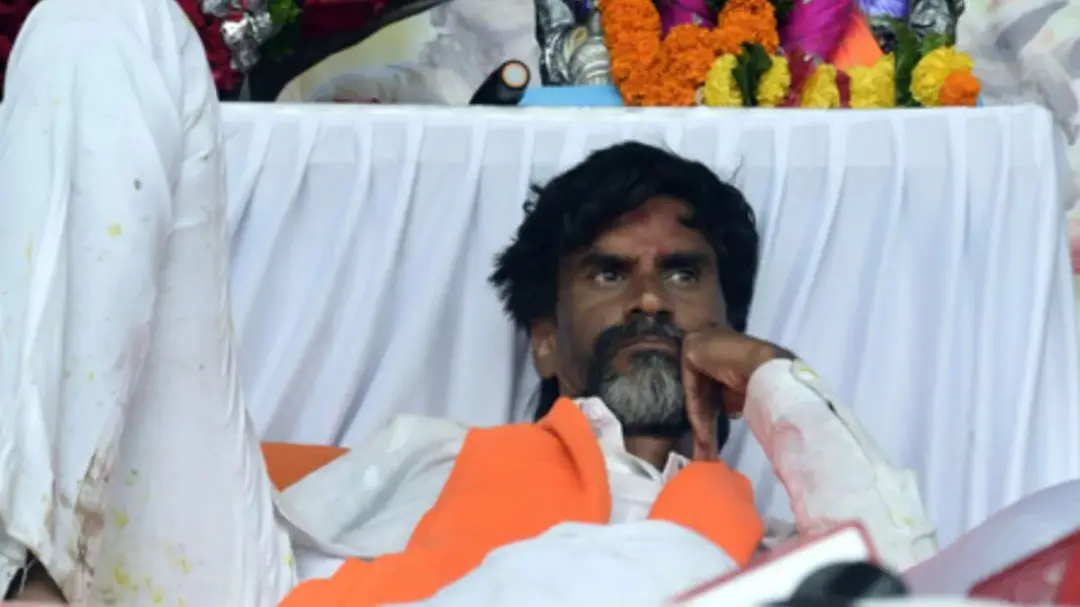
Maratha quota stir: 300 police deployed in Jalna village
Though the Maratha reservation agitation led by activist Manoj Jarange Patil has been called off, managing it over two weeks cost the Jalna district administration crores, officials indicated. Around 300 police personnel were permanently deployed at Antarwali Sarati, along with six doctors including surgeons. A dry day was imposed for six consecutive days after local women complained of safety issues linked to alcohol use. Collector Ashima Mittal said the aim was a legally sustainable, socially balanced solution.
Source
News18 — India · read the original report ↗
Desk check · some claims need care
What the desk checked (5)
- Jalna district spent crores over two weeks managing the Maratha quota agitation at Antarwali Sarati. — Stated in source without an itemised figure or named financial authority; no precise amount given.
- About 300 police personnel were permanently deployed at the protest site. — Figure appears in source, attributed generally to the reporting; no named official cited.
- Six doctors, including specialised surgeons, were stationed on-site. — Figure appears in source without named attribution.
- A dry day was imposed for six consecutive days after local women complained of safety issues linked to alcohol use. — Attributed to district authorities in the source; no order number or date provided.
- Adolescent girls avoided going out after 4pm; women asked villagers for toilet access; a resident parked her car 5 km away. — Attributed to unnamed senior district sources and 'field data' — unverifiable single-source accounts.
Analysts’ view opinion
The agitation may be called off, but the continuing permanent deployment of about 300 police in Jalna, a stationed medical team and a six-day dry day suggest the administration treats Antarwali Sarati as a standing pressure point rather than a closed chapter. For Manoj Jarange Patil, the episode demonstrated an ability to pull the state machinery to the negotiating table; for the government, it is a delicate walk between law-and-order costs and constitutional limits. The Collector's framing of a solution that is "legally sustainable" and "socially balanced" reflects the political caution of not deepening caste divisions.
- Heavy police presence persisting after the stir was called off signals the government is planning for the possibility of renewed mobilisation.
- Multiple rounds of direct talks between a Collector-led core committee and Jarange Patil indicate the protesters' bargaining leverage has grown.
- The official language about not deepening caste divisions points to a balancing strategy mindful of how other communities may react.
- The multi-crore management bill and disruption to residents could become ammunition in mutual political blame over protest methods.
- Imposing a six-day dry day after complaints by local women highlights politically sensitive local discontent at the very epicentre of the movement.
What to watch — Watch for what legally sustainable step the government takes next, whether Jarange Patil revives the agitation, and when the Jalna deployment is scaled down.
The story does not establish the exact cost, the specific assurances given by the government, or any measurable electoral gain or loss for any party.
Deep dive
Research brief · 8 facts · 5 dates · exam-readyThe brief
Context
Antarwali Sarati, a small village in Maharashtra's Jalna district, has been the epicentre of the Maratha reservation agitation led by activist Manoj Jarange Patil, who held an indefinite hunger strike there demanding reservation for the Maratha community and caste validity certificates. The agitation has now been called off, but it drew large crowds to the village over two weeks and forced the Jalna district administration into a multi-crore law-and-order and civic management exercise. The District Collector, as part of a government-constituted core committee, held multiple rounds of direct talks with Jarange Patil. Field accounts from the district also point to a heavy social and infrastructure burden on the village's own residents.
Key facts
- The Jalna district administration spent crores over two weeks managing the Maratha quota agitation at Antarwali Sarati, per officials cited in the report.
- At the height of the agitation, around 300 police personnel were permanently deployed at Antarwali Sarati.
- A dedicated team of six medical doctors, including specialised surgeons, was stationed on-site.
- District authorities imposed a dry day for six consecutive days after local women complained of safety issues driven by alcoholism among the floating crowd.
- The District Collector, as part of a core committee constituted by the government, held several rounds of direct talks with Manoj Jarange Patil.
- Jalna Collector Ashima Mittal said the objective was a solution that is 'legally sustainable, socially balanced and does not deepen caste divisions'.
- Field observations recorded that adolescent girls in the village strictly avoided stepping outside their homes after 4 pm due to unpredictable gatherings.
- In one documented case, a female resident parked her car five kilometres away due to gridlock and vandalism, leaving her young daughter behind with a grandmother.
Timeline
- Two weeks before the storyMaratha quota agitation led by Manoj Jarange Patil gathers at Antarwali Sarati; Jalna administration mobilises police, doctors and civic arrangements.
- During the agitationLocal women complain of safety issues linked to alcoholism among the floating crowd; a dry day is imposed for six consecutive days.
- During the agitationDistrict Collector, as part of the government's core committee, holds multiple rounds of dialogue with Jarange Patil.
- Before the reportJarange Patil calls off the agitation; the scale of the administrative operation comes to light.
- September 17, 2026, 13:30 ISTNews18 publishes the report on the cost and impact of managing the stir.
Who has a stake
- Manoj Jarange Patil — Activist leading the Maratha quota agitation; held an indefinite hunger strike at Antarwali Sarati for reservation and caste validity certificates.
- Jalna district administration / Collector Ashima Mittal — Had to maintain law and order, provide civic amenities and broker peace as part of the government's core committee.
- Residents of Antarwali Sarati, especially women and adolescent girls — Lost mobility, privacy and safe access to routines; sanitation gaps and traffic gridlock disrupted daily life.
- Local farmers — Open areas and standing agricultural fields were used for defecation, turning livelihoods into an unmanaged sanitation site.
- Maharashtra government — Spent crores on security and amenities; must find a legally sustainable reservation solution within the constitutional framework.
- Police and medical personnel — Around 300 police and six doctors including surgeons deployed continuously at the protest site.
Why it matters
Large mass agitations impose costs that go well beyond politics — crores in state spending, diversion of police and medical staff, and a measurable loss of everyday freedom for residents of the host village. The Jalna experience shows that quota movements are managed at the district level, where collectors must simultaneously keep order, negotiate with protest leaders and protect ordinary citizens. It also underlines the government's stated challenge: crafting a reservation solution that is legally sustainable without deepening caste divisions.
UPSC angle
Prelims pointers
- Antarwali Sarati, in Jalna district of Maharashtra, is the epicentre of the Maratha reservation agitation.
- Manoj Jarange Patil led the agitation, demanding Maratha reservation and caste validity certificates.
- Ashima Mittal is the District Collector of Jalna, and a member of the government-constituted core committee for talks.
- Around 300 police personnel and six doctors, including surgeons, were deployed at the protest site.
- A 'dry day' — a ban on liquor sale — was imposed for six consecutive days in the area.
- The District Collector heads the district administration's law-and-order and civic response machinery.
Mains framing
The Maratha quota agitation at Antarwali Sarati illustrates how identity-based reservation demands translate into concrete administrative burdens at the district level. The immediate cause was a hunger strike by Manoj Jarange Patil seeking reservation for the Maratha community and caste validity certificates; the consequence was a two-week, multi-crore mobilisation involving around 300 permanently deployed police personnel, six doctors including surgeons and the whole district machinery. Implications ran in three directions: fiscal, with crores spent purely on law and order and civic amenities; institutional, with the Collector doubling as negotiator on a government core committee while maintaining order; and social, with the host village's residents — particularly women and adolescent girls who avoided going out after 4 pm — losing mobility, privacy and sanitation access, and farmers' fields being used for open defecation. A dry day for six consecutive days had to be imposed after women reported safety threats from alcoholism among the floating crowd. The way forward, as articulated by Collector Ashima Mittal, lies in dialogue within the constitutional and legal framework and a solution that is legally sustainable and socially balanced without deepening caste divisions — alongside better protest-management planning, temporary sanitation and traffic arrangements, and safeguards for host communities.
Key terms
- Maratha quota agitation
- Movement in Maharashtra demanding reservation in education and jobs for the Maratha community.
- Caste validity certificate
- Official document verifying a person's caste claim, needed to access reservation benefits; one of the agitation's demands.
- Dry day
- An officially notified day on which sale of liquor is prohibited; imposed here for six consecutive days on safety grounds.
- Core committee
- Committee constituted by the Maharashtra government, including the District Collector, to negotiate with the protest leadership.
- District Collector
- Chief administrative officer of a district, responsible for law and order coordination and civic arrangements.
- Antarwali Sarati
- Village in Jalna district described as 'ground zero' of the Maratha reservation agitation.
Practice questions
- Mass agitations impose costs on the state and on host communities alike. Discuss with reference to the management of the Maratha quota stir at Antarwali Sarati.
- Examine the role of the District Collector in balancing law and order, negotiation with protest leaders, and protection of citizens' everyday rights during large-scale protests.
- 'A solution that is legally sustainable and socially balanced.' Critically analyse the challenges of accommodating caste-based reservation demands within India's constitutional framework.
Grounded only in the source report — figures and dates are the source's, not inferred.