
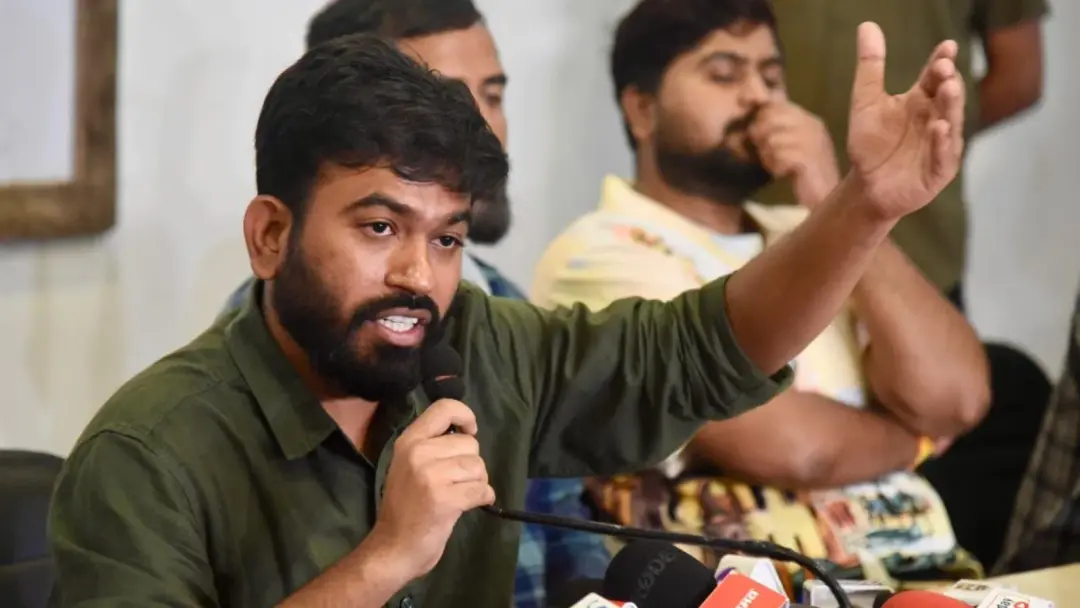
Activist launches 'Adivasi School Thik Karo' campaign in Nagpur
Cockroach Janata Party (CJP) activist Abhijeet Dipke announced the 'Adivasi School Thik Karo' campaign in Nagpur on Wednesday, September 16. His team will visit tribal schools in Maharashtra, including Gadchiroli, as well as Rajasthan, Jharkhand, Odisha and Gujarat, and document facilities. Dipke claimed more than 590 Adivasi students died in Maharashtra over two years, that only 477 Eklavya Model Residential Schools are functional against over 700 sanctioned buildings, and that over 2,800 posts remain vacant.
Source
Indian Express — Cities · read the original report ↗
Desk check · some claims need care
What the desk checked (5)
- Abhijeet Dipke of Cockroach Janata Party launched the 'Adivasi School Thik Karo' campaign in Nagpur on Wednesday, September 16. — Attributed to Dipke's announcement as reported; day-date pairing not independently confirmed in the source.
- More than 590 Adivasi students in Maharashtra died over the past two years, with Balaghat recording over 30 student deaths in three months. — Explicitly a claim by Dipke; no official source cited, and Balaghat is not in Maharashtra, an inconsistency an editor should check.
- Only 477 Eklavya Model Residential Schools are functional though over 700 buildings were sanctioned; only 340 have permanent buildings. — Claimed by Dipke; figures appear in the source but no government confirmation is provided.
- More than 2,800 teaching posts remain vacant and teachers are deployed for election duty. — Unattributed beyond Dipke's statement; no official data in the source.
- Ex-gratia of Rs 2-4 lakh or cattle is given to families of deceased students. — Framed as a rhetorical question by Dipke; compensation amounts not officially sourced.
Analysts’ view opinion
Every claim in this campaign points to the same governance gap: in tribal education, sanctioning buildings and posts is treated as the deliverable, while actually making them functional and staffed is a separate story. The allegation that only 477 of over 700 sanctioned buildings are functional and that over 2,800 posts lie vacant — if borne out — is a textbook announcement-versus-delivery problem. Anganwadi rooms doubling as classrooms and teachers pulled into election duty look less like flawed policy design and more like chronic diversion of resources. It is worth stressing these are one activist's assertions; no official response appears in this story.
- The gap between three numbers in the Eklavya residential schools scheme — sanctioned, functional, and housed in permanent buildings — is the sharpest single indicator of implementation slippage.
- If the vacancy claim holds, it is not merely a recruitment issue: in residential schools, thin staffing also erodes child safety and health supervision.
- Attributing student deaths to food poisoning, snakebite and poor medical access raises the harder question of where accountability sits between education, health and tribal welfare departments.
- The question raised on compensation matters in policy terms: ex-gratia should not become a substitute for preventive systems that failed upstream.
- Deploying teachers on non-teaching duties such as elections is a long-standing administrative habit, and it bites hardest exactly where staffing is already thinnest.
What to watch — Watch whether the documentation gathered across the five states is published in a verifiable form, and whether tribal welfare departments or the body running Eklavya schools respond with official figures.
All the numbers and stated causes of death here are an activist's allegations, unverified against government data, and the story records no response from any department.
Deep dive
Research brief · 8 facts · 5 dates · exam-readyThe brief
Context
Activist Abhijeet Dipke of the Cockroach Janata Party (CJP) has launched a campaign called 'Adivasi School Thik Karo' to spotlight the condition of schools, teacher availability and basic facilities in tribal areas. Announced in Nagpur on Wednesday, September 16, it follows CJP's earlier 'School Thik Karo' campaign aimed at improving schools across the country. The campaign's team plans to visit tribal schools in Maharashtra, including Gadchiroli, and in Rajasthan, Jharkhand, Odisha, Gujarat and other parts of the country to document facilities. Dipke's claims focus on student deaths in residential tribal schools, gaps in the Eklavya Model Residential Schools (EMRS) programme and large-scale teacher vacancies.
Key facts
- Dipke announced the 'Adivasi School Thik Karo' campaign in Nagpur on Wednesday, September 16.
- He claimed more than 590 Adivasi students in Maharashtra died over the past two years.
- He claimed Balaghat registered over 30 student deaths in the past three months.
- He said only 477 Eklavya Model Residential Schools are functional though the government sanctioned more than 700 buildings.
- Of the functional EMRS schools, only 340 had permanent buildings, according to Dipke.
- He claimed more than 2,800 posts remained vacant.
- He alleged classrooms meant for anganwadis were being used to conduct school classes.
- He attributed some student deaths to food poisoning, snakebites and inadequate access to medical facilities, and questioned ex-gratia of Rs 2-4 lakh or compensation in the form of cattle.
Timeline
- Past two years (as claimed)More than 590 Adivasi students in Maharashtra lost their lives, according to Dipke.
- Past three months (as claimed)Balaghat registered over 30 student deaths, according to Dipke.
- Before the new campaignCJP ran the 'School Thik Karo' campaign to improve the condition of schools across the country.
- Wednesday, September 16Dipke announced the 'Adivasi School Thik Karo' campaign in Nagpur.
- AheadTeam to visit tribal schools in Maharashtra (including Gadchiroli), Rajasthan, Jharkhand, Odisha, Gujarat and elsewhere to document facilities.
Who has a stake
- Adivasi students in residential and tribal-area schools — Safety, health access, teachers and basic infrastructure; over 590 deaths claimed in Maharashtra in two years.
- Families of deceased students — Adequacy of ex-gratia — Dipke questioned Rs 2-4 lakh or compensation in the form of cattle.
- Abhijeet Dipke and Cockroach Janata Party (CJP) — Running the campaign; documenting school facilities across five states to press for improvements.
- Government running the EMRS programme — Sanctioned over 700 buildings but only 477 schools functional and 340 with permanent buildings, per the claims.
- Teachers in tribal schools — Deployment on non-teaching duties, particularly election work, alongside over 2,800 vacant posts.
- Gadchiroli and other tribal districts — Named as focus areas for the campaign's on-ground documentation.
Why it matters
Residential schooling is the main route to education for many Adivasi children, so gaps in buildings, staff and medical access directly affect their survival and learning. The claims — hundreds of student deaths, unbuilt or non-functional EMRS campuses, thousands of vacancies and teachers pulled into election duty — point to accountability questions in tribal education delivery. A citizen-led documentation drive across five states could put verifiable evidence into the public domain.
UPSC angle
Prelims pointers
- 'Adivasi School Thik Karo' campaign launched by CJP activist Abhijeet Dipke in Nagpur on September 16.
- Eklavya Model Residential Schools (EMRS): claimed 477 functional against 700-plus sanctioned buildings; only 340 with permanent buildings.
- Claim of over 2,800 vacant posts and over 590 Adivasi student deaths in Maharashtra in two years.
- Campaign states: Maharashtra (including Gadchiroli), Rajasthan, Jharkhand, Odisha, Gujarat.
- Predecessor campaign: CJP's 'School Thik Karo' for schools across the country.
- Alleged causes of student deaths: food poisoning, snakebites, inadequate access to medical facilities.
Mains framing
The 'Adivasi School Thik Karo' campaign frames tribal education as a governance and rights failure rather than a purely pedagogical one. The claims made — over 590 Adivasi student deaths in Maharashtra in two years, over 30 deaths in Balaghat in three months, only 477 functional Eklavya Model Residential Schools against over 700 sanctioned buildings, just 340 with permanent buildings, and over 2,800 vacant posts — suggest three linked deficits: physical infrastructure (including anganwadi rooms allegedly doubling as classrooms), human resources (vacancies plus teachers diverted to non-teaching work such as election duty), and safety and health systems (deaths attributed to food poisoning, snakebites and inadequate medical access). The activist also raises the question of whether ex-gratia of Rs 2-4 lakh, or compensation in cattle, is a proportionate state response to a child's death. The way forward suggested by the campaign itself is evidence-building: on-ground documentation of facilities across Maharashtra, Rajasthan, Jharkhand, Odisha and Gujarat, which can be tested against official records. Beyond that, the source does not state any specific government response or policy commitment.
Key terms
- Adivasi School Thik Karo
- Campaign launched by Abhijeet Dipke to highlight school conditions, teacher availability and basic facilities in tribal areas.
- Cockroach Janata Party (CJP)
- The outfit whose activist, Abhijeet Dipke, launched the campaign; it earlier ran the 'School Thik Karo' campaign.
- Eklavya Model Residential Schools (EMRS)
- Government residential school programme for tribal students; Dipke claims only 477 are functional against over 700 sanctioned buildings.
- Anganwadi
- Child care centre; Dipke alleged anganwadi classrooms were being used to conduct school classes.
- Ex-gratia
- Discretionary compensation paid to families; Dipke questioned Rs 2-4 lakh or cattle given for a student's death.
- Gadchiroli
- Tribal district in Maharashtra named as a focus area for the campaign's school visits.
Practice questions
- Examine the structural gaps in tribal residential education in India, using the claims made about the Eklavya Model Residential Schools programme.
- Deployment of teachers for non-teaching duties such as election work undermines the right to education. Discuss.
- How can citizen-led documentation campaigns complement official monitoring of welfare schemes for marginalised communities?
Grounded only in the source report — figures and dates are the source's, not inferred.