
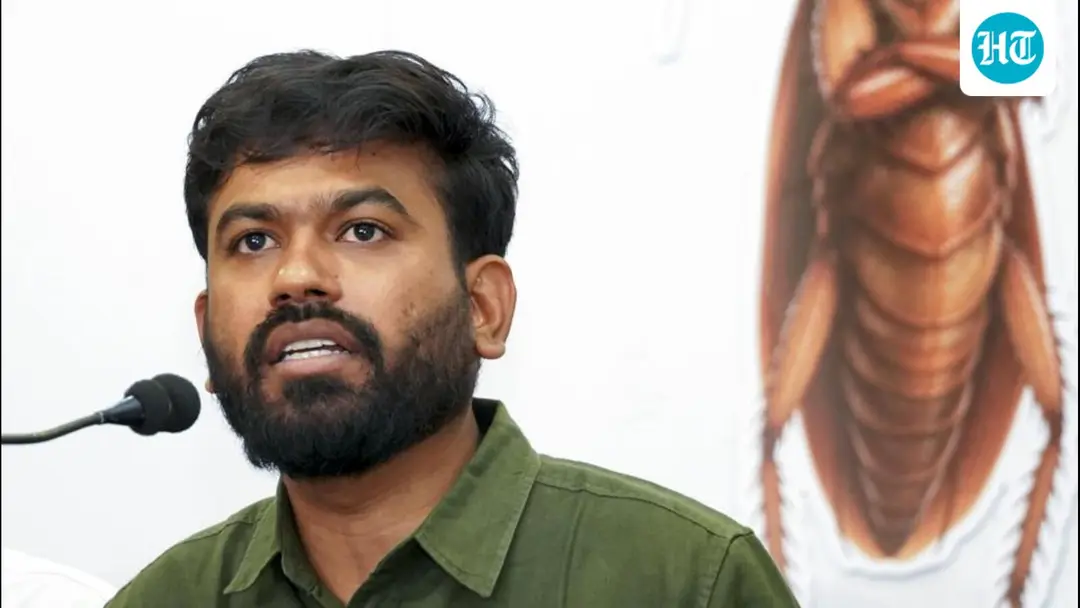
CJP launches 'Adivasi School Thik Karo' campaign in Gadchiroli
Cockroach Janta Party founder Abhijeet Dipke on Wednesday launched the 'Adivasi School Thik Karo' campaign after three tribal children died of snakebites last month at a government-aided ashramshala in Maharashtra's Gadchiroli. He said the drive begins in Gadchiroli on September 17, with representatives inspecting infrastructure, safety standards and living conditions from Thursday. Dipke claimed over 590 tribal students died in Maharashtra in two years. The Bombay High Court has directed the state government to safeguard students.
Source
Hindustan Times — India · read the original report ↗
Desk check · some claims need care
What the desk checked (5)
- Three tribal children died of snakebites at a government-aided ashramshala in Gadchiroli last month. — Stated in source as background without a named official source; date given only as 'last month'.
- More than 590 tribal students have died in Maharashtra in the past two years, many from snakebites. — Attributed to Dipke; no government data or independent verification cited in source.
- 477 of 720 sanctioned Eklavya Model Residential Schools are non-functional; tribal higher education enrolment is 22.8%. — Figures appear in source but are attributed solely to Dipke, with no source document named.
- A Bombay High Court division bench of acting Chief Justice Ravindra Ghuge and Justice Gautam Ankhad directed the state to safeguard students. — Attributed to the named bench with a quoted direction; routine court reporting.
- Only 130 Scheduled Tribe applicants secured admission to IITs. — Described in source as a claim by Dipke; timeframe and dataset unspecified.
Analysts’ view opinion
This campaign lands on a genuine governance gap: ashramshalas are residential institutions where the state is effectively the guardian, yet the story describes basic safety failures — snakebite deaths, cramped rented buildings — that point to design and oversight lapses rather than one-off accidents. The Bombay High Court's direction that "no more young lives should be lost" is the more consequential lever here, because judicial monitoring historically forces the kind of audits and compliance reporting that campaigns alone cannot. The sharper policy question is not funding announcements but whether minimum, enforceable safety and habitability standards exist for tribal residential schools, and who is accountable when they are breached.
- The core failure described is regulatory, not merely budgetary: residential schools run from rented, cramped premises suggest no binding infrastructure or safety norm is being enforced at the point of sanction.
- Grant-in-aid ashramshalas sit in an accountability grey zone between government and private management, which historically makes inspection and responsibility harder to pin down.
- The claim that 477 of 720 sanctioned Eklavya Model Residential Schools are non-functional, if borne out, points to a chronic Indian policy pattern of sanction-heavy, delivery-light schemes.
- Compensation-after-death is a weak policy instrument compared with preventive standards — first-aid protocols, anti-venom access, boundary and drainage upkeep — and the story suggests the system leans on the former.
- The campaign frames this as an 80-year, cross-party failure, which is politically convenient for a new outfit but also consistent with the fact that tribal residential education has rarely been an electoral priority for any government.
What to watch — Watch whether the state responds with a time-bound safety audit and compliance affidavit before the High Court, and whether any minimum standards for hostel infrastructure, medical response and inspection frequency are actually notified.
The mortality figures, the Eklavya non-functionality count, enrolment and IIT admission numbers and the compensation claims are all assertions by the campaign's founder as reported here, not independently verified data, and the story does not carry the state government's response.
Deep dive
Research brief · 8 facts · 5 dates · exam-readyThe brief
Context
After three tribal children died of snakebites last month at a government-aided ashramshala (tribal residential school) in Maharashtra's Gadchiroli district, Cockroach Janta Party (CJP) founder Abhijeet Dipke launched the 'Adivasi School Thik Karo' (Fix Tribal Schools) campaign. The launch comes amid hunger strikes by students across Maharashtra's tribal belt and intervention by the Bombay High Court, which has directed the state to safeguard students. The campaign is an extension of CJP's nationwide 'School Thik Karo' drive for upgrading public education.
Key facts
- Three tribal children died of snakebites last month at a government-aided ashramshala in Gadchiroli, Maharashtra.
- The 'Adivasi School Thik Karo' campaign was launched on Wednesday and is set to kick off in Gadchiroli on September 17.
- CJP representatives will conduct ground inspections of infrastructure, safety standards and living conditions in Gadchiroli from Thursday.
- Dipke claimed more than 590 tribal students died in Maharashtra over the past two years, many due to snakebites.
- A Bombay High Court division bench of acting chief justice Ravindra Ghuge and justice Gautam Ankhad directed the state to safeguard students, saying "no more young lives should be lost".
- Dipke said 477 of 720 sanctioned Eklavya Model Residential Schools are currently non-functional.
- Higher education enrolment among tribal students was cited as stagnant at 22.8%; only 130 Scheduled Tribe applicants secured IIT admission.
- More than 30 tribal deaths were reported in Madhya Pradesh's Balaghat district within two months, with casualties also in Chhattisgarh, Jharkhand, Odisha, Andhra Pradesh and Uttarakhand.
Timeline
- Last monthThree tribal children died of snakebites at a government-aided ashramshala in Gadchiroli, Maharashtra.
- Before the launch (date not stated in the source)Widespread student hunger strikes across Maharashtra's tribal belt; Bombay HC bench takes notice of youth-led protests and directs the state to protect students.
- WednesdayCJP founder Abhijeet Dipke launches the 'Adivasi School Thik Karo' campaign.
- ThursdayCJP representatives begin ground-level inspections across Gadchiroli.
- September 17Campaign formally kicks off in Gadchiroli.
Who has a stake
- Tribal students in ashramshalas — Their safety, living conditions and quality of education; deaths from snakebites and other causes.
- Cockroach Janta Party (CJP) and founder Abhijeet Dipke — Leading the campaign and inspections; alleging institutional negligence and discrimination in tribal education.
- Maharashtra government — Under Bombay High Court directions to safeguard students; responsible for government-aided ashramshalas and their infrastructure.
- Bombay High Court (acting CJ Ravindra Ghuge and justice Gautam Ankhad) — Judicial oversight; issued stern directions that no more young lives should be lost.
- Families of deceased tribal students — Compensation described by Dipke as nominal, in some states "as meagre as a couple of goats".
- Students on hunger strike in Maharashtra's tribal belt — Demanding attention to conditions in tribal residential schools; their protests were noticed by the High Court.
Why it matters
Ashramshalas and Eklavya Model Residential Schools are the main route to schooling for lakhs of tribal children, so basic failures in buildings, safety and living conditions translate directly into preventable deaths. The claims of 590-plus student deaths in Maharashtra in two years and 477 of 720 sanctioned EMRSs being non-functional point to an implementation gap between sanctioned schemes and ground reality. Judicial intervention by the Bombay High Court signals that student safety in residential tribal schools is now a rights and accountability question, not only an administrative one.
UPSC angle
Prelims pointers
- 'Adivasi School Thik Karo' (Fix Tribal Schools) campaign launched by Cockroach Janta Party founder Abhijeet Dipke; kicks off in Gadchiroli on September 17.
- Ashramshala: government or government-aided residential school for tribal students; three children died of snakebites in one such school in Gadchiroli.
- Bombay High Court division bench: acting chief justice Ravindra Ghuge and justice Gautam Ankhad directed the Maharashtra government to safeguard students.
- Eklavya Model Residential Schools (EMRS): of 720 sanctioned facilities, 477 said to be non-functional.
- Figures cited: 590+ tribal student deaths in Maharashtra in two years; 22.8% tribal higher education enrolment; 130 ST admissions to IITs.
- Other states with reported tribal student deaths: Madhya Pradesh (30+ in Balaghat in two months), Chhattisgarh, Jharkhand, Odisha, Andhra Pradesh, Uttarakhand.
Mains framing
The Gadchiroli snakebite deaths expose how tribal residential education in India can fail at the most basic level of safety and shelter: the campaign's claim that tribal schools operate out of cramped, rented properties while crores are spent on district headquarters frames the problem as one of misplaced budgetary priorities and administrative neglect rather than absence of schemes. The figures cited — 477 of 720 sanctioned Eklavya Model Residential Schools non-functional, 22.8% higher education enrolment among tribal students, only 130 ST admissions to IITs — suggest a pipeline that leaks at every stage, from unsafe hostels to faculty underrepresentation. The spread of similar fatalities to Madhya Pradesh, Chhattisgarh, Jharkhand, Odisha, Andhra Pradesh and Uttarakhand indicates a pattern across the tribal belt, not isolated accidents, while nominal compensation for bereaved families reflects unequal valuation of tribal lives. Judicial intervention by the Bombay High Court, student hunger strikes and civil-society inspections of infrastructure, safety standards and living conditions point to a way forward built on enforceable safety norms in ashramshalas, making sanctioned EMRSs functional, and accountability audits — with the larger argument, as the campaign puts it, that headline GDP growth or a $5 trillion economy target is hollow if indigenous youth are left behind.
Key terms
- Ashramshala
- Residential school for tribal students, run by government or government-aided bodies; the Gadchiroli deaths occurred in one such school.
- Eklavya Model Residential School (EMRS)
- Residential school scheme for tribal students; 477 of 720 sanctioned facilities said to be non-functional.
- Cockroach Janta Party (CJP)
- Political outfit founded by Abhijeet Dipke, running the nationwide 'School Thik Karo' public education campaign.
- 'School Thik Karo' campaign
- CJP's broader nationwide drive to upgrade public education, of which the tribal school campaign is an extension.
- Scheduled Tribe (ST)
- Constitutionally recognised tribal communities; only 130 ST applicants were said to have secured IIT admission.
- Division bench
- A two-judge bench of a High Court; here acting CJ Ravindra Ghuge and justice Gautam Ankhad issued directions on student safety.
Practice questions
- The deaths of tribal students in residential schools reflect a gap between scheme sanction and ground implementation. Discuss with reference to ashramshalas and Eklavya Model Residential Schools.
- Examine the role of judicial intervention and student protest in enforcing accountability for safety standards in tribal residential schools.
- "Macroeconomic growth figures mean little if indigenous youth are left behind." Critically analyse this statement in the context of tribal education outcomes in India.
Grounded only in the source report — figures and dates are the source's, not inferred.