
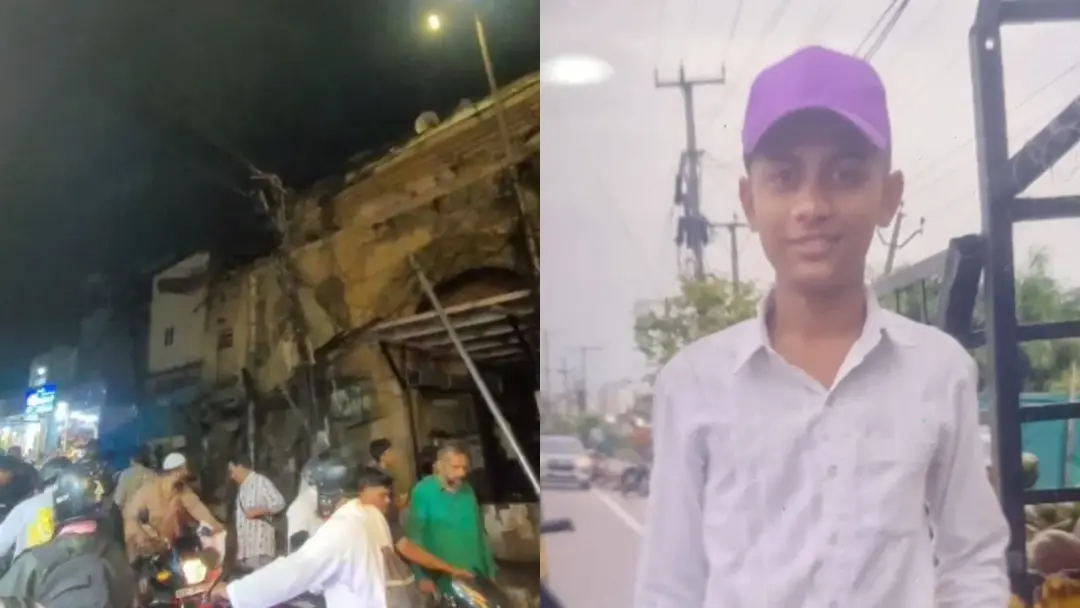
Two young men electrocuted by snapped power lines in Hyderabad
Two young men died of electrocution near Royal Sea Hotel, under Bandlaguda police station limits in Hyderabad's Old City, after heavy evening rain snapped power lines that fell into water stagnating on the road. Jafar, 25, and Abu, 16, had alighted from an auto and were walking when they stepped into the water. Jafar died on the spot and Abu died while being taken to Owaisi Hospital. Police registered a case. Locals alleged electricity department negligence.
Source
Old City Hyderabad — స్థానికం · read the original report ↗
Desk check · compared with the source
What the desk checked (4)
- Two young men, Jafar (25) and Abu (16), died of electrocution near Royal Sea Hotel in Hyderabad's Old City after power lines snapped in heavy rain. — Names, ages and location appear in the source; no named official or police statement is cited.
- Jafar died on the spot and Abu died on the way to Owaisi Hospital. — Figure and sequence appear in the source; no source given for the medical confirmation.
- Bandlaguda police shifted the bodies to the mortuary for post-mortem and registered a case. — Attributed generally to Bandlaguda police in the source; no officer named.
- Locals alleged negligence by electricity department officials in not removing snapped lines or cutting supply in time. — Presented in the source as local residents' allegation, not verified; no departmental response included.
Analysts’ view opinion
The deaths of two young men in Hyderabad's Old City are a human tragedy, but they also carry the seeds of a governance argument — one about the electricity utility and the city's monsoon-readiness. Residents are alleging that live wires were neither removed nor de-energised in time, and allegations of that kind, layered on to a recurring seasonal infrastructure grievance, are the sort of material opposition voices typically pick up. At the same time, the story records no party reaction and no action against any official, so this is a situation that could become political rather than one that already is.
- The victims' ages (25 and 16) and the location — the Old City, a politically sensitive area with strong entrenched local representation — raise the pressure on local leaders to be seen responding.
- The residents' charge of "electricity department negligence" shifts the frame from personal misfortune to institutional failure, which is the politically decisive move.
- Because police have registered a case, the matter can travel from administrative review to legal accountability; who is ultimately held responsible will be politically significant.
- Expect competing narratives: the governing side tends to foreground extreme rainfall, while critics tend to frame such deaths as long-running infrastructure neglect.
- Officials advising the public to avoid waterlogged stretches may itself be read by critics as shifting the burden of safety on to citizens.
What to watch — Watch for any ex-gratia announcement, suspension or inquiry ordered against utility officials, and the first statements from local representatives and opposition leaders — those will show whether this escalates politically.
The story does not establish negligence — that is a residents' allegation; it carries no utility response, no party reaction, and no confirmed official action or compensation.
Deep dive
Research brief · 8 facts · 5 dates · exam-readyThe brief
Context
Two young men were electrocuted in Hyderabad's Old City after heavy evening rain snapped overhead power lines near the Royal Sea Hotel, under Bandlaguda police station limits. The live wires fell into rainwater stagnating on the road, and the two, who had just got off an auto, stepped into the water without noticing them. Locals cut off the power supply and tried to rush them to hospital, but both died. The case has renewed local anger over the electricity department's failure to clear snapped lines and shut off supply in time during the monsoon.
Key facts
- Two young men died of electrocution near Royal Sea Hotel, within Bandlaguda police station limits in Hyderabad's Old City.
- The victims were Jafar, aged 25, and Abu, aged 16, both local residents.
- Heavy rain in the evening snapped electricity wires on a nearby pole, which fell into water stagnating on the road.
- The two had arrived by auto, got down at Royal Sea Hotel and were walking on the road when they stepped into the electrified water.
- Locals who saw the incident immediately stopped the power supply and tried to move the victims to hospital.
- Jafar died on the spot; Abu, seriously injured, died on the way to the nearby Owaisi Hospital despite being shifted by ambulance.
- Bandlaguda police reached the spot, took charge of the bodies and sent them to the mortuary for post-mortem.
- Police have registered a case and are investigating; locals allege electricity department officials acted negligently.
Timeline
- Evening (day of the incident)Heavy rain lashes Hyderabad's Old City; wires on a pole near Royal Sea Hotel snap and fall into stagnant road water.
- Shortly afterJafar (25) and Abu (16) alight from an auto, walk into the water and receive a severe electric shock.
- Immediately after the shockLocals cut the power supply; Jafar is found dead on the spot and Abu is shifted by ambulance towards Owaisi Hospital.
- En route to hospitalAbu dies on the way to Owaisi Hospital.
- After being informedBandlaguda police reach the spot, send the bodies for post-mortem, register a case and begin investigation.
Who has a stake
- Families of Jafar (25) and Abu (16) — Lost two young members; await post-mortem findings and accountability through the police case.
- Bandlaguda police — Registered the case and are investigating the cause and possible negligence behind the deaths.
- Electricity department officials — Face local allegations of negligence for not removing snapped wires or cutting supply in time.
- Local residents of the Old City area — Face recurring monsoon risk from snapped live wires and waterlogged roads; they intervened to cut the power.
- Owaisi Hospital — Nearest hospital to which the injured teenager was being taken; he died en route.
Why it matters
The deaths show how routine monsoon failures — snapped overhead lines plus waterlogged roads — turn into fatal hazards in dense urban neighbourhoods. With locals alleging that supply was not cut and wires were not cleared in time, the incident raises questions of civic and utility accountability in Hyderabad's Old City. It also underlines why officials advise avoiding water-filled stretches and staying away from broken wires during the rains.
UPSC angle
Prelims pointers
- Incident location: near Royal Sea Hotel, Bandlaguda police station limits, Old City, Hyderabad (Telangana).
- Victims: Jafar, 25, and Abu, 16; Jafar died on the spot, Abu died en route to Owaisi Hospital.
- Immediate cause: heavy evening rain snapped power lines from a pole into stagnant road water.
- Police action: bodies sent for post-mortem; a case registered and investigation under way by Bandlaguda police.
- Local grievance: alleged negligence by electricity department in not removing snapped wires or halting supply.
- Official advisory: avoid walking in waterlogged areas and stay cautious near snapped electric wires during monsoon.
Mains framing
Urban electrocution deaths during the monsoon are rarely freak accidents; they sit at the intersection of ageing overhead distribution networks, poor stormwater drainage that leaves roads waterlogged, and delayed emergency response by utilities. In this Hyderabad case, wires snapped from a pole in heavy evening rain and fell into stagnant water near Royal Sea Hotel, killing Jafar (25) instantly and Abu (16) on the way to hospital; it was local residents, not officials, who cut off the supply, and residents have alleged that the electricity department failed to remove the snapped lines or stop supply in time. The implications are both legal — the police case and post-mortem will test negligence and liability — and administrative, since the same combination of waterlogging and low-hanging or frayed conductors recurs each rainy season in dense old-city localities. A grounded way forward lies in what the source itself points to: prompt removal of snapped wires and immediate shutdown of supply in affected feeders, faster response to rain-related faults, and sustained public advisories against walking through water-filled stretches; beyond that, the source does not state any specific policy measure.
Key terms
- Electrocution
- Death caused by passage of electric current through the body, here from live wires lying in stagnant water.
- Bandlaguda police station limits
- The police jurisdiction in Hyderabad's Old City where the incident occurred and the case was registered.
- Post-mortem
- Medico-legal autopsy of the bodies, ordered here before the police investigation proceeds.
- Owaisi Hospital
- The hospital near the spot to which the injured 16-year-old was being taken by ambulance; he died on the way.
- Waterlogging
- Rainwater stagnating on roads after heavy rain, which became the conductor for the snapped live wires.
Practice questions
- Monsoon electrocution deaths in Indian cities are a failure of both utility maintenance and urban drainage. Examine with reference to the Hyderabad incident.
- What institutional mechanisms should electricity distribution utilities put in place for rapid response to snapped conductors during heavy rain? Discuss.
- Discuss the question of accountability and compensation when a citizen dies due to alleged negligence by a public utility.
Grounded only in the source report — figures and dates are the source's, not inferred.