
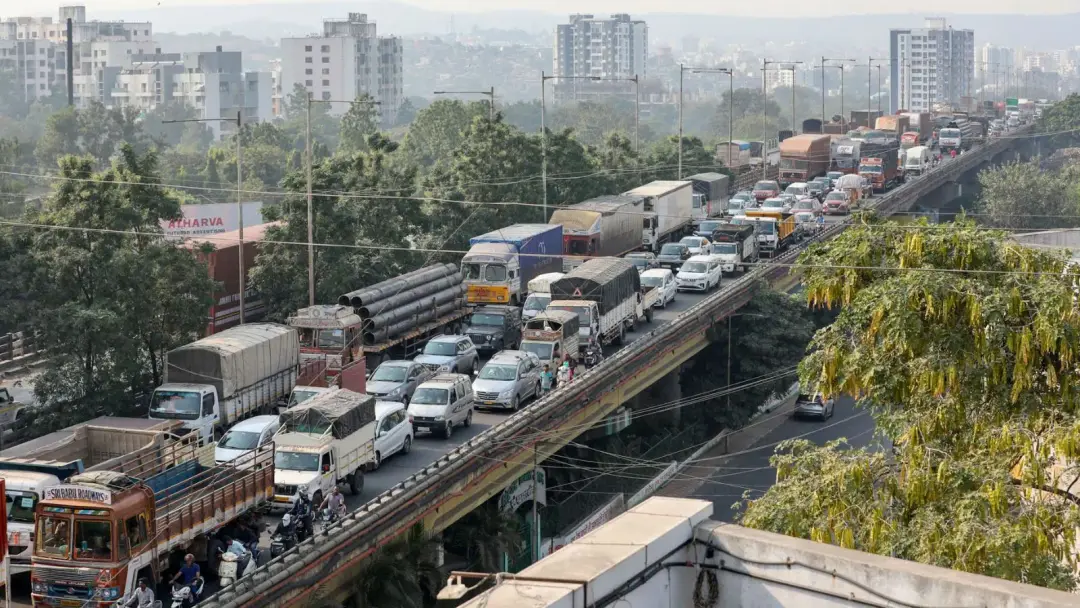
Plan to fell 1,139 trees for Hebbal tunnel draws opposition
The Greater Bengaluru Authority has proposed felling 1,139 trees for a 2.3-km underground twin tunnel road connecting Hebbal Junction to the KVAFSU campus. Funded by the Bangalore Development Authority, the project will cost about Rs 1,130 crore. An online petition against it has drawn more than 20,000 signatures, and the proposal is under challenge in the Karnataka High Court. An IISc report said the tunnel would be about 6.12 times costlier than a metro.
Source
Indian Express — Cities · read the original report ↗
Desk check · compared with the source
What the desk checked (5)
- GBA has proposed felling 1,139 trees for the 2.3-km Hebbal tunnel road — Figure appears in source, attributed to the Greater Bengaluru Authority proposal on which feedback has been invited.
- Project funded by BDA will cost about Rs 1,130 crore — Figure stated in source without a named official source.
- An online Change.org petition has over 20,000 signatures — Figure appears in source; petition initiators named (Satya Arikutharam, Dattatraya T Devare, N S Mukunda, Puneet Sachdev).
- Vegetation survey marked over 1,400 trees while official number affected is 1,128 — Internal inconsistency with the 1,139 figure cited earlier in the same source; survey not attributed to a named agency.
- Tunnel is about 6.12 times more expensive than a metro alternative — Attributed to an IISc Sustainable Transportation Lab report authored by Professor Ashish Verma; per-passenger figures of Rs 5.23 vs Rs 0.86 appear in source.
Analysts’ view opinion
The Hebbal tunnel is no longer just an infrastructure file — it has become a test case in Bengaluru's civic politics. A Rs 1,130-crore price tag, 1,139 trees, more than 20,000 signatures and a High Court challenge together raise the political cost of pushing ahead. The government has a strong story to tell on airport connectivity and congestion relief; but the IISc finding that the tunnel is about 6.12 times costlier than a metro equivalent handed critics and civic groups an argument that is easy to repeat.
- The opposition here is led by professionals and middle-class civic groups — a constituency with outsized voice in urban politics, which makes outright dismissal costly for the government.
- The "costs more, delivers less" economic argument is politically sharper than the purely environmental one, because the taxpayer-money frame travels to a much wider audience.
- The GBA inviting feedback works as procedural armour — it lets the state say consultation happened, while critics can dismiss it as a formality.
- If the court intervenes, the burden of the decision shifts from politicians to the judiciary, which can be both a relief and an embarrassment for the government.
- Because the project is BDA-funded, questions of ownership and accountability between agencies could become a friction point of their own.
What to watch — Watch whether, after the feedback window closes, a revised proposal emerges with a lower tree count, or whether the government simply waits on the Karnataka High Court.
The story does not establish where any political party stands on the project, what the government's formal response is, or how the court is likely to rule.
Deep dive
Research brief · 8 facts · 6 dates · exam-readyThe brief
Context
The Karnataka government has proposed a 2.3-km underground twin tunnel road in Bengaluru linking Hebbal Junction to the Karnataka Veterinary, Animal and Fisheries Sciences University (KVAFSU) campus, on a stretch that connects to Kempegowda International Airport. The Greater Bengaluru Authority (GBA) has proposed felling 1,139 trees for the project, which is funded by the Bangalore Development Authority (BDA) at a cost of about Rs 1,130 crore. Citizens, urban mobility experts and environmentalists have opposed it through an online petition with more than 20,000 signatures, and the tree-felling proposal is being challenged in the Karnataka High Court. An IISc study says the tunnel would cost roughly six times more than a comparable metro option.
Key facts
- The GBA has proposed felling 1,139 trees for the 2.3-km tunnel road at Hebbal.
- The project is a 2.3-km underground twin tunnel road from Hebbal Junction to the KVAFSU campus, funded by the BDA at about Rs 1,130 crore.
- An online Change.org campaign against the tree felling has received more than 20,000 signatures.
- The tree-felling proposal is under challenge in the Karnataka High Court on multiple grounds; GBA has invited public feedback.
- A vegetation survey along the 2-km stretch marked over 1,400 trees, while the official number of affected trees is 1,128.
- Affected trees include heritage, native, flowering and fruiting trees in Hebbal Tree Park, Hebbal Lake, the veterinary college campus and UAS staff quarters.
- IISc IST Lab report by Prof Ashish Verma: tunnel costs about Rs 5.23 per passenger versus Rs 0.86 for metro.
- By passengers per hour per direction, tunnel costs about Rs 13.74 lakh per unit of capacity versus Rs 2.26 lakh for metro — about 6.12 times more expensive.
Timeline
- Not dated in the sourceGovernment proposes 2.3-km underground twin tunnel road from Hebbal Junction to KVAFSU campus, funded by BDA at about Rs 1,130 crore.
- Not dated in the sourceVegetation survey along the 2-km stretch marks over 1,400 trees; official figure of affected trees put at 1,128.
- Not dated in the sourceGBA proposes felling 1,139 trees and invites public feedback on the proposal.
- Not dated in the sourceChange.org petition launched by Satya Arikutharam, Dattatraya T Devare, N S Mukunda and Puneet Sachdev crosses 20,000 signatures.
- Not dated in the sourceIISc Sustainable Transportation Lab report finds the tunnel about 6.12 times costlier than an equivalent metro.
- OngoingTree-felling proposal challenged in the Karnataka High Court on multiple grounds.
Who has a stake
- Greater Bengaluru Authority (GBA) — Proposing authority for felling 1,139 trees; has invited public feedback on the proposal.
- Bangalore Development Authority (BDA) — Funding agency for the roughly Rs 1,130-crore tunnel road project.
- Petitioners — Satya Arikutharam, Dattatraya T Devare, N S Mukunda, Puneet Sachdev — Initiated the Change.org petition calling the tunnel road an ecological disaster.
- IISc Sustainable Transportation Lab (Prof Ashish Verma) — Its cost analysis argues the tunnel is about 6.12 times costlier than a metro and would only relocate congestion.
- Karnataka High Court — Hearing the challenge to the tree-felling proposal on multiple grounds.
- Bengaluru residents and commuters, including airport-bound traffic — Face years of excavation, noise, dust and pollution, and possible shifting of congestion to Veterinary College and Mekhri Circle.
- KVAFSU / veterinary college campus and UAS staff quarters — Trees on their campuses, including heritage and native species, are among those marked for felling.
Why it matters
The dispute pits big-ticket road infrastructure against Bengaluru's shrinking green cover and public-transport priorities, with Rs 1,130 crore of public money at stake for a 2.3-km stretch. An IISc analysis arguing the tunnel is about six times costlier per passenger than a metro raises the question of whether such projects deliver value or simply move congestion to new choke points. The outcome in the Karnataka High Court and GBA's handling of public feedback will set a precedent for how citizen objections and tree-felling approvals are weighed in urban projects.
UPSC angle
Prelims pointers
- GBA proposes felling 1,139 trees for the 2.3-km Hebbal twin tunnel road; project cost about Rs 1,130 crore, funded by BDA.
- The tunnel connects Hebbal Junction to the KVAFSU campus; the stretch also connects to Kempegowda International Airport.
- IISc's Sustainable Transportation Lab (IST Lab) report authored by Prof Ashish Verma, civil engineering department.
- Cost comparison: Rs 5.23 per passenger (tunnel) vs Rs 0.86 (metro); Rs 13.74 lakh vs Rs 2.26 lakh per unit of PHPD capacity — a 6.12 times gap.
- Vegetation survey marked over 1,400 trees along the 2-km stretch; official affected-tree count is 1,128.
- Change.org petition by urban mobility and environment activists has over 20,000 signatures; matter is in the Karnataka High Court.
Mains framing
Bengaluru's Hebbal tunnel proposal illustrates the core dilemma of Indian urban mobility: whether scarce public capital should go to car-centric tunnels or mass transit. The GBA's plan to fell 1,139 trees for a 2.3-km, Rs 1,130-crore twin tunnel has drawn a Change.org petition with over 20,000 signatures and a Karnataka High Court challenge, with objectors pointing to heritage, native, flowering and fruiting trees around Hebbal Tree Park, Hebbal Lake and the veterinary college campus, and warning of years of excavation, noise, dust, habitat destruction and permanent change to the local microclimate. Their functional objection is equally important: the tunnel would not eliminate congestion but shift it towards Veterinary College and Mekhri Circle. The IISc IST Lab report quantifies the opportunity cost — Rs 5.23 per passenger versus Rs 0.86 for a metro, and Rs 13.74 lakh versus Rs 2.26 lakh per unit of peak-hour capacity, making the tunnel about 6.12 times costlier for comparable benefit. The way forward suggested by these findings is rigorous, publicly disclosed cost-benefit comparison against transit alternatives, genuine consideration of the feedback GBA has invited, and treating mature urban tree cover as infrastructure rather than as clearable obstruction.
Key terms
- Greater Bengaluru Authority (GBA)
- The civic authority that has proposed felling 1,139 trees for the Hebbal tunnel and invited public feedback on it.
- Bangalore Development Authority (BDA)
- The agency funding the roughly Rs 1,130-crore Hebbal twin tunnel road project.
- KVAFSU
- Karnataka Veterinary, Animal and Fisheries Sciences University, whose campus is the tunnel's other end point.
- IST Lab, IISc
- The Indian Institute of Science's Sustainable Transportation Lab, which found the tunnel about 6.12 times costlier than a metro.
- PHPD (passengers per hour per direction)
- A transport capacity metric; by it, the tunnel costs about Rs 13.74 lakh per unit versus Rs 2.26 lakh for metro.
- Twin tunnel road
- An underground road with two parallel tubes; here a 2.3-km link from Hebbal Junction to the KVAFSU campus.
Practice questions
- Critically examine whether underground tunnel roads or mass rapid transit offer better value for Indian cities, using the Hebbal tunnel cost comparison as an example.
- Discuss the role of citizen petitions, expert institutional studies and judicial review in scrutinising large urban infrastructure projects in India.
- How should urban planning frameworks value mature tree cover and water bodies such as Hebbal Lake when clearing infrastructure projects?
Grounded only in the source report — figures and dates are the source's, not inferred.