
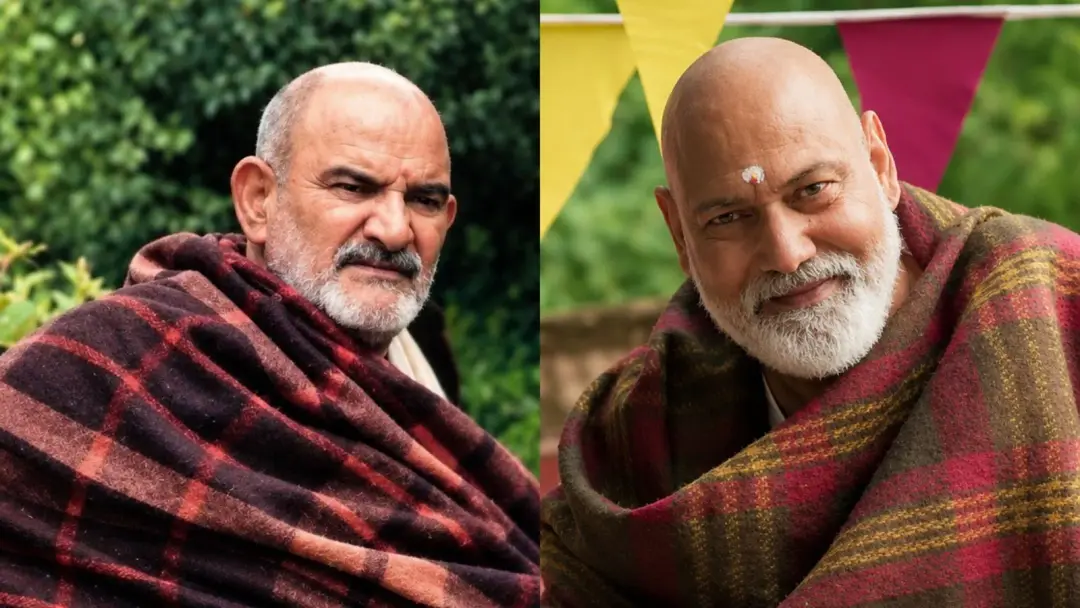
Retired Colonel Hunny Bakshi plays Neem Karoli Baba in Hanuman Ansh
Colonel Hunny Bakshi (retd), 61, tells The Indian Express he plays Neem Karoli Baba in a cameo in Hanuman Ansh, based on the guru's life, and calls the film's box office success a "chamatkar". He says it is a trilogy and he has been told he will have a major role in the second part. Commissioned in Military Intelligence in 1988, Bakshi headed the Technical Support Division and faced court martial over phone-tapping allegations; proceedings were dropped in March.
Source
Indian Express — Cities · read the original report ↗
Desk check · compared with the source
What the desk checked (5)
- Colonel Hunny Bakshi (retd) plays Neem Karoli Baba in a cameo in the film Hanuman Ansh. — Attributed to Bakshi in an interview with The Indian Express; he describes the scene and its length.
- Bakshi, 61, was commissioned in Military Intelligence in 1988 as a cadet at the Indian Military Academy, Dehradun, and commanded an MI unit in Kolkata from 2007 to 2010. — Figures and dates appear in the source as reported detail, not attributed to a named document.
- He was handpicked by then Chief of Army Staff Gen V K Singh to head the Technical Support Division (TSD). — Stated by the source without further sourcing; Gen V K Singh named as then serving chief.
- His unit was accused of eavesdropping on politicians' phones; he was attached for court martial at Nabha, Punjab, in 2015. — Reported by the source using passive attribution ('was accused'); no accusing authority named.
- In March, all proceedings against Bakshi were dropped on his plea citing legal infirmities and denial of defence documents. — Appears in source; year of 'March' not specified in the text.
Analysts’ view opinion
The success of 'Hanuman Ansh' says something bigger than its own backstory: devotional and spiritual subjects still command a large, routinely underestimated theatrical audience in India. That retired Colonel Hunny Bakshi himself expected the film to leave halls within two weeks underlines how word-of-mouth and faith-community support can outrun industry projections. And casting a first-time actor chiefly for his resemblance to the guru is a telling example of how 'look' can outweigh résumé in this genre.
- Bakshi's description of the project as a trilogy suggests an attempt to convert a single hit into a franchise — a relatively new play in the devotional space.
- Even a two-minute cameo can register strongly with audiences when it opens the film, as he says his scene does.
- Publicising the film through community 'bhandaras' shows how grassroots outreach can substitute for conventional marketing spend in this genre.
- The condition that he abstain from non-vegetarian food and alcohol until release reflects the sensitivities and audience expectations attached to playing a revered spiritual figure.
- Bakshi's controversial military past guarantees him media attention, but how that affects audience reception is not yet clear.
What to watch — Watch whether the promised bigger role in the second part materialises, and whether this success opens doors for the web-series scripts he says he is writing.
The story gives no box office figures, budget, critical response or confirmation that the sequel is in production; the trilogy and larger-role claims come from Bakshi alone.
Deep dive
Research brief · 8 facts · 5 dates · exam-readyThe brief
Context
Hanuman Ansh is a film based on the life of the religious guru Neem Karoli Baba, directed by Vishal Chaturvedi, and has become a box office success. The Baba is played in a cameo by Colonel Hunny Bakshi (retd), 61, a former Military Intelligence officer based in Dehradun. Bakshi once headed the Technical Support Division (TSD), a special Army unit raised under then Chief of Army Staff Gen V K Singh, and later faced a general court martial over allegations that his unit tapped politicians' phones. All proceedings against him were dropped in March.
Key facts
- Colonel Hunny Bakshi (retd), 61, plays Neem Karoli Baba in a cameo in Hanuman Ansh, a film based on the guru's life.
- Bakshi calls the film's box office success a "chamatkar (miracle)" and says he held bhandaras (feasts) to publicise it.
- He says Hanuman Ansh is a trilogy covering the Baba's youth and childhood, and he has been told he will have a major role in the second part.
- His scene: as the Baba he meets Dr Bhonsle, described as Pandit Jawaharlal Nehru's doctor, telling him he could not save Nehru; the rest of the film is in flashback.
- Director Vishal Chaturvedi cast him after noting his resemblance to the Baba, with a rider to abstain from non-veg food and alcohol till release.
- Bakshi was commissioned in Military Intelligence in 1988 while a cadet at the Indian Military Academy, Dehradun.
- He commanded an MI unit in Kolkata from 2007 to 2010, then was handpicked by serving Chief of Army Staff Gen V K Singh to head the Technical Support Division (TSD).
- In 2015 Bakshi was attached to face court martial at an armoured brigade in Nabha, Punjab; in March all proceedings were dropped.
Timeline
- 1988Bakshi commissioned into Military Intelligence while a cadet at the Indian Military Academy, Dehradun.
- 2007 to 2010Commands an MI unit in Kolkata; later handpicked by Gen V K Singh to head the Technical Support Division.
- May 2012Gen V K Singh retires as Chief of Army Staff; the TSD then faces a series of inquiries, with Bakshi facing charges.
- 2015Bakshi attached to face court martial at an armoured brigade in Nabha, Punjab.
- MarchAll proceedings against Bakshi dropped on his plea citing legal infirmities in the Court of Inquiry and non-supply of documents crucial to his defence.
Who has a stake
- Colonel Hunny Bakshi (retd) — Cleared of court martial proceedings in March; now writes web series scripts and has debuted on screen as Neem Karoli Baba.
- Vishal Chaturvedi, director of Hanuman Ansh — Cast Bakshi for his resemblance to the Baba; the film's unexpected success rests on his trilogy plan.
- Indian Army / Military Intelligence — The TSD inquiries and court martial touched on the propriety of a special intelligence unit's activities.
- Gen V K Singh (former Chief of Army Staff) — Handpicked Bakshi to head the TSD; the unit faced inquiries after his retirement in May 2012.
- Audiences and devotees of Neem Karoli Baba — The film dramatises the guru's youth and childhood, driving its box office run.
Why it matters
The story links an unusual film success built on faith-based storytelling with one of the Army's most contested internal episodes, the Technical Support Division phone-tapping allegations. It shows how a long-running court martial ended not on the merits of the charges but on procedural infirmities in the Court of Inquiry and denial of documents to the defence. For readers, it is both an entertainment industry note and a reminder of due-process questions in military justice.
UPSC angle
Prelims pointers
- Hanuman Ansh, directed by Vishal Chaturvedi, is based on the life of guru Neem Karoli Baba; Bakshi plays the Baba in a cameo.
- Technical Support Division (TSD) was a special Army unit headed by Col Hunny Bakshi, set up under Gen V K Singh as Chief of Army Staff.
- Gen V K Singh retired as Chief of Army Staff in May 2012, after which the TSD faced a series of inquiries.
- Bakshi was commissioned into Military Intelligence in 1988 as a cadet at the Indian Military Academy, Dehradun.
- Court martial proceedings against Bakshi, begun with his attachment at Nabha (Punjab) in 2015, were dropped in March.
- Bakshi's cameo shows the Baba meeting Dr Bhonsle, described as Jawaharlal Nehru's doctor.
Mains framing
The Hanuman Ansh episode sits at the intersection of two Indian storylines: the commercial pull of devotional cinema and the unresolved questions of military justice. On the first, a film on Neem Karoli Baba's youth, publicised partly through bhandaras and word of mouth, became what its cameo actor calls a \"chamatkar\", pointing to how faith-centred narratives can outperform expectations without conventional marketing muscle; the planned trilogy suggests producers see a durable market. On the second, Colonel Hunny Bakshi's decade-long ordeal — heading the Technical Support Division on the Army Chief's pick, facing allegations that his unit eavesdropped on politicians' phones, being attached for court martial in 2015, and having proceedings dropped in March on grounds of legal infirmities in the Court of Inquiry and non-supply of defence documents — raises the issue of procedural rigour and timeliness in service tribunals and courts of inquiry. The source does not state any policy response; the way forward it implies is narrow but clear: inquiries against officers must be procedurally sound and documents essential to the defence must be supplied, so that outcomes rest on substance rather than lapses, and careers are not left in limbo for years.
Key terms
- Neem Karoli Baba
- Well-known religious guru on whose life the film Hanuman Ansh is based.
- Technical Support Division (TSD)
- Special Army unit headed by Col Bakshi, later accused of eavesdropping on politicians' phones and subjected to inquiries.
- General court martial
- Military trial forum; Bakshi was attached to face one at an armoured brigade in Nabha, Punjab, in 2015.
- Court of Inquiry
- Army fact-finding proceeding; Bakshi's plea cited legal infirmities in the Court of Inquiry against him.
- Military Intelligence (MI)
- Army arm into which Bakshi was commissioned in 1988; he commanded an MI unit in Kolkata from 2007 to 2010.
- Bhandara
- Community feast; Bakshi says he held bhandaras to publicise Hanuman Ansh.
Practice questions
- Devotional and faith-based films have found unexpected commercial success in India. Discuss the factors behind this trend, using the case of Hanuman Ansh.
- Examine the importance of procedural safeguards such as supply of defence documents in Courts of Inquiry and court martial proceedings in the armed forces.
- Special intelligence units within the armed forces raise questions of oversight and accountability. Comment with reference to the Technical Support Division episode.
Grounded only in the source report — figures and dates are the source's, not inferred.