
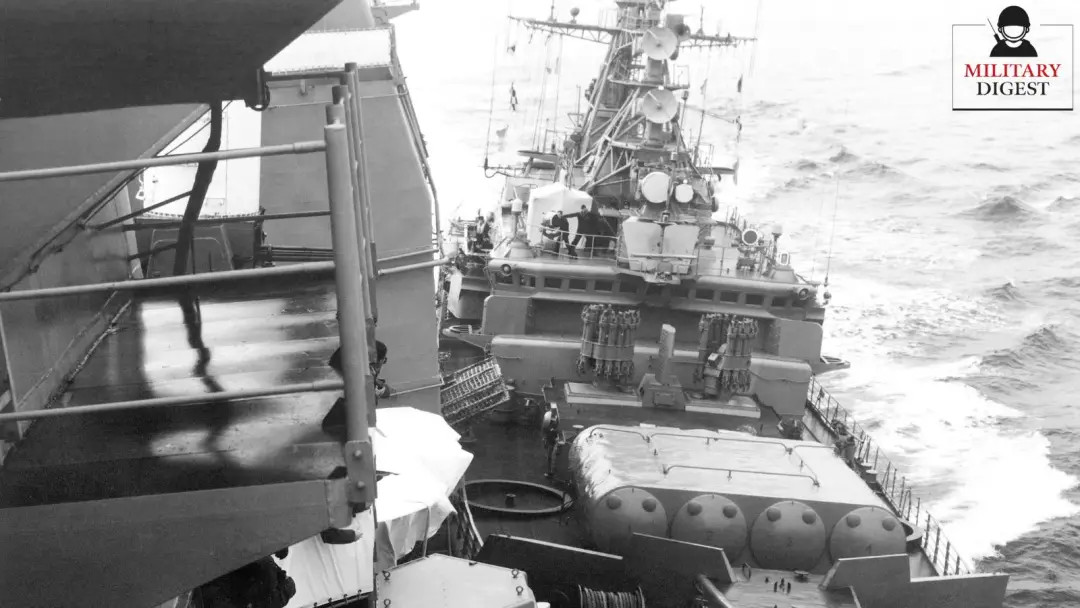
Naval ramming tactics span ancient galleys to modern standoffs
On September 15, Pakistani naval ship PNS Hunain collided with Indian naval ship INS Kolkata in the northern Arabian Sea, severely damaging the Pakistani vessel. The Institute of Marine Engineering Science and Technology says 19 German U-boats were sunk by ramming in World War I, while 27 U-boats were rammed up to May 1943 in World War II, of which 24 sank. In August 1943, Japanese destroyer Amagiri rammed and sank US PT-109, commanded by John F Kennedy.
Source
Indian Express — Cities · read the original report ↗
Desk check · compared with the source
What the desk checked (5)
- Pakistani naval ship PNS Hunain collided with Indian naval ship INS Kolkata in the northern Arabian Sea on September 15, severely damaging the Pakistani vessel. — No source or official statement cited in the text; year not specified.
- 19 German U-boats were sunk by ramming in World War I; HMS Dreadnought rammed and sank U-29. — Attributed to the Institute of Marine Engineering Science and Technology website.
- 27 U-boats were rammed up to May 1943 in World War II, of which 24 sank. — Figure appears in source, attributed to the same institute.
- Japanese destroyer Amagiri rammed and sank US PT-109, commanded by Lt John F Kennedy, in the Solomon Islands in August 1943. — Stated as fact in source without separate attribution.
- In the February 1988 Black Sea bumping incident, Soviet frigate Bezzavetny bumped USS Yorktown and SKR-6 bumped USS Caron, causing limited damage. — Stated as fact in source; no document or official record cited.
Analysts’ view opinion
The September 15 PNS Hunain–INS Kolkata contact in the northern Arabian Sea may look like an accident, but strategically it belongs to an old maritime tradition of applying pressure without firing a shot. History's lesson is blunt: ramming worked in specific situations in both World Wars, yet the ramming ship usually paid heavily too. Because modern warships are neither designed nor trained for ramming, such events more often flow from miscalculation than deliberate attack — and the fact that the Pakistani vessel came away severely damaged underlines how thin the strategic payoff is.
- Ramming ceased to be a weapon once guns and missiles allowed kills at a distance; what survives today is bravado and threatening posture rather than tactics.
- The historical numbers cut both ways — 19 German U-boats sunk by ramming in World War I, and 27 rammed with 24 sunk by May 1943 — but damage to the rammer was often substantial.
- The Amagiri's sinking of PT-109 in August 1943 shows the core logic: ramming was chosen over gunfire precisely to avoid revealing one's own position.
- In peacetime, close-quarters manoeuvring is the most dangerous kind, because a single misjudged turn can escalate faster than political leaderships can react.
- With the damage falling on the Pakistani ship, the operational cost of such aggressive handling may well exceed any signalling gain.
What to watch — Watch whether either side issues an official account, and whether any dialogue or rules-of-behaviour mechanism for preventing unplanned encounters at sea is taken up.
The story does not establish whether the collision was deliberate or a navigational error, nor the precise extent of damage, any casualties, or the two governments' official positions.
Deep dive
Research brief · 8 facts · 10 dates · exam-readyThe brief
Context
On September 15, the Pakistani naval ship PNS Hunain collided with the Indian naval ship INS Kolkata in the northern Arabian Sea, severely damaging the Pakistani vessel and triggering debate over the recklessness of the Pakistani captain's actions. The incident revived attention on naval ramming and "shadowing" — tactics that date to ancient oar-powered galleys with ram bows and persisted through both World Wars. Today such collisions are rare because modern warships are neither designed nor trained for ramming, and are more often seen as displays of bravado or as coercive "grey zone" posturing, as in the South China Sea.
Key facts
- On September 15, PNS Hunain (Pakistan) collided with INS Kolkata (India) in the northern Arabian Sea; the Pakistani vessel was severely damaged.
- The Institute of Marine Engineering Science and Technology says the ram bow was the most significant weapon of naval vessels in ancient times, falling into disuse after gunpowder and the cannon.
- In World War I, 19 German U-boats were sunk by ramming; British battleship HMS Dreadnought used its ram bow to sink submarine U-29.
- In World War II, 27 U-boats were rammed according to statistics up to May 1943, of which 24 sank.
- In August 1943, Japanese destroyer Amagiri rammed and sank US PT-109, commanded by Lt John F Kennedy, in the Solomon Islands, choosing ramming over gunfire to avoid revealing its position.
- HMS Glowworm rammed German heavy cruiser Admiral Hipper off Norway in April 1940; Glowworm was lost and her captain received a posthumous Victoria Cross.
- USS Borie rammed U-405 in a night surface action in November 1943; both vessels were so badly damaged they were later scuttled or sank. Finnish submarine Vetehinen rammed and sank Soviet submarine ShCh-305 in November 1942.
- In the Black Sea bumping incident of February 1988, Soviet frigate Bezzavetny bumped USS Yorktown and Mirka-class SKR-6 bumped USS Caron inside claimed Soviet territorial waters; damage was limited to scraped hulls and bent fittings.
Timeline
- World War I19 German U-boats sunk by ramming; HMS Dreadnought rams and sinks U-29.
- April 1940HMS Glowworm rams German heavy cruiser Admiral Hipper off Norway; Glowworm is lost.
- November 1942Finnish submarine Vetehinen rams and sinks Soviet submarine ShCh-305.
- Up to May 194327 U-boats rammed in World War II, of which 24 sank.
- August 1943Japanese destroyer Amagiri rams and sinks US PT-109 (commanded by Lt John F Kennedy) in the Solomon Islands.
- November 1943USS Borie rams U-405; both vessels badly damaged and later scuttled or sunk.
- May 1967USS Walker and Soviet Kotlin-class destroyer Besslednyi collide in the Sea of Japan after repeated close approaches.
- February 1988Black Sea bumping incident: Soviet frigate Bezzavetny bumps USS Yorktown; SKR-6 bumps USS Caron.
- 2011PNS Babur vs INS Godavari incident involving high-speed closing and contact.
- September 15PNS Hunain collides with INS Kolkata in the northern Arabian Sea; Pakistani ship severely damaged.
Who has a stake
- Indian Navy (INS Kolkata) — Safety of its warship and crew during shadowing encounters; managing escalation at sea without gunfire.
- Pakistan Navy (PNS Hunain) — Its vessel was severely damaged; the captain's actions have been debated as reckless.
- Institute of Marine Engineering Science and Technology — Technical authority cited on the history and effectiveness of ram bows and ramming against submarines.
- Chinese PLA Navy, Chinese Coast Guard and "maritime militia" — Named as frequent users of grey-zone tactics in the South China Sea, the primary global hotspot for dangerous naval manoeuvres in the 2020s.
- Crews of warships in close-quarters encounters — Collisions risk flooding, fires and potential loss of both vessels involved.
Why it matters
A single miscalculation at sea — a ship nudging another to change course instead of using weapons — can severely damage or sink warships and escalate a standoff between nuclear-armed neighbours. The September 15 Arabian Sea collision places India-Pakistan naval encounters in the same category as Cold War "bumping" incidents and today's South China Sea grey-zone harassment, where coercion stops just short of war.
UPSC angle
Prelims pointers
- On September 15, PNS Hunain (Pakistan) collided with INS Kolkata (India) in the northern Arabian Sea.
- WWI: 19 German U-boats sunk by ramming; HMS Dreadnought rammed and sank U-29.
- WWII: 27 U-boats rammed up to May 1943, of which 24 sank.
- Japanese destroyer Amagiri rammed and sank PT-109, commanded by Lt John F Kennedy, in the Solomon Islands in August 1943.
- Black Sea bumping incident, February 1988: Soviet frigate Bezzavetny bumped USS Yorktown, SKR-6 bumped USS Caron.
- 2011: PNS Babur vs INS Godavari incident involved high-speed closing and contact.
Mains framing
Naval ramming has travelled from being a primary weapon — the ram bow of ancient galleys propelled at maximum speed by slave oarsmen — to a marginal, largely accidental or coercive act. Gunpowder and the cannon, which could sink a vessel at a distance, made the ram obsolete, though it retained niche value against submarines: 19 U-boats were rammed and sunk in World War I and 24 of 27 rammed U-boats sank up to May 1943. But because submarines were built to withstand deep-water pressure, the ramming ship often suffered serious bow damage, and the practice was increasingly frowned upon; USS Borie and U-405 both ended up lost. In the Cold War, ramming mutated into low-speed "shouldering" in non-shooting confrontations such as the February 1988 Black Sea bumping incident and the May 1967 USS Walker-Besslednyi collision, where each side accused the other. In the 2020s the South China Sea has become the primary hotspot, with the PLAN, Chinese Coast Guard and "maritime militia" using grey-zone tactics that stop short of outright war. The September 15 PNS Hunain-INS Kolkata collision, like the 2011 PNS Babur-INS Godavari contact, shows the risk: modern warships are neither designed nor trained for ramming, and collisions invite flooding, fires and loss of both vessels. The way forward lies in professional restraint in close-quarters manoeuvring, since such incidents typically stem from miscalculation rather than design.
Key terms
- Ram bow
- A reinforced projecting bow used to smash into and hole an enemy hull; the most significant naval weapon in ancient times.
- Shouldering
- Deliberate low-speed ramming or nudging of another ship in tense but non-shooting confrontations, common in the Cold War era.
- Grey-zone tactics
- Harassment at sea that stops just short of provoking outright war, used per experts by China's PLAN, Coast Guard and maritime militia.
- U-boat
- German submarine of the World Wars; 19 were sunk by ramming in WWI and 24 of 27 rammed U-boats sank up to May 1943.
- Institute of Marine Engineering Science and Technology
- Body whose website provides the cited historical data on ram bows and the effectiveness of ramming against submarines.
- PT-109
- US patrol torpedo boat commanded by Lt John F Kennedy, rammed and sunk by Japanese destroyer Amagiri in August 1943.
Practice questions
- Trace the evolution of ramming as a naval tactic from ancient galleys to contemporary maritime standoffs, and explain why it is rare in modern naval warfare.
- What are 'grey-zone' tactics at sea? Discuss with reference to the South China Sea and recent India-Pakistan naval encounters.
- Collisions between warships of rival navies are usually the product of miscalculation rather than intent. Examine this statement in the light of the September 15 PNS Hunain-INS Kolkata incident and Cold War bumping episodes.
Grounded only in the source report — figures and dates are the source's, not inferred.