
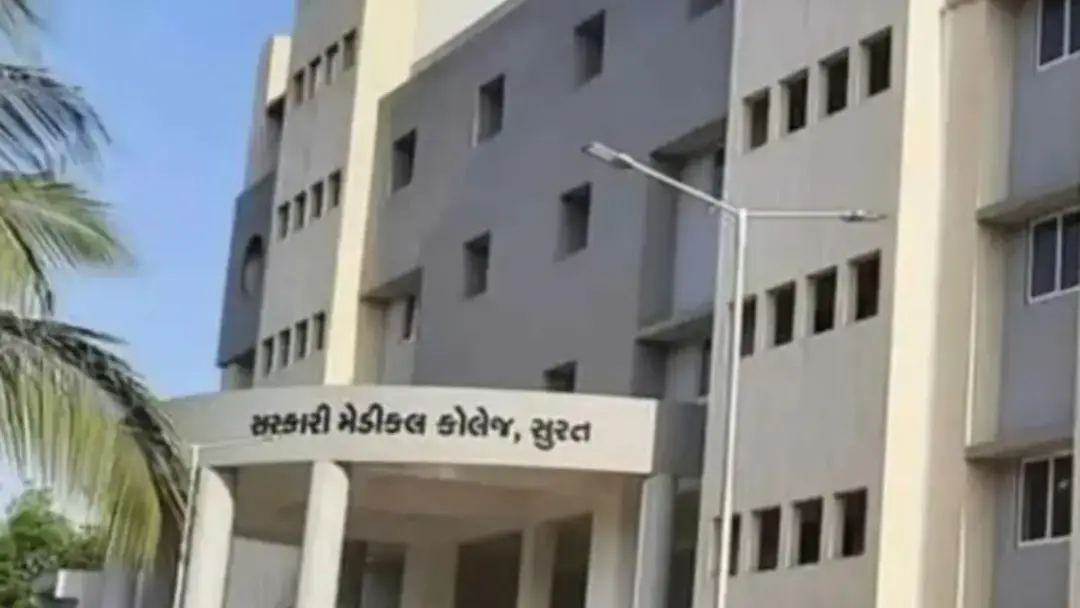
Surat medical college PG student dies, police probe on
A postgraduate student at the Government Medical College in Surat allegedly died by suicide on Thursday afternoon by cutting blood vessels near the elbows of both hands, police said. Dr Yogendra Prajapati, a third-year anatomy student and resident doctor at New Civil Hospital, was in the dissection hall from morning on undergraduate examination duty, in-charge Medical Superintendent Dr Parul Vadgama said. Khatodara police found no suicide note and registered an accidental death case. It was the college's second such incident in under two months.
Source
Indian Express — Cities · read the original report ↗
Desk check · some claims need care
What the desk checked (5)
- A 28-year-old postgraduate student at Government Medical College, Surat, allegedly died by suicide on Thursday afternoon by slitting both hands. — Attributed to police; however the source separately describes a 30-year-old in an earlier August 9 case, and the age of the deceased in this incident is stated only once.
- Dr Yogendra Prajapati, a third-year anatomy student and resident doctor at New Civil Hospital, injured himself in the department's dissection hall. — Attributed to Khatodara police and police sources in the source text.
- He had been in the dissection hall since morning supervising undergraduate examinations; his own third-year exams ended last week. — Quoted to in-charge Medical Superintendent Dr Parul Vadgama via PTI.
- Police registered a case of accidental death, found no suicide note and are probing; reason unknown. — Quoted to Khatodara police inspector N V Bharwad; no independent corroboration in source.
- This was the second such incident at the college in under two months; after the August 9 death of Harsh Pandya, four senior resident doctors were booked and suspended but not yet arrested. — Stated in source as outcome of a probe, without naming the investigating authority.
Analysts’ view opinion
At this stage the police have only registered an "accidental death" case, which is an inquiry-stage entry rather than an accusation against anyone. With no suicide note recovered, the burden of establishing cause shifts almost entirely onto the post-mortem, the police probe and statements from colleagues and family. The fact that this is the second such death at the same college in under two months — the first having led to a criminal case and suspension of four senior resident doctors over alleged verbal abuse — pushes the matter beyond individual tragedy into the territory of institutional accountability.
- Registering an "accidental death" case is the standard first procedural step in an unnatural death; the classification can change if the probe surfaces evidence pointing to abetment.
- Absent a note, circumstantial material — workload, colleagues' statements, digital records — typically becomes the evidentiary backbone of such an inquiry.
- The story notes that in the August 9 case four accused were booked and suspended but not yet arrested, which raises fair procedural questions about the pace of that investigation.
- Two deaths in under two months focuses attention on regulators' oversight duties around anti-ragging and grievance mechanisms and resident doctors' working conditions in medical colleges.
- The family has legitimate interests in being kept informed and seeking further action, while the presumption of innocence must hold for anyone not accused at this stage.
What to watch — Watch whether the post-mortem findings or family and colleague statements lead police to reclassify the case beyond "accidental death", and whether the college or state medical education authorities order an internal inquiry.
The story does not establish any cause, any individual's culpability, or any link to the August incident — the police themselves say the reason is not known.
Deep dive
Research brief · 8 facts · 6 dates · exam-readyThe brief
Context
A 28-year-old postgraduate medical student, Dr Yogendra Prajapati, a third-year MD (anatomy) student at the Government Medical College, Surat, and resident doctor at New Civil Hospital, allegedly died by suicide on a Thursday afternoon inside the anatomy department's dissection hall by cutting blood vessels near the elbows of both hands. He had been on duty since morning for undergraduate students' examinations, and was alone after colleagues left. Khatodara police found no suicide note and registered a case of accidental death. It is the second such death at the same college in under two months, after first-year microbiology student Harsh Pandya died on August 9 in a case where four senior resident doctors were booked for verbal abuse and humiliation.
Key facts
- Dr Yogendra Prajapati, 28, a third-year student of the anatomy department at Government Medical College, Surat, allegedly died by suicide on Thursday afternoon.
- He allegedly used a sharp object to cut blood vessels near the elbows of both hands in the department's dissection hall after colleagues left in the afternoon.
- He had been in the dissection hall since morning, on duty for undergraduate students' examinations; his own third-year exams had concluded the previous week.
- Dr Prajapati was a resident doctor at New Civil Hospital and lived with his wife, four-year-old son and parents in the college's hostel quarters.
- He was found unconscious on the floor by a student; in-charge Medical Superintendent Dr Parul Vadgama, Dean Dr Jayesh Brahmabhatt and the police control room were informed.
- Khatodara police registered a case of accidental death; police inspector N V Bharwad said no suicide note was found and the reason is not yet known.
- This was the second such incident at the Surat medical college in under two months.
- On August 9, Harsh Pandya, 30, a first-year microbiology student, allegedly died by suicide in his hostel room; a probe found he had faced verbal abuse and humiliation.
Timeline
- August 9Harsh Pandya, 30, a first-year microbiology student, allegedly died by suicide in his hostel room at the Surat medical college.
- After the August 9 deathA probe found he had faced verbal abuse and humiliation; four senior resident doctors were booked in a criminal case and suspended, but were yet to be arrested.
- Week before the latest deathDr Yogendra Prajapati's third-year MD examinations concluded; he was completing some remaining terms.
- Thursday morningDr Prajapati was in the anatomy dissection hall on undergraduate examination duty.
- Thursday afternoonAlone after colleagues left, he allegedly cut blood vessels near the elbows of both hands; found unconscious by a student.
- After the incidentKhatodara police registered an accidental death case, spoke to family members and began a probe.
Who has a stake
- Family of Dr Yogendra Prajapati — His wife, four-year-old son and parents, who lived with him in the college hostel quarters, have lost their earning member; police have spoken to them.
- Government Medical College, Surat, and New Civil Hospital — Face scrutiny after a second student death in under two months; Dean Dr Jayesh Brahmabhatt and in-charge Medical Superintendent Dr Parul Vadgama were informed of the incident.
- Khatodara police — Registered an accidental death case and must establish the reason for the death; no suicide note was found.
- Postgraduate and resident doctors at the college — Work and examination-duty conditions under question; in the August 9 case, four senior resident doctors were booked and suspended.
- Undergraduate students of the college — Examinations were under way in the dissection hall; a student was the first to find Dr Prajapati unconscious.
Why it matters
Two alleged suicides of medical students at the same government college in under two months point to stress and, in the earlier case, alleged abuse within postgraduate medical training. With no suicide note and an accidental death case registered, the outcome of the police probe will shape accountability, as will the pending arrests of the four resident doctors booked in the August 9 case.
UPSC angle
Prelims pointers
- Dr Yogendra Prajapati, 28, was a third-year MD (anatomy) student at Government Medical College, Surat, and a resident doctor at New Civil Hospital.
- The death occurred in the dissection hall of the anatomy department; Khatodara police registered a case of accidental death.
- Khatodara police inspector N V Bharwad said no suicide note was found.
- In-charge Medical Superintendent: Dr Parul Vadgama; Dean: Dr Jayesh Brahmabhatt.
- August 9: Harsh Pandya, 30, first-year microbiology student, allegedly died by suicide in his hostel room after alleged verbal abuse and humiliation.
- Four senior resident doctors were booked and suspended in the Pandya case but were yet to be arrested.
Mains framing
Two alleged student suicides at the Government Medical College, Surat, within two months bring into focus the working and learning environment of postgraduate medical education. The latest case involves a third-year MD (anatomy) student who had just finished his own examinations and was on duty for undergraduate examinations from morning, and who allegedly injured himself in the dissection hall when left alone; police have registered an accidental death case and say the reason is not yet known as no suicide note was found. The earlier August 9 death of a first-year microbiology student was traced by a probe to verbal abuse and humiliation, leading to four senior resident doctors being booked and suspended, though arrests are still pending — indicating gaps between institutional inquiry findings and effective enforcement. The implications are institutional as well as personal: a resident doctor who was the support of a wife, a four-year-old child and parents living in hostel quarters. A grounded way forward, on the source's facts, would involve completing the police probe transparently, ensuring the accused in the earlier case are brought to book, and institutional attention to the conditions of resident doctors and examination-duty workloads; the source does not detail any specific reform measures.
Key terms
- Dissection hall
- The anatomy department facility where cadaver dissection teaching and practical examinations are held; the site of the latest incident.
- Accidental death case (AD)
- A police entry registered for an unnatural death where no accused is named at the outset; Khatodara police registered one here.
- Resident doctor
- A postgraduate medical trainee working in a hospital while pursuing a degree; Dr Prajapati was a resident at New Civil Hospital.
- MD (anatomy)
- Doctor of Medicine postgraduate degree in anatomy; Dr Prajapati was in his final (third) year.
- Medical Superintendent
- Senior administrative officer in charge of hospital functioning; Dr Parul Vadgama was in-charge Medical Superintendent.
Practice questions
- Two student deaths in under two months at the same medical college raise questions about the training environment for resident doctors. Discuss the institutional safeguards needed, using the Surat cases as illustration.
- What is the difference between an accidental death case and a criminal case in police practice, and why does the distinction matter in deaths where no suicide note is found?
- In the August 9 Surat case, four senior resident doctors were booked and suspended but not arrested. Examine the challenges in enforcing accountability for abuse in professional educational institutions.
Grounded only in the source report — figures and dates are the source's, not inferred.