
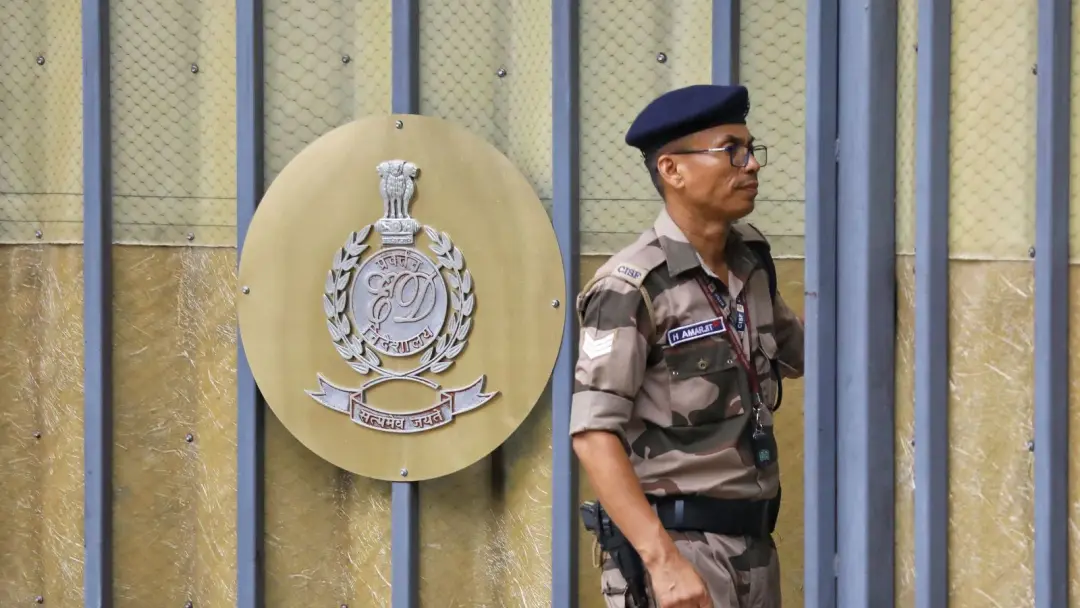
ED flags IBC frauds, large haircuts as key thrust areas
The Enforcement Directorate has identified unearthing frauds under the Insolvency and Bankruptcy Code and PMLA as a core operational thrust area. At its 36th Quarterly Conference of Zonal Officers at IIM Bengaluru on September 14-15, it cited circumvention of Section 29A, inflated related-party claims, asset stripping and disproportionately large haircuts through which promoters regain assets. The NCLT's August 25 order let Subhash Chandra settle claims of Rs 22,006.57 crore for Rs 6.25 crore; it was stayed on September 1.
Source
Indian Express — India · read the original report ↗
Desk check · compared with the source
What the desk checked (5)
- ED named unearthing IBC and PMLA frauds as a core thrust area at its 36th Quarterly Conference of Zonal Officers at IIM Bengaluru on September 14-15. — Attributed to an official ED statement in the source.
- NCLT's August 25 order allowed Subhash Chandra to settle personal insolvency by paying Rs 6.25 crore against admitted claims of Rs 22,006.57 crore; a five-member special bench stayed it on September 1. — Specific figures and dates appear in the source, referenced to NCLT orders; internally consistent.
- Between FY2021-22 and FY2025-26, 1,077 cases were resolved under IBC with Rs 2.47 lakh crore recovered, averaging about 29% of admitted claims; FY26 recovery fell to 20%. — Figures appear in the source without a named data source; year-wise percentages listed are internally consistent.
- NCLT terminated the insolvency process of Alchemist Limited on February 3 after ED's intervention. — Attributed to unnamed sources plus quoted NCLT order language; company identification is source-based, not confirmed by ED on record.
- An ED official said companies often take shelter under IBC to escape prosecution. — Quoted from an unnamed ED official.
Analysts’ view opinion
Strip away the enforcement drama and this is a story about the price of credit. The numbers in the story are the real signal: 1,077 IBC resolutions between FY22 and FY26 returned Rs 2.47 lakh crore to creditors — about 29% of admitted claims on average — and FY26 recovery fell to 20%, the lowest in five years. If deep haircuts are partly the product of collusive bids, inflated related-party claims and asset stripping rather than genuinely worthless assets, then the loss is not merely a banking write-off but a subsidy paid by depositors, taxpayers and future borrowers.
- Low recovery rates feed directly into how banks price risk, so haircuts that look like a one-time loss show up later as wider spreads and tighter credit for borrowers with no connection to the defaults.
- The Subhash Chandra case cited in the story — Rs 6.25 crore against admitted claims of Rs 22,006.57 crore, with the NCLT order stayed on September 1 — is economically striking precisely because of the ratio, whatever the legal merits ultimately prove to be.
- The story frames the core policy trade-off honestly: the government's position that the IBC is about resolution rather than recovery has real economic logic, since a revived firm preserves jobs and going-concern value that liquidation destroys.
- Banks' counter-argument in the story is equally economic — divergent valuation methods and opacity can turn a legitimate haircut into a transfer of value from creditors to the very promoters who caused the distress.
- There is a cost to the ED's approach too: more intervention applications and parallel PMLA action could lengthen resolution timelines, and in insolvency, delay itself erodes asset value and deters bidders.
What to watch — Watch whether FY26's 20% recovery rate proves to be a one-year outlier or a trend, and whether the NCLT's stayed settlement order and the ED's stated legal tension between IBC Sections 14 and 32A and PMLA attachment powers push lawmakers toward clarifying the statute.
The story establishes that the ED has flagged patterns and named thrust areas — it does not establish that any particular settlement, including Chandra's, was collusive, nor does it quantify how much of the fall in recovery rates is due to fraud rather than to genuinely impaired assets.
Deep dive
Research brief · 8 facts · 4 dates · exam-readyThe brief
Context
The Insolvency and Bankruptcy Code (IBC), 2016 resolves distressed companies through a tribunal-supervised process, with Section 29A barring defaulting promoters and related parties from bidding for their own firms. The Enforcement Directorate, which enforces the Prevention of Money Laundering Act (PMLA), says promoters are misusing insolvency to regain assets cheaply and to shield themselves from prosecution. At its 36th Quarterly Conference of Zonal Officers at IIM Bengaluru on September 14-15, the ED made "unearthing frauds under the IBC and the PMLA" its top operational thrust area. The trigger was the NCLT's August 25 order allowing Essel Group founder Subhash Chandra to settle admitted claims of Rs 22,006.57 crore for Rs 6.25 crore, stayed on September 1.
Key facts
- ED's 36th Quarterly Conference of Zonal Officers was held at IIM Bengaluru on September 14-15; "unearthing frauds under the IBC and the PMLA" headed its list of core operational thrust areas.
- NCLT's August 25 order allowed Essel Group founder Subhash Chandra to settle personal insolvency by paying Rs 6.25 crore against admitted claims of Rs 22,006.57 crore.
- On September 1, a five-member special bench of the NCLT stayed the Chandra settlement order.
- ED flagged recurring malpractices: circumvention of Section 29A, inflation of related-party claims, manipulation of the Committee of Creditors, asset stripping and artificially large haircuts.
- Between FY2021-22 and FY2025-26, 1,077 cases were resolved under the IBC with creditors recovering Rs 2.47 lakh crore — about 29% of admitted claims on average.
- Recovery fell to 20% in FY26, the lowest in five years, from 37% in FY25, 28% in FY24, 39% in FY23 and 24% in FY22.
- Conference sought at least 10 high-profile cases per region for conclusion of trial and conviction within six to eight months; cases pending beyond 10 years to go into a monitoring register for monthly review by the zone head.
- In the Alchemist Limited case, founded by former Rajya Sabha MP KD Singh, ED was probing an alleged Rs 1,842-crore public financial scandal; NCLT terminated the insolvency process on February 3 this year.
Timeline
- February 3, 2025 (stated as February 3 this year)NCLT terminates the entire insolvency process against Alchemist Limited after ED's intervention, recalling the CIRP initiation order.
- August 25NCLT allows Subhash Chandra to settle personal insolvency proceedings by paying Rs 6.25 crore against admitted claims of Rs 22,006.57 crore.
- September 1A five-member special bench of the NCLT stays the settlement order.
- September 14-15ED holds its 36th Quarterly Conference of Zonal Officers at IIM Bengaluru and lists IBC/PMLA frauds as top thrust area.
Who has a stake
- Enforcement Directorate (ED) — Says IBC misuse "often clashes with our investigations"; wants zones to file intervention applications and start independent PMLA probes against masterminds.
- National Company Law Tribunal (NCLT) — Adjudicating authority whose orders — the Chandra settlement and its stay, and the Alchemist termination — are at the centre of the dispute.
- Banks and financial creditors — Recovered only about 29% of admitted claims on average over five years; flag divergent valuation methodologies and opacity causing excessive haircuts.
- Promoters and related parties — Accused of using Section 29A circumvention, CoC manipulation and Section 32A immunity to regain control of assets and evade prosecution.
- Resolution professionals — ED zones directed to obtain from them copies of applications on preferential, undervalued, fraudulent and extortionate transactions; in Alchemist, an ex-employee was appointed RP.
- Government — Maintains the Code's primary objective is "resolution, not recovery", against criticism over deep haircuts.
Why it matters
Deep haircuts strike at the credibility of India's flagship bankruptcy reform: creditors recovered only 20% of admitted claims in FY26, the lowest in five years, while cases like Chandra's show settlements at a tiny fraction of dues. If promoters can re-acquire firms they sank and use Section 32A immunity to blunt PMLA action, both credit discipline and criminal accountability are weakened. The ED's push also raises a jurisdictional question: how the IBC moratorium and immunity coexist with the agency's attachment powers.
UPSC angle
Prelims pointers
- Section 29A, IBC: bars defaulting promoters, wilful defaulters and connected/related parties from bidding for their own company.
- Section 14, IBC: moratorium pausing legal action; Section 32A: immunity to a company's assets after an unrelated successful resolution applicant takes over.
- Section 9, IBC: route used by an operational creditor (Sai Tech Medicare Pvt Ltd) to seek CIRP against Alchemist Limited.
- ED enforces the Prevention of Money Laundering Act (PMLA), 2002; its 36th QCZO was held at IIM Bengaluru on September 14-15.
- IBC recovery rate: about 29% average over FY22-FY26; 20% in FY26, 37% in FY25, 28% in FY24, 39% in FY23, 24% in FY22.
- Government's stated position: the IBC's primary objective is "resolution, not recovery".
Mains framing
The ED's identification of IBC-PMLA frauds as a core thrust area exposes a structural fault line in India's insolvency architecture. The stated malpractices — circumvention of Section 29A, inflated related-party claims, domination of the Committee of Creditors, asset stripping and artificially large haircuts — suggest that a process designed for value-maximising resolution can be turned into a laundering and immunity device, as the NCLT found in Alchemist Limited where the CIRP was held not to have been initiated for genuine resolution. The data reinforce the concern: 1,077 resolutions between FY22 and FY26 yielded Rs 2.47 lakh crore, roughly 29% of admitted claims, with FY26 recovery slipping to 20%; the Rs 6.25 crore settlement against Rs 22,006.57 crore of admitted claims became the flashpoint. Two tensions must be reconciled: the government's position that the Code seeks "resolution, not recovery" versus banks' complaint that divergent valuation methods and opacity produce excessive haircuts; and the IBC's Section 14 moratorium and Section 32A immunity versus PMLA attachment powers. The ED's own prescriptions — scrutiny of preferential, undervalued, fraudulent and extortionate transaction applications, intervention before the tribunal, independent PMLA probes against masterminds, mandatory valuation of attached properties by government-approved valuers, and time-bound trials — point to a way forward, but durable reform will require clearer valuation standards, tighter related-party screening and statutory clarity on the IBC-PMLA overlap.
Key terms
- IBC (Insolvency and Bankruptcy Code)
- India's insolvency law under which distressed companies are resolved; government says its primary objective is resolution, not recovery.
- Haircut
- The portion of admitted claims that creditors forgo; average recovery under the IBC was about 29% of claims over FY22-FY26.
- CIRP (Corporate Insolvency Resolution Process)
- The tribunal-supervised insolvency process for a company; in Alchemist's case it was initiated on an operational creditor's Section 9 plea and later terminated.
- Section 32A, IBC
- Grants immunity to a company's assets once a new, unrelated successful resolution applicant takes over — alleged to be misused to frustrate PMLA proceedings.
- Committee of Creditors (CoC)
- Body of creditors that decides on resolution plans; ED flagged its manipulation and, in Alchemist, its domination by accused group entities.
- QCZO (Quarterly Conference of Zonal Officers)
- ED's periodic review meeting of zonal officers; the 36th edition was held at IIM Bengaluru on September 14-15.
Practice questions
- Large haircuts under the IBC are less a failure of law than of valuation and screening. Critically examine in the light of recent recovery data and the Enforcement Directorate's findings.
- Discuss the legal tension between the moratorium under Section 14 and immunity under Section 32A of the IBC on one hand, and attachment powers under the PMLA on the other. How should this conflict be resolved?
- Does the IBC's stated goal of "resolution, not recovery" adequately protect creditors' interests? Substantiate with reference to recovery trends between FY22 and FY26.
Grounded only in the source report — figures and dates are the source's, not inferred.