
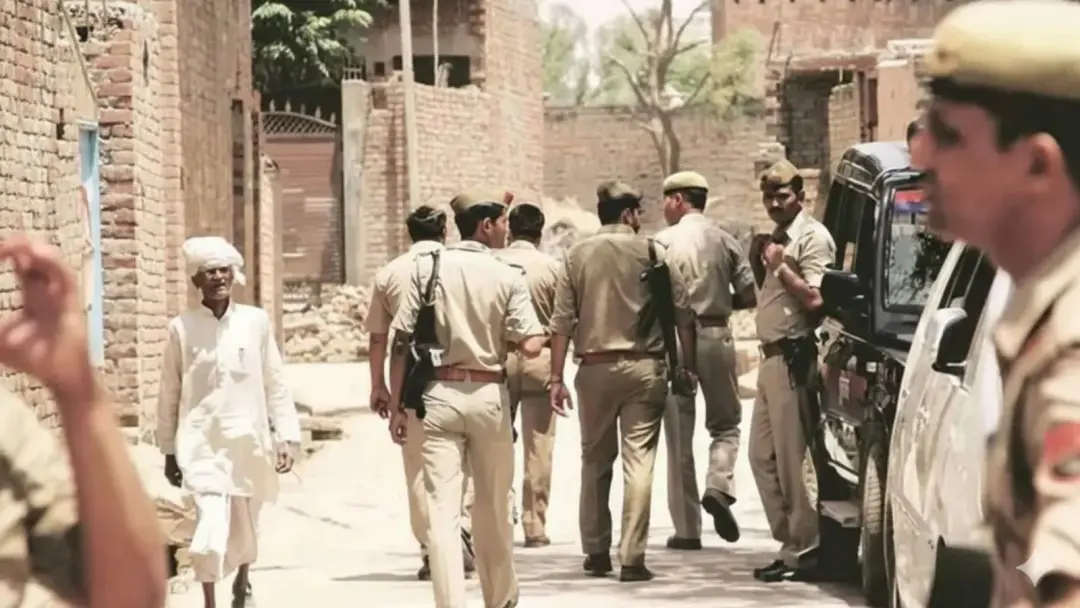
Two arrested in Lucknow over EMI recovery blood donation allegation
Lucknow police on Thursday arrested two private finance company employees, Aniket Singh and Sushant Sharma, accused of forcing a youth to donate blood and work as domestic help to recover a pending mobile phone loan EMI. A Rs 25,000 reward was announced for absconding employee Shubham Singh. DCP (South) Mohammad Mushtaque said the victim, Newal, bought a Rs 21,500 phone in late July on a Rs 2,799 monthly EMI, and was taken away on September 8 and detained over four days.
Source
Indian Express — Cities · read the original report ↗
Desk check · compared with the source
What the desk checked (5)
- Two finance company employees, Aniket Singh and Sushant Sharma, were arrested on Thursday. — Attributed to Lucknow DCP (South) Mohammad Mushtaque in the source.
- A Rs 25,000 reward was announced for absconding employee Shubham Singh. — Figure appears in source, attributed to police.
- Victim Newal bought a phone for Rs 21,500 with a Rs 2,799 monthly EMI for one year. — Figures appear in source, credited to police investigation.
- Newal was forced to donate one unit of blood and work as domestic help for over four days. — Allegation based on police account of the mother's complaint; not independently verified.
- Police will act against the blood bank and finance company if evidence is found. — Attributed to the DCP as a stated intention, not a completed action.
Analysts’ view opinion
This is not merely a loan-recovery dispute — if the allegations hold up, they fall squarely in the territory of serious criminal offences touching personal liberty and bodily integrity. Allegedly taking a man from his home, confining him for over four days, pressuring him to give blood and making him work as domestic help goes far beyond any civil debt obligation. Under Indian law no loan agreement gives a lender or a recovery agent coercive power over a borrower's person; dues can only be pursued through courts or legally permitted recovery channels.
- The core legal principle is simple: an unpaid EMI is a civil liability, and detaining a person or extracting labour is not a lawful route to recovering it.
- The procedural trail matters — the mother's complaint about the September 8 incident, an FIR registered on September 14, and police reliance on call detail records and scientific evidence to identify the accused.
- A Rs 25,000 reward on the absconding third accused, followed by remand, bail applications and eventual filing of a charge sheet, are the ordinary next steps in this kind of case.
- Sanctioning a loan to a person with no stated source of income, and the absence of control over agents' conduct, raise regulatory questions about recovery practices alongside the criminal inquiry.
- However grave the allegations, the arrested men retain the presumption of innocence and the right to a fair trial — guilt is for a court to determine.
What to watch — With the DCP saying action will follow against the blood bank and the finance company if evidence emerges, watch whether liability widens from individual agents to institutions, and which specific offences the charge sheet ultimately invokes.
Everything here rests on the police account at an early stage; the accused persons' version, any response from the finance company or blood bank, and the exact sections invoked in the FIR are not established in this story.
Deep dive
Research brief · 8 facts · 5 dates · exam-readyThe brief
Context
Lucknow police have arrested two employees of a private finance company for allegedly coercing a jobless youth into donating blood and working as domestic help to recover an unpaid EMI on a mobile phone loan. The victim, Newal, of Rajaramkhera village in the Nigohan police station area, had bought a phone for Rs 21,500 in late July, financed by a company based in Gomti Nagar at a monthly EMI of Rs 2,799 for one year. With no job or income, he could not pay even the first instalment. The case, registered on his mother's complaint, has raised questions about lending without income checks and about coercive recovery practices.
Key facts
- Two private finance company employees, Aniket Singh and Sushant Sharma, were arrested by Lucknow Police on Thursday.
- A reward of Rs 25,000 has been announced for absconding employee Shubham Singh.
- The victim, Newal, bought a mobile phone for Rs 21,500 from a local shop in late July.
- The loan was financed by a private company in Gomti Nagar at a monthly EMI of Rs 2,799 for one year.
- Newal has no job or source of income, yet the shop and finance company employees financed the loan; he could not pay even the first EMI.
- Recovery agents allegedly took Newal from his home on September 8, forced him to donate one unit of blood at a blood bank and collected the money.
- He was allegedly detained at Shubham's house for over four days and made to work as domestic help.
- One month's EMI was allegedly recovered from Newal's brother Rajkumar before his release; a case was lodged on September 14.
Timeline
- July endNewal buys a mobile phone worth Rs 21,500 from a local shop, financed at Rs 2,799 monthly EMI for one year.
- September 8Recovery agents Aniket and Shubham visit Newal's house and take him away; he is allegedly forced to donate one unit of blood.
- After September 8, over four daysNewal allegedly detained at Shubham's house and made to work as a domestic help; one month's EMI recovered from his brother Rajkumar before release.
- September 14Case lodged on the mother's complaint; investigation initiated.
- Thursday (as reported)Aniket Singh and Sushant Sharma arrested; Rs 25,000 reward announced on absconding Shubham Singh.
Who has a stake
- Newal, the victim — Jobless borrower allegedly forced to donate blood, detained over four days and made to work as domestic help over an unpaid Rs 2,799 EMI.
- Newal's mother and brother Rajkumar — The mother's complaint triggered the FIR; Rajkumar allegedly paid one month's EMI to secure his brother's release.
- Lucknow Police / DCP South Mohammad Mushtaque — Investigating agency; used call details and scientific evidence to identify accused, made arrests and announced reward.
- Accused finance company employees Aniket Singh, Sushant Sharma, Shubham Singh — Two arrested; Shubham absconding with a Rs 25,000 reward on him.
- The private finance company (Gomti Nagar) and mobile shop — Financed a loan to a person with no income; police say action will follow if evidence is found.
- The blood bank — Police say action will be initiated against it too if any evidence is found in the coerced blood donation.
Why it matters
The case shows how small-ticket consumer loans, given without checking a borrower's income, can end in coercion, illegal detention and even forced blood donation. It also puts the spotlight on outsourced recovery agents and the accountability of the lender and the blood bank, both of whom the police say may face action if evidence emerges.
UPSC angle
Prelims pointers
- EMI: Equated Monthly Instalment; here Rs 2,799 a month for one year on a Rs 21,500 phone.
- Case registered in Nigohan police station area, Lucknow; victim from Rajaramkhera village.
- Finance company located in Gomti Nagar, Lucknow.
- Lucknow DCP (South) Mohammad Mushtaque briefed the media on the case.
- Reward of Rs 25,000 announced on absconding accused Shubham Singh.
- Police used call detail records and scientific evidence to identify the accused.
Mains framing
The Lucknow case illustrates the risks embedded in easy, small-ticket consumer financing: a jobless youth was given a one-year loan of Rs 21,500 at Rs 2,799 a month, defaulted on the very first instalment, and was then allegedly picked up by recovery agents, made to donate a unit of blood so the payment could be pocketed, and detained for over four days as domestic help until his brother paid one month's EMI. The causes lie in credit disbursal without income verification at the point of sale, and in recovery being pushed onto field agents whose conduct escapes scrutiny until a criminal complaint is filed. The implications are grave: coercive recovery converts a civil default into wrongful confinement and bodily exploitation, and a blood bank's involvement raises questions about consent in donation. The way forward, as indicated by the police stance in this story, is accountability beyond the individual agents, with action against the finance company and the blood bank if evidence is found, alongside diligent verification of borrower capacity before lending; wider policy prescriptions are not stated in the source.
Key terms
- EMI
- Equated Monthly Instalment, the fixed monthly repayment on a loan; here Rs 2,799 for twelve months.
- Recovery agent
- Person engaged to collect overdue loan dues; in this case employees of the private finance company.
- DCP (South)
- Deputy Commissioner of Police heading the southern zone of Lucknow Police; Mohammad Mushtaque in this case.
- Absconding accused
- A named accused evading arrest; here Shubham Singh, with a Rs 25,000 reward announced on him.
- Call detail records
- Phone call data used by police, along with other scientific evidence, to identify the accused.
Practice questions
- Coercive loan recovery practices turn civil defaults into criminal offences. Examine with reference to the Lucknow EMI recovery case.
- Discuss the responsibility of lenders and point-of-sale financiers in assessing borrower repayment capacity in small-ticket consumer credit.
- What safeguards should govern voluntary blood donation, and how should institutions be held accountable when consent is compromised?
Grounded only in the source report — figures and dates are the source's, not inferred.