
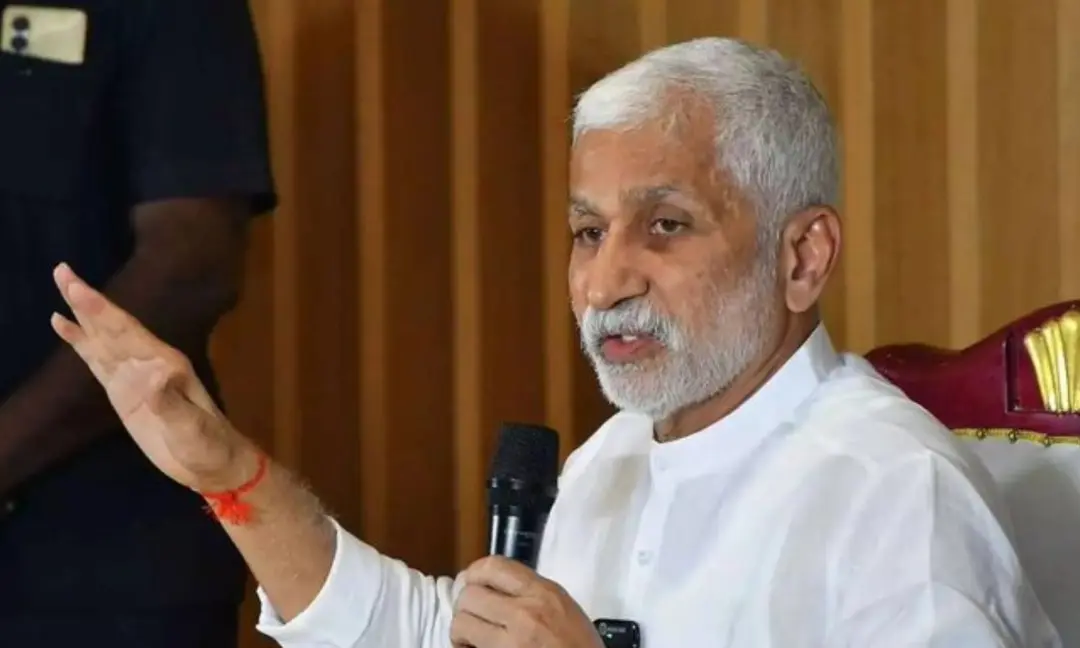
Vijayasai Reddy criticises TDP over social media influencers
YSRCP leader Vijayasai Reddy has criticised the TDP over the use of social media influencers. He asked why paid influencers were needed for campaigning when the TDP claims to have a strong cadre. If government schemes were genuinely benefiting people, the experience of party leaders and publicity by grassroots workers should suffice, he said. He reportedly recalled that TDP leaders had raised similar criticism of pro-government social media posts during YSRCP rule.
Source
ఆంధ్రప్రదేశ్ వార్తలు — Andhra Pradesh · read the original report ↗
Desk check · some claims need care
What the desk checked (4)
- YSRCP leader Vijayasai Reddy criticised the TDP over social media influencers. — Attributed to Vijayasai Reddy; no direct quote, date or venue given in source.
- TDP is using paid influencers to promote government schemes. — Stated as the premise of his questions; no evidence or source cited.
- Reddy questioned why a party claiming strong cadre needs paid influencers. — Appears consistently in the source as his statement.
- Reddy referred to TDP's earlier criticism of pro-government posts during YSRCP rule. — Source hedges with 'it is learnt', indicating second-hand sourcing.
Analysts’ view opinion
This is less a policy dispute than a battle over narrative. With YSRCP out of power and its ground presence diminished, Vijayasai Reddy is turning the TDP's own past criticism back on the ruling party — a low-cost, high-visibility political move. The question "if your cadre is strong, why pay influencers?" is crafted to trap the ruling party in its own argument, though the attack has limits, since paid digital promotion is now standard practice across major parties.
- For an opposition party, this is a cheap way to generate debate while shifting attention onto how government schemes are being publicised.
- Invoking the TDP's earlier attacks on YSRCP's social media machinery is a deliberate double-standards trap for the ruling side.
- The line "if people trust the schemes, why the extra campaign?" signals a wider aim of casting doubt on the impact of welfare delivery itself.
- The natural TDP counter is that digital outreach is unavoidable in modern campaigning — and that YSRCP ran its own social media operation in office.
- As reported, this remains a one-sided charge; whether it becomes a real political issue depends on how, or whether, the TDP responds.
What to watch — Watch whether the TDP ignores the charge or counter-attacks by pointing to social media campaigning during YSRCP's own tenure.
The story does not establish whether, to what extent, or with whose money the TDP is actually using paid influencers — this is one leader's allegation.
Deep dive
Research brief · 8 facts · 3 dates · exam-readyThe brief
Context
In Andhra Pradesh, YSRCP leader Vijayasai Reddy has attacked the ruling TDP over the use of paid social media influencers to publicise government programmes and welfare schemes. He argues that a party claiming a strong grassroots cadre should not need hired influencers, and that TDP leaders themselves had criticised pro-government social media campaigns when YSRCP was in power. The exchange reflects how social media has become a central campaign platform for major parties, with paid promotions now themselves a subject of political debate.
Key facts
- YSRCP leader Vijayasai Reddy has publicly criticised the TDP over the issue of social media influencers being used for publicity.
- He questioned why paid influencers are needed for social media campaigning when the TDP claims to have a strong cadre.
- He asked why influencers must be specially engaged to explain government programmes and schemes if the party has a strong grassroots structure.
- He argued that if welfare schemes were genuinely benefiting people, TDP leaders' own experiences and grassroots workers' publicity should be enough.
- He said the need for special influencer-driven publicity arises only if people lack trust in government schemes.
- Vijayasai Reddy is reported to have recalled criticism by TDP leaders of social media campaigning and pro-government posts during the YSRCP government's tenure.
- He remarked that the same allegations once made against YSRCP now have to be put to the TDP.
- The source notes social media has become a key platform for all major parties to convey policies, government programmes and political activities.
Timeline
- During the earlier YSRCP government's tenureTDP leaders criticised social media campaigning and pro-government posts, according to Vijayasai Reddy.
- Present (TDP in power)Vijayasai Reddy questions the ruling party's use of paid social media influencers to publicise schemes.
- After the remarksThe question of paid promotions and influencer use triggers discussion in political circles.
Who has a stake
- Vijayasai Reddy (YSRCP leader) — Seeking to put the ruling party on the defensive by questioning the credibility of its scheme publicity.
- Telugu Desam Party (ruling party) — Its claim of a strong grassroots cadre and the public credibility of its welfare schemes are being questioned.
- YSRCP — Uses the issue to counter past TDP attacks on its own social media campaigning while in government.
- Social media influencers — Their role in paid political promotion is now itself a matter of political controversy.
- Andhra Pradesh voters — Depend on credible information about government programmes and welfare schemes rather than paid publicity.
Why it matters
Paid influencer campaigns blur the line between political publicity and independent opinion, making it harder for voters to judge whether welfare schemes are actually working. The row also shows how both major Andhra parties adopt identical criticisms depending on who holds power, turning social media strategy itself into an electoral issue.
UPSC angle
Prelims pointers
- Vijayasai Reddy is a YSRCP leader; his criticism targets the TDP over paid social media influencers.
- The dispute is over publicity for government programmes and welfare schemes in Andhra Pradesh.
- Vijayasai Reddy's core argument: a strong cadre and grassroots workers should make paid influencers unnecessary.
- He recalled TDP leaders criticising pro-government social media posts during YSRCP rule.
- The source states social media is now a key platform for all major parties' campaigns.
- Specific figures, dates or amounts relating to influencer payments are not stated in the source.
Mains framing
The controversy raised by YSRCP's Vijayasai Reddy over the TDP's alleged use of paid social media influencers illustrates a wider shift in Indian political communication: from cadre-based, face-to-face mobilisation to platform-mediated, professionally managed publicity. His argument is essentially about authenticity and accountability — if welfare schemes deliver real benefits, word-of-mouth from beneficiaries, leaders' experience and grassroots workers should suffice, and reliance on paid promotion signals a trust deficit. The counter-context, as the source notes, is that every major party now uses social media to convey policies and government programmes, making influencer engagement a competitive necessity rather than an admission of failure. Notably, both parties have made the same charge from opposite sides of power, suggesting the issue is less about principle than positional advantage. The way forward lies in transparency norms for political content — clear disclosure of paid political promotion and sponsored posts — so that voters can distinguish independent commentary from campaign material, while parties retain the option of strengthening genuine grassroots feedback channels. The source does not describe any specific regulatory measure.
Key terms
- YSRCP
- Yuvajana Sramika Rythu Congress Party, the Andhra Pradesh party whose leader Vijayasai Reddy made the criticism.
- TDP
- Telugu Desam Party, the party currently in power in Andhra Pradesh being criticised in this story.
- Paid influencers
- Social media personalities compensated to promote a party's or government's messaging to their followers.
- Cadre
- A party's trained, committed workers who campaign and mobilise voters at the grassroots level.
- Pro-government posts
- Social media content favourable to the ruling party, whose sponsorship and authenticity are contested here.
Practice questions
- Has social media publicity weakened the role of the traditional party cadre in Indian politics? Discuss with reference to the debate over paid political influencers.
- Should paid political promotion by social media influencers be subject to mandatory disclosure? Examine the arguments for and against.
- Critically examine how ruling and opposition parties in India adopt contradictory positions on political publicity depending on who is in power, using the Andhra Pradesh influencer row as an example.
Grounded only in the source report — figures and dates are the source's, not inferred.