
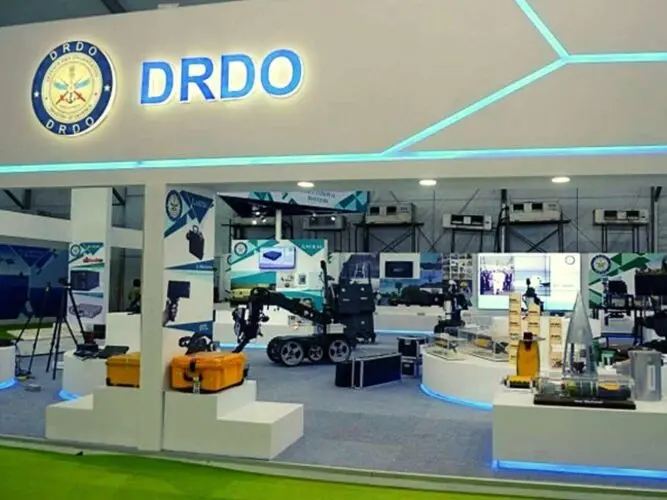
DRDO ties up with Zero mK India for quantum computing hardware
DRDO has signed an agreement with Rajasthan-based startup Zero mK India Private Limited to develop an indigenous 20 mK-class dilution refrigerator, a cryogenic system that creates the ultra-low temperatures needed to operate and test quantum computing platforms. It is the first high-value agreement under the ₹500-crore Technology Development Fund corpus approved by Defence Minister Rajnath Singh. Aligned with the National Quantum Mission, the project is expected to reduce import dependence. DRDO said the partnership could model future private-industry collaborations.
Source
DRDO · read the original report ↗
Desk check · compared with the source
What the desk checked (5)
- DRDO signed its first high-value Technology Development Fund agreement with Rajasthan-based Zero mK India Private Limited. — Stated in source as fact; attributed to DRDO announcement, no agreement value disclosed.
- The project covers an indigenous 20 mK-class dilution refrigerator for quantum computing. — Technical specification appears directly in source text.
- The TDF corpus of ₹500 crore was approved by Defence Minister Rajnath Singh. — Figure appears in source; attributed to the Defence Minister's approval.
- DRDO said the partnership could serve as a model for future collaborations with private industry. — Attributed to DRDO; paraphrased, not a direct quote.
- The initiative is aligned with the National Quantum Mission and expected to reduce import dependence. — Presented in source as expectation, not a verified outcome.
Analysts’ view opinion
The real bottleneck in quantum computing is not just qubit design but the ultra-low-temperature plumbing that keeps qubits alive. A 20 mK-class dilution refrigerator is a chokepoint component supplied globally by only a handful of vendors, so DRDO's decision to build one domestically is supply-chain thinking rather than a race for qubit counts. That the first high-value agreement under the ₹500-crore TDF corpus went to a startup also says something about how India is routing deep-tech money.
- Quantum processors cannot be operated or tested without extreme cryogenics, which makes refrigeration hardware a gating factor for all qubit research.
- Dependence on imported dilution refrigerators carries cost, lead-time and servicing exposure; a domestic system could ease all three.
- Local availability of the equipment and local support could speed up experimental cycles for research labs, universities and private quantum startups.
- Its alignment with the National Quantum Mission suggests this is not a standalone defence project but part of building a broader hardware base.
- DRDO framing a startup contract as a template for future private partnerships is notable, though the template's value will be judged on delivery.
What to watch — Watch for when a first prototype appears, what cooling performance and specifications it actually achieves, and whether more deep-tech awards follow under the TDF route.
The story establishes only that an agreement has been signed — it does not set out timelines, contract value, technical targets, manufacturing scale, or whether the unit will match imported systems on performance.
Deep dive
Research brief · 8 facts · 3 dates · exam-readyThe brief
Context
Quantum computers need extremely low operating temperatures, close to absolute zero, which are produced by specialised cryogenic equipment called dilution refrigerators. India currently relies largely on imported cryogenic infrastructure for such work. The Defence Research and Development Organisation (DRDO) has now signed an agreement with Rajasthan-based startup Zero mK India Private Limited to develop an indigenous 20 mK-class dilution refrigerator. It is the first high-value agreement under DRDO's ₹500-crore Technology Development Fund (TDF) corpus approved by Defence Minister Rajnath Singh.
Key facts
- DRDO has signed its first high-value Technology Development Fund (TDF) agreement with Rajasthan-based startup Zero mK India Private Limited.
- The project covers development of an indigenous 20 mK-class dilution refrigerator, a cryogenic system producing ultra-low temperatures for quantum platforms.
- The agreement is the first high-value award under the ₹500-crore TDF corpus approved by Defence Minister Rajnath Singh.
- The TDF corpus is meant to promote deep-tech and advanced technology development in India.
- The initiative is aligned with the National Quantum Mission.
- Local development is expected to reduce India's dependence on imported cryogenic infrastructure.
- DRDO said the partnership could serve as a model for future DRDO-private industry collaborations.
- Present at the event were the Defence Secretary, Secretary of the Department of Defence R&D and DRDO Chairman Rajesh Kumar Singh, and senior officials from DG MCC, DG TM and SSPL.
Timeline
- Date not stated in the sourceDefence Minister Rajnath Singh approves a ₹500-crore corpus for the Technology Development Fund to promote deep-tech development.
- Date not stated in the sourceDRDO signs its first high-value TDF agreement with Zero mK India Private Limited for a 20 mK-class dilution refrigerator.
- After signingRajnath Singh congratulates DRDO, industry partners and stakeholders, expressing confidence in future emerging-technology collaborations.
Who has a stake
- DRDO — Building indigenous strategic technology capability and testing a model for collaboration with private industry.
- Zero mK India Private Limited (Rajasthan-based startup) — Receives the first high-value TDF agreement to develop the 20 mK-class dilution refrigerator.
- Ministry of Defence / Defence Minister Rajnath Singh — Approved the ₹500-crore TDF corpus; seeks deep-tech development and wider industry participation in defence R&D.
- National Quantum Mission — Initiative is aligned with the Mission; indigenous cryogenic hardware supports its quantum technology goals.
- India's quantum research ecosystem (labs, universities, startups) — Access to domestically made ultra-low-temperature hardware instead of imports for operating and testing quantum platforms.
- DRDO labs and offices - SSPL, DG MCC, DG TM — Senior officials were present; involved in the technical and management oversight of such programmes.
Why it matters
Quantum computing hardware cannot function without ultra-low-temperature cryogenic systems, and India has depended on imports for this critical infrastructure. An indigenous 20 mK-class dilution refrigerator would strengthen the hardware base of India's quantum ecosystem and reduce a strategic supply vulnerability. It also signals a shift in defence R&D towards funding startups through the TDF route.
UPSC angle
Prelims pointers
- Technology Development Fund (TDF) is a DRDO route to fund industry; a ₹500-crore corpus was approved by Defence Minister Rajnath Singh.
- The DRDO-Zero mK India project is for a 20 mK-class dilution refrigerator, used to create ultra-low temperatures for quantum computing.
- Zero mK India Private Limited is a Rajasthan-based startup.
- The initiative is aligned with the National Quantum Mission.
- Rajesh Kumar Singh is Defence Secretary, Secretary of the Department of Defence R&D and DRDO Chairman (as stated in the source).
- DRDO bodies named in the source: DG MCC, DG TM and SSPL.
Mains framing
India's quantum technology ambitions, framed by the National Quantum Mission, depend not only on algorithms and qubits but on enabling hardware - above all cryogenic systems that reach millikelvin temperatures, which India has largely imported. The DRDO agreement with Zero mK India Private Limited for an indigenous 20 mK-class dilution refrigerator addresses this hardware gap, and is significant as the first high-value award under the ₹500-crore Technology Development Fund corpus approved by the Defence Minister, showing how public defence R&D can channel funds to a startup working on deep tech. The implications are threefold: reduced import dependence in a strategically sensitive segment; a strengthened domestic base for quantum computing, advanced cryogenics and strategic research; and a template that DRDO itself says could model future collaborations with private industry. The way forward, as indicated in the source, lies in scaling such DRDO-industry partnerships across emerging technology sectors, so that indigenous capability extends from research prototypes to the supporting hardware ecosystem.
Key terms
- Dilution refrigerator
- A specialised cryogenic system that creates the ultra-low temperatures needed to operate, test and advance quantum computing platforms.
- 20 mK-class
- Denotes cooling capability down to about 20 millikelvin, near absolute zero, the temperature range required for quantum hardware.
- Technology Development Fund (TDF)
- A DRDO funding route for industry-led technology development, with a ₹500-crore corpus approved by the Defence Minister for deep tech.
- National Quantum Mission
- India's national programme on quantum technology, with which this indigenous cryogenic hardware initiative is aligned.
- Zero mK India Private Limited
- Rajasthan-based startup that signed DRDO's first high-value TDF agreement to build the indigenous dilution refrigerator.
- SSPL
- A DRDO establishment whose senior officials attended the signing; full expansion not stated in the source.
Practice questions
- Why is indigenous cryogenic hardware critical to India's quantum technology ambitions, and how does the DRDO-Zero mK India agreement address this need?
- Examine the role of the Technology Development Fund in enabling startup participation in India's defence and deep-tech research.
- Discuss how DRDO-private industry partnerships can reduce strategic import dependence in emerging technology sectors, with reference to the National Quantum Mission.
Grounded only in the source report — figures and dates are the source's, not inferred.