
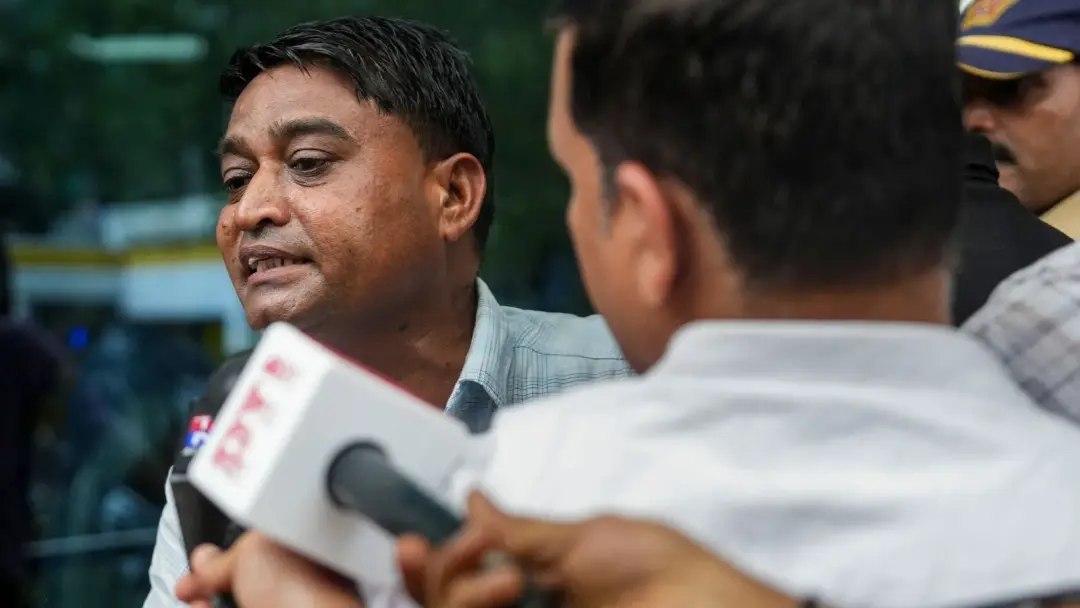
Lawyer alleges Sahil Wakode's parents detained en route to IIT Bombay
The parents of IIT Bombay student Sahil Wakode were detained by Mumbai Police in Bhandup on Thursday morning while travelling to the Powai campus, their lawyer Nikhil Kamble alleged. He said they were held at the police station for about an hour, released, and then taken to a government guest house to meet SC/ST Commission officials. Police said permission was given for a protest at Azad Maidan. Sahil died by suicide on September 18; his parents allege caste discrimination.
Source
Indian Express — Cities · read the original report ↗
Desk check · some claims need care
What the desk checked (5)
- Sahil Wakode's parents were detained in Bhandup on Thursday morning while heading to the IIT Bombay campus in Powai. — Attributed to the family's lawyer Nikhil Kamble; not independently confirmed in the source.
- The couple was held at Bhandup police station for about an hour and later released. — Attributed to lawyer Kamble; duration is approximate in the source.
- Police had granted permission for the protest at Azad Maidan and were persuading the parents to shift the venue. — Attributed to an unnamed police official.
- Sahil, a second-year BTech student, died by suicide on September 18 and his parents allege caste-based discrimination. — Date and allegation appear in the source; the discrimination claim is the parents' allegation.
- Powai Police registered an FIR naming Professor Suryanarayana Doolla, the exam invigilator, based on the father's complaint. — Stated in source as police action on the father's complaint; no charge proven.
Analysts’ view opinion
What began as a campus tragedy is turning into a test of caste politics. The allegation that the parents were detained — while police say they were trying to move the protest to Azad Maidan — is politically expensive for the government, because it feeds an image of a Dalit family being silenced. Taking them to meet SC/ST Commission officials looks like an attempt to channel anger into institutional processes; police can argue law and order, but the optics work against them.
- The venue fight (IIT gate versus Azad Maidan) is not mere logistics — a protest outside an elite institution carries national resonance, which is why shifting it matters so much.
- A Dalit student's death combined with caste-discrimination allegations is a combination that historically escalates campus politics fast, and opposition parties and Dalit organisations are likely to take it up.
- Even an hour-long detention, whatever its justification, hands critics a sharp line about the state obstructing a grieving family.
- The demand for immediate arrests and the warning of a hunger strike put a clock on the government: a slow investigation raises the political price.
- Bringing in the SC/ST Commission could cut both ways for the government — it may signal sensitivity, or be criticised as a manoeuvre to divert a street protest.
What to watch — Watch who turns up at the Azad Maidan protest — the presence of Dalit organisations and opposition leaders would decide whether this becomes a Maharashtra-wide political issue.
The story does not establish the legal basis of the detention, whether the caste-discrimination allegations are true, or what role the professor named in the FIR played — these remain allegations under investigation.
Deep dive
Research brief · 8 facts · 5 dates · exam-readyThe brief
Context
Sahil Wakode, a second-year BTech student at IIT Bombay, died by suicide on September 18. His parents allege he faced caste-based discrimination on campus, and an FIR has been registered at Powai Police Station naming a professor who was the invigilator during a mid-semester exam in which Sahil was allegedly found using a phone. On Thursday morning, as the parents travelled to the Powai campus to protest, they were detained by Mumbai Police at Bhandup, their lawyer Nikhil Kamble alleged, while police said protest permission had been granted only for Azad Maidan.
Key facts
- Sahil Wakode, a second-year BTech student at IIT Bombay, died by suicide on September 18.
- His parents were detained by Mumbai Police in Bhandup on Thursday morning while travelling to the IIT Bombay campus in Powai, lawyer Nikhil Kamble alleged.
- Kamble said the couple was held at Bhandup police station for almost an hour and released later.
- The parents were then taken to the government's Sahyadri guest house to meet officials of the Scheduled Castes and Scheduled Tribes Commission.
- A police official said the parents had permission to protest at Mumbai's Azad Maidan but were insisting on protesting outside the IIT Bombay campus.
- Powai Police registered an FIR, based on the father's complaint, naming Professor Suryanarayana Doolla, the invigilator for the exam where Sahil was allegedly found using a phone.
- The parents have demanded immediate arrest of those they hold responsible; father Ravindra Wakode had warned of a hunger strike outside the IIT Bombay gate if no arrest was made.
- On Wednesday, Sahil's parents alleged that they were forcibly moved out of Mumbai.
Timeline
- Week before the death (as stated in source: 'last week')Sahil was allegedly found using a phone during a mid-semester exam invigilated by Professor Suryanarayana Doolla.
- September 18Sahil Wakode, second-year BTech student at IIT Bombay, died by suicide.
- After the deathPowai Police registered an FIR on the father's complaint naming Professor Suryanarayana Doolla.
- WednesdaySahil's parents alleged they were forcibly moved out of Mumbai.
- Thursday morningParents detained at Bhandup police station for about an hour while heading to Powai; later released and taken to Sahyadri guest house to meet SC/ST Commission officials; they were to protest at Azad Maidan.
Who has a stake
- Ravindra Wakode and Sahil's mother — Seeking arrests over their son's death; allege caste discrimination, forced removal from Mumbai and detention en route to campus.
- Mumbai Police (Bhandup and Powai police stations) — Managing protest venue and law and order; accused of detaining the parents; investigating the FIR.
- IIT Bombay — Institution where the student studied and where caste discrimination is alleged; site the parents wanted to protest outside.
- Professor Suryanarayana Doolla — Named in the FIR as the invigilator of the exam in which Sahil was allegedly found using a phone.
- Scheduled Castes and Scheduled Tribes Commission — Its officials met the parents at the Sahyadri guest house; mandated to examine safeguards for SC/ST persons.
- Nikhil Kamble, lawyer — Represents the family and has alleged the detention and restriction on their movement to Powai.
Why it matters
The case raises questions about caste-based discrimination in elite higher-education institutions and about how the state handles protest by a bereaved family. The parents' allegations of being forcibly moved out of Mumbai and detained while heading to the campus put the balance between the right to protest and police venue restrictions under scrutiny, with the SC/ST Commission now drawn in.
UPSC angle
Prelims pointers
- Sahil Wakode was a second-year BTech student at IIT Bombay (Powai campus); he died by suicide on September 18.
- FIR registered by Powai Police names Professor Suryanarayana Doolla, exam invigilator.
- Parents detained at Bhandup police station for about an hour on Thursday morning.
- Azad Maidan in Mumbai was the police-permitted protest venue.
- Sahyadri guest house is the government guest house where SC/ST Commission officials met the parents.
- The family's lawyer is Nikhil Kamble; the father is Ravindra Wakode.
Mains framing
The death of IIT Bombay student Sahil Wakode on September 18 and his parents' allegation of caste-based discrimination on campus point to a recurring institutional failure: elite technical institutions where students from Scheduled Caste backgrounds report exclusion, and grievance mechanisms that families do not trust enough to await their outcome. The immediate trigger here was an exam incident in which Sahil was allegedly found with a phone, leading to an FIR against the invigilating professor on the father's complaint. Equally significant is the state's response: the parents say they were forcibly moved out of Mumbai on Wednesday and were detained at Bhandup for about an hour on Thursday while going to Powai, with police maintaining that permission had been granted only for Azad Maidan. This frames two issues for an answer — the adequacy of anti-discrimination and mental-health safeguards inside campuses, and the proportionality of police restrictions on peaceful protest by aggrieved families. A way forward suggested by the facts in the source is time-bound investigation of the FIR, a substantive inquiry by the Scheduled Castes and Scheduled Tribes Commission whose officials met the parents, and transparent, non-coercive handling of protest permissions rather than detention.
Key terms
- Detention
- Police holding a person at a station for a period; here the parents were held at Bhandup police station for about an hour before release.
- FIR
- First Information Report — the police record of a cognizable offence; one was registered at Powai on the father's complaint.
- SC/ST Commission
- Commission for Scheduled Castes and Scheduled Tribes; its officials met Sahil's parents at the Sahyadri guest house.
- Azad Maidan
- Designated protest ground in Mumbai where police said the parents had permission to demonstrate.
- Sahyadri guest house
- Maharashtra government guest house in Mumbai, used here for the meeting between the parents and SC/ST Commission officials.
- Invigilator
- Faculty member supervising an examination; Professor Suryanarayana Doolla was the invigilator in the mid-semester exam cited in the FIR.
Practice questions
- Discuss the institutional measures needed to address allegations of caste-based discrimination in higher educational institutions, using the IIT Bombay case as a reference.
- Examine the limits on the right to peaceful protest in India. Can restriction of a protest to a designated venue justify detention of protesters?
- What is the mandate of the Commission for Scheduled Castes and Scheduled Tribes, and how effective can it be in cases involving campus discrimination?
Grounded only in the source report — figures and dates are the source's, not inferred.