
Tiger movement reported in Koutala mandal, residents alarmed
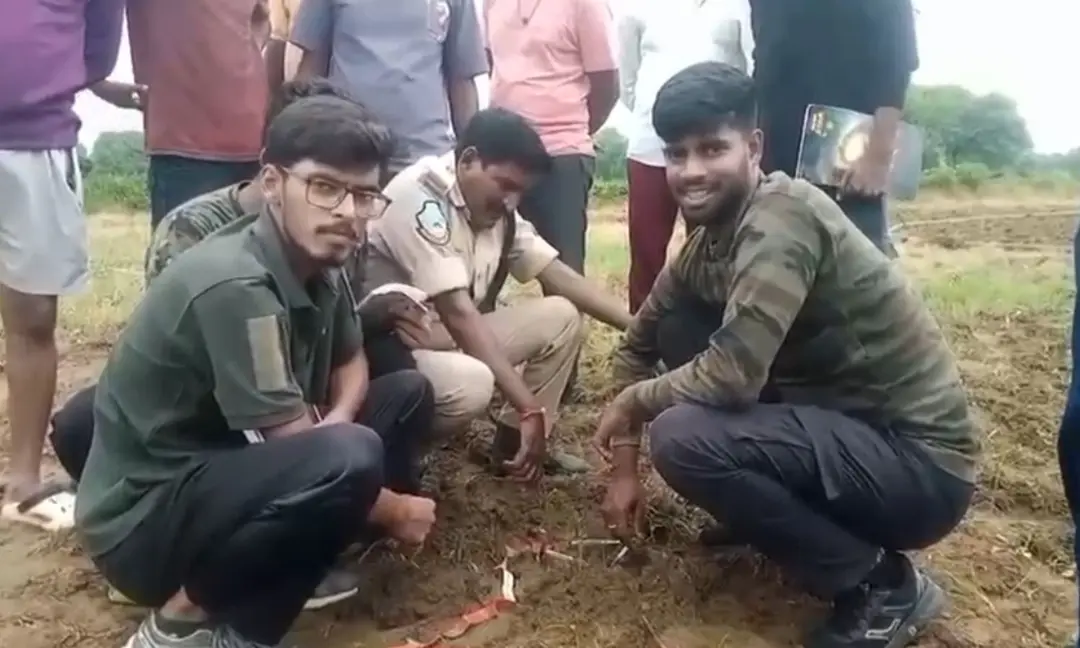
Residents of Koutala mandal in Kumuram Bheem Asifabad district say a tiger has been moving in the area for the past three days. Farmers and the local sarpanch found pugmarks in farmland on the outskirts of Gundayipeta village and informed the forest department. On the orders of Sirpur forest range officer Srinivas, FSO Tulsidas Naik inspected the fields and confirmed the pugmarks. Officials said traces indicated movement from Tatipalli towards Gundayipeta, and advised alertness in the Pranahita and Pen Ganga areas.
Source
Kumuram Bheem Asifabad — వార్తలు · read the original report ↗
Desk check · compared with the source
What the desk checked (5)
- A tiger has been moving in Koutala mandal of Kumuram Bheem Asifabad district for the past three days, alarming residents. — Stated in source without a named source; attributed generally to local information.
- Farmers and the local sarpanch found tiger pugmarks in fields near Gundayipeta and informed forest officials. — Attributed in source to farmers and the village sarpanch.
- FSO Tulsidas Naik inspected the fields on the orders of Sirpur forest range officer Srinivas and identified pugmarks. — Attributed to named officials in the source.
- Officials said there were traces of the tiger moving from Tatipalli towards Gundayipeta. — Attributed to forest department officials.
- Forest officials advised farmers and residents in the Pranahita and Pen Ganga areas to stay alert. — Attributed to forest department officials in the source.
Analysts’ view opinion
On the surface this is a forest-department matter, but in forest-dependent constituencies like Komuram Bheem Asifabad, tiger movement near farmland turns political quickly. Notably, the first elected representative in the chain here is the village sarpanch — a reminder that the panchayat tier remains the public's most accessible political address. With fear reported over three days, the political question becomes the speed of the state machinery's response and what protection or compensation follows.
- Pugmarks found inside agricultural fields make this a livelihood issue for farmers, which is politically sensitive in any rural belt.
- The sarpanch alerting officials and the FSO conducting a field inspection suggests local governance is still in a complaint-and-response cycle rather than a preventive one.
- If the official output remains an advisory to 'stay alert', pressure from local bodies and opposition voices for concrete protective measures could grow.
- The Pranahita and Pen Ganga stretches sit along border forest corridors, which can raise questions about whose coordination responsibility this is.
- No party statement, protest or political allegation is recorded in the story — this remains at the administrative stage for now.
What to watch — If the tiger's movement continues, watch whether local representatives and opposition voices escalate demands on the forest department for patrolling, compensation or tracking measures.
The story establishes only that pugmarks were confirmed; it does not establish any loss of human life, livestock or crops, nor any political reaction to the incident.
Deep dive
Research brief · 7 facts · 4 dates · exam-readyThe brief
Context
Koutala mandal in Telangana's Kumuram Bheem Asifabad district, part of the forest belt along the Pranahita and Pen Ganga rivers, has reported tiger movement for three consecutive days. Farmers and the local sarpanch spotted pugmarks in farmland on the outskirts of Gundayipeta village and alerted the forest department. Field staff from the Sirpur forest range verified the pugmarks and traced the animal's movement from Tatipalli towards Gundayipeta. The district lies in a corridor region where tigers are known to move, and forest officials have asked farmers and residents to stay alert.
Key facts
- Residents of Koutala mandal, Kumuram Bheem Asifabad district, report tiger movement over the past three days (report published 20 August 2026).
- Farmers and the local sarpanch identified tiger pugmarks in agricultural fields on the outskirts of Gundayipeta village.
- The sighting information was passed on by farmers and the sarpanch to forest department officials.
- Sirpur forest range officer Srinivas ordered an inspection of the affected farmland.
- FSO Tulsidas Naik inspected the fields on the outskirts of Gundayipeta and confirmed the presence of tiger pugmarks.
- Officials said traces showed the tiger had moved from Tatipalli towards Gundayipeta.
- Forest officials advised farmers and residents in the Pranahita and Pen Ganga areas to remain alert.
Timeline
- Past three days (as of 20 August 2026)Tiger movement reported in Koutala mandal, leaving local residents anxious.
- RecentlyFarmers and the local sarpanch find tiger pugmarks in farmland on the outskirts of Gundayipeta village and inform the forest department.
- After the alertOn Sirpur range officer Srinivas's orders, FSO Tulsidas Naik inspects the fields and confirms the pugmarks.
- 20 August 2026Officials state the tiger moved from Tatipalli towards Gundayipeta and advise alertness in the Pranahita and Pen Ganga areas.
Who has a stake
- Farmers of Gundayipeta and Koutala mandal — Livelihood and personal safety while working in fields where tiger pugmarks were found.
- Local sarpanch, Gundayipeta — First responder role — identified the pugmarks and alerted the forest department.
- Sirpur forest range officer Srinivas — Ordered the field inspection; responsible for range-level response and public safety advisories.
- FSO Tulsidas Naik — Conducted the ground inspection and confirmed the pugmarks.
- Telangana Forest Department — Must track the tiger's movement, prevent human-wildlife conflict and protect the animal.
- Residents of the Pranahita and Pen Ganga areas — Advised to stay alert as the tiger may move through these stretches.
Why it matters
Tiger movement into farmland in Kumuram Bheem Asifabad brings the risk of human-wildlife conflict directly into villages where people work in fields daily. The confirmation of pugmarks by forest staff and the advisory for the Pranahita and Pen Ganga areas show how quickly local vigilance and forest department response must combine in corridor landscapes. For readers, it illustrates that conservation success is felt on the ground as a safety and livelihood question for farming communities.
UPSC angle
Prelims pointers
- Koutala mandal and Gundayipeta village are in Kumuram Bheem Asifabad district, Telangana.
- Pugmarks — footprints — are used by forest staff to confirm and trace tiger presence.
- Sirpur is the forest range whose officer ordered the Gundayipeta inspection; FSO is Forest Section Officer.
- Pranahita and Pen Ganga are the river areas where forest officials issued an alert.
- Tiger movement traces were reported from Tatipalli towards Gundayipeta.
- Sarpanch is the elected head of a gram panchayat, here the first to alert the forest department.
Mains framing
The Koutala episode is a small but telling instance of human-wildlife conflict in India's central forest belt: a tiger moving through farmland on the outskirts of Gundayipeta village in Kumuram Bheem Asifabad district kept residents anxious for three days before forest staff confirmed pugmarks and traced movement from Tatipalli. The immediate causes are the overlap of cultivated land with forest and riverine corridors along the Pranahita and Pen Ganga, where large carnivores move between habitats and inevitably cross fields where farmers work. The implications run both ways — risk to human life and crops on one side, and risk to the tiger from panic, retaliation or accidental encounters on the other. The response visible in the source is instructive: local reporting by farmers and the sarpanch, verification by the range officer and FSO, and a public advisory to stay alert. A durable way forward, consistent with what officials have done here, lies in strengthening this chain — quick verification of sightings, continuous tracking of movement, sustained community advisories in corridor villages, and cooperation between residents and the forest department so that alertness replaces alarm. Beyond the facts stated, specific compensation or corridor-protection measures are not stated in the source.
Key terms
- Pugmark
- The footprint of a big cat, used by forest staff to confirm a tiger's presence and direction of movement.
- FSO (Forest Section Officer)
- Field-level forest official; here Tulsidas Naik, who inspected the Gundayipeta farmland and confirmed pugmarks.
- Forest Range Officer
- Officer in charge of a forest range; here Srinivas of Sirpur range, who ordered the inspection.
- Sarpanch
- Elected head of a village gram panchayat; the Gundayipeta sarpanch helped spot and report the pugmarks.
- Pranahita and Pen Ganga
- River areas near the affected villages where the forest department advised people to remain alert to tiger movement.
- Kumuram Bheem Asifabad
- Telangana district containing Koutala mandal and Gundayipeta village, where the tiger movement was reported.
Practice questions
- How do river and forest corridors such as those along the Pranahita and Pen Ganga shape patterns of human-wildlife conflict in central India? Discuss with reference to the Koutala case.
- Examine the role of local institutions — farmers, sarpanches and field-level forest staff — in the early detection and management of tiger movement near agricultural land.
- What measures can reduce risk to both farmers and tigers when big cats move through cultivated land? Suggest a framework for response and community communication.
Grounded only in the source report — figures and dates are the source's, not inferred.