
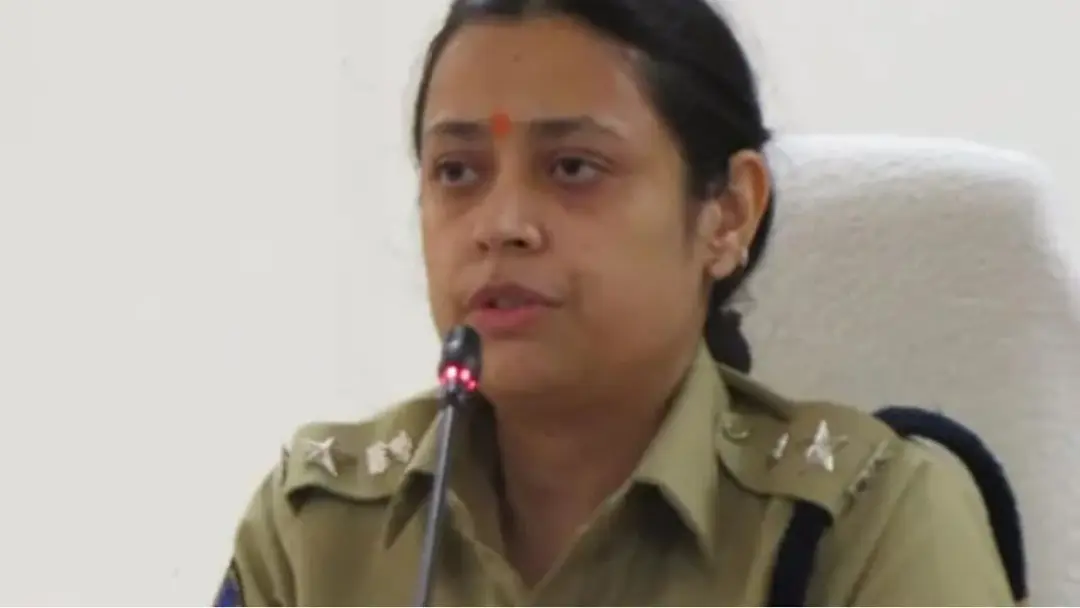
Police Act in force in Asifabad district till April 30
The Police Act is in force in Kumuram Bheem Asifabad district from April 1 to April 30, Superintendent of Police Nitika Pant said. During this period, dharnas, public meetings, rallies and demonstrations are banned without permission from higher officials, she said. Possession of banned weapons and gatherings that cause inconvenience to the public are completely prohibited. The SP warned that legal action will be taken against violators, and said prior permission is mandatory for events.
Source
Kumuram Bheem Asifabad — వార్తలు · read the original report ↗
Desk check · compared with the source
What the desk checked (4)
- The Police Act is in force in Kumuram Bheem Asifabad district from April 1 to April 30. — Attributed to SP Nitika Pant; source text awkwardly mentions '30 police act', so only the April 1-30 period is reported here.
- Dharnas, public meetings, rallies and demonstrations are banned without permission from higher officials. — Attributed to the SP in the source.
- Possession of banned weapons and gatherings causing public inconvenience are fully prohibited. — Attributed to the SP; no further detail or list given in source.
- Legal action will be taken against violators and prior permission is mandatory for events. — Stated as a warning by the SP; no penalty details specified.
Analysts’ view opinion
A month-long prohibitory order in Kumuram Bheem Asifabad is routine police administration on paper, but in practice it hands the district administration a gatekeeping power over who may hold a rally and who may not — and that is inherently political. In a tribal-majority district with a history of agitational politics, opposition parties and local movements are the ones whose street mobilisation gets squeezed first, since governing-side events tend to be easier to clear through official channels. The order's legitimacy will rest less on the text than on how even-handedly permissions are granted over the next four weeks.
- Blanket bans on dharnas, public meetings and rallies without prior permission shift the initiative from protest organisers to the police, a quiet but real transfer of political leverage.
- Opposition and activist groups typically absorb the cost of such orders, because permission regimes reward those with smoother access to the administration.
- The story gives an administrative rationale of public order and weapons control, not a stated political trigger, so read it as precautionary policing rather than proof of a specific confrontation.
- Agitations in such districts often revolve around land, forest rights, displacement and local development demands — issues where a one-month curb can effectively defuse momentum.
- Expect the standard political script: complaints of curbing democratic space from those out of power, and a law-and-order defence from those in office.
What to watch — Watch whether permissions in April are granted or refused evenhandedly across parties, and whether any group challenges the order publicly or in court.
The story does not state why the order was issued now, whether any specific event or threat prompted it, or whether such orders are a recurring monthly practice in this district.
Deep dive
Research brief · 8 facts · 3 dates · exam-readyThe brief
Context
Kumuram Bheem Asifabad, a district in Telangana, has had provisions of the Police Act enforced across its limits for the month of April. Such orders are issued by the district police chief to regulate public assembly and processions for a fixed period. Superintendent of Police Nitika Pant announced that the restrictions run from April 1 to April 30, during which dharnas, public meetings, rallies and demonstrations require prior permission from higher officials. The source does not state the reason for the order or the specific sections invoked.
Key facts
- The Police Act is in force in Kumuram Bheem Asifabad district from April 1 to April 30, as announced by Superintendent of Police Nitika Pant.
- During the period, dharnas, public meetings and rallies are banned without permission from higher officials.
- Rallies and demonstrations (pradarshanalu) are specifically stated to be prohibited.
- Possession of banned weapons is completely prohibited during the enforcement period.
- Gatherings that cause inconvenience to the public are completely prohibited.
- The SP warned that legal action will be taken against those who violate the rules.
- Prior permission is mandatory for holding any events or programmes in the district.
- The specific reason for imposing the order and the sections of the Act invoked are not stated in the source.
Timeline
- April 1Police Act provisions come into force across Kumuram Bheem Asifabad district.
- April 1 to April 30Ban on dharnas, public meetings, rallies, demonstrations, banned weapons and public-inconveniencing gatherings without prior permission.
- April 30The enforcement period ends, as stated by the SP.
Who has a stake
- Kumuram Bheem Asifabad district police / SP Nitika Pant — Responsible for enforcing the order, granting permissions and taking legal action against violators.
- Residents of the district — Protection from public inconvenience and weapons-related risk, but restrictions on assembly for the month.
- Political parties, unions and civil society groups — Cannot hold dharnas, rallies, public meetings or demonstrations without prior permission from higher officials.
- Event organisers — Must obtain prior permission for any programme held during April.
- Persons holding banned weapons — Face complete prohibition and legal action if found in possession.
Why it matters
Month-long prohibitory orders directly touch the citizen's ability to protest, assemble and hold public meetings, making them a recurring point of friction between public order and civil liberties at the district level. For readers, the notice is also practical: any dharna, rally or event in the district in April needs prior police permission or invites legal action.
UPSC angle
Prelims pointers
- Kumuram Bheem Asifabad is a district in Telangana; the district is named after tribal icon Kumuram Bheem.
- The Police Act order in the district runs from April 1 to April 30, announced by SP Nitika Pant.
- Acts prohibited: dharnas, public meetings, rallies, demonstrations without permission from higher officials.
- Possession of banned weapons and gatherings causing public inconvenience are completely prohibited.
- Prior permission from police is mandatory for conducting events during the period.
- Violators face legal action, as warned by the Superintendent of Police.
Mains framing
District-level prohibitory orders under the Police Act, such as the one in force in Kumuram Bheem Asifabad from April 1 to April 30, illustrate the routine administrative balancing between maintaining public order and protecting the freedoms of speech, assembly and movement. The stated grounds here are narrow and preventive: barring unpermitted dharnas, public meetings, rallies and demonstrations, prohibiting possession of banned weapons, and stopping gatherings that inconvenience the public, with legal action promised against violators. The implication is that all peaceful public mobilisation in the district becomes conditional on prior permission from higher officials, which shifts the default from freedom to permission for a full month; the source does not state the reason for the order or the sections invoked, which itself points to the need for reasoned, publicly explained orders. A balanced way forward lies in narrowly tailored, time-bound and well-publicised orders, transparent and prompt disposal of permission applications, clear reasons recorded for restrictions, and recourse for aggrieved organisers, so that preventive policing does not become a blanket curb on democratic expression.
Key terms
- Police Act
- The law under which district police impose time-bound restrictions on assemblies, processions and weapons; invoked here for April 1-30, with sections not stated in the source.
- Dharna
- A sit-in style protest at a place, listed among the activities banned without prior permission.
- Superintendent of Police (SP)
- The head of the district police; here Nitika Pant, who announced the order in Kumuram Bheem Asifabad.
- Kumuram Bheem Asifabad district
- A district in Telangana where the Police Act restrictions are in force for April.
- Prior permission
- Mandatory clearance from higher officials required for holding events, rallies or public meetings during the enforcement period.
Practice questions
- Prohibitory orders under police laws are routinely issued at the district level. Discuss how such orders can be reconciled with the citizen's right to assemble peacefully.
- Examine the role of the Superintendent of Police in maintaining public order in a district, with reference to time-bound restrictions on rallies and public meetings.
- What safeguards should accompany blanket month-long restrictions on public gatherings to prevent their misuse? Suggest measures.
Grounded only in the source report — figures and dates are the source's, not inferred.