
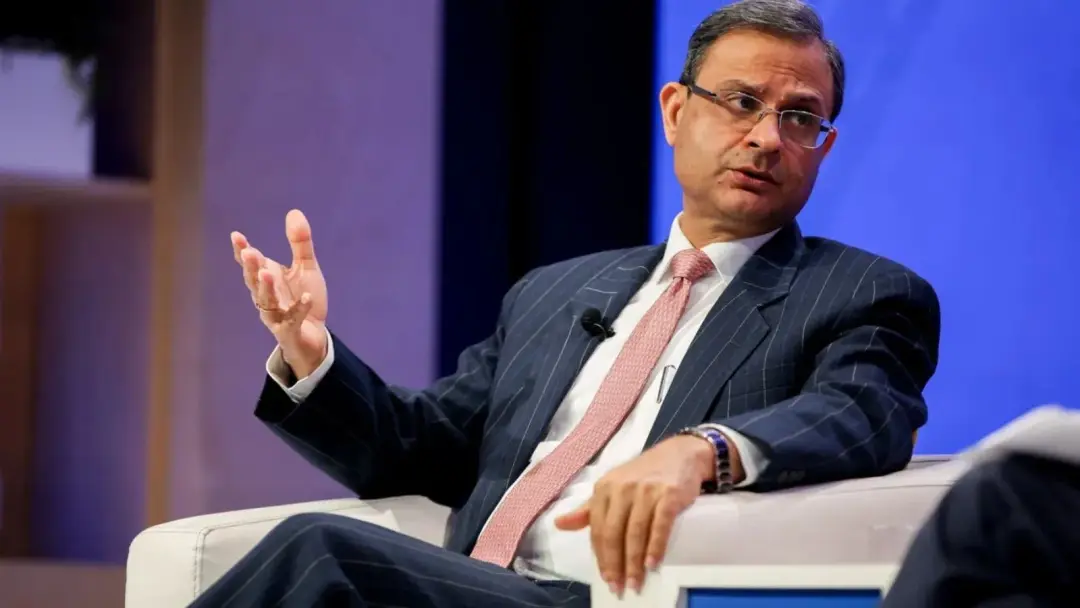
Small UPI fee won't dent transaction volumes, says RBI Governor
A small fee will not have a major impact on the number of UPI payments across the country, RBI Governor Sanjay Malhotra said Wednesday, on the government's move to levy a 0.4 per cent charge on transactions above Rs 2,000. The MDR is expected from October 15, capped at Rs 300 for payments of Rs 75,000 and above. Person-to-person transfers stay free. The same day, RBI raised the repo rate by 25 basis points to 5.50 per cent.
Source
Indian Express — Business · read the original report ↗
Desk check · compared with the source
What the desk checked (5)
- A small fee will not have a major impact on UPI payment numbers. — Attributed to RBI Governor Sanjay Malhotra, speaking Wednesday.
- Government to levy 0.4% MDR on UPI transactions above Rs 2,000 from October 15, capped at Rs 300 for payments of Rs 75,000 and above. — Figures appear in source, attributed to the government's announcement; enforcement date stated as expected.
- Railways, telecom, insurance, fuel and agricultural inputs will face a flat Rs 5 MDR; mutual funds, securities, stockbrokers and dealers 0.02% capped at Rs 300. — Figures appear in source without a named official; consistent internally.
- P2P transfers stay free and make up about 37% of UPI volume and about 70% of value. — Percentages appear in source; no agency credited for the data.
- RBI raised the repo rate by 25 bps to 5.50%, its first hike in nearly four years, with a shift to calibrated tightening. — Attributed to the six-member Monetary Policy Committee and the Governor's statement.
Analysts’ view opinion
Two cost-raising decisions landed on the same day — the return of MDR on UPI merchant payments and a 25 basis point repo hike. The Governor's argument is economically defensible: 0.4 per cent of transaction value is unlikely to change behaviour for most users, and person-to-person transfers, which the story puts at about 37 per cent of volume and 70 per cent of value, stay free. The real question is not how large the fee is but who absorbs it — the cost of running the digital payments rails is shifting from government support and bank balance sheets towards merchants.
- Ending nearly six years of zero-MDR effectively moves the cost of digital payments infrastructure from public subsidy onto transaction users.
- The carve-outs — a flat Rs 5 for railways, telecom, insurance, fuel and agri inputs, and 0.02 per cent for mutual funds, securities and brokers — show a deliberate attempt to shield thin-margin and high-ticket segments.
- The clearest gainers are banks and payment service providers that have carried the rails without transaction revenue, as the system moves towards financial self-sustainability.
- Whether small merchants are actually protected hinges on enforcement: banks have only been 'advised' not to let the charge be passed on, while apps are expressly barred from platform or hidden fees.
- The timing matters — the fee arrives just as a rate hike and a shift to calibrated tightening raise borrowing costs, squeezing small businesses from two directions at once.
What to watch — Watch UPI merchant transaction volumes after October 15, whether merchants respond by nudging customers towards cash or quietly building the cost into prices, and what the RBI and NPCI say in their response to the Supreme Court petition.
The story does not establish how much revenue the MDR will generate, how it will be shared between banks and apps, or how the advisory against passing on the charge will be enforced — nor does it suggest any link between the rate hike and the MDR decision.
Deep dive
Research brief · 8 facts · 4 dates · exam-readyThe brief
Context
The Union Finance Ministry has decided to end nearly six years of zero-MDR (merchant discount rate) on UPI payments by levying a 0.4 per cent user charge on certain transactions above Rs 2,000, expected from October 15. RBI Governor Sanjay Malhotra said on Wednesday that such a small fee would not materially dent UPI transaction volumes. The decision has been challenged in the Supreme Court, which last month declined to stay it and sought responses from the RBI and NPCI. On the same day, the RBI's Monetary Policy Committee raised the repo rate by 25 basis points to 5.50 per cent, its first hike in nearly four years, and shifted its stance to "calibrated tightening".
Key facts
- Government to levy a 0.4 per cent MDR/user charge on UPI transactions above Rs 2,000, expected to be enforced from October 15.
- The 0.4 per cent charge is capped at Rs 300 for transactions of Rs 75,000 and above.
- Essential and thin-margin sectors — railways, telecom, insurance, fuel and agricultural inputs — face a flat MDR of Rs 5 per transaction for payments above Rs 2,000.
- Mutual funds, securities, stockbrokers and dealers will attract a lower MDR of 0.02 per cent, capped at Rs 300.
- Person-to-person (P2P) UPI transfers remain free irrespective of amount; P2P is about 37 per cent of UPI transaction volume and about 70 per cent of transaction value.
- The move ends nearly six years of zero-MDR UPI payments for specified transactions.
- RBI hiked the repo rate by 25 basis points to 5.50 per cent, its first increase in nearly four years, with a unanimous MPC vote.
- The six-member MPC shifted its stance to "calibrated tightening"; Malhotra said rate cuts are "off the table in the near term".
Timeline
- December 2024Sanjay Malhotra takes office as RBI Governor.
- Last month (before the story)Supreme Court bench led by CJI Surya Kant refuses to stay the MDR decision and seeks responses from RBI and NPCI on a petition against the Finance Ministry gazette notifications.
- Wednesday (day of the story)RBI hikes repo rate by 25 bps to 5.50 per cent; Malhotra says a small UPI fee will not significantly affect transaction volumes.
- October 15The 0.4 per cent UPI MDR is expected to be enforced.
Who has a stake
- Reserve Bank of India / Governor Sanjay Malhotra — Must respond to the Supreme Court on the MDR notifications and manage digital payments growth alongside a tightening rate cycle.
- Union Ministry of Finance — Issued the gazette notifications setting the MDR; has 'advised' banks to ensure merchants do not pass charges to customers.
- Merchants, especially small and marginal businesspersons — Face MDR costs on transactions above Rs 2,000, with concerns these may be passed on to customers.
- Consumers using UPI — P2P transfers stay free; app providers are expressly barred from platform fees or hidden charges.
- NPCI — Operator of UPI; asked by the Supreme Court to respond to the petition challenging the MDR.
- Essential/thin-margin sectors (railways, telecom, insurance, fuel, agri inputs) — Get a concessional flat MDR of Rs 5 per transaction above Rs 2,000 instead of 0.4 per cent.
- Capital market intermediaries (mutual funds, stockbrokers, dealers) — Lower MDR of 0.02 per cent capped at Rs 300 on UPI payments.
- Monetary Policy Committee — Voted unanimously for the 25 bps hike amid rising inflation and a weakening currency.
Why it matters
UPI's zero-cost design is central to India's mass adoption of digital payments, so reintroducing a merchant discount rate tests whether volumes hold up once a price is attached. At the same time, the RBI's first rate hike in nearly four years and a shift to calibrated tightening signal that borrowing costs may stay elevated, affecting households and businesses already adjusting to payment charges.
UPSC angle
Prelims pointers
- MDR (Merchant Discount Rate): fee charged to merchants on digital payments; UPI had zero MDR for specified transactions for nearly six years.
- New UPI MDR: 0.4 per cent on transactions above Rs 2,000, capped at Rs 300 for payments of Rs 75,000 and above; effective expected October 15.
- Flat Rs 5 MDR for railways, telecom, insurance, fuel and agricultural inputs; 0.02 per cent (cap Rs 300) for mutual funds, securities, stockbrokers and dealers.
- P2P UPI transfers remain free; P2P is ~37 per cent of UPI volume and ~70 per cent of value.
- Repo rate raised by 25 bps to 5.50 per cent — first hike in nearly four years; MPC stance shifted to 'calibrated tightening'.
- UPI is operated by the National Payments Corporation of India (NPCI); MDR notified via Union Finance Ministry gazette notifications.
Mains framing
The reintroduction of a merchant discount rate on UPI marks a shift from a subsidy-driven, zero-cost digital payments model to one where the payments infrastructure is partly funded by users of higher-value transactions. The government has tried to balance revenue and inclusion by exempting person-to-person transfers (about 37 per cent of volume and 70 per cent of value), applying a flat Rs 5 charge in thin-margin essential sectors such as railways, telecom, insurance, fuel and agricultural inputs, and a lower 0.02 per cent rate for capital market transactions, while capping the charge at Rs 300. The core risks are pass-through to consumers and to small merchants, which the Finance Ministry seeks to address by advising banks against pass-through and expressly prohibiting platform or hidden fees by UPI app providers; enforceability of such 'advice' remains the open question, and the legality of the gazette notifications is before the Supreme Court, which has declined a stay but sought RBI and NPCI responses. RBI Governor Sanjay Malhotra's assurance that a small fee will not dent volumes will be tested from October 15. The way forward lies in transparent monitoring of volumes and merchant behaviour, clear grievance redress, and calibrating or rolling back rates if adoption among small merchants weakens — all occurring against a tighter monetary backdrop after the 25 bps repo hike to 5.50 per cent and a stance of calibrated tightening.
Key terms
- MDR (Merchant Discount Rate)
- The fee levied on merchants for accepting a digital payment; UPI had zero MDR on specified transactions for nearly six years.
- UPI
- Unified Payments Interface, India's real-time retail payments system operated by NPCI.
- P2P transfers
- Person-to-person UPI transfers, which remain free regardless of amount.
- Repo rate
- RBI's benchmark policy rate at which it lends to banks; raised 25 bps to 5.50 per cent.
- Calibrated tightening
- Policy stance signalling that future action can only be a hike or a pause, ruling out near-term rate cuts.
- Monetary Policy Committee (MPC)
- Six-member RBI committee that sets the policy rate; it voted unanimously for the 25 bps hike.
Practice questions
- Does the reintroduction of MDR on UPI risk reversing India's digital payments gains? Examine with reference to the exemptions and caps announced by the government.
- Discuss the regulatory and judicial issues raised by the Finance Ministry's gazette notifications on UPI charges, including the roles of the RBI and NPCI.
- Analyse the RBI's shift to 'calibrated tightening' and the 25 bps repo rate hike to 5.50 per cent in the context of rising inflation and a weakening currency.
Grounded only in the source report — figures and dates are the source's, not inferred.