
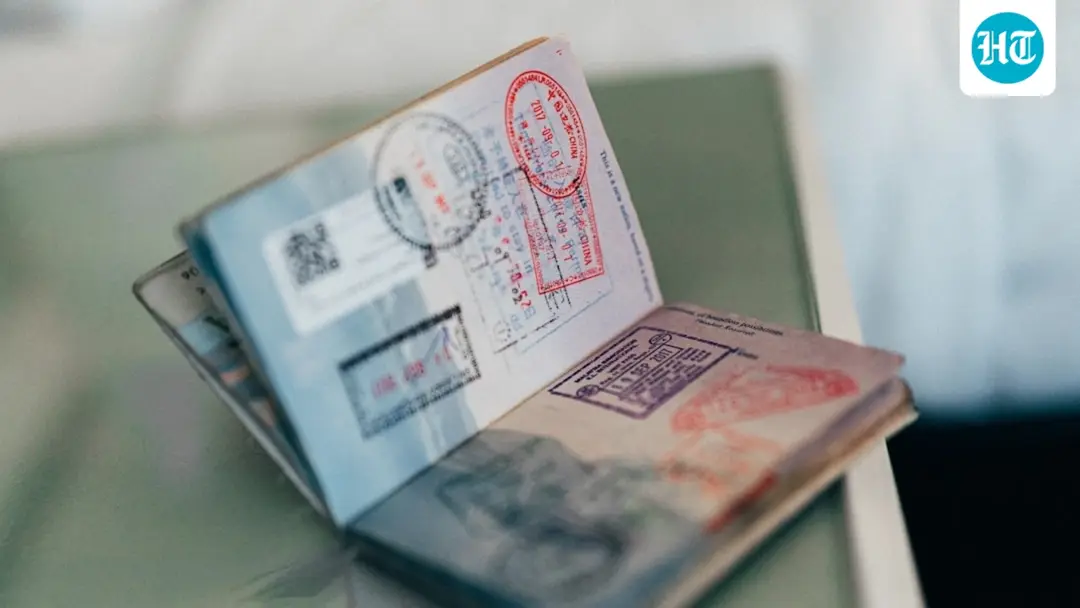
Digi Yatra trials for international departures planned October-December
The government is working to extend Digi Yatra, the facial recognition system used by domestic flyers, to international departures, with trials planned at Delhi, Mumbai, Bengaluru, Hyderabad and Cochin between October and December, officials said. The international version will use e-passports instead of Aadhaar, reading the chip via NFC and matching the stored photo with a selfie. Immigration integration comes later; emigration checks and inbound travel remain unchanged.
Source
Hindustan Times — India · read the original report ↗
Desk check · compared with the source
What the desk checked (5)
- Digi Yatra trials for international departures are planned at Delhi, Mumbai, Bengaluru, Hyderabad and Cochin between October and December. — Attributed to unnamed officials aware of the matter; dates are stated as plans, not confirmed.
- The international version will use electronic passports instead of Aadhaar-based enrolment, with NFC chip reading and a selfie match. — Attributed to a first unnamed official; consistent with ministry policy document cited in source.
- 17,316,144 e-passports had been issued till July 30, 2026. — Figure appears in source, attributed to a government reply in Parliament in August; the date is internally odd but reproduced as given.
- Emigration checks stay unchanged and inbound passengers see no change; immigration integration is a later phase. — Attributed to a second official and the civil aviation ministry policy document.
- Digi Yatra CEO Suresh Khadakbhavi said talks with IATA, ICAO and an EUDI pilot are at an early stage. — Direct on-record quote attributed by name in the source.
Analysts’ view opinion
Extending Digi Yatra to international departures is not merely a technical upgrade — it is a politically visible deliverable that lets the government point to "Digital India" and "ease of travel" as something citizens actually experience. Starting trials at Delhi, Mumbai, Bengaluru, Hyderabad and Cochin means the first beneficiaries are metro and diaspora-linked flyers, a constituency whose goodwill is disproportionately audible. At the same time, leaving immigration integration to a later phase and needing rules amended on showing passports at terminal entry signals careful power-sharing between the civil aviation and home ministries.
- Taking facial recognition into a border-crossing process gives the government a tangible, everyday proof point for its digital governance narrative.
- Using the e-passport chip instead of Aadhaar can also be read as putting some distance from the legal and political contestation around Aadhaar-based identity.
- Keeping immigration separate in phase one reflects strategic caution on a domain controlled by the home ministry, where any failure would be costly.
- Flagging a MeitY audit, CERT-In testing and STQC certification up front functions as pre-emptive political armour against privacy and surveillance criticism.
- Questions from opposition voices and privacy advocates on biometric data, voluntariness and data storage are predictable, and the story does not settle them.
What to watch — Watch whether trials actually begin before December and how quickly the home ministry clears the amendment to the mandatory passport-at-entry rule — both will set the political pace of this rollout.
This is a plan described by unnamed officials; final approvals, firm dates, the rule amendments and the specifics of data storage and privacy safeguards are not established in the story.
Deep dive
Research brief · 8 facts · 6 dates · exam-readyThe brief
Context
Digi Yatra is a facial recognition-based, paperless boarding system currently used by domestic flyers in India, built on Aadhaar-based e-KYC enrolment with the digital credential stored in a wallet on the passenger's phone. The civil aviation ministry now wants to extend it to international departures, with trials planned at five airports between October and December. For international travel, enrolment will rely on electronic passports (e-passports) read via near-field communication instead of Aadhaar. Immigration integration, emigration checks and inbound travel are outside the first phase.
Key facts
- Trials for Digi Yatra on international departures are planned at Delhi, Mumbai, Bengaluru, Hyderabad and Cochin between October and December, officials said.
- Delhi and Mumbai are likely to be the first airports to get the facility, an officer said.
- First phase covers only the departure side, focused on less-sensitive points: terminal entry, security and potentially boarding gates.
- The international version will use e-passports, not Aadhaar: the first page is scanned and the chip read via NFC, with the chip photo matched to a selfie.
- Till July 30, 2026, a total of 17,316,144 e-passports had been issued, per a government reply in Parliament in August.
- Software upgradation is under way, followed by a MeitY audit; final testing includes vulnerability assessment and penetration testing by CERT-In and STQC certification.
- Rules framed by the civil aviation ministry, home affairs ministry and bureau of civil aviation must be amended, including the mandatory showing of passports at airport entry.
- On September 1, the Bureau of Immigration announced e-boarding passes are accepted at all immigration counters; physical immigration stamps were also done away with effective September 1.
Timeline
- Past couple of yearsMinistry of Home Affairs runs the Fast Track Immigration-Trusted Traveller Programme (FTI-TTP) for pre-verified Indian nationals and OCI card holders at multiple airports.
- September 1Bureau of Immigration posts on X that e-boarding passes are accepted at all immigration counters; physical immigration stamps done away with.
- AugustGovernment reply in Parliament gives the cumulative e-passport issuance figure of 17,316,144 (till July 30, 2026).
- Before trialsUpgraded application completes final testing; MeitY audit, CERT-In VAPT and STQC certification to be done.
- October to DecemberTrials planned for Digi Yatra on international departures at Delhi, Mumbai, Bengaluru, Hyderabad and Cochin.
- Later stage / after trialsIntegration with immigration, and procurement and backend integration of e-gates at international checkpoints.
Who has a stake
- Ministry of Civil Aviation — Owns the Digi Yatra policy document and is driving the extension to international departures; must amend air travel rules.
- Digi Yatra Foundation / CEO Suresh Khadakbhavi — Must satisfy every stakeholder that the border-crossing process is robust, safe and secure; pursuing cross-border interoperability.
- Ministry of Home Affairs and Bureau of Immigration — Control immigration and emigration checks and the FTI-TTP; rules on documents at airports need amendment.
- MeitY, CERT-In and STQC — Responsible for audit, vulnerability assessment and penetration testing, and quality certification of the upgraded app before trials.
- International travellers with e-passports — Faster, paperless passage at terminal entry, security and possibly boarding gates; no change at emigration or on arrival.
- Airport operators at Delhi, Mumbai, Bengaluru, Hyderabad, Cochin — Host the trials and will need e-gates and backend integration at international checkpoints.
- IATA, ICAO and EUDI pilot trials under APTITUDE cohort — Partners in early-stage discussions on making Digi Yatra interoperable with overseas airports and immigration authorities.
Why it matters
India's international airports handle a sensitive border-crossing process, and shifting identity checks to facial recognition touches on security, privacy and data handling as much as on convenience. The design choices announced — e-passport chips instead of Aadhaar, credentials on the passenger's phone, and immigration kept isolated in the first phase — show how the state is sequencing digitisation against risk. If interoperability talks with IATA, ICAO and EU digital identity pilots succeed, Indian travellers' digital credentials could eventually work at foreign airports.
UPSC angle
Prelims pointers
- Digi Yatra: facial recognition-based paperless boarding; domestic version uses Aadhaar e-KYC, international version will use e-passports.
- NFC (near-field communication) will be used by the passenger's phone to read the e-passport chip; chip photo matched with a selfie.
- Trial airports for international departures: Delhi, Mumbai, Bengaluru, Hyderabad, Cochin (October-December).
- FTI-TTP: Fast Track Immigration-Trusted Traveller Programme of MHA for pre-verified Indian nationals and OCI card holders.
- Pre-trial checks: MeitY audit, CERT-In vulnerability assessment and penetration testing, STQC certification.
- From September 1, e-boarding passes accepted at all immigration counters; physical immigration stamps discontinued.
Mains framing
The extension of Digi Yatra to international departures marks a shift from domestic convenience to the far more sensitive domain of border crossing. The driver is digitisation of air travel — paperless entry, security and boarding, e-boarding passes accepted at immigration since September 1, and the discontinuation of physical immigration stamps. Design safeguards are visible: enrolment through internationally standard e-passports read via NFC rather than Aadhaar, credentials created by matching the chip photo with a selfie and stored on the passenger's phone, a first phase limited to less-sensitive touchpoints, and immigration kept isolated as the ministry's policy document envisages automated border control only as a subsequent phase. The constraints are equally clear: software upgradation pending a MeitY audit, CERT-In penetration testing and STQC certification; amendment of rules framed by the civil aviation ministry, home affairs ministry and bureau of civil aviation, including the mandatory display of passports at airport entry; and procurement and backend integration of e-gates that could take time after trials. The way forward, as officials frame it, is phased proving of efficacy before immigration integration, satisfying every stakeholder on robustness and security, and pursuing cross-border interoperability through early-stage talks with IATA, ICAO and the EUDI pilot under the APTITUDE cohort.
Key terms
- Digi Yatra
- Facial recognition-based system for paperless passenger processing at airports, with the digital credential held in a wallet on the passenger's phone.
- e-passport
- Passport with an embedded chip conforming to international standards and carrying certain biometric details, including a stored photograph.
- NFC (near-field communication)
- Short-range wireless technology that lets a phone read the chip embedded in an e-passport.
- FTI-TTP
- Fast Track Immigration-Trusted Traveller Programme run by MHA to speed up immigration for pre-verified Indian nationals and OCI card holders.
- STQC
- Standardisation Testing and Quality Certification, the body whose certification is planned as part of testing the upgraded Digi Yatra app.
- CERT-In
- Agency conducting the vulnerability assessment and penetration testing of the upgraded Digi Yatra application.
Practice questions
- Digi Yatra's extension to international departures uses e-passports rather than Aadhaar. Discuss the security, privacy and interoperability considerations behind this design choice.
- Examine how the phased sequencing of Digi Yatra — terminal entry and security first, immigration later — reflects the balance between passenger facilitation and border security.
- Digi Yatra and FTI-TTP address different touchpoints in air travel. Evaluate how such digital initiatives together reshape passenger processing at Indian airports, and what regulatory changes they demand.
Grounded only in the source report — figures and dates are the source's, not inferred.