
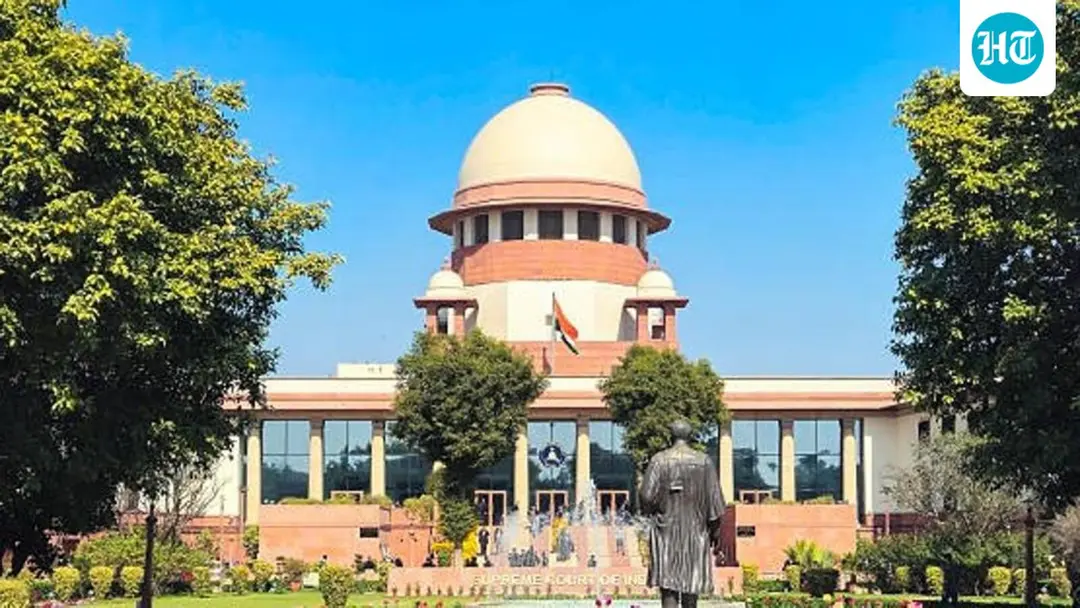
National song choice is State's call, says Supreme Court
The Supreme Court on Tuesday declined to examine whether Vande Mataram should be recognised as the National Song or whether its official rendition should have two or six stanzas, saying the choice of national symbols rests with an elected government. The bench of CJI Surya Kant and justices Joymalya Bagchi and V Mohana agreed to scrutinise penal consequences under the 2026 amendment, saying conscientious objectors cannot face prosecution. Hearing TM Krishna's petition, it gave the Centre two weeks to respond.
Source
Hindustan Times — India · read the original report ↗
Desk check · compared with the source
What the desk checked (5)
- A bench of CJI Surya Kant, Justice Joymalya Bagchi and Justice V Mohana declined to examine whether Vande Mataram should be the National Song or how many stanzas it should have. — Attributed to the bench's oral observations as reported in the source; names and composition appear in the source.
- The 2026 amendment to the Prevention of Insults to National Honour Act extended Section 3 protection to the National Song, with up to three years imprisonment, fine or both. — Figure and provision appear in the source text; no independent verification possible.
- The petition was filed by Carnatic vocalist TM Krishna, challenging the amendment and MHA directions prescribing the six-stanza version. — Attributed in source, with counsel S Muralidhar named as appearing for the petitioner.
- The bench said Bijoe Emmanuel vs State of Kerala (1986) would continue to govern the field and conscientious objectors would not face penal consequences. — Direct quotes attributed to the bench in the source; case details as described in source.
- The Centre was given two weeks to respond after the petition is furnished to the Solicitor General. — Procedural direction stated in source; no order copy cited.
Analysts’ view opinion
Politically, this is a split outcome that gives each side something. By holding that the choice of national symbols lies with an elected government, the bench leaves the Centre room on Vande Mataram and the six-stanza question; by stating that conscientious objectors face no prosecution, it validates the petitioner's core grievance. The fight is therefore likely to shift from the cultural argument over which song and how many stanzas, to the narrower legal battle over how far criminal law can compel participation.
- The observation that national symbols are the elected government's remit is immediate relief for the Centre and a political basis for defending the 2026 amendment.
- But by keeping penal consequences open to scrutiny and invoking Bijoe Emmanuel (1986), the court has left the most contested part of the law under judicial review.
- Assembly protests and a BJP padayatra in Karnataka suggest the issue is functioning as a mobilisation tool on the ground, not only as a courtroom dispute.
- Because the petitioner is a cultural figure rather than a party, the debate is more likely to be framed around religious freedom and individual conscience than partisan alignment.
- The sharp exchange with the Solicitor General signals that this case is being argued in a charged political register, not as dry statutory interpretation.
What to watch — Watch the Centre's reply within two weeks — especially whether it defends the six-stanza direction and the penal clause firmly or softens their scope — as that will set the political direction.
This is only a preliminary stage; the story does not establish how the court will finally rule on the amendment's validity, what happens to the MHA directions, or which party gains electorally.
Deep dive
Research brief · 8 facts · 4 dates · exam-readyThe brief
Context
The Prevention of Insults to National Honour Act, 1971 was amended in 2026 to extend criminal protection under Section 3 to the "National Song" alongside the National Anthem, and the Ministry of Home Affairs issued directions prescribing the complete six-stanza version of Vande Mataram for specified governmental, ceremonial and cultural occasions. Carnatic vocalist, author and Ramon Magsaysay Award recipient TM Krishna challenged both the amendment and the MHA directions, arguing they compel citizens to sing stanzas invoking Hindu deities. On Tuesday, a Supreme Court bench of CJI Surya Kant and justices Joymalya Bagchi and V Mohana refused to examine whether Vande Mataram should be the National Song or whether two or six stanzas should be official, holding that national symbols are for an elected government to decide, but agreed to scrutinise the penal consequences.
Key facts
- The 2026 amendment substituted Section 3 of the Prevention of Insults to National Honour Act, 1971 to cover the "National Song" along with the National Anthem.
- Under the amended Section 3, intentionally preventing the singing of the National Anthem or National Song, or disturbing an assembly engaged in such singing, is punishable with up to three years' imprisonment, or fine, or both.
- The bench comprised Chief Justice of India Surya Kant and justices Joymalya Bagchi and V Mohana.
- The court said: "It is not the remit of the court to second-guess what are the national sentiments and aspirations associated with Vande Mataram. It is for the State."
- The bench held that "for a conscientious objector, not to recite one or all the stanzas of the national song is not going to subject himself to criminal prosecution", invoking Articles 25 and 26.
- The court said Bijoe Emmanuel Vs State of Kerala (1986) would continue to govern the field.
- Petitioner's counsel senior advocate S Muralidhar argued that for nearly 80 years Vande Mataram was officially treated as its opening two stanzas.
- The petition says the last four of the six stanzas refer to Durga, Lakshmi and Saraswati; the Centre was given two weeks to respond.
Timeline
- 1971Prevention of Insults to National Honour Act enacted; it made no reference to a National Song.
- 1986In Bijoe Emmanuel Vs State of Kerala, the Supreme Court protected three Jehovah's Witnesses schoolchildren who refused to sing the National Anthem on religious grounds.
- 2026Amendment substitutes Section 3 of the 1971 Act to extend criminal protection to the "National Song"; MHA directions prescribe the full six-stanza Vande Mataram for specified occasions.
- Tuesday (hearing date, as reported)Supreme Court declines to examine the national-song and stanza questions, agrees to examine penal consequences, and gives the Centre two weeks to file its response.
Who has a stake
- TM Krishna, petitioner — Carnatic vocalist and Magsaysay awardee challenging the amendment and MHA directions as violating equality, religious freedom, free speech and non-discrimination.
- Supreme Court bench (CJI Surya Kant, Justices Joymalya Bagchi, V Mohana) — Drawing the line between the State's choice of national symbols and the State's power to compel participation through criminal law.
- Union government / Ministry of Home Affairs — Must defend the 2026 amendment and the office memorandum prescribing six stanzas; has two weeks to respond.
- Solicitor General Tushar Mehta — Defending Parliament's legislative authority; his reference to "Naxalites" during the hearing was objected to by Muralidhar.
- Conscientious objectors and non-Hindu citizens — Petition alleges disparate impact from compulsory rendition of stanzas invoking Hindu deities; court says they cannot face prosecution.
- Senior advocate S Muralidhar — Argued the amendment inserted "National Song" into a penal statute without defining it or specifying the version covered.
Why it matters
The case tests where reverence for national symbols ends and compelled speech begins, now that refusal can attract up to three years' imprisonment. By reaffirming Bijoe Emmanuel while leaving the choice of symbols to the elected government, the court signals judicial restraint on national sentiment but firm protection of Article 25 and 26 freedoms. It also raises the question of whether an executive office memorandum can create criminal liability.
UPSC angle
Prelims pointers
- Prevention of Insults to National Honour Act, 1971 — Section 3 amended in 2026 to include the "National Song"; punishment up to 3 years, fine, or both.
- Bijoe Emmanuel Vs State of Kerala (1986): refusal to sing the National Anthem on genuine religious belief is not disrespect and cannot justify expulsion; involved Jehovah's Witnesses children.
- Articles 25 and 26 — freedom of conscience, free profession/practice of religion and rights of religious denominations, invoked by the bench.
- Bench: CJI Surya Kant with Justices Joymalya Bagchi and V Mohana; Centre given two weeks to respond.
- Petitioner TM Krishna is a Carnatic vocalist, author and Ramon Magsaysay Award recipient; represented by senior advocate S Muralidhar.
- Petition notes the last four of Vande Mataram's six stanzas invoke Durga, Lakshmi and Saraswati.
Mains framing
The dispute over the 2026 amendment to the Prevention of Insults to National Honour Act, 1971 illustrates the constitutional distinction between the State's legitimate authority to designate national symbols and its power to enforce participation in them through penal law. The Supreme Court accepted that, \"by customs and usage, the National Song has always been mentioned and understood as Vande Mataram\", and declined to adjudicate whether two or six stanzas should be official or to enter into religious interpretation of the lyrics, treating these as questions for an elected government. But it kept open the criminal-law dimension, holding that anyone claiming infraction of Article 25 or 26 rights cannot be subjected to penal consequences and that Bijoe Emmanuel (1986) — which distinguished respectful non-participation from disrespect — continues to govern. The petitioner's further arguments deepen the issue: that a penal statute uses the undefined term \"National Song\"; that MHA office memoranda, being executive instructions without independent statutory basis, cannot create criminal liability; and that mandating stanzas invoking Durga, Lakshmi and Saraswati has a disparate impact on non-Hindu citizens, straining secularism. A way forward consistent with the source is judicial reading down of the penal provision to exclude conscientious objection, statutory clarity on what version is protected, and evolution of national symbols through public consensus rather than compulsion, as Muralidhar urged.
Key terms
- Prevention of Insults to National Honour Act, 1971
- Law penalising insults to national symbols; its Section 3 was substituted in 2026 to protect the National Song alongside the National Anthem.
- Conscientious objector
- A person who declines to participate in an act on grounds of conscience or religion; the court said such a person cannot be criminally prosecuted for not reciting the national song.
- Bijoe Emmanuel Vs State of Kerala (1986)
- Supreme Court ruling that Jehovah's Witnesses children who stood respectfully but refused to sing the National Anthem could not be expelled.
- MHA directions / office memorandum
- Executive instructions prescribing the full six-stanza Vande Mataram for specified occasions; challenged as lacking independent statutory basis to create criminal liability.
- Articles 25 and 26
- Constitutional guarantees of freedom of conscience and religion, and rights of religious denominations, invoked by the bench as limits on penal enforcement.
Practice questions
- "The State may choose national symbols, but it cannot compel their expression." Examine this proposition in light of the Supreme Court's observations on the 2026 amendment to the Prevention of Insults to National Honour Act, 1971.
- Discuss the significance of Bijoe Emmanuel Vs State of Kerala (1986) for the scope of Articles 25 and 26 in cases of compelled participation in national rituals.
- Can executive instructions such as a ministry's office memorandum form the basis of criminal liability? Analyse with reference to the challenge to the MHA directions on Vande Mataram.
Grounded only in the source report — figures and dates are the source's, not inferred.