
Andhra Pradesh moves to direct election of mayors, municipal chairpersons
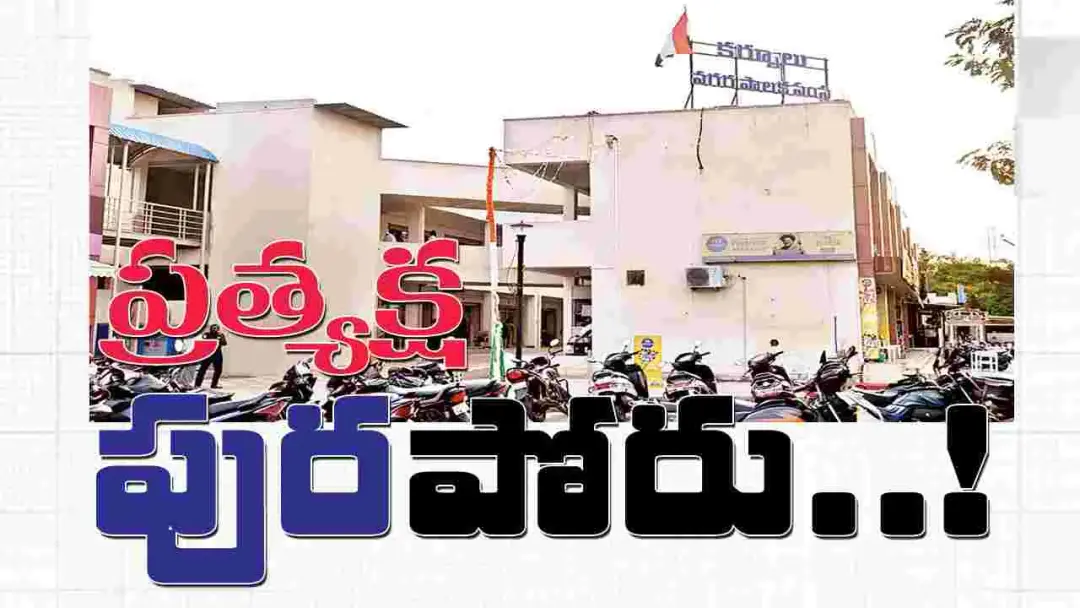
The Andhra Pradesh Assembly has passed a resolution for voters to directly elect municipal corporation mayors and municipality chairpersons, replacing the indirect system. GO RT 1065 was issued to implement 33.33% reservation for Backward Classes in urban local bodies and 34% in rural bodies. Preparations are on for polls in October, with the voter list set for release on September 3. In Kurnool Corporation, a court stay on ward delimitation has left the election uncertain.
Source
Adoni — crime & civic · read the original report ↗
Desk check · some claims need care
What the desk checked (5)
- Assembly passed a resolution for direct election of mayors and municipal chairpersons — Stated in source as a government/Assembly decision; no document number or date cited.
- GO RT No.1065 provides 34% BC reservation in rural and 33.33% in urban local bodies — Specific GO number appears in source; issued Wednesday per source, no further attribution.
- GO MS No.64 of May 24 raised Kurnool Corporation wards from 52 to 68 — Figures and GO number appear in source; consistent with the accompanying table.
- Court stayed ward delimitation after a Kurnool resident petitioned over census overlap; 39 municipalities face similar cases — Attributed to source reporting/officials; court name and case details not given.
- Voter list to be released September 3, using voters as on January 1, 2026 — Described as preparations under way, attributed to officials; not a notified date.
Analysts’ view opinion
By passing an Assembly resolution for voters to directly elect mayors and municipal chairpersons, the ruling coalition has redrawn the rules of local politics in Andhra Pradesh. Seats that were previously won by assembling corporators and councillors after the polls — with all the bargaining and defections that entailed — will now rest on popular mandate, candidate strength and party brand. Alongside this, the GO providing 33.33 per cent reservation for BCs in urban bodies and 34 per cent in rural bodies is a clear political signal on social arithmetic. The real obstacle to the timetable, however, is litigation: Kurnool's ward delimitation is stayed, and the story says such cases exist in 39 municipalities.
- Direct election can favour the party with statewide momentum, since popular sentiment converts straight into mayor and chairperson posts — but the same mechanism exposes it directly if the mood turns.
- The indirect system's cross-voting, splits and post-poll bargaining shrink in importance, which could weaken local power brokers and strengthen central party leaderships.
- Raising BC reservation (33.33 per cent urban, 34 per cent rural) is a bid to widen the social base; per the story, over 120 wards across combined Kurnool and Nandyal districts could go to BCs.
- Coalition seat-sharing is already a pressure point — the story notes BJP leaders have taken the Adoni chairperson's post to their leadership and are also eyeing Emmiganur.
- Stays on ward delimitation, with cases in 39 municipalities, now effectively govern the election calendar; officials say the government has argued the GVMC precedent and judgment is reserved.
What to watch — Watch the September 3 voter list publication, the court's ruling on Kurnool's ward delimitation, and whether the October election exercise holds or slips.
The story does not establish poll dates, the outcome of the court case, the final legal shape of the direct-election system or how opposition parties will respond — and the BC seat figures are approximations.
Deep dive
Research brief · 8 facts · 8 dates · exam-readyThe brief
Context
Andhra Pradesh's urban local bodies have been without elected councils since the term of municipal corporations and municipalities ended on March 23. The NDA "Kutami" (alliance) government led by Chief Minister Chandrababu Naidu has now cleared the way for urban polls, passing an Assembly resolution to switch from indirect election of mayors and municipal chairpersons (by elected corporators/councillors) to direct election by voters. Alongside, it has ordered enhanced Backward Classes reservation and a ward reorganisation exercise, though court stays in several municipalities, including Kurnool Corporation, have clouded the timetable.
Key facts
- The AP Assembly passed a resolution to have voters directly elect municipal corporation mayors and municipality chairpersons, ending the indirect system.
- GO RT No. 1065 was issued to implement 33.33% BC reservation in urban local bodies and 34% in rural local bodies; the order on 33.33% was issued on Wednesday.
- The term of municipal corporation and municipality governing bodies ended on March 23; poll groundwork began thereafter.
- Voter lists are to be released on September 3, prepared ward-wise counting voters up to January 1, 2026; elections are being planned for October.
- GO MS No. 64 was issued on May 24 for redivision of divisions/wards as per the 2011 Census; Kurnool Corporation wards were raised from 52 to 68.
- In Kurnool district, wards rose from 149 to 187 (Kurnool, Adoni, Emmiganur, Gudur); in Nandyal district from 158 to 184, with about 62-63 and 61-62 BC seats respectively.
- A city resident challenged ward redivision during the ongoing Census and the court granted a stay; 39 municipalities in the state have similar cases.
- The state cited the earlier GVMC judgment to seek vacation of the stays; the verdict has been reserved, officials say.
Timeline
- March 23Term of municipal corporation and municipality governing bodies in the combined Kurnool region ended.
- April (this year)Government issued orders increasing the number of wards; ward division carried out.
- May 24GO MS No. 64 issued for redivision of divisions and wards based on the 2011 Census; Kurnool's 52 wards raised to 68.
- Wednesday (as reported)Orders issued on implementing 33.33% BC reservation; GO RT No. 1065 covers 33.33% urban and 34% rural BC reservation.
- September 3Planned publication/release of ward-wise voter lists.
- October 3Special Intensive Revision (SIR) of voter rolls in the district is to conclude.
- OctoberMunicipal elections proposed to be held.
- Up to January 1, 2026Cut-off used for counting voters in corporations and municipalities for the ward-wise rolls.
Who has a stake
- Kutami (alliance) government under CM Chandrababu Naidu — Pushing direct election of mayors/chairpersons, BC reservation and October polls; must clear court stays first.
- Backward Classes — 33.33% reservation in urban local bodies and 34% in rural bodies under GO RT 1065; about 62-63 seats in Kurnool district, 61-62 in Nandyal.
- BJP and Jana Sena (alliance partners) — Expect two or three municipal chairperson posts; BJP leaders have pressed for Adoni and also seek Emmiganur.
- Kurnool Corporation voters and aspirants — Mayor and corporator elections hinge on the court verdict on ward delimitation.
- District Collector and municipal officials — Collector is District Election Officer; corporation commissioner is Additional Election Officer, municipal commissioners are Assistant Election Officers.
- Returning/Assistant Returning Officers — About 125-150 ROs and a similar number of AROs needed in the combined district; one RO per 2-4 wards.
- Judiciary — Stay on Kurnool ward redivision and similar cases in 39 municipalities; reserved verdict will decide poll feasibility.
Why it matters
Direct election of mayors and chairpersons changes the power equation in urban local government, making the executive head answerable to the electorate rather than to a council majority, and it reshapes candidate selection, money and caste calculations in city politics. At the same time, the 33.33% BC quota in urban bodies and 34% in rural bodies will redraw who can contest hundreds of wards. Whether the October timetable holds now depends on court verdicts on ward delimitation in 39 municipalities, including Kurnool.
UPSC angle
Prelims pointers
- AP Assembly resolution: direct election of municipal corporation mayors and municipality chairpersons, replacing indirect election by corporators/councillors.
- GO RT No. 1065: 33.33% BC reservation in urban local bodies, 34% in rural local bodies.
- GO MS No. 64 (May 24): redivision of divisions/wards on 2011 Census basis; Kurnool Corporation 52 to 68 wards.
- Municipal bodies' term ended March 23; voter list release planned September 3; polls proposed in October.
- SIR (Special Intensive Revision) of electoral rolls in the district concludes October 3.
- Election machinery: Collector as District Election Officer; corporation commissioner as Additional Election Officer; municipal commissioners as Assistant Election Officers.
Mains framing
Andhra Pradesh's shift to direct election of mayors and municipal chairpersons, combined with enhanced Backward Classes reservation (33.33% urban, 34% rural under GO RT 1065) and ward redivision based on the 2011 Census, marks a significant restructuring of urban local self-government. The stated rationale for direct election is greater accountability of the urban executive head to voters rather than to shifting council majorities; critics of such models point to potential friction between a directly elected head and the council. The reservation order expands political space for BCs, with roughly 62-63 of 187 wards in Kurnool district and 61-62 of 184 in Nandyal district likely reserved. But implementation is hostage to litigation: a petitioner argued that ward boundaries cannot be redrawn while the Census is under way, and stays now affect 39 municipalities, with the state relying on the earlier GVMC judgment to seek their vacation. The way forward lies in early judicial clarity, transparent and officially notified delimitation and reservation rosters, clean ward-wise voter lists that avoid splitting a single household across wards, and timely appointment of ROs and AROs so that bodies vacant since March 23 are restored without further delay.
Key terms
- Direct election of mayor/chairperson
- Voters elect the mayor or municipal chairperson directly, instead of elected corporators/councillors choosing them.
- GO RT No. 1065
- AP government order implementing 33.33% BC reservation in urban local bodies and 34% in rural local bodies.
- GO MS No. 64 (May 24)
- Order for redivision of municipal divisions and wards as per the 2011 Census; raised Kurnool Corporation wards from 52 to 68.
- SIR (Special Intensive Revision)
- Intensive revision of electoral rolls; in the district it is to be completed on October 3.
- RO / ARO
- Returning Officer and Assistant Returning Officer, appointed for every 2-4 wards to run polling, ballot printing and conduct of elections.
- GVMC case
- Earlier Greater Visakhapatnam Municipal Corporation judgment cited by the state to seek cancellation of stays on ward redivision.
Practice questions
- Direct election of mayors is expected to strengthen accountability in urban local governance. Discuss the possible benefits and risks of this shift with reference to Andhra Pradesh's recent Assembly resolution.
- Examine how ward delimitation and reservation exercises interact with judicial intervention in delaying urban local body elections in India, using the Andhra Pradesh case.
- What are the implications of providing 33.33% reservation for Backward Classes in urban local bodies and 34% in rural bodies for representation and party politics?
Grounded only in the source report — figures and dates are the source's, not inferred.