
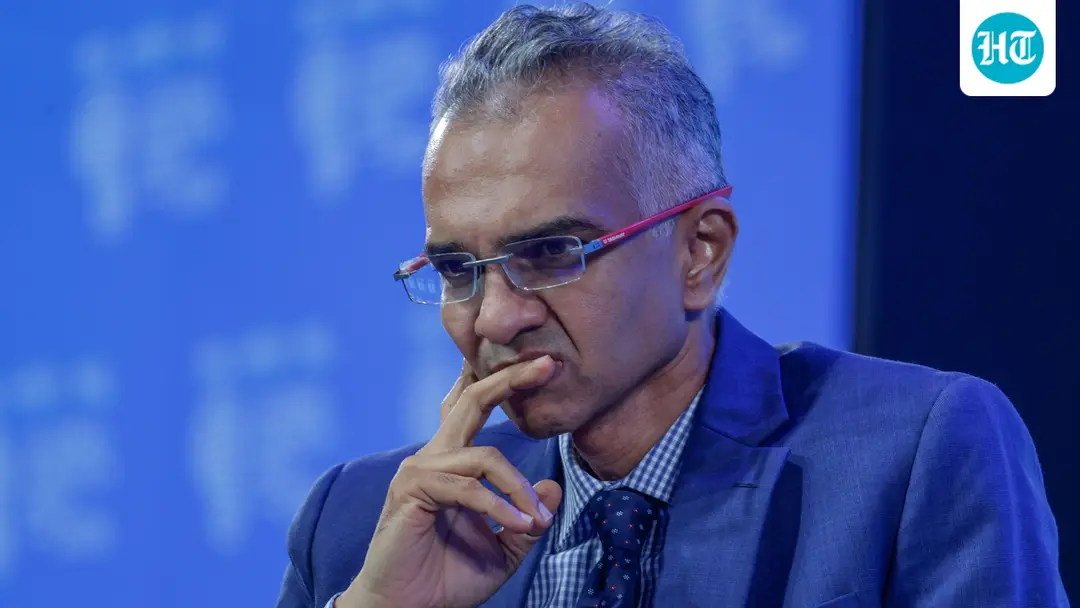
New MDR won't dent UPI volumes, says NPCI chief Dilip Asbe
The newly introduced Merchant Discount Rate framework for UPI is unlikely to have a major impact on transaction volumes, NPCI Managing Director and CEO Dilip Asbe said on Thursday at the 13th SBI Banking & Economics Conclave 2026. From October 15, a 0.4% MDR applies to specified person-to-merchant transactions above ₹2,000, capped at ₹300 for payments of ₹75,000 and above. P2P transfers and merchant payments up to ₹2,000 stay free. About 96% of P2M transactions are expected to remain unaffected.
Source
Hindustan Times — India · read the original report ↗
Desk check · compared with the source
What the desk checked (5)
- A 0.4% MDR applies from October 15 to specified P2M UPI transactions above ₹2,000, capped at ₹300 for transactions of ₹75,000 and above. — Figures appear in the source, attributed to the framework announced by the government and NPCI; no notification document cited.
- P2P transactions and merchant payments up to ₹2,000 remain free; small merchants under the zero-MDR framework are exempt. — Stated in source as part of the announced framework; no separate attribution given.
- About 96% of P2M transactions are expected to remain unaffected. — Figure appears in source as an expectation; the estimating body is not explicitly named.
- Railways, telecom, insurance, fuel and agricultural inputs attract a flat ₹5 MDR above ₹2,000; capital market transactions 0.02% capped at ₹300. — Figures appear in source without a named document or official; internally consistent.
- Around 20 million merchants have soundboxes while another 40 million have QR codes without the devices. — Attributed to Asbe's remarks at the conclave; no underlying dataset cited.
Analysts’ view opinion
This is less a price change than a business-model shift: for the first time, India's largely free UPI rails get a revenue line. NPCI's own estimate that 96 per cent of P2M transactions stay untouched suggests the cost is concentrated on a small slice of high-value payments made at merchants who, by Asbe's argument, already absorb card charges. Banks, payment apps and acceptance infrastructure such as soundboxes and AI tools stand to gain; the unresolved question is whether the 0.4 per cent can genuinely be kept off the consumer.
- Moving from a free public utility to a revenue-bearing rail could improve the long-term financial sustainability of running and upgrading the payments network.
- The ₹2,000 floor and ₹300 cap together confine the burden to larger-ticket payments, limiting any direct price pressure on everyday small-value spending.
- The flat ₹5 charge for thin-margin essentials such as railways, telecom, insurance, fuel and farm inputs reads as a pragmatic nod to cost sensitivity in those sectors.
- The gap cited — roughly 20 million merchants with soundboxes against 40 million with only QR codes — points to where the new revenue is meant to be reinvested.
- If merchants quietly build the fee into their prices, the effect becomes a small, indirect consumer cost, which makes enforcement of the government's no-pass-through directive the decisive variable.
What to watch — Watch high-value P2M volumes and values after October 15, and how firmly banks police merchants adding surcharges at the counter.
The story is built on the NPCI chief's expectation, not outcomes — it does not establish how much revenue the framework will raise, how it will be shared, or whether volumes will in fact hold up.
Deep dive
Research brief · 8 facts · 2 dates · exam-readyThe brief
Context
India's Unified Payments Interface (UPI), run by the National Payments Corporation of India (NPCI), has so far been largely free for users and merchants. The government and NPCI have now introduced a Merchant Discount Rate (MDR) — a fee charged to merchants on digital payments — for a specified set of person-to-merchant (P2M) UPI transactions from October 15. Speaking at the 13th SBI Banking & Economics Conclave 2026, NPCI MD and CEO Dilip Asbe said the change would not materially dent UPI volumes or value and that the revenue would be reinvested in the payments ecosystem.
Key facts
- From October 15, a 0.4% MDR applies to specified person-to-merchant (P2M) UPI transactions above ₹2,000.
- The 0.4% charge is capped at ₹300 for transactions of ₹75,000 and above.
- Person-to-person (P2P) transfers and merchant payments up to ₹2,000 remain free; small merchants under the zero-MDR framework are exempt.
- About 96% of P2M transactions are expected to remain unaffected by the new MDR.
- Essential and thin-margin sectors — railways, telecom, insurance, fuel and agricultural inputs — attract a flat MDR of ₹5 per transaction for payments above ₹2,000.
- Capital market transactions carry an MDR of 0.02%, capped at ₹300.
- Around 20 million merchants have soundboxes, while another 40 million merchants have QR codes without the devices.
- The government has directed banks to ensure MDR is not passed on to customers.
Timeline
- October 15 (effective date of new framework)0.4% MDR begins applying to specified P2M UPI transactions above ₹2,000, with sector-specific flat and capped rates.
- Thursday (during the 13th SBI Banking & Economics Conclave 2026)NPCI MD and CEO Dilip Asbe says the new MDR will not have a major impact on UPI volumes or value.
Who has a stake
- NPCI — Operates UPI and co-announced the framework; says revenue will be reinvested in soundboxes, AI-based solutions, voice-based and feature-phone payments.
- Government — Announced the framework along with NPCI and has directed banks to ensure MDR is not passed on to customers.
- Merchants above the zero-MDR threshold — Will bear the 0.4% or flat ₹5 charge; Asbe says most already pay credit card charges embedded in their pricing.
- Small merchants under the zero-MDR framework — Exempt from the new charges, as are all merchant payments up to ₹2,000.
- Consumers — Risk of merchants passing on the MDR; P2P transfers and sub-₹2,000 merchant payments stay free.
- Banks — Directed by the government to ensure the MDR burden is not transferred to customers.
- Thin-margin sectors (railways, telecom, insurance, fuel, agri inputs) — Face a flat ₹5 per transaction MDR above ₹2,000 instead of the 0.4% ad valorem rate.
Why it matters
UPI is India's dominant retail payment rail and its zero-cost model has driven mass adoption; introducing MDR marks a shift from free digital payments to a revenue-generating model. How the charge is absorbed — by merchants, banks or consumers — will shape whether digital payments keep growing or push users back to cash. NPCI argues the revenue will fund acceptance infrastructure such as soundboxes, AI, voice-based and feature-phone payments.
UPSC angle
Prelims pointers
- MDR (Merchant Discount Rate): fee charged to merchants on digital payment acceptance.
- NPCI operates UPI; its MD and CEO is Dilip Asbe.
- From October 15: 0.4% MDR on specified P2M UPI transactions above ₹2,000, capped at ₹300 for payments of ₹75,000 and above.
- P2P transfers and P2M payments up to ₹2,000 remain free; small merchants under zero-MDR framework exempt.
- Flat ₹5 MDR above ₹2,000 for railways, telecom, insurance, fuel and agricultural inputs; 0.02% (capped ₹300) for capital market transactions.
- Venue of Asbe's remarks: 13th SBI Banking & Economics Conclave 2026.
Mains framing
The reintroduction of MDR on large-value UPI person-to-merchant transactions reflects the tension between sustaining a subsidy-free, financially viable payments infrastructure and preserving the zero-cost model that made UPI ubiquitous. The design attempts to balance both: a 0.4% charge only above ₹2,000 with a ₹300 cap, flat ₹5 pricing for thin-margin essential sectors such as railways, telecom, insurance, fuel and agri inputs, 0.02% for capital markets, and full exemption for P2P transfers, sub-₹2,000 payments and small merchants under the zero-MDR framework — leaving roughly 96% of P2M transactions untouched. NPCI's case is that the incremental cost falls largely on merchants already paying credit card charges that are embedded in prices, and that the revenue will be ploughed back into acceptance infrastructure (only about 20 million of the 60 million QR-enabled merchants have soundboxes), AI-based solutions and voice/feature-phone payments. The central risk is pass-through to consumers, which the government has sought to pre-empt by directing banks; the way forward lies in data-based review of the pricing framework, as NPCI has promised, alongside monitoring of merchant behaviour and any migration back to cash.
Key terms
- MDR (Merchant Discount Rate)
- The fee a merchant pays for accepting a digital payment, expressed as a percentage of or flat amount per transaction.
- UPI
- Unified Payments Interface, India's real-time retail payments system operated by NPCI.
- NPCI
- National Payments Corporation of India, the umbrella body that runs UPI and other retail payment systems.
- P2M transaction
- Person-to-merchant payment, as distinct from P2P (person-to-person) transfers, which remain free of MDR.
- Zero-MDR framework
- Arrangement under which specified small merchants pay no MDR on UPI transactions.
- Soundbox
- Device that gives merchants audio confirmation of received digital payments; about 20 million merchants have one.
Practice questions
- Critically examine the implications of introducing MDR on high-value UPI person-to-merchant transactions for India's digital payments adoption.
- The new UPI MDR framework exempts P2P transfers, payments up to ₹2,000 and small merchants. Discuss how such differentiated pricing seeks to balance viability with financial inclusion.
- What safeguards are needed to ensure merchant discount rates are not passed on to consumers, and how effective can regulatory directions to banks be?
Grounded only in the source report — figures and dates are the source's, not inferred.