
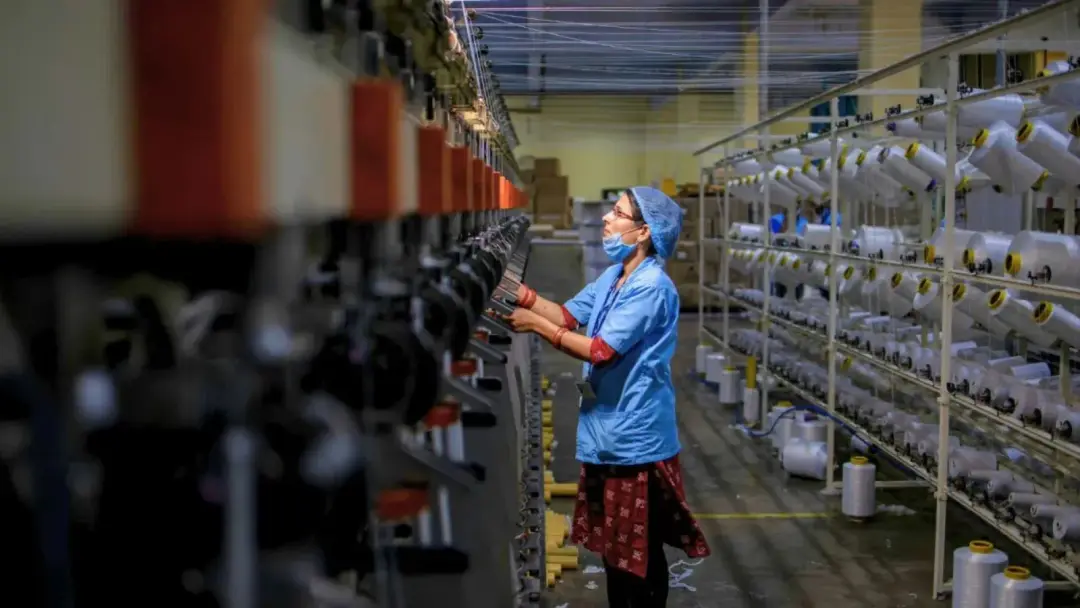
Eight-hour shift for textile workers not applicable: SGCCI
Textile workers' demand for Sunday weekly offs and eight-hour shifts is not applicable, Southern Gujarat Chamber of Commerce and Industry President Ashok Jirawala said on Tuesday. He said the sector would need five lakh more workers for embroidery units if eight-hour shifts were implemented. Protests that began in Amroli on August 16 spread to Katargam, Sachin GIDC, Pipodara and Kadodara. The chamber will submit a representation to Union ministries on yarn prices and power charges.
Source
Indian Express — Cities · read the original report ↗
Desk check · compared with the source
What the desk checked (5)
- Textile workers' demand for Sunday weekly offs and eight-hour shifts is 'not applicable'. — Directly attributed to SGCCI President Ashok Jirawala in a quote to The Indian Express; opinion of the chamber, not a verified fact.
- The sector would need five lakh more workers for embroidery units if eight-hour shifts are implemented. — Figure appears in source as Jirawala's quoted estimate; no supporting data or independent source given.
- Protests began in Amroli on August 16 and spread to Anjani Industries, Katargam, Sachin GIDC, Pipodara and Kadodara. — Stated in source without named source or official attribution.
- The chamber will submit a representation to the Union Ministries of Textiles, Industries and Power. — Attributed to Jirawala in a direct quote; a stated future intention.
- Suggestions included output-based wages, recovering 50% of damage cost from negligent workers and banning mobile phones in units. — Appears in source as meeting suggestions; proposers are not individually identified.
Analysts’ view opinion
This is less a pure labour-rights dispute than a fight over who absorbs a cost squeeze in Surat's textile cluster. The chamber's own argument — that cutting 12-hour shifts to eight would require five lakh additional embroidery workers — cuts both ways: a large extra wage bill for units, but also a large potential expansion in employment. With yarn prices, power tariffs and outages pressing on margins, owners are leaning toward output-linked pay, which shifts income risk onto the worker.
- Because polyester and man-made fibre costs track international crude, units have little control over raw material prices, so the pressure lands on labour costs instead.
- If the five-lakh estimate is even broadly right, a shorter shift is a cost shock for owners but also a jobs opportunity — the real question is at what wage that employment comes.
- Proposals such as output-based wages and recovering 50% of negligence-related damage from workers transfer earnings volatility from the firm to the worker.
- Insistence on cash wages signals weak PF/ESIC coverage and thin social-security enrolment, effectively deferring the cost of formalisation.
- Protests spreading from Amroli to Katargam, Sachin GIDC, Pipodara and Kadodara mean production disruption is already a real, if unquantified, cost.
What to watch — Watch how the Union textiles, industries and power ministries respond to the chamber's representation, and how long the stoppages keep output offline.
The five-lakh worker figure is the chamber's own assertion; the story does not establish independent verification, prevailing wage levels, the number of units affected, or any official government or union response.
Deep dive
Research brief · 8 facts · 4 dates · exam-readyThe brief
Context
Surat, Gujarat's man-made textile hub, has seen a wave of worker protests in embroidery and textile units demanding weekly offs on Sundays and eight-hour work shifts instead of the prevailing 12-hour shifts. The Southern Gujarat Chamber of Commerce and Industry (SGCCI), the region's apex industry body, convened a meeting of textile associations and labour officials at its Sarsana office where its president Ashok Jirawala said the demand is "not applicable". The same meeting also took up rising yarn prices, high power charges, power outages and compliance with the new labour laws, with the chamber deciding to petition the Union government.
Key facts
- SGCCI President Ashok Jirawala said on Tuesday that textile workers' demand for Sunday weekly offs and eight-hour shifts is "not applicable".
- Jirawala said the textile sector would need five lakh more workers for embroidery units if eight-hour shifts were implemented.
- He said industry workers work 12 hours everywhere, and unit owners give holidays when there is power staggering in their areas.
- The protest began in Amroli on August 16 and spread to Anjani Industries, Katargam, Sachin GIDC, Pipodara and Kadodara.
- At several factories workers halted operations entirely and staged intense demonstrations.
- SGCCI will submit a representation to the Union Ministry of Textiles, Ministry of Industries and Ministry of Power.
- The meeting discussed rising yarn prices, high power charges, power outages and implementation of labour laws.
- Suggestions at the meeting included wages based on work output, recovering 50% of damage cost from a negligent worker, and banning mobile phones inside units.
Timeline
- August 16Textile workers' protest begins in Amroli, Surat, over demands for Sunday offs and eight-hour shifts.
- After August 16Protests spread to Anjani Industries, Katargam, Sachin GIDC, Pipodara and Kadodara; workers halt operations at several factories.
- Tuesday (date not stated in the source)SGCCI holds a meeting with textile associations and labour officials at its Sarsana office; Jirawala says the eight-hour demand is not applicable.
- Coming daysSGCCI to submit a representation to the Union Ministries of Textiles, Industries and Power.
Who has a stake
- Embroidery and textile workers in Surat — Demand Sunday weekly offs and eight-hour shifts against the prevailing 12-hour working day; face proposals on output-linked wages and damage recovery.
- SGCCI (Southern Gujarat Chamber of Commerce and Industry) — Represents industry; argues the shift demand is unworkable and is petitioning the Centre on yarn prices, power charges and labour law compliance.
- Unit/factory owners — Agreed to comply with revised PF and ESIC regulations but cite worker insistence on cash wages; face labour costs and possible need for more workers.
- Union Ministries of Textiles, Industries and Power — Will receive SGCCI's representation on yarn prices, power charges, outages and labour law implementation.
- Labour officials — Participated in the SGCCI meeting; responsible for enforcement of labour laws in the units.
- Yarn and raw material suppliers / crude oil market — Rising international crude prices directly raise costs of polyester/man-made fibres, transportation and production, per the meeting.
Why it matters
Surat's textile and embroidery cluster employs a large informal workforce, and the clash over 12-hour versus eight-hour shifts is a test of how new labour law obligations such as PF and ESIC coverage are actually enforced on the ground. The dispute also links shop-floor conditions to macro pressures — crude-linked yarn prices and power costs — that industry says squeeze its ability to absorb higher labour costs.
UPSC angle
Prelims pointers
- SGCCI: Southern Gujarat Chamber of Commerce and Industry, headquartered at Sarsana, Surat; president Ashok Jirawala.
- Surat textile protest began at Amroli on August 16 and spread to Katargam, Sachin GIDC, Pipodara and Kadodara.
- SGCCI claim: five lakh additional workers needed for embroidery units if eight-hour shifts are implemented.
- GIDC: Gujarat Industrial Development Corporation; Sachin GIDC is a Surat industrial estate named in the protests.
- PF and ESIC are the social security regulations factory owners agreed to comply with in the meeting.
- SGCCI representation to be sent to Union Ministries of Textiles, Industries and Power.
Mains framing
The Surat dispute illustrates the structural tension in India's labour-intensive man-made textile clusters between statutory working-hour and social security norms and a production model built on long shifts, piece-rate wages and cash payments. Industry, through SGCCI, argues that an eight-hour shift is "not applicable" because it would require five lakh more embroidery workers and because 12-hour shifts are the norm, while offering holidays only during power staggering — an implicit admission that rest depends on power supply rather than worker entitlement. Workers' recourse has been direct action: protests from Amroli on August 16 spreading across Katargam, Sachin GIDC, Pipodara and Kadodara with complete halts at several factories. Compounding this are cost pressures flagged at the meeting: crude-linked polyester and yarn prices, transportation and production costs, high power tariffs and outages, which industry wants the Centre to address, arguing yarn prices should fall when crude prices do. The employers' own suggestions — output-linked wages, recovering 50% of negligence-caused damage from workers and banning mobile phones — raise questions of fairness and legality. A credible way forward lies in the tripartite route already begun (associations plus labour officials), transparent enforcement of PF and ESIC with bank-routed wages, and addressing input-cost and power reliability issues so that compliance is not framed as a trade-off against worker rights.
Key terms
- SGCCI
- Southern Gujarat Chamber of Commerce and Industry, the regional industry body based in Sarsana, Surat, that convened the meeting.
- Power staggering
- Scheduled rotation of industrial power supply; unit owners say they give workers holidays when staggering hits their area.
- GIDC
- Gujarat Industrial Development Corporation; Sachin GIDC is one of the Surat industrial estates where protests spread.
- PF and ESIC
- Provident Fund and Employees' State Insurance Corporation social security schemes; owners agreed to comply with revised regulations.
- Man-made fibres
- Polyester and similar synthetic fibres whose cost is directly linked to international crude oil prices, as discussed at the meeting.
- Output-based wages
- Paying workers according to work produced rather than time worked — a suggestion made at the SGCCI meeting.
Practice questions
- Examine the tension between statutory working-hour norms and the production model of India's labour-intensive textile clusters, with reference to the recent Surat protests.
- How do input costs such as crude-linked yarn prices and power tariffs shape employer resistance to labour law compliance in the man-made fibre textile sector? Discuss.
- Critically evaluate employer-side proposals such as output-linked wages, recovery of damage costs from workers and workplace mobile phone bans from the standpoint of labour rights and productivity.
Grounded only in the source report — figures and dates are the source's, not inferred.