
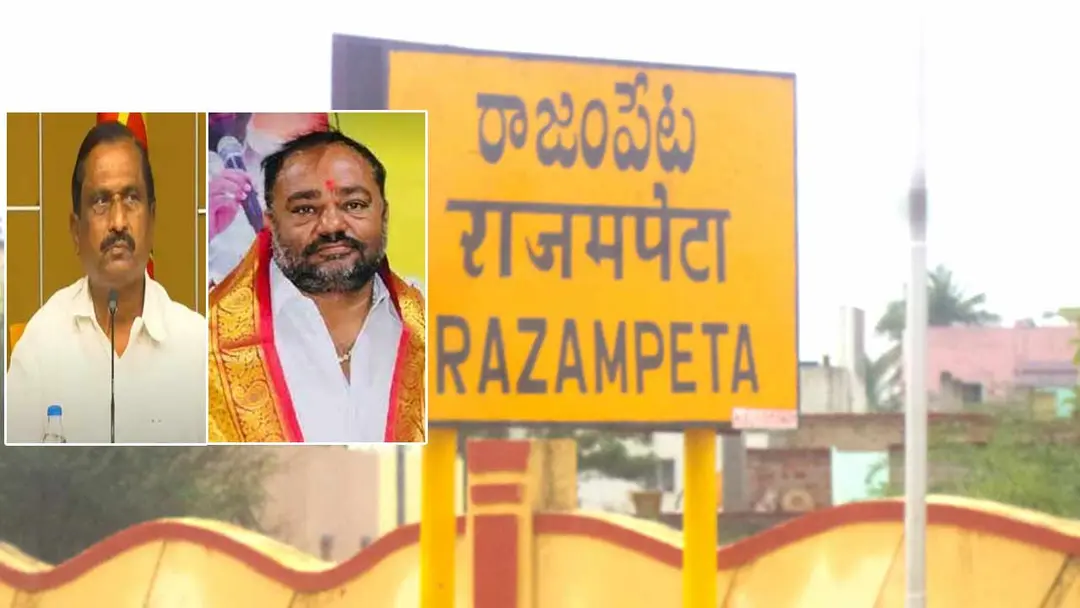
Factional differences surface again in Rajampet TDP
Factional differences resurfaced in the Telugu Desam Party in Rajampet constituency of Annamayya district. On Friday evening, party workers sat on their knees and raised slogans demanding that the assembly in-charge post be given to Bathyala Chengal Rayudu. Members of the Bathyala faction met at Padma Priya Kalyana Mandapam in Rajampet to press the demand. They alleged YSRCP covert operatives had entered the party and caused its defeat, and said the current in-charge ignores genuine workers, indirectly questioning Chamarthi Jaganmohan Raju.
Source
Annamayya — రాజకీయాలు · read the original report ↗
Desk check · some claims need care
What the desk checked (5)
- TDP workers sat on their knees and raised slogans on Friday evening demanding the Rajampet assembly in-charge post for Bathyala Chengal Rayudu — Described in the source as occurring at a meeting; no official or named spokesperson quoted.
- The meeting of the Bathyala faction was held at Padma Priya Kalyana Mandapam in Rajampet — Venue named in source; not independently corroborated in the text.
- YSRCP 'covert' operatives have entered the Rajampet TDP and caused the party's defeat there — Allegation attributed collectively to Bathyala faction members; no evidence or named source given.
- The current TDP in-charge is not responding to genuine party workers and is doing injustice to leaders and workers — Allegation by the faction; no response from the in-charge included in the source.
- Faction members indirectly questioned Chamarthi Jaganmohan Raju's role in Rajampet and his need for the in-charge post — Source says the reference was indirect; no direct quote attributed to a named speaker.
Analysts’ view opinion
What happened in Rajampet is not routine grumbling — it is an open contest over who controls a constituency the party lost. The choice to kneel while shouting slogans is a deliberately theatrical form of pressure on the leadership: it reads as devotion rather than indiscipline, which makes it harder to punish. With the assembly in-charge post effectively functioning as a first claim on the next ticket, the Bathyala camp is trying to stake that claim early.
- Blaming defeat on "YCP covert" infiltration is a classic internal manoeuvre that shifts accountability for losing onto the rival faction.
- The indirect jab at Chamarthi Jaganmohan Raju — questioning what a parliament-level office-bearer needs with a Rajampet in-charge post — frames the fight as one leader holding too many posts.
- For the opposition YSRCP this is free ammunition: visible disorder inside the governing party's local unit.
- The leadership faces an awkward choice — conceding rewards this playbook and invites copycat protests elsewhere, while ignoring it risks demoralising the ground cadre.
- The framing that these differences have surfaced "once again" suggests an entrenched personality-based rivalry that one meeting will not settle.
What to watch — Whether the leadership reshuffles the in-charge post or moves to discipline the protesters — that response will set the template for how long this factional fight runs.
The story carries no response from Chamarthi Jaganmohan Raju or the TDP leadership, and the "covert" claims are one faction's allegations, not established facts.
Deep dive
Research brief · 7 facts · 3 dates · exam-readyThe brief
Context
Rajampet is an assembly constituency in Andhra Pradesh's Annamayya district. The Telugu Desam Party (TDP) unit there has long-running factional rivalry, and it resurfaced when supporters of Bathyala Chengal Rayudu publicly demanded that he be made the party's assembly in-charge for Rajampet. Their protest indirectly targeted Chamarthi Jaganmohan Raju, described in the source as the parliament (unit) president, who currently holds/seeks the in-charge post. The TDP lost the Rajampet seat, and the protesting faction blames "YSRCP covert operatives" inside the party for the defeat.
Key facts
- Factional differences flared again in the TDP unit of Rajampet constituency, Annamayya district, as reported on June 7, 2025.
- On Friday evening, TDP workers sat on their knees and raised slogans demanding the Rajampet assembly in-charge post for Bathyala Chengal Rayudu.
- The Bathyala faction held its constituency-level meeting at Padma Priya Kalyana Mandapam in Rajampet.
- Faction members asked the party high command (adhishtanam) to recognise Chengal Rayudu's hard work.
- They alleged YSRCP covert operatives had infiltrated the Rajampet TDP and were the reason for the party's defeat there.
- They alleged the current TDP in-charge does not respond to genuine party workers and is doing injustice to leaders and cadre.
- Aimed indirectly at Chamarthi Jaganmohan Raju, they asked what business a parliament president has in Rajampet and why he needs the in-charge post.
Timeline
- Friday evening (before June 7, 2025)TDP workers of the Bathyala faction sit on their knees and raise slogans in Rajampet demanding the assembly in-charge post for Bathyala Chengal Rayudu.
- Same meetingFaction members gather at Padma Priya Kalyana Mandapam, allege YSRCP covert operatives caused the party's defeat and question the present in-charge.
- June 7, 2025, 8:51 amThe report on the resurfaced factional differences is published.
Who has a stake
- Bathyala Chengal Rayudu — His supporters want him appointed Rajampet TDP assembly in-charge, arguing his work for the party deserves recognition.
- Chamarthi Jaganmohan Raju — Described as parliament president; indirectly questioned over holding/claiming the Rajampet assembly in-charge post.
- Telugu Desam Party high command — Must settle the in-charge dispute; faction appeals to it to recognise Chengal Rayudu's efforts.
- TDP workers and local leaders in Rajampet — Complain of being ignored by the present in-charge and of injustice to genuine cadre.
- YSRCP — Accused by the protesting faction of planting covert operatives inside the Rajampet TDP, causing its defeat.
Why it matters
Constituency-level in-charge posts decide who controls party machinery, ticket prospects and access to the leadership, so such disputes can weaken a ruling party's local organisation. The open protest by workers, and the charge that rival-party "covert operatives" caused the defeat, shows how factionalism and distrust shape politics in Rayalaseema constituencies like Rajampet.
UPSC angle
Prelims pointers
- Rajampet assembly constituency lies in Annamayya district of Andhra Pradesh.
- Bathyala Chengal Rayudu is the leader whose faction demands the Rajampet TDP assembly in-charge post.
- Chamarthi Jaganmohan Raju, referred to as parliament president, is the leader indirectly questioned in the protest.
- The faction's meeting venue was Padma Priya Kalyana Mandapam, Rajampet.
- 'Adhishtanam' (high command) is the party leadership that appoints constituency in-charges.
- Report date: June 7, 2025; protest held the preceding Friday evening.
Mains framing
Party organisation at the constituency level is the base of electoral politics, and the Rajampet episode illustrates how appointment of an assembly in-charge becomes a flashpoint. The Bathyala faction's grievances are threefold: non-recognition of a loyal leader's work, an in-charge who allegedly ignores genuine workers, and alleged infiltration by rival YSRCP "covert operatives" blamed for the party's defeat in Rajampet. Such intra-party factionalism, expressed through public protest rather than internal channels, can demoralise cadre, blur accountability for electoral losses and give ammunition to opponents. The way forward, as the source itself suggests through the appeal to the high command, lies in transparent, merit- and work-based selection of constituency in-charges, credible internal grievance redressal so that workers need not kneel in public to be heard, and verification of infiltration charges instead of allowing them to circulate as blame for defeat. Beyond Rajampet, the case points to the wider need for institutionalised internal democracy in Indian political parties.
Key terms
- TDP (Telugu Desam Party)
- Andhra Pradesh political party whose Rajampet unit is split into rival factions in this story.
- Assembly in-charge
- Party functionary entrusted with organisational responsibility for a specific assembly constituency.
- YSRCP covert operatives ('covertulu')
- Term used by the faction for alleged rival-party plants working inside TDP to cause its defeat.
- Adhishtanam (high command)
- Central party leadership that decides appointments such as constituency in-charge.
- Annamayya district
- Andhra Pradesh district in which Rajampet constituency is located.
Practice questions
- Intra-party factionalism at the constituency level weakens political accountability. Discuss with reference to disputes over organisational posts such as assembly in-charge.
- What measures can strengthen internal democracy and grievance redressal within Indian political parties? Illustrate your answer.
- Examine how allegations of 'covert operatives' and defections shape political competition in Andhra Pradesh's regional party system.
Grounded only in the source report — figures and dates are the source's, not inferred.