
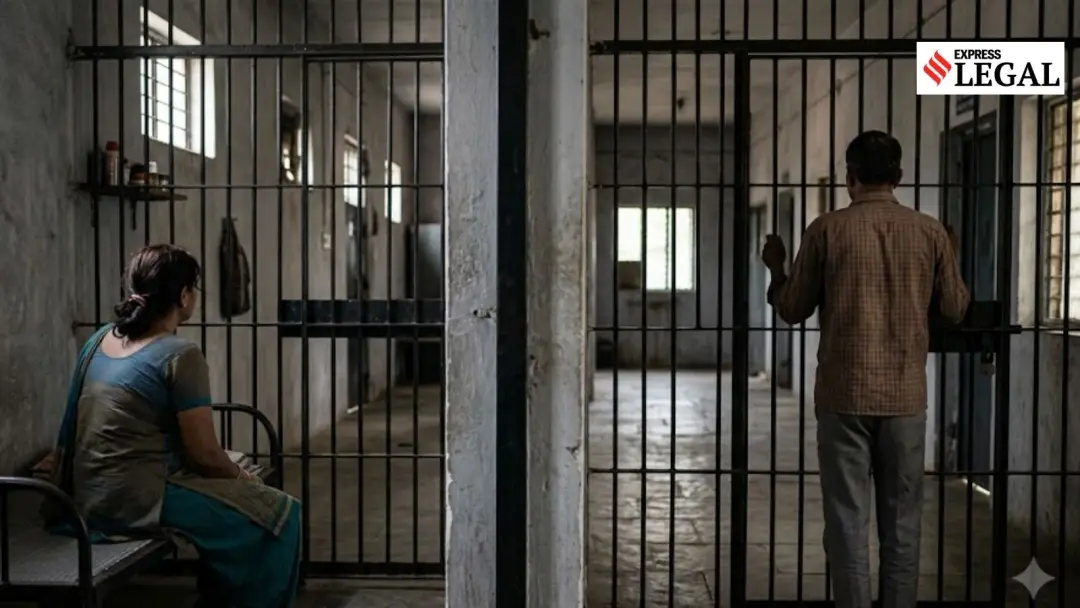
Fourth conviction in Shivamogga IS conspiracy case, six years jail
An NIA special court in Bengaluru on Monday sentenced Huzair Farhan Baig, accused No 5 in the Shivamogga Islamic State conspiracy case, to six years' rigorous imprisonment and a fine of Rs 58,000. Baig, who pleaded guilty, is the fourth person convicted in the case. The NIA alleged he arranged a hideout in Bengaluru for terrorist activities and received funds in cryptocurrency. He was convicted under IPC and UAPA sections. Four chargesheets name 12 accused.
Source
Indian Express — Cities · read the original report ↗
Desk check · compared with the source
What the desk checked (5)
- NIA special court in Bengaluru sentenced Huzair Farhan Baig to six years' rigorous imprisonment and a Rs 58,000 fine on Monday. — Figures and sentence appear in source, attributed to the NIA special court order.
- Baig pleaded guilty and arranged a hideout in Bengaluru for terrorist activities. — Stated in source; the hideout role is an NIA allegation, the guilty plea is reported as fact.
- Case registered by Karnataka Police in September 2022, taken over and re-registered by NIA on November 15, 2022. — Dates appear in source without further documentary citation.
- Baig received funds in cryptocurrency in friends' bank accounts, later converted to fiat currency. — Attributed to NIA investigation; not independently verifiable here.
- Arafath Ali was sentenced in April 2026; Zabiulla and Nadeem Faizal in November 2025. — Both dates appear in source; the April 2026 date is internally inconsistent with the sequence described and should be checked by an editor.
Analysts’ view opinion
This is not a verdict after a contested trial — it is a conviction following a plea of guilty, which means the court did not have to test the NIA's allegations against evidence. Notably, four accused in this case have now drawn identical six-year terms, suggesting an emerging sentencing pattern. The combination charged — IPC 120B and 121A alongside UAPA Sections 17, 18, 20, 38, 39 and 40 — shows how the prosecution bundled fundraising, conspiracy, membership and support into a single architecture.
- In a guilty-plea conviction the court does not weigh evidence, so the NIA's allegations should be read as unchallenged rather than judicially proven after scrutiny.
- UAPA Sections 17 (raising funds), 18 (conspiracy), 20 (membership of a terrorist organisation) and 38–40 (association, support, fundraising) criminalise the preparatory stage, without requiring a completed violent act.
- The allegation that cryptocurrency was routed through friends' bank accounts and converted to cash makes digital-asset tracing a central evidentiary question in terror-financing prosecutions.
- With four chargesheets against 12 accused but only four convictions so far, the bulk of the litigation — including the case against the alleged online handler said to be absconding — remains pending.
- Because one convict's separate Mangaluru graffiti case is still on trial, this sentence cannot be treated as prejudging that matter; each charge must be independently established.
What to watch — Watch how the remaining accused are tried, whether any appeal is filed (appellate scope is narrow after a guilty plea), and what progress is made against the person described as absconding.
The story does not establish the circumstances of the guilty plea, whether any understanding on sentence reduction existed, how much time was already spent in custody as a set-off, or whether an appeal is intended.
Deep dive
Research brief · 8 facts · 9 dates · exam-readyThe brief
Context
The Shivamogga Islamic State (IS) conspiracy case concerns an alleged IS module operating in Karnataka's Shivamogga district, whose members were said to have been radicalised online by a handler using the alias 'Colonel', later identified as Mohammed Shaheed Faisal, who is absconding. The module was accidentally unearthed after a stabbing incident in Shivamogga city on Independence Day. The case was first registered by Karnataka Police in September 2022 and re-registered by the National Investigation Agency (NIA) on November 15, 2022. An NIA special court in Bengaluru has now convicted a fourth accused, Huzair Farhan Baig, who pleaded guilty.
Key facts
- Huzair Farhan Baig alias Huzair, accused No 5, was sentenced to six years' rigorous imprisonment and a fine of Rs 58,000 by an NIA special court in Bengaluru on Monday.
- Baig is the fourth person convicted in the case, which was registered four years ago; he pleaded guilty to the charges.
- The case was registered by Karnataka Police in September 2022 and re-registered by the NIA on November 15, 2022.
- Baig was convicted under IPC Sections 120B and 121A and UAPA Sections 17, 18, 20, 38, 39 and 40.
- NIA alleges Baig arranged a hideout in Bengaluru for terrorist activities on the instructions of co-accused Maaz Muneer Ahmed, and was radicalised by Ahmed and Syed Yasin.
- Investigation found Baig received funds as cryptocurrency in bank accounts of his friends; it was converted to fiat currency to pay for the hideout.
- The NIA has filed four chargesheets against 12 accused in the case so far.
- Earlier convicts: Arafath Ali, 26 (six years' RI in April 2026 after pleading guilty); Zabiulla alias Charbi, 34, and Nadeem Faizal, 29, both Shivamogga residents (six years each in November 2025).
Timeline
- January 2020Arafath Ali, later a convict in the case, fled India.
- December 2020Provocative graffiti painted in Mangaluru; Arafath Ali is a co-accused in that case, still under trial.
- Independence Day (August 15), year not stated in the sourceA stabbing incident in Shivamogga city accidentally led to the unearthing of the ISIS terror module.
- September 2022Case initially registered by the Karnataka Police.
- November 15, 2022NIA took over and re-registered the case.
- September 2023Arafath Ali arrested by NIA at Delhi airport after being deported from Kenya.
- November 2025Zabiulla and Nadeem Faizal sentenced to six years in prison each.
- April 2026Arafath Ali sentenced to six years' rigorous imprisonment after pleading guilty.
- Monday (date as reported)Huzair Farhan Baig sentenced to six years' RI and Rs 58,000 fine, becoming the fourth convict.
Who has a stake
- National Investigation Agency (NIA) — Investigating agency that re-registered the case, filed four chargesheets against 12 accused and secured four convictions.
- NIA Special Court, Bengaluru — Trial court convicting and sentencing the accused under IPC and UAPA provisions.
- Huzair Farhan Baig (accused No 5) — Convicted on a guilty plea; faces six years' rigorous imprisonment and a Rs 58,000 fine.
- Karnataka Police — Registered the original case in September 2022 after the Shivamogga stabbing incident before handover to the NIA.
- Mohammed Shaheed Faisal alias 'Colonel' — Alleged online handler who radicalised the accused; absconding and wanted in several NIA terror cases.
- Other accused, including Maaz Muneer Ahmed and Syed Yasin — Named as co-accused who allegedly radicalised and directed Baig; trial/proceedings continue.
Why it matters
The case shows how an online handler abroad allegedly radicalised youths in a district town, and how cryptocurrency routed through friends' bank accounts was used to fund a safe house. Successive guilty pleas and convictions under UAPA indicate steady prosecution progress, even as the alleged handler remains absconding and eight of the 12 chargesheeted accused are yet to be convicted.
UPSC angle
Prelims pointers
- Shivamogga IS conspiracy case: registered by Karnataka Police in September 2022; re-registered by NIA on November 15, 2022.
- Baig convicted under IPC Sections 120B (criminal conspiracy) and 121A, and UAPA Sections 17, 18, 20, 38, 39, 40.
- NIA has filed four chargesheets against 12 accused; four have been convicted so far.
- Sentence for Baig: six years' rigorous imprisonment plus Rs 58,000 fine, by NIA Special Court, Bengaluru.
- Alleged online handler used the alias 'Colonel', identified as Mohammed Shaheed Faisal, absconding.
- Arafath Ali was deported from Kenya and arrested at Delhi airport in September 2023.
Mains framing
The Shivamogga IS conspiracy case illustrates the changing anatomy of terror recruitment in India: radicalisation conducted remotely by an online handler using an alias, local recruitment through peer networks, arrangement of urban hideouts, and terror financing routed through cryptocurrency converted into fiat currency via friends' bank accounts. That the module was unearthed 'accidentally' after a stabbing incident on Independence Day points to gaps in early detection of small, self-contained cells in tier-two cities, while the transfer of the case from state police to the NIA reflects the federal architecture for investigating terror offences. The prosecution's record — four convictions, four chargesheets against 12 accused, and sentences of six years each under IPC Sections 120B and 121A and UAPA Sections 17, 18, 20, 38, 39 and 40 — shows that guilty pleas can shorten trials, yet the absconding handler wanted in several NIA cases underlines the limits of domestic enforcement against transnational handlers. The way forward, on the source's own evidence, lies in tracing crypto-to-fiat conversion chains and mule accounts, coordination between state police and central agencies, and sustained monitoring of online radicalisation, alongside completing trials of the remaining accused.
Key terms
- NIA (National Investigation Agency)
- Central agency that took over and re-registered the Shivamogga case and files chargesheets before designated NIA special courts.
- UAPA
- Unlawful Activities (Prevention) Act; Baig was convicted under its Sections 17, 18, 20, 38, 39 and 40 relating to terror offences.
- IPC Section 120B
- Criminal conspiracy provision of the Indian Penal Code, one of the sections under which Baig was convicted.
- IPC Section 121A
- IPC provision applied in the case alongside Section 120B in the conviction of Baig.
- Rigorous imprisonment (RI)
- Custodial sentence involving hard labour; each of the four convicts in this case received six years' RI/imprisonment.
- Cryptocurrency-to-fiat conversion
- Method allegedly used here: crypto funds received in friends' bank accounts were converted into regular currency to pay for the hideout.
Practice questions
- How do online handlers and encrypted platforms alter the challenge of detecting terror modules in smaller Indian cities? Discuss with reference to the Shivamogga IS conspiracy case.
- Examine the role of cryptocurrency in terror financing and the investigative capacities needed to trace such transactions in India.
- Discuss the division of responsibility between state police and the National Investigation Agency in terror cases, using the Shivamogga case as an illustration.
Grounded only in the source report — figures and dates are the source's, not inferred.