
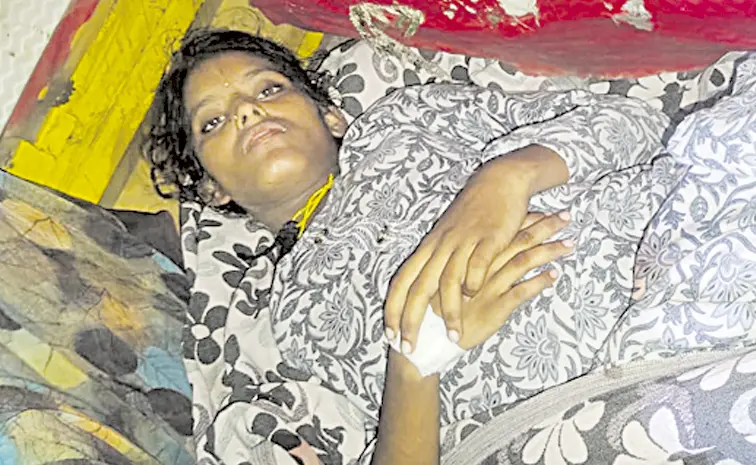
Differently abled woman gives birth in RTC bus, left on road
Arthina Lavanya, a differently abled woman from Vedullapalli in Bapatla mandal, gave birth to a boy in a Vijayawada–Chirala RTC bus between Narakoduru and Chebrolu. Despite pleas from her family and passengers, the driver and conductor did not stop at a hospital and left the mother and newborn on the road at night, the report said. A 'Sakshi' reporter on the bus shifted them by auto to Chebrolu PHC, where they waited two hours without doctors before a nurse gave first aid. The low-weight baby was moved to Guntur GGH.
Source
Guntur — స్థానికం · read the original report ↗
Desk check · some claims need care
What the desk checked (5)
- A differently abled pregnant woman, Arthina Lavanya of Vedullapalli in Bapatla mandal, gave birth in a Vijayawada–Chirala RTC bus between Narakoduru and Chebrolu at night. — Detailed first-hand account in source; reporter says he was on the same bus; no official confirmation cited.
- Bus driver and conductor refused pleas from family and passengers and left the mother and newborn on the roadside. — Allegation reported by the source; no response from RTC staff or transport authorities included.
- Guntur GGH doctors sent her home saying delivery was still ten days away, after Bapatla hospital referred her for low foetal weight. — Stated in source without attribution to any named doctor or hospital record.
- No doctor or head nurse was present at Chebrolu PHC; the family waited two hours and a duty nurse gave first aid and cut the umbilical cord. — Reported by the source; no official PHC comment given.
- The low-birth-weight baby with breathing difficulty was shifted to Guntur GGH in a special vehicle. — Appears in source; outcome of mother and child not further detailed.
Analysts’ view opinion
What begins as a personal tragedy is politically a story about the state machinery — and specifically about two of the most visible public services, the state road transport corporation and government healthcare. The combination of a disabled woman from a poor family, a night-time roadside drop-off and a primary health centre without a doctor hands the opposition an emotionally powerful and easily communicated line of attack. In such cases the usual official response is fast and personnel-focused — action against individual staff — precisely to keep the debate away from systemic gaps.
- The story records that the family and locals are demanding action, and such demands can quickly harden into political pressure.
- Suspending or acting against the driver and conductor is the politically cheapest and most visible remedy; vacancies and doctor availability at primary health centres are slower and costlier to fix.
- Failure appears at four points — the Bapatla hospital, Guntur GGH, the Chebrolu PHC and the RTC bus — which makes single-point blame hard and therefore more awkward for the administration.
- Disability welfare, rural healthcare and night-time public transport safety can be bundled by opponents into one campaign theme.
- Because the incident surfaced through a journalist who was on the same bus, the account carries extra amplification and is harder to brush aside.
What to watch — Watch how quickly RTC management and the health department issue statements or order inquiries — and whether the response stops at individual staff or touches staffing and night-time service gaps.
The account rests on a single news organisation's reporting; the staff's version, the outcome of any official inquiry and reactions from political leaders are not established here.
Deep dive
Research brief · 8 facts · 6 dates · exam-readyThe brief
Context
Arthina Lavanya, a differently abled woman from Vedullapalli in Bapatla mandal of Andhra Pradesh, went into labour inside a Vijayawada–Chirala APSRTC bus while returning home from Guntur at night. She had been sent to Guntur GGH earlier the same day for a low-weight foetus, but doctors there told her the delivery was still ten days away and sent her home. She delivered a boy in the moving bus between Narakoduru and Chebrolu, after which the driver and conductor left mother and newborn on the roadside without even cutting the umbilical cord. A 'Sakshi' reporter travelling in the same bus arranged an auto and shifted them to the Chebrolu PHC, where no doctor was available for two hours.
Key facts
- Arthina Lavanya, a differently abled woman of Vedullapalli village, Bapatla mandal, was married six years ago to Gopiraju, a shepherd; the couple already has a daughter.
- On Monday she went to the Bapatla government hospital, where doctors said the foetus was underweight and referred her to Guntur GGH for better care.
- She travelled to Guntur GGH by ambulance, but doctors there said the delivery was still ten days away and sent her home.
- She boarded a Vijayawada–Chirala RTC bus of the Chirala depot at Guntur bus stand along with her grandmother and sisters to return to Bapatla.
- Labour pains began near Narakoduru soon after the bus started; the driver and conductor refused pleas from family and passengers to stop at a nearby hospital.
- She delivered a baby boy inside the bus between Narakoduru and Chebrolu villages; staff left the mother and the newborn, with the umbilical cord uncut, on the roadside at night.
- Bapatla Rural 'Sakshi' reporter Angirekula Koteswararao, travelling in the same bus, got off with them and arranged an auto to the Chebrolu Primary Health Centre.
- No doctor or head nurse was present at the Chebrolu PHC; the mother and baby waited two hours in the auto before a duty nurse gave first aid and cut the umbilical cord.
Timeline
- Six years agoLavanya married Gopiraju, a shepherd; the couple already has one daughter.
- Monday (daytime)Lavanya visits Bapatla government hospital; doctors find the foetus underweight and refer her to Guntur GGH.
- Monday, laterShe reaches Guntur GGH by ambulance; doctors say delivery is ten days away and send her home.
- Monday nightShe boards the Vijayawada–Chirala RTC bus at Guntur; labour begins near Narakoduru and she delivers a boy between Narakoduru and Chebrolu.
- Same nightBus staff leave mother and newborn on the roadside; 'Sakshi' reporter shifts them by auto to Chebrolu PHC.
- After two hours at the PHCDuty nurse gives first aid and cuts the cord; the low-weight baby with breathing difficulty is shifted in a special vehicle to Guntur GGH.
Who has a stake
- Arthina Lavanya and her newborn son — Life and health; the baby was underweight and had breathing difficulty, requiring transfer to Guntur GGH.
- Lavanya's family (grandmother, sisters, husband Gopiraju) — They pleaded with bus staff in vain and are now demanding action against those responsible.
- APSRTC driver and conductor of the Vijayawada–Chirala bus (Chirala depot) — Face criticism and demands for action for refusing to stop and leaving mother and baby on the road.
- Guntur GGH doctors — Criticised for sending a referred high-risk pregnant woman home saying delivery was ten days away.
- Chebrolu Primary Health Centre staff — Criticised for absence of any doctor or head nurse; a duty nurse eventually provided first aid.
- 'Sakshi' reporter Angirekula Koteswararao — Intervened as a bystander and arranged transport, credited in the report with saving the two lives.
- Local residents — Demanding disciplinary action against negligent medical officers, staff and the bus crew.
Why it matters
The episode exposes how a referral chain meant to protect high-risk pregnancies — district hospital to Guntur GGH to the local PHC — failed at every link, leaving a differently abled woman to deliver in a public bus and wait two hours without a doctor. It also shows how public transport staff behaved when a medical emergency arose on board, with a journalist-bystander filling the gap that institutions left. Maternal and newborn survival in such cases depends on exactly these last-mile links working at night.
UPSC angle
Prelims pointers
- Vedullapalli village lies in Bapatla mandal; the incident occurred between Narakoduru and Chebrolu villages.
- The bus involved was a Vijayawada–Chirala APSRTC service belonging to the Chirala depot.
- GGH stands for Government General Hospital; the referral in this case was to Guntur GGH.
- A Primary Health Centre (PHC) is the first institutional contact point in the rural public health system — here the Chebrolu PHC had no doctor or head nurse on duty.
- The Bapatla government hospital referred the woman upward because the foetus was underweight.
Mains framing
The Chebrolu incident is a case study in last-mile failure of maternal health care rather than of absent institutions: the woman did reach a government hospital at Bapatla, was correctly referred upward to Guntur GGH for a low-weight foetus, and was moved by ambulance — yet she was sent home on an assessment that delivery was ten days away, with no arrangement for a high-risk, differently abled patient's return journey. The second failure was human: despite pleas from family and fellow passengers, the RTC driver and conductor refused to divert to a hospital and later abandoned a post-delivery mother and an infant with an uncut umbilical cord on a road at night. The third was institutional absence — the Chebrolu PHC, located on the main road, had neither doctor nor head nurse, forcing a two-hour wait in an auto until a duty nurse intervened. The implications cut across accountability for referral decisions, night-time staffing of PHCs, emergency-response protocols for transport staff, and specific protections for differently abled and high-risk pregnant women. The way forward, as demanded by the family and locals in the source, begins with action against the negligent medical officers, staff and the bus crew; the source does not state any official policy response.
Key terms
- GGH (Government General Hospital)
- Large state-run tertiary hospital; Guntur GGH was where the woman was referred and where the newborn was finally taken.
- PHC (Primary Health Centre)
- Basic rural government health facility; the Chebrolu PHC here had no doctor or head nurse available.
- APSRTC bus (Vijayawada–Chirala service)
- State road transport corporation bus of the Chirala depot in which the delivery took place.
- Referral
- Sending a patient from a lower facility to a better-equipped one; Bapatla hospital referred Lavanya to Guntur GGH for the underweight foetus.
- Low birth weight
- Underweight baby; the newborn had breathing difficulty and needed transfer to Guntur GGH in a special vehicle.
Practice questions
- The Chebrolu case shows that maternal deaths and near-misses often occur despite contact with the public health system. Discuss the accountability gaps in referral and night-time staffing that such incidents reveal.
- Should public transport crews be bound by a legally defined duty to respond to medical emergencies on board? Examine with reference to this incident.
- Differently abled women face compounded barriers in accessing maternal health care. Suggest concrete measures for high-risk pregnancy management in rural Andhra Pradesh, drawing on this case.
Grounded only in the source report — figures and dates are the source's, not inferred.