
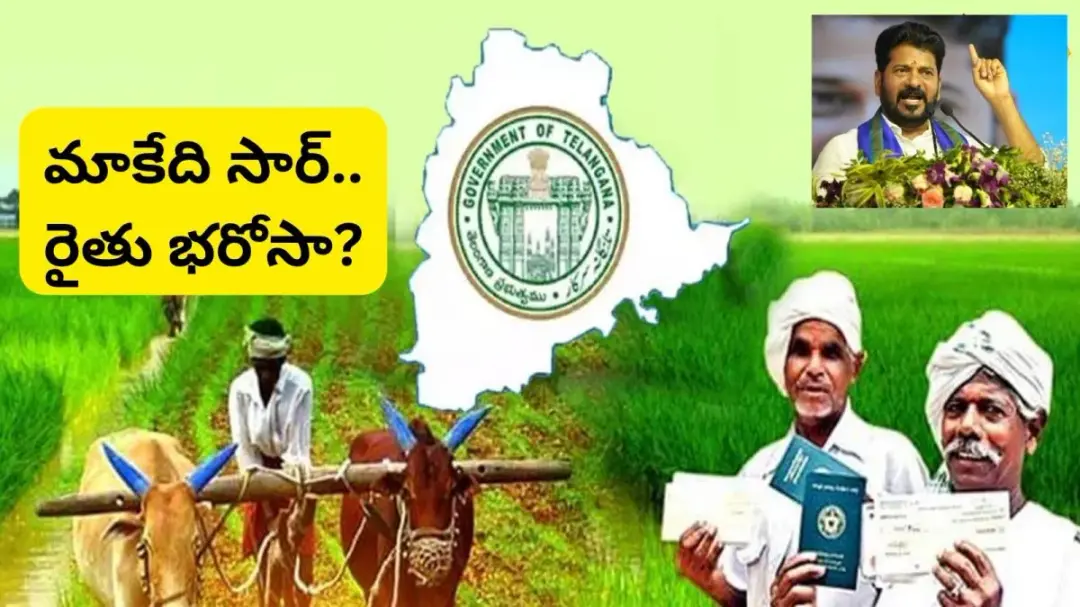
Land record gaps cloud Rythu Bharosa rollout in Telangana
Land rights and record problems in Telangana are affecting implementation of the Rythu Bharosa scheme. Though Bhu Bharati replaced Dharani, old record issues and non-delivery of pattadar passbooks persist. Revenue Minister Ponguleti Srinivas Reddy said in March 2026 that over 9 lakh sadabainama applications relating to transactions before 2 June 2014 are pending. Complaints cite survey delays and money being collected for surveys. In Kokapet, Narsingi and Puppalaguda, some built-up land remains recorded as agricultural.
Source
Rythu Bharosa (TS) · read the original report ↗
Desk check · some claims need care
What the desk checked (4)
- Over 9 lakh sadabainama applications relating to transactions before 2 June 2014 are pending. — Attributed in source to Revenue Minister Ponguleti Srinivas Reddy, stated as said in March 2026; date appears in source as written.
- The Bhu Bharati system replaced Dharani but old land record problems persist. — Presented as background in the source with no specific document or official cited.
- Farmers allege field-level survey processes are delayed and that money has to be paid for surveys. — Unattributed allegations reported as complaints; no named source or data given.
- Land in Kokapet, Narsingi and Puppalaguda remains classified as agricultural in records despite large-scale construction. — Framed in the source as questions being raised, not as verified record data.
Analysts’ view opinion
This is fundamentally a plumbing problem, not a policy problem: a cash transfer scheme can only be as accurate as the land record it rides on. With more than 9 lakh sadabainama applications still pending as stated by the Revenue Minister in March 2026, and passbooks not reaching some holders, the risk runs in two directions at once — genuine tillers waiting for money they qualify for, and payments potentially flowing to land that is agricultural only on paper. Both outcomes are fiscal leakage of a kind, and both weaken the growth return on every rupee the state spends on farm support.
- The economic cost of record errors is borne disproportionately by small and tenant-style cultivators, for whom a delayed transfer is a working-capital shock at sowing or input-purchase time.
- Unclear titles do more than block a subsidy — they weaken collateral value for farm credit, which is usually the costlier constraint for a farming household than the transfer itself.
- The Kokapet, Narsingi and Puppalaguda examples flagged in the story point to a targeting risk where urbanised land still sits in records as agricultural, which is exactly where scheme spending delivers least agricultural benefit.
- Allegations of money being demanded for survey work, if borne out, function as an informal tax that raises the effective cost of claiming a supposedly free entitlement.
- Replacing Dharani with Bhu Bharati changes the system layer, but the legacy data problem and the absence of a comprehensive survey mean the cleanup cost is deferred rather than removed.
What to watch — Watch the rate at which the pending sadabainama applications and pass book issuance are actually cleared before the next Rythu Bharosa disbursement cycle — that clearance pace, more than the scheme's headline size, will decide how much of the money reaches working farmers.
The story does not establish how many farmers were actually denied or delayed payment, the rupee value at stake, or whether the survey-payment allegations have been verified.
Deep dive
Research brief · 8 facts · 4 dates · exam-readyThe brief
Context
Telangana gives farm investment support under the Rythu Bharosa scheme, but eligibility is tied to land records showing clear ownership. Since the state's formation, land records were cleaned up and computerised, agricultural registration moved to tahsildar offices, and the Dharani portal was introduced; the government has now replaced Dharani with the Bhu Bharati system. Because no comprehensive land survey has been carried out, disputes over boundaries, ownership rights and record entries persist, and many cultivators still lack updated pattas or pattadar passbooks. This leaves genuine farmers waiting for scheme benefits while some non-agricultural land remains classified as agricultural.
Key facts
- Telangana replaced the Dharani portal with the Bhu Bharati land records system, but old record problems remain unresolved.
- Revenue Minister Ponguleti Srinivas Reddy said in March 2026 that over 9 lakh sadabainama applications are pending.
- The pending sadabainama applications relate to white-paper land transactions done before 2 June 2014.
- The Minister said the Bhu Bharati Act includes provisions to resolve sadabainama cases, including taking an affidavit from the buyer.
- No comprehensive land survey has been conducted, so boundary, ownership and record-entry disputes continue in many areas.
- Applications are filed through Mee Seva, after which the mandal surveyor must inspect boundaries, issue notices to neighbouring farmers and conduct panchanama.
- There are complaints of delays in the field-level survey process and allegations that money is being collected for surveys.
- In Kokapet, Narsingi and Puppalaguda on Hyderabad's outskirts, land with large constructions is still recorded as agricultural land.
Timeline
- Before 2 June 2014Sadabainama (white-paper) land purchases took place; over 9 lakh such applications later remain pending for regularisation.
- After Telangana's formationLand records purification, computerisation, the Dharani portal and registration of agricultural land at tahsildar offices were introduced.
- Later (date not stated in the source)The government brought in the Bhu Bharati system in place of Dharani, with provisions to settle sadabainama cases.
- March 2026Revenue Minister Ponguleti Srinivas Reddy states that over 9 lakh sadabainama applications are pending.
Who has a stake
- Genuine cultivating farmers — Without clear recording of rights and pattadar passbooks, they risk missing Rythu Bharosa financial assistance.
- Sadabainama buyers (pre-2 June 2014) — Over 9 lakh pending applications keep their purchases unregularised and rights unrecorded.
- Telangana Revenue Department and Minister Ponguleti Srinivas Reddy — Responsible for clearing pending cases under Bhu Bharati and ensuring benefits reach rightful beneficiaries.
- Mandal surveyors and Mee Seva system — Field verification, notices and panchanama depend on them; delays and money-collection allegations hit credibility.
- Landowners in Kokapet, Narsingi, Puppalaguda — Built-up land still shown as agricultural raises questions of wrongful eligibility for farm support.
Why it matters
Rythu Bharosa money flows on the basis of land records, so errors in those records decide who gets state support and who is left out. Unless records are comprehensively corrected and actual cultivators identified, genuine farmers may be excluded while urbanised, built-up plots recorded as agricultural could still draw benefits.
UPSC angle
Prelims pointers
- Bhu Bharati is the land records system introduced in Telangana in place of the Dharani portal.
- Sadabainama refers to land purchases made on white paper without registered deeds; the cut-off date cited is 2 June 2014.
- Over 9 lakh sadabainama applications were pending as per the Revenue Minister in March 2026.
- Ponguleti Srinivas Reddy is the Telangana Revenue Minister named in the story.
- Land-issue applications are filed via Mee Seva; the mandal surveyor conducts boundary inspection and panchanama.
- Kokapet, Narsingi and Puppalaguda are Hyderabad-outskirt areas where built-up land is still recorded as agricultural.
Mains framing
Telangana's experience shows that welfare delivery in agriculture is only as good as the land record it rests on. Successive interventions since the state's formation — record purification, computerisation, registration of agricultural land at tahsildar offices, the Dharani portal and now Bhu Bharati — have digitised data without resolving the underlying problem: the absence of a comprehensive land survey, leaving boundaries, ownership rights and record entries in conflict. This creates two symmetrical failures for Rythu Bharosa: genuine cultivators whose mutation is incomplete or who have not received pattadar passbooks, and over 9 lakh pre-2 June 2014 sadabainama buyers, remain outside the record, while urbanised plots in Kokapet, Narsingi and Puppalaguda continue to be classified as agricultural. Process gaps compound this — delays in mandal-level survey after Mee Seva applications, cases where field verification and panchanama still yield no permanent settlement, and allegations that money is demanded for surveys. The way forward suggested in the source is comprehensive correction of land records and accurate identification of those actually cultivating, so that assistance reaches the rightful beneficiaries; the Bhu Bharati Act's affidavit-based route for sadabainama cases is one such step.
Key terms
- Rythu Bharosa
- Telangana's farm financial assistance scheme whose delivery depends on land ownership details in records.
- Bhu Bharati
- Telangana's new land records system and law brought in to replace the Dharani portal.
- Dharani
- The earlier Telangana land records and registration portal, now replaced by Bhu Bharati.
- Sadabainama
- Land purchase recorded on plain white paper without registration; being regularised for transactions before 2 June 2014.
- Pattadar passbook
- Official document evidencing a landholder's title; non-delivery blocks access to farmer schemes.
- Panchanama
- Field record drawn up by the surveyor after inspecting boundaries and notifying neighbouring farmers.
Practice questions
- Land records, not land itself, decide who gets farm support in India. Examine this with reference to Telangana's shift from Dharani to Bhu Bharati.
- Discuss how the absence of a comprehensive land survey undermines the regularisation of sadabainama transactions and the targeting of farmer income support schemes.
- Urbanised land continuing to be recorded as agricultural raises both fiscal and equity concerns. Critically analyse in the context of Rythu Bharosa.
Grounded only in the source report — figures and dates are the source's, not inferred.