
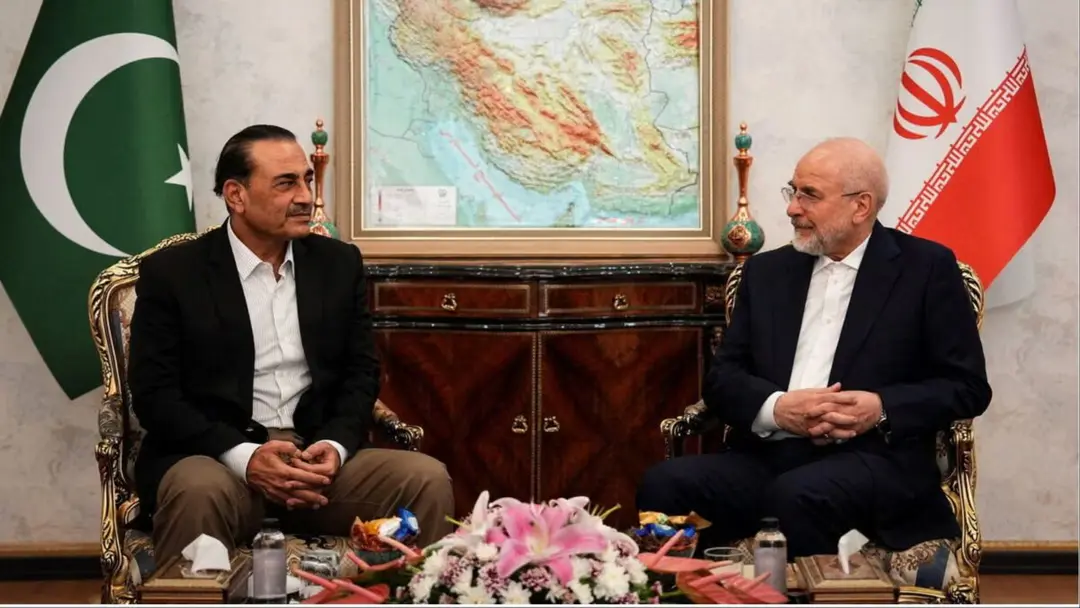
Iran says no US message conveyed through Pakistan during Naqvi visit
Iran has said no message or specific proposal from the United States was conveyed through Pakistan during Pakistani Interior Minister Mohsin Naqvi's visit to Tehran. The Iranian Foreign Ministry said the visit focused on bilateral relations, existing agreements and following up on understandings reached at the leadership level. Tehran said ties with Pakistan were strengthening and acknowledged Islamabad's role in regional diplomacy. Reuters had reported in August that Naqvi and Army chief Asim Munir discussed de-escalation in Tehran.
Source
CNN-News18 · read the original report ↗
Desk check · some claims need care
What the desk checked (5)
- No US message or proposal was conveyed through Pakistan during Mohsin Naqvi's Tehran visit. — Attributed to Iran, as learnt by CNN-News18; no named official quoted for this line.
- Iran's Foreign Ministry said the visit followed up on leadership-level agreements and understandings and focused on bilateral ties. — Attributed to the Iranian Foreign Ministry in the source.
- In August, Pakistan and Iran made 'significant progress' in talks on the conflict, per Naqvi, who visited Tehran with Army chief Asim Munir. — Attributed in source to an earlier Reuters report; second-hand sourcing.
- Iranian spokesperson Esmaeil Baghaei said no US-Iran negotiators' meeting is planned in Pakistan. — Named attribution, but appears only in the article's Quick Answers section, not the main body.
- Munir spoke with US President Donald Trump before his Tehran visit; Trump warned of economic consequences for countries giving Iran 'any type of lifeline'. — Attributed to the Reuters report cited in the source; not independently verifiable here.
Analysts’ view opinion
Iran's clarification is better read as message-control than as a flat denial of contact. Appearing to receive a US proposal carries a political cost for Tehran, both domestically and regionally, so framing Naqvi's visit as strictly bilateral is the low-risk option. Notably, Tehran still acknowledged Islamabad's role in regional diplomacy — a signal that the channel is being kept open rather than shut.
- An official "no message was conveyed" does not rule out quiet contact; back-channels typically function precisely because they are not publicly confirmed.
- The fact that Naqvi travelled to Tehran in August alongside army chief Asim Munir suggests this file sits more with Pakistan's security establishment than with its civilian ministries.
- References to the Strait of Hormuz and oil export threats underline that this tension is not confined to West Asia but touches the economic interests of every major energy importer.
- Pakistan is walking a narrow line — proximity to Washington on one side, an unavoidable land border with Iran on the other.
- Being seen as a credible messenger carries real diplomatic value for Islamabad, which is why how that role is publicised matters as much as whether it exists.
What to watch — Watch which venue and which intermediary any US-Iran engagement eventually runs through, and whether Iran's posture on the Strait of Hormuz shifts.
The story does not establish that no messages have ever passed through Pakistan; it reflects Iran's characterisation of one specific visit, not an independently verified account.
Deep dive
Research brief · 8 facts · 3 dates · exam-readyThe brief
Context
Amid a conflict involving Iran, the United States and Israel, Pakistan has positioned itself as a diplomatic go-between, with Interior Minister Mohsin Naqvi making visits to Tehran. Reuters reported in August that Naqvi, travelling with Army chief Asim Munir, had discussed de-escalation, the reopening of the Strait of Hormuz and an early end to the conflict. Iran's Foreign Ministry has now clarified that Naqvi's latest Tehran visit carried no message or specific proposal from Washington, and was instead about bilateral ties and existing agreements. Iranian spokesperson Esmaeil Baghaei also said no meeting between Iranian and US negotiators is planned in Pakistan.
Key facts
- Iran said no message or specific proposal from the United States was conveyed through Pakistan during Interior Minister Mohsin Naqvi's Tehran visit, CNN-News18 has learnt.
- The Iranian Foreign Ministry said the visit focused on bilateral relations, existing Iran-Pakistan agreements, and following up on understandings reached at the leadership level.
- Tehran said Pakistan-Iran relations were strengthening across various areas and acknowledged Islamabad's role in regional diplomatic efforts amid heightened tensions.
- In August, Reuters reported Pakistan and Iran had made 'significant progress' in talks on the US-Israeli war involving Iran and a possible path to peace.
- Reuters said Naqvi visited Tehran along with Pakistan Army chief Asim Munir; talks covered preventing escalation, reopening the Strait of Hormuz and an expedited end to the conflict.
- Naqvi said Iranian President Masoud Pezeshkian had 'candidly shared his government's perspective', calling it 'a very constructive exchange on the issues involved'.
- Munir had spoken with US President Donald Trump ahead of his Tehran visit, according to the Reuters report.
- Iran's foreign ministry spokesperson Esmaeil Baghaei said there are no plans for any meeting between Iranian and US negotiators in Pakistan.
Timeline
- August (this year, per the source)Reuters reports Pakistan and Iran made 'significant progress' in talks on the US-Israeli war involving Iran; Naqvi and Army chief Asim Munir visit Tehran.
- Before the Tehran visitMunir speaks with US President Donald Trump; Trump warns of economic consequences for countries giving 'any type of lifeline to Iran', while Iran threatens to shut down Gulf oil exports.
- September 20, 2026 (first published)Iran clarifies that Naqvi's Tehran visit conveyed no US message or proposal and was focused on bilateral ties and leadership-level understandings.
Who has a stake
- Iran (Foreign Ministry, President Masoud Pezeshkian) — Wants to control the narrative on back-channel diplomacy; insists the visit was bilateral and denies planned US-Iran negotiator meetings in Pakistan.
- Pakistan (Interior Minister Mohsin Naqvi, Army chief Asim Munir) — Seeking a role as regional interlocutor; source says Pakistan confirmed it has been relaying messages between the US and Iran.
- United States (President Donald Trump) — Pursuing isolation of Tehran; Trump warned of economic consequences for countries providing 'any type of lifeline to Iran'.
- Israel — Party to the conflict involving Iran and the US referenced in the talks on de-escalation.
- Global energy markets and shipping — Reopening of the Strait of Hormuz was a talking point; Iran had threatened to shut down oil exports from the Gulf.
Why it matters
The dispute over what was, or was not, carried to Tehran shows how fragile and contested back-channel diplomacy is in an active West Asian conflict. For India, any escalation touching the Strait of Hormuz directly affects energy supplies and shipping, while Pakistan's projection of itself as a mediator between Washington and Tehran has regional strategic implications.
UPSC angle
Prelims pointers
- Mohsin Naqvi is Pakistan's Interior Minister; Asim Munir is Pakistan's Army chief.
- Masoud Pezeshkian is the President of Iran; Esmaeil Baghaei is the Iranian foreign ministry spokesperson.
- The Strait of Hormuz, a key Gulf oil chokepoint, featured in the Pakistan-Iran talks reported by Reuters in August.
- Iran had threatened to shut down oil exports from the Gulf; Trump warned of economic consequences for any country giving a 'lifeline' to Iran.
- Iran's Foreign Ministry said Naqvi's visit followed up on understandings reached at the leadership level, not a US initiative.
Mains framing
The episode illustrates the character of crisis diplomacy in West Asia: informal, deniable and heavily mediated by third parties. Pakistan, engaging both Washington (Munir's call with Trump) and Tehran (Naqvi's visits with the Iranian leadership), has sought to present itself as a conduit for de-escalation, with Reuters reporting 'significant progress' in August on preventing escalation, reopening the Strait of Hormuz and ending the conflict quickly. Iran's latest clarification, however, deliberately separates those earlier conflict-related discussions from the purpose of the current visit, and its spokesperson rules out any US-Iran negotiator meeting on Pakistani soil, signalling Tehran's reluctance to appear to be negotiating under pressure while the US pursues isolation and warns against any 'lifeline to Iran'. The implications are twofold: conflicting public accounts erode the credibility of mediation channels, and the risk to the Hormuz chokepoint keeps global energy security exposed. The way forward, as suggested by the source, lies in maintaining bilateral channels and leadership-level understandings while any negotiated settlement is pursued through mutually acknowledged, rather than contested, intermediaries.
Key terms
- Strait of Hormuz
- Gulf maritime chokepoint whose reopening was discussed in the Pakistan-Iran talks; Iran had threatened to shut down oil exports from the Gulf.
- Back-channel diplomacy
- Indirect, often deniable contact between adversaries through a third party; here, Pakistan relaying messages between the US and Iran.
- Iranian Foreign Ministry
- Tehran's diplomatic arm, which stated the Naqvi visit concerned bilateral ties, existing agreements and leadership-level understandings.
- De-escalation
- Measures to prevent further escalation of conflict, described by Reuters as a focus of the Pakistan-Iran discussions.
- Leadership-level understandings
- Agreements reached between heads of government/state, which Iran said Naqvi's visit was meant to follow up on.
Practice questions
- Examine the role of third-party interlocutors in de-escalating conflicts in West Asia, with reference to Pakistan's engagement with Iran and the United States.
- How does instability around the Strait of Hormuz affect India's energy security and maritime trade interests?
- Discuss the risks and benefits of back-channel diplomacy when the parties involved publicly contest the content of the messages exchanged.
Grounded only in the source report — figures and dates are the source's, not inferred.