
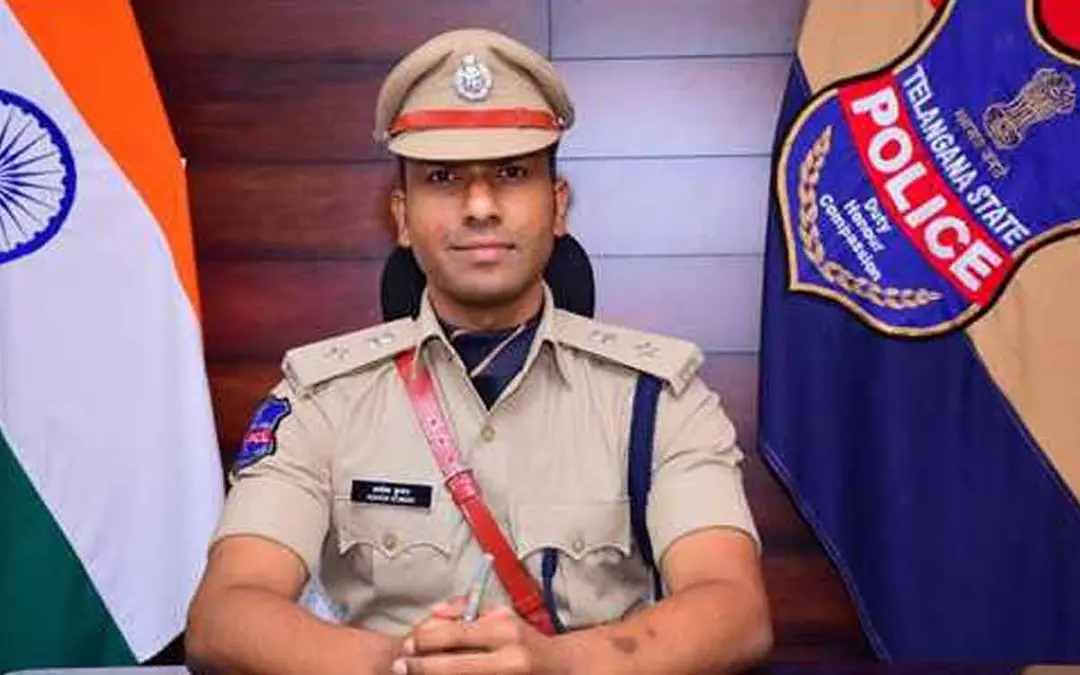
Police Act in force across Jagtial district for one month
The Police Act will be in force across Jagtial district for one month, from March 1 to March 31, in view of law and order, District SP Ashok Kumar said in a statement. He said no dharnas, rasta rokos, protests, rallies, public meetings or gatherings should be held without permission from police officers. He also asked people not to disturb law and order or take part in unlawful activities damaging government property, and sought cooperation from all sections.
Source
Jagtial — నేరాలు · read the original report ↗
Desk check · compared with the source
What the desk checked (4)
- The Police Act is in force across Jagtial district for one month, from March 1 to March 31. — Dates appear in the source and are attributed to a statement by District SP Ashok Kumar.
- Dharnas, rasta rokos, protests, rallies, public meetings and gatherings may not be held without police permission. — Attributed to the SP's statement in the source; no order number or legal section cited.
- The measure was taken keeping law and order in view. — Stated as the SP's reasoning; no further detail or incident cited in the source.
- The SP appealed to people of all sections to cooperate with police. — Attributed directly to the SP in the source.
Analysts’ view opinion
A month-long, district-wide Police Act order looks administrative on paper, but in practice it regulates the space available for political activity. Requiring police permission for dharnas, rasta rokos, rallies and public meetings is an immediate constraint on parties and mass organisations that rely on street mobilisation, while adding leverage to whoever controls the permission counter. The story does not state what specific incident or threat prompted the order — and that gap is precisely what will become politically contested.
- Making protest permission-based shifts the practical decision on who may assemble to the local police apparatus.
- Opposition parties and farmer, worker or student bodies, whose strength shows up through public gatherings, are the relative losers here.
- The ruling side can defend the move as routine maintenance of law and order; opponents can frame it as a curb on dissent.
- The breadth matters politically: it covers the whole district for a full month, not a single flashpoint or single day.
- Such orders are commonly issued around exams, festivals, polls or agitations, but since no reason is specified in the story, imputing political motive would be premature.
What to watch — Watch which parties or organisations actually get permission and which are refused — that record, more than the order itself, will show whether it is applied even-handedly.
The story does not establish the specific threat or trigger behind the order, whether it is a routine periodic notification, or how any party has responded to it.
Deep dive
Research brief · 7 facts · 3 dates · exam-readyThe brief
Context
Jagtial district in Telangana has invoked the Police Act across its territory for one month, from March 1 to March 31, citing the need to maintain law and order. District Superintendent of Police Ashok Kumar announced the measure through a statement, requiring prior police permission for any dharna, rasta roko, protest, rally, public meeting or gathering. Such district-wide orders are a routine preventive policing tool used by SPs and police commissioners to regulate assemblies in a defined area for a fixed period.
Key facts
- The Police Act is in force across Jagtial district for one month, from March 1 to March 31.
- The order was announced by Jagtial District SP Ashok Kumar in a statement.
- Under the order, no dharnas, rasta rokos, protests, rallies, public meetings, sabhas or gatherings may be held without permission from police officers.
- The stated reason for the order is maintaining law and order (shanti bhadratalu) in the district.
- The SP asked people not to disturb law and order or engage in unlawful activities that damage government property.
- The SP sought the cooperation of people of all sections with the police, who he said work continuously to protect law and order.
- The announcement was reported on March 6, 2025, at 04:07 PM IST, i.e. after the order period had begun.
Timeline
- March 1, 2025Police Act order comes into force across Jagtial district.
- March 6, 2025Report of SP Ashok Kumar's statement announcing the district-wide Police Act enforcement is published.
- March 31, 2025The one-month period of the order ends.
Who has a stake
- Jagtial district police / SP Ashok Kumar — Responsible for enforcing the order and preserving law and order across the district for the month.
- Residents of Jagtial district — Must seek police permission before holding any protest, rally or public gathering during the period.
- Political parties, unions and civil society groups — Their ability to hold dharnas, rasta rokos, rallies and public meetings is now conditional on police permission.
- Government (owner of public property) — Order specifically warns against unlawful acts causing damage to government property.
Why it matters
Blanket district-wide restrictions on assemblies directly touch the fundamental freedoms of speech and peaceful assembly, which the Constitution allows to be restricted only on reasonable grounds. How narrowly such preventive orders are drafted, publicised and enforced determines whether they are genuine law-and-order measures or a routine curb on democratic protest. The fact that the order took effect on March 1 but was reported on March 6 also raises questions about public notice.
UPSC angle
Prelims pointers
- Police Act enforced district-wide in Jagtial (Telangana) from March 1 to March 31, 2025.
- Order issued by District Superintendent of Police (SP) Ashok Kumar through a statement.
- Activities needing prior police permission: dharnas, rasta rokos, protests, rallies, public meetings and gatherings.
- Jagtial district falls in the Karimnagar region of Telangana as per the news dateline.
- The order also warns against unlawful activity causing damage to government property.
Mains framing
Preventive police orders such as the one-month, district-wide enforcement of the Police Act in Jagtial illustrate the recurring tension between the state's duty to maintain public order and citizens' rights to free expression and peaceful assembly. District police chiefs use such orders to pre-empt disruptions like rasta rokos and unpermitted rallies that can escalate into violence or damage to public property, and they shift the burden onto organisers to obtain prior permission. The concerns are that blanket, area-wide and month-long restrictions can be over-broad, that discretion over granting permission can be applied unevenly to different political or social groups, and that citizens may learn of the order only after it has taken effect, as here where the order began on March 1 but was reported on March 6. The way forward lies in narrowly tailoring such orders in time and place to identifiable threats, recording clear reasons, ensuring wide and timely publicity, providing a transparent and time-bound permission process with reasons for refusal, and designating spaces where peaceful protest may continue, so that the SP's appeal for public cooperation rests on consent rather than compulsion.
Key terms
- Police Act
- The statutory framework empowering police to regulate public assemblies and processions in a specified area for a specified period; invoked here district-wide in Jagtial.
- Superintendent of Police (SP)
- The senior-most police officer in charge of a district; here SP Ashok Kumar issued the Jagtial order.
- Rasta roko
- A protest method involving blocking a road or highway to halt traffic; listed among activities barred without police permission.
- Dharna
- A sit-in protest at a location to press demands; requires prior police permission under the order.
- Shanti bhadratalu (law and order)
- Public peace and order, the stated ground on which the district-wide Police Act order was imposed.
Practice questions
- District-wide preventive orders regulating assemblies are a common policing tool in India. Examine their justification and the safeguards needed to keep them consistent with the freedoms of speech and peaceful assembly.
- Discuss the role of the district Superintendent of Police in maintaining law and order, with reference to powers to regulate protests, rallies and public meetings.
- "Public order restrictions must be reasonable, specific and well-publicised." Critically analyse this statement in the light of month-long, area-wide prohibitory orders.
Grounded only in the source report — figures and dates are the source's, not inferred.