
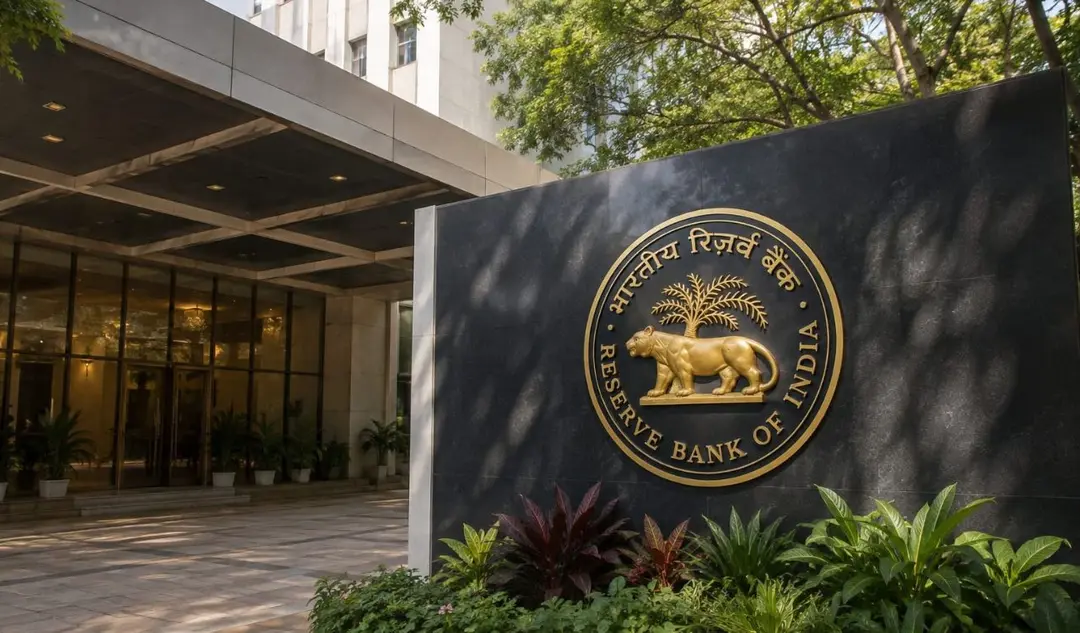
RBI rejects Tata Sons plea, files caveat in Bombay High Court
After rejecting Tata Sons' March 2024 application to surrender its NBFC registration, the Reserve Bank of India has filed a caveat in the Bombay High Court to ensure it is heard before any order is passed, sources said on Monday. The company, now classified an upper-layer NBFC, must list. Tata Trusts, holding over 65 per cent, is reluctant to list, while Shapoorji Pallonji Group, with around 18 per cent, is pushing for listing. RBI and Tata Sons did not respond.
Source
Telangana Today · read the original report ↗
Desk check · some claims need care
What the desk checked (5)
- RBI rejected Tata Sons' March 2024 application to surrender its NBFC registration and filed a caveat in the Bombay High Court. — Attributed to unnamed sources; neither RBI nor Tata Sons responded when contacted, per source.
- Tata Sons is classified as an upper-layer NBFC and must list on the bourses. — Stated in source as consequence of the rejection; no regulatory document cited.
- Tata Trusts holds over 65 per cent of Tata Sons and Shapoorji Pallonji Group around 18 per cent. — Figures appear in source without attribution to a filing or official statement.
- Chairman N Chandrasekaran opted out of reappointment when his term ends in February next year. — Stated in source; reasons partly cited to 'news reports'.
- RBI listed 15 entities as Upper Layer NBFCs mandating listing by October 2025; NBFCs with over Rs 1 lakh crore assets automatically qualify; Tata Sons has assets over Rs 1.75 lakh crore. — Figures appear in source; regulatory announcements described without direct citation.
Analysts’ view opinion
This is more than a regulatory ruling — it is a test of how India's largest unlisted pool of corporate assets is allowed to be managed. With assets of over Rs 1.75 lakh crore, a listed Tata Sons would have its capital allocation and cash deployment exposed to daily market scrutiny, which is precisely why Tata Trusts is reluctant. For Shapoorji Pallonji, holding around 18 per cent, listing would mean a market-determined price and liquidity for its stake — the split in shareholder economics could not be clearer.
- The cost-benefit trade-off is straightforward: listing brings transparency and valuation clarity, but as the story notes, experts say investor pressure for returns makes long-term, slow-payback bets harder to sustain.
- Who gains: Shapoorji Pallonji Group, whose roughly 18 per cent stake would finally get a market price and a potential exit route; who bears the cost: Tata Trusts, with over 65 per cent, which fears dilution of control over a philanthropy-linked structure.
- The upper-layer NBFC framework is designed to impose discipline on systemically significant lenders, and the rule that any NBFC above Rs 1 lakh crore in assets automatically qualifies left the RBI little room to carve out a single exception.
- By filing a caveat, the RBI is signalling it expects a legal challenge and a possible stay — implying this uncertainty could persist, clouding the group's capital-raising planning in the interim.
- The timing is awkward: the decision lands amid a leadership transition, a divided board and questions over losses at businesses such as Tata Digital and Air India — exactly the items public markets would price most aggressively.
What to watch — Thursday's Tata Sons board meeting is the pivot — whether it produces a legal challenge or the first steps toward listing will set the direction of the group's capital strategy.
The story does not establish whether Tata Sons will actually list, on what timeline or at what valuation; both the RBI and Tata Sons declined to respond and the account rests on unnamed sources.
Deep dive
Research brief · 8 facts · 6 dates · exam-readyThe brief
Context
Tata Sons, the unlisted holding company of the Tata group, is registered with the RBI as a core investment company NBFC and was placed by the regulator in the "upper layer" category of non-bank finance companies, which carries a mandatory stock-market listing requirement. In March 2024, Tata Sons applied to surrender its NBFC registration, a move that would have removed the listing obligation. The RBI has now rejected that application and filed a caveat in the Bombay High Court so that it is heard before any court order, including a stay, is passed. The rejection comes as Tata Sons faces a divided board, leadership transition and open disagreement among shareholders over listing.
Key facts
- The RBI rejected Tata Sons' March 2024 application to surrender its NBFC (core investment company) registration.
- The RBI has filed a caveat in the Bombay High Court to ensure it is heard before any order, including a stay, is passed.
- Tata Sons is classified as an upper-layer NBFC and must therefore list on the bourses.
- Tata Trusts, led by Noel Tata, holds over 65 per cent (more than two-thirds) of Tata Sons and is reluctant to list.
- Shapoorji Pallonji Group, the largest private shareholder with around 18 per cent, is publicly pushing for listing.
- Tata Sons is valued at USD 170 billion and has assets of over Rs 1.75 lakh crore.
- The RBI had named 15 entities as Upper Layer NBFCs, mandating them to list by October 2025; the list was later expanded to include government-run NBFCs.
- Any NBFC with over Rs 1 lakh crore in assets automatically qualifies as an upper-layer NBFC, per the RBI.
Timeline
- March 2024Tata Sons applies to the RBI to surrender its NBFC (core investment company) registration.
- October 2025 (deadline set by RBI)Deadline by which the 15 entities classified as Upper Layer NBFCs were mandated to list.
- Earlier this year (2026)RBI expands the upper-layer list to include government-run NBFCs and rules that any NBFC with over Rs 1 lakh crore assets automatically qualifies.
- 15 September 2026 (Monday)Sources say the RBI has rejected Tata Sons' plea and filed a caveat in the Bombay High Court.
- Thursday (following the report)Tata Sons board expected to meet as scheduled; any legal challenge can come only after the board meets.
- February next yearN Chandrasekaran's term as Tata Sons chairman ends; he has opted out of reappointment.
Who has a stake
- Reserve Bank of India — Regulatory authority over NBFC classification; wants its rejection order upheld and has filed a caveat to be heard before any court order.
- Tata Sons — The USD 170 billion holding company may be compelled to list, ending its unlisted status; reportedly deleveraged to avoid listing.
- Tata Trusts (Noel Tata-led) — Largest shareholder with over 65 per cent; reluctant to list, fearing loss of control over long-term capital allocation decisions.
- Shapoorji Pallonji Group — Largest private shareholder with about 18 per cent; publicly pushing for listing, which would create liquidity for its stake.
- N Chandrasekaran — Outgoing chairman who declined to guarantee no listing, citing uncertainty of regulatory/legal outcomes; opted out of reappointment.
- Bombay High Court — Forum where any petition against the RBI order would be heard; caveat filed to ensure RBI is heard first.
Why it matters
A forced listing of Tata Sons would open India's largest and most opaque holding company to public market scrutiny of its capital allocation and returns, which experts say could make long-term bets harder. It also sharpens the split between Tata Trusts, which controls over 65 per cent and resists listing, and the Shapoorji Pallonji Group, which wants it, at a moment when the group is changing chairmen. The case will test how far RBI's upper-layer NBFC framework can be applied to a promoter holding company.
UPSC angle
Prelims pointers
- Upper Layer NBFC: RBI category whose entities are mandated to list; RBI's original list had 15 entities with an October 2025 listing deadline.
- RBI rule: any NBFC with assets over Rs 1 lakh crore automatically qualifies as an upper-layer NBFC.
- Tata Sons applied in March 2024 to surrender its core investment company (CIC) NBFC licence; rejected by RBI.
- Tata Trusts holds over 65 per cent of Tata Sons; Shapoorji Pallonji Group holds around 18 per cent.
- Tata Sons: assets over Rs 1.75 lakh crore; valued at USD 170 billion.
- A caveat is filed in a court to ensure the filing party is heard before any order, including a stay, is passed.
Mains framing
The RBI's rejection of Tata Sons' plea to surrender its NBFC registration illustrates the tension between prudential regulation of systemically large non-bank financiers and the governance preferences of family- and trust-controlled conglomerates. The scale-based upper-layer framework, which covered 15 entities with an October 2025 listing deadline and was later widened to government NBFCs and any NBFC with assets above Rs 1 lakh crore, is intended to force disclosure and market discipline on entities whose size makes them significant to the financial system; Tata Sons, with assets over Rs 1.75 lakh crore, falls squarely within it. Against this, Tata Trusts, holding over 65 per cent, argues in effect that listing would subject a philanthropy-controlled holding company to investor demands for returns and constrain long-term, patient capital, while the Shapoorji Pallonji Group's 18 per cent stake gives it an interest in listing and liquidity. The dispute is compounded by a divided board and Chandrasekaran's decision not to seek reappointment. The way forward, on the source's facts, lies in the corporate-law and constitutional-writ route: a board decision followed by possible litigation in the Bombay High Court, where the RBI has pre-emptively filed a caveat, and clarity on whether an unlisted promoter holding company can be treated identically to lending NBFCs.
Key terms
- NBFC (Non-Banking Financial Company)
- A financial company registered with and regulated by the RBI that does not hold a banking licence.
- Upper Layer NBFC
- RBI's top-tier classification of large NBFCs subject to stricter norms including a mandatory stock exchange listing.
- Core Investment Company (CIC)
- An NBFC category for companies that mainly hold shares in group firms; Tata Sons sought to surrender this licence.
- Caveat
- A legal filing that requires a court to hear the caveator before passing any order, including a stay, in a matter.
- Deleveraging
- Reducing debt on the balance sheet; Tata Sons reportedly did this to try to avoid the listing requirement.
- Tata Trusts
- A group of non-profits, chaired by Noel Tata, holding over 65 per cent of Tata Sons and opposing listing.
Practice questions
- Critically examine whether the RBI's scale-based upper-layer NBFC framework, with its mandatory listing requirement, should apply uniformly to promoter holding companies such as Tata Sons.
- Discuss the governance implications of a philanthropic trust holding a controlling stake of over 65 per cent in an unlisted conglomerate holding company.
- What are the arguments for and against compelling large unlisted financial entities to list on stock exchanges? Illustrate with the Tata Sons case.
Grounded only in the source report — figures and dates are the source's, not inferred.