
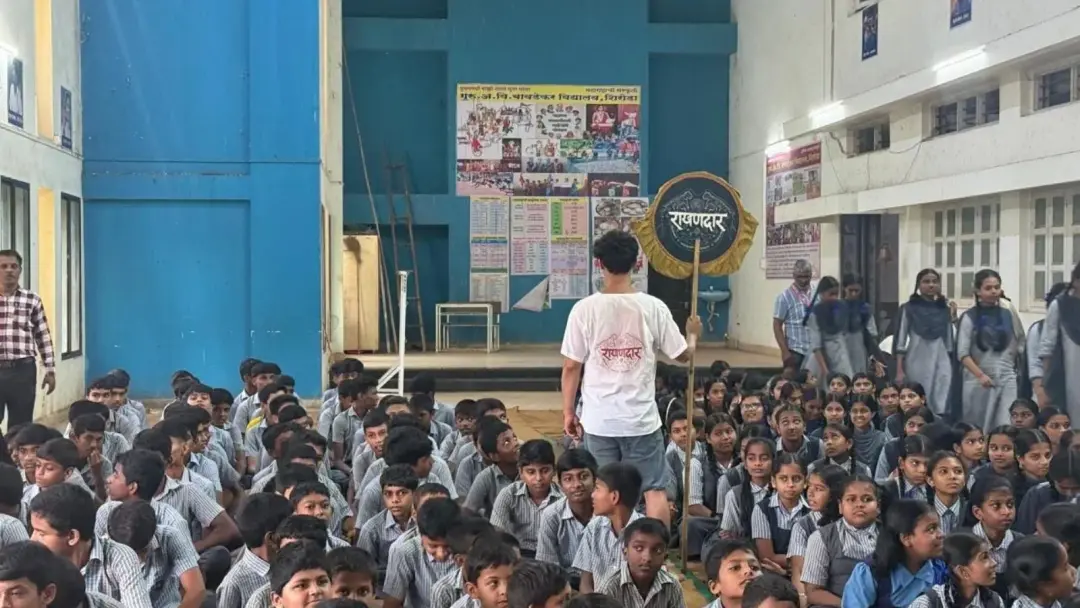
'Rakhandar Yatra' walks Konkan villages over land, water concerns
A group of farmers, environmentalists and entrepreneurs has been walking village to village across Konkan since June as part of the Rakhandar Yatra, to protect the region's land, water and livelihoods. It began at the Mauli temple in Kankumbi on the Goa-Karnataka border and entered Maharashtra in July. Concerns raised include diverting Mandovi river water to the Malprabha basin, mining in Sindhudurg, and a proposed nuclear plant and chemical refinery in Ratnagiri. The group draws on Vetoba, Konkan's guardian deity.
Source
Indian Express — Cities · read the original report ↗
Desk check · compared with the source
What the desk checked (5)
- The Rakhandar Yatra began in June at the Mauli temple in Kankumbi village on the Goa-Karnataka border and entered Maharashtra in July. — Timeline appears in source; attributed to the organising group's account.
- Locals and environmentalists oppose a proposal to divert Mandovi river water towards the Malprabha basin. — Attributed to Malhar Indulkar, a core member of the group; no government document cited in source.
- Jaitapur, Madban and Barsu have seen protests over projects including a proposed nuclear power plant and chemical refinery. — Stated in source without separate attribution; consistent with the article's context.
- The Geoglyphs of Konkan Region of India were added to UNESCO's Tentative List in 2022. — Figure and year appear in source; not independently verified here.
- Prasad Gawde's YouTube channel Konkani Ranmanus has over 5.89 lakh subscribers. — Figure appears in source as reported; no date of count given.
Analysts’ view opinion
The Rakhandar Yatra looks like a cultural-environmental march, but politically it is an attempt to build a village-level network across Konkan. Separate local fights — the Mandovi diversion, mining in Sindhudurg, the Jaitapur and Barsu projects — are being stitched into a single "protect Konkan" narrative, and that aggregation is the group's real strategic move. By anchoring itself in gramdaivat traditions and the guardian deity Vetoba rather than any party, it becomes harder for the establishment to dismiss it as simply anti-development.
- Converting scattered local grievances into one regional identity is among the most potent forms of political mobilisation.
- Beginning each meeting at the village temple signals that cultural symbolism is not the monopoly of any single political formation.
- A yatra spanning Maharashtra, Goa and Karnataka makes inter-state questions such as river diversion politically more delicate.
- In Jaitapur, Madban and Barsu, where resistance already exists, this could give protest an organisational spine and raise the political cost of private nuclear proposals.
- A YouTube channel with over 5.89 lakh subscribers in the core group shows opinion can now be built without traditional party machinery.
What to watch — Watch whether regional parties try to adopt this platform ahead of local body polls, or whether the government moves to defuse it through local consultation.
The story does not establish the scale of public support, any party affiliation, or how the state government and project promoters are responding — nor is there evidence here of electoral impact.
Deep dive
Research brief · 8 facts · 5 dates · exam-readyThe brief
Context
A group of young farmers, environmentalists, entrepreneurs and content creators from Konkan has since June been conducting the 'Rakhandar Yatra', walking village to village across the Goa-Karnataka border region, Sindhudurg and Ratnagiri. 'Rakhandar' means protector or guardian, and the idea draws on Vetoba (Vetal), a guardian deity worshipped in parts of Konkan and Goa. The yatra links this cultural idea to current disputes over river diversion, mining, coastal land sales to outsiders and large industrial and nuclear projects. Organisers say the effort is not only about resistance but also about promoting those preserving Konkan's agriculture, food and sustainable livelihoods.
Key facts
- The Rakhandar Yatra began in June at the Mauli temple in Kankumbi village on the Goa-Karnataka border, chosen as it is associated with the Mandovi river.
- The group walks for four to five days every month through villages in one area; it entered Maharashtra in July.
- In Sindhudurg the yatra covered Dodamarg and Banda (mining and unplanned development concerns) and Malvan and Vengurla (discussions with fishing communities).
- In August the yatra travelled through Ratnagiri, including Jaitapur, Madban and Barsu, sites of protests over a proposed nuclear power plant and chemical refinery.
- Locals and environmentalists oppose a proposal to divert Mandovi river water to the Malprabha basin, which organisers say is for industrial use in the name of drought mitigation.
- The yatra's logo is inspired by petroglyphs on Konkan's laterite plateaus; the Geoglyphs of Konkan Region of India were added to UNESCO's Tentative List in 2022.
- UNESCO Tentative List geoglyph sites include Kasheli, Rundhye Tali, Devache Gothane and Barsu in Maharashtra.
- Prasad Gawde, a key member, runs the YouTube channel 'Konkani Ranmanus' with over 5.89 lakh subscribers, focused on Konkan's landscape, local and organic food and sustainable livelihoods.
Timeline
- 2022Geoglyphs of Konkan Region of India added to UNESCO's Tentative List, with sites including Kasheli, Rundhye Tali, Devache Gothane and Barsu.
- JuneRakhandar Yatra launched at the Mauli temple, Kankumbi village, on the Goa-Karnataka border, amid opposition to the Mandovi-Malprabha diversion proposal.
- JulyAfter covering villages along the Goa-Karnataka border, the yatra entered Maharashtra, travelling through Dodamarg, Banda, Malvan and Vengurla in Sindhudurg.
- AugustThe yatra moved through Ratnagiri district, including Jaitapur, Madban and Barsu.
- September 21, 2026Report published on the yatra's progress and the concerns raised.
Who has a stake
- Rakhandar Yatra core members (Malhar Indulkar, Satyajit Chavan, Prasad Gawde) — Building a village-level network to protect Konkan's land, water and livelihoods and to promote its agriculture and culture.
- Villagers, farmers and fishing communities of Sindhudurg and Ratnagiri — Land, water, forests, agriculture and fishing livelihoods threatened by mining, unplanned development and mega projects.
- Residents and environmentalists at Kankumbi, Goa-Karnataka border — Opposing diversion of Mandovi river water to the Malprabha basin.
- Maharashtra state government — Pursuing large projects in Ratnagiri, including a proposed nuclear power plant and chemical refinery, and considering private nuclear power projects.
- Jaitapur, Madban and Barsu communities — Centre of long-running protests against nuclear and refinery projects on their land.
- UNESCO / heritage community — Konkan's laterite-plateau geoglyphs, on the Tentative List since 2022, face pressure from development in the same landscape.
Why it matters
The yatra shows how local resistance in Konkan is shifting from single-project agitations to a broader, culturally rooted network linking river diversion, mining, coastal land sales and mega projects. It raises the core question of how India balances energy, industrial and drought-mitigation projects with the ecological limits and livelihoods of a fragile coastal region. It also illustrates the use of local religious and heritage symbols, from gramdaivats to petroglyphs, to mobilise environmental opinion.
UPSC angle
Prelims pointers
- Rakhandar means protector or guardian; the yatra draws on Vetoba (Vetal), a guardian deity of parts of Konkan and Goa.
- Mandovi river originates at Kankumbi (Goa-Karnataka border); a proposal seeks to divert its water to the Malprabha basin.
- Jaitapur, Madban and Barsu in Ratnagiri: sites of protests over a proposed nuclear power plant and chemical refinery.
- Geoglyphs of Konkan Region of India entered UNESCO's Tentative List in 2022; sites include Kasheli, Rundhye Tali, Devache Gothane, Barsu.
- Dodamarg and Banda in Sindhudurg face mining and unplanned development concerns; Malvan and Vengurla are fishing belts.
- Gramdaivats named in the source: Sateri, Sukai, Chatkai, Kalkai, Zolai, Janai.
Mains framing
The Rakhandar Yatra illustrates a convergence of resource conflicts in the Konkan: an inter-state proposal to divert Mandovi water to the Malprabha basin, mining and unplanned development in Dodamarg and Banda, pressure on fishing livelihoods in Malvan and Vengurla, sale of coastal land to outsiders, and mega projects such as a nuclear power plant and chemical refinery around Jaitapur, Madban and Barsu, with the state also considering private nuclear projects. The underlying causes are the region's attractiveness for energy and industrial siting and for water transfers justified as drought mitigation, set against an ecologically fragile coastal landscape whose laterite plateaus also host geoglyphs on UNESCO's Tentative List since 2022. Implications include contested land acquisition, livelihood insecurity for farmers and fishers, and the deepening of a cultural-ecological idiom of protest that invokes gramdaivats and Vetoba's role as guardian at the village boundary. A way forward, as the organisers themselves frame it, lies in combining genuine local consultation on project siting and water transfers with active promotion of the alternatives already on the ground: local and organic food, sustainable livelihoods and heritage-based value in Konkan's villages.
Key terms
- Rakhandar
- Marathi/Konkani term for a protector or guardian; the name adopted by the yatra's participants.
- Vetoba / Vetal
- Guardian deity worshipped in parts of Konkan and Goa, seen as ever-alert protector at the village boundary.
- Gramdaivat
- Village deity; in Konkan these include Sateri, Sukai, Chatkai, Kalkai, Zolai and Janai, with traditions tied to the landscape.
- Mandovi-Malprabha diversion
- Proposal to divert water from the Mandovi river towards the Malprabha basin, opposed by locals and environmentalists.
- Geoglyphs / petroglyphs of Konkan
- Ancient rock art on Konkan's laterite plateaus; on UNESCO's Tentative List since 2022 and the inspiration for the yatra's logo.
- Konkani Ranmanus
- YouTube channel of yatra member Prasad Gawde, with over 5.89 lakh subscribers, on Konkan's landscape, food and livelihoods.
Practice questions
- Examine how culturally rooted mobilisations such as Konkan's Rakhandar Yatra reshape environmental movements in India. Illustrate with the issues of river diversion, mining and mega projects raised by the yatra.
- Inter-basin water transfers are often justified as drought mitigation but contested as industrial diversion. Critically discuss with reference to the proposed Mandovi-Malprabha diversion.
- Discuss the challenges of siting nuclear and petrochemical mega projects in ecologically sensitive coastal regions, with reference to Jaitapur, Madban and Barsu in Ratnagiri.
Grounded only in the source report — figures and dates are the source's, not inferred.