
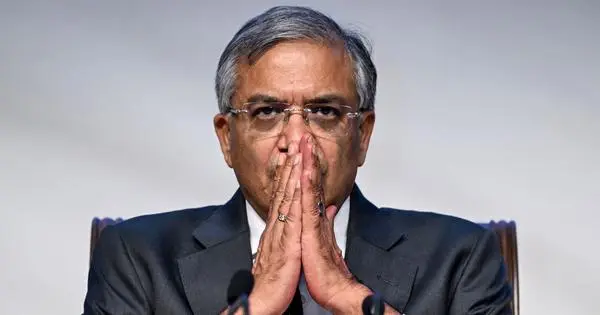
Report on Election Commission dissent triggers Opposition attack
An Indian Express report said Election Commissioners Sukhbir Singh Sandhu and Vivek Joshi objected 14 times in 10 months to panel decisions on the special intensive revision of electoral rolls. The Opposition accused Chief Election Commissioner Gyanesh Kumar of ruling "like a dictator". The Supreme Court referred pleas against the 2023 law on Election Commission appointments to a larger bench. The Gujarat High Court denied interim relief to journalist Ravi Nair in an Adani defamation case.
Source
Scroll.in · read the original report ↗
Desk check · some claims need care
What the desk checked (5)
- Two election commissioners objected to decisions on the special intensive revision of electoral rolls 14 times in 10 months — Attributed in the source to a report by The Indian Express; figure appears in source but is not officially confirmed
- Opposition accused CEC Gyanesh Kumar of ruling 'like a dictator'; Congress said Modi and Kumar damaged democracy — Attributed to Opposition and Congress reactions as quoted in the source
- Supreme Court referred petitions against the 2023 EC appointments law to a larger bench, to be constituted by CJI Surya Kant — Attributed to proceedings before Justices Dipankar Datta and Satish Chandra Sharma; quotes given in source
- Gujarat High Court declined interim relief to journalist Ravi Nair, in custody since September 17 in an Adani Enterprises defamation case — Attributed to the court's observation; dates and case details appear in source
- Supreme Court called the three-month delay by Speaker Om Birla on disqualification pleas against 20 rebel TMC MPs a 'red flag' — Attributed to verbal observations of the court; Solicitor General's denial of delay also recorded
Analysts’ view opinion
The reported internal dissent inside the Election Commission hands the Opposition a sharper political weapon: the argument shifts from external allegation to what is described as an on-record disagreement among commissioners. At the same time, the Supreme Court's decision to send the challenge to the 2023 appointments law to a larger bench defers any immediate verdict, which buys the Union government time. Taken together — the poll panel, the Speaker's pending decisions, a journalist in custody — these threads are being woven into a single Opposition narrative about institutional independence.
- The reported figure of 14 objections in 10 months gives the Opposition's "dictator" charge against the CEC something concrete to point to, beyond rhetoric.
- Congress linking the issue directly to the Prime Minister, and Akhilesh Yadav asking the Supreme Court to act on its own, signals an attempt to turn this into a shared national opposition plank.
- Referral to a larger bench stretches the timeline, and prolonged legal uncertainty lets the political campaign run without waiting on a ruling.
- Justice Datta's remarks questioning the independence of the selection process are quotable ammunition for critics, but Justice Sharma's disagreement is a reminder that nothing is settled.
- The court calling three months of delay by the Speaker on 20 rebel Trinamool MPs a "red flag" while declining to fix a deadline shows how time itself remains the key tactic in defection politics.
What to watch — Watch whether the Commission publicly asserts that its decisions were collective, and whether the Opposition makes this a central theme in Parliament and in state election campaigning.
That objections were reportedly recorded is not the same as proof of any actual irregularity in the electoral rolls, and the story carries no direct account from the two commissioners themselves.
Deep dive
Research brief · 8 facts · 5 dates · exam-readyThe brief
Context
An Indian Express report revealed that the two Election Commissioners, Sukhbir Singh Sandhu and Vivek Joshi, objected 14 times in 10 months to Election Commission decisions relating to the special intensive revision (SIR) of electoral rolls, prompting Opposition charges that Chief Election Commissioner Gyanesh Kumar was functioning "like a dictator". Separately, the Supreme Court referred petitions challenging the constitutionality of the 2023 law on appointment of Election Commission members to a larger bench, with one judge remarking that it "does not appear to ensure an independent selection process". Two other proceedings featured the same day: the Gujarat High Court's refusal of interim relief to journalist Ravi Nair in an Adani Enterprises criminal defamation case, and the Supreme Court calling the three-month delay by the Lok Sabha Speaker on disqualification petitions against 20 rebel Trinamool Congress MPs a "red flag".
Key facts
- The Indian Express reported that Election Commissioners Sukhbir Singh Sandhu and Vivek Joshi objected to panel decisions on the special intensive revision of electoral rolls 14 times in 10 months.
- The objections covered registration of new voters, deletions and restoration of electors, filing of appeals against voter inclusion, and custody and security of electoral rolls.
- The Opposition accused Chief Election Commissioner Gyanesh Kumar of ruling "like a dictator"; Congress said PM Narendra Modi and Kumar "together have caused great damage to the country's democracy".
- Samajwadi Party chief Akhilesh Yadav urged the Supreme Court to take suo motu cognisance of the matter.
- The Supreme Court referred pleas challenging the 2023 law on appointment of Election Commission members to a larger bench, to be placed before Chief Justice Surya Kant for a constitution bench.
- Justice Dipankar Datta said the law "does not appear to ensure an independent selection process" and that a "nominee of the prime minister in the selection committee cannot be expected to defy the prime minister"; Justice Satish Chandra Sharma disagreed and cited a "substantial question of law".
- The Gujarat High Court refused interim relief to journalist Ravi Nair, held in judicial custody since September 17 in a criminal defamation case by Adani Enterprises Limited, saying he could not challenge a non-bailable warrant already executed.
- The Supreme Court called the three months taken by Lok Sabha Speaker Om Birla on disqualification petitions against 20 rebel Trinamool Congress MPs a "red flag" but refused to set a deadline.
Timeline
- October 2020 to July 2021Journalist Ravi Nair publishes social media posts on the Adani Group, relating to Hindenburg Research allegations and a strike against proposed privatisation of the Jawaharlal Nehru Port Trust.
- 2023Law governing the appointment of members of the Election Commission is enacted; its constitutionality is later challenged.
- August (year not stated in the source)Notices issued to the 20 rebel Trinamool Congress MPs in the disqualification matter, per Solicitor General Tushar Mehta.
- September 17Ravi Nair taken into custody and sent to jail for failing to appear in person at a hearing in the Adani defamation case.
- Reported nowIndian Express report on 14 objections in 10 months by the two Election Commissioners; Opposition attacks CEC Gyanesh Kumar; Supreme Court refers 2023 EC appointments law to a larger bench; Gujarat HC denies Nair interim relief.
Who has a stake
- Chief Election Commissioner Gyanesh Kumar — Accused by the Opposition of ruling "like a dictator" after the report of repeated dissent by the two Election Commissioners.
- Election Commissioners Sukhbir Singh Sandhu and Vivek Joshi — Recorded 14 objections in 10 months on SIR decisions, raising questions about internal decision-making in the Commission.
- Opposition parties (Congress, Samajwadi Party) — Congress alleged damage to democracy by PM Modi and the CEC; Akhilesh Yadav sought suo motu Supreme Court cognisance.
- Supreme Court (Justices Dipankar Datta and Satish Chandra Sharma; CJI Surya Kant) — Must decide the constitutionality of the 2023 EC appointments law through a larger/constitution bench.
- Journalist Ravi Nair — In judicial custody since September 17; denied interim relief in criminal defamation case filed by Adani Enterprises Limited.
- Lok Sabha Speaker Om Birla — Under judicial scrutiny for three-month delay on disqualification petitions against 20 rebel Trinamool Congress MPs.
Why it matters
Dissent inside the Election Commission over the special intensive revision of electoral rolls touches the credibility of the voter list, the foundation of electoral democracy. Simultaneously, the Supreme Court's remarks that the 2023 appointments law "does not appear to ensure an independent selection process" put the institutional independence of the Commission itself in question. Together with the defamation case against a journalist and the delay over MPs' disqualification petitions, the day's developments raise wider questions about how constitutional and statutory authorities exercise discretion.
UPSC angle
Prelims pointers
- Election Commission comprises the Chief Election Commissioner and two Election Commissioners; current CEC named in the story is Gyanesh Kumar.
- Election Commissioners named: Sukhbir Singh Sandhu and Vivek Joshi; 14 objections in 10 months on SIR decisions.
- A 2023 law governs appointment of Election Commission members; its validity is now referred to a larger bench before CJI Surya Kant.
- Justices Dipankar Datta and Satish Chandra Sharma heard the EC appointments pleas; Datta questioned the independence of the selection process.
- Ravi Nair case: criminal defamation complaint by Adani Enterprises Limited; posts dated October 2020 to July 2021; custody from September 17.
- Supreme Court termed three-month delay by Lok Sabha Speaker Om Birla on disqualification of 20 rebel Trinamool Congress MPs a "red flag".
Mains framing
The reported 14 objections in 10 months by the two Election Commissioners on the special intensive revision of electoral rolls — spanning voter registration, deletions and restorations, appeals against inclusion, and the custody and security of rolls — suggests that a multi-member Election Commission designed for collegiate decision-making may be functioning through majority or unilateral choices, which the Opposition characterised as dictatorial. The controversy is inseparable from the question of how Commissioners are appointed: hearing challenges to the 2023 law, Justice Dipankar Datta observed that it "does not appear to ensure an independent selection process" and that a prime ministerial nominee on the selection committee "cannot be expected to defy the prime minister", while Justice Satish Chandra Sharma held that a substantial question of law required a larger bench, resulting in a reference to the Chief Justice for a constitution bench. The implication is that both the process of appointment and the internal transparency of the Commission's decisions bear on public confidence in electoral rolls. A grounded way forward, on the source's own terms, lies in the constitution bench's determination of the law's validity, greater visibility of dissent within the Commission, and timely judicial or institutional response to complaints about roll revision. The parallel instances — a journalist in judicial custody in a corporate defamation case and a three-month delay by the Speaker on MPs' disqualification, which the Supreme Court flagged while declining to fix a deadline — illustrate the broader theme of accountability in the exercise of discretionary authority.
Key terms
- Special intensive revision (SIR) of electoral rolls
- The Election Commission exercise on revising voter lists — covering new registrations, deletions, restorations and appeals — over which the two Commissioners raised objections.
- 2023 law on Election Commission appointments
- Statute governing appointment of the CEC and Election Commissioners, now challenged before the Supreme Court and referred to a larger bench.
- Constitution bench / larger bench
- A bench of more judges formed by the Chief Justice to decide substantial questions of law, as directed here by Justices Datta and Sharma.
- Suo motu cognisance
- A court taking up a matter on its own motion, which Akhilesh Yadav urged the Supreme Court to do on the EC dissent report.
- Non-bailable warrant
- A court order for arrest without automatic bail; the Gujarat High Court said Ravi Nair could not challenge it once executed.
- Hindenburg Research
- United States-based short seller whose allegations against the Adani Group featured in Ravi Nair's social media posts from October 2020 to July 2021.
Practice questions
- Does the multi-member structure of the Election Commission adequately safeguard against unilateral decision-making? Discuss with reference to the reported dissent over the special intensive revision of electoral rolls.
- Examine the constitutional concerns raised by the Supreme Court regarding the 2023 law on appointment of Election Commission members, particularly the composition of the selection committee.
- Delay by presiding officers in deciding disqualification petitions has been called a "red flag" by the Supreme Court. Critically evaluate the accountability of such discretionary powers.
Grounded only in the source report — figures and dates are the source's, not inferred.