
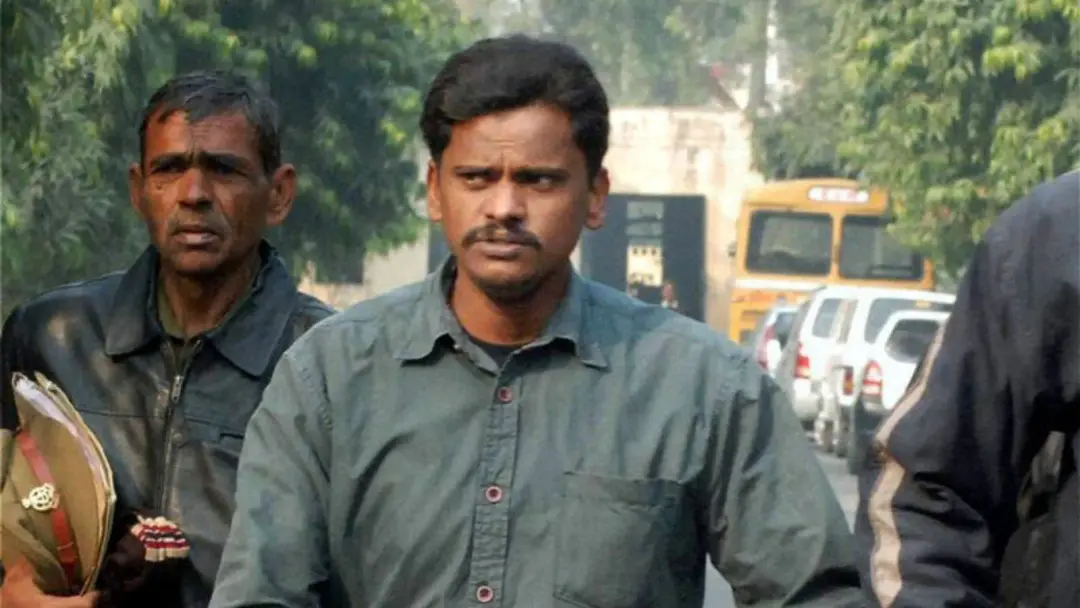
Surendra Koli, acquitted in Nithari killings, found dead in Haridwar
Surendra Koli, the main accused in the 2006 Nithari killings, was found hanging at the tea stall he ran outside Lal Mata temple in Haridwar, police said. Sentenced to death in 13 cases, he was acquitted in 12 by the Allahabad High Court in October 2023. On November 11, 2025, the Supreme Court acquitted him in the last case, calling the investigation botched. He walked out of jail on November 13 after 19 years.
Source
Indian Express — Cities · read the original report ↗
Desk check · some claims need care
What the desk checked (5)
- Koli was found hanging at his tea stall outside Lal Mata temple in Haridwar on Friday, September 18. — Attributed to police; the September 18 date conflicts with the source's statement that he was freed on November 13, 2025, and died less than a year later — an internal inconsistency an editor must resolve.
- The Supreme Court acquitted Koli in the 13th and last case on November 11, 2025, and he left Kasna Jail on November 13, 2025. — Dates and bench details (then CJI B R Gavai, Justices Surya Kant and Vikram Nath) appear in the source.
- The Supreme Court called the investigation 'botched' and a 'manifest miscarriage of justice'. — Quoted from the court order as reported in the source.
- Remains of 19 bodies were recovered from a drain behind house D-5 in Noida's Sector 31 in December 2006. — Figure appears in the source; no investigating agency cited for the count.
- Koli spent 19 years in prison, was sentenced to death in 13 cases, and was acquitted in 12 by the Allahabad High Court in October 2023. — Figures and dates appear in the source, consistent with the reported legal timeline.
Analysts’ view opinion
Surendra Koli's death is not just a personal tragedy — it reopens the political argument over investigative quality, police accountability and the death penalty. After the Supreme Court itself called the probe "botched" and a "manifest miscarriage of justice", the uncomfortable question for governments is what a man who spent 19 years in jail received by way of compensation or rehabilitation after acquittal. Because his defence argued the case stuck only because he was a poor, uneducated Dalit domestic worker, the issue could also feed into social-justice politics.
- Nearly two decades on, the Nithari victims' families still have no convicted perpetrator — a politically awkward fact no government finds easy to answer.
- With the Supreme Court itself flagging flawed investigation and the influence of a media trial, opposition voices get a ready-made argument on police accountability and criminal justice reform.
- Koli's identity as a poor, uneducated Dalit labourer makes this a potential test case in the wider debate over whether the system's burden falls hardest on the weakest.
- His death highlights the absence of any systematic policy for compensation, protection or livelihood support for those freed after long wrongful incarceration.
- The case is likely to become a reference point for opponents of capital punishment, since an execution would have made any correction impossible.
What to watch — Watch whether political parties take up three threads — accountability for investigative lapses, a compensation framework for the wrongfully jailed, and the death penalty debate.
The story does not establish the findings of any inquiry into the circumstances of the death, nor does it record any party or official political reaction.
Deep dive
Research brief · 8 facts · 10 dates · exam-readyThe brief
Context
The Nithari killings shocked India in December 2006, when skeletal remains of 19 bodies were recovered from a drain behind house D-5 in Noida's Sector 31, home of businessman Moninder Singh Pandher. His domestic help Surendra Koli, a Dalit school dropout from Almora district in Uttarakhand, was arrested along with Pandher on December 29, 2006, and was cast in media and courtrooms as a "cannibal" who lured children, killed them and ate their flesh. Koli was sentenced to death in 13 cases, but the Allahabad High Court acquitted him in 12 cases in October 2023, and the Supreme Court acquitted him in the last case on November 11, 2025, calling the investigation "botched". He walked out of Kasna Jail on November 13, 2025 after 19 years; on Friday, September 18, he was found hanging at the tea stall he ran outside Lal Mata temple in Haridwar, police said.
Key facts
- Remains of 19 bodies were recovered from a drain behind house D-5, Sector 31, Noida, from December 2006.
- Pandher and his domestic help Koli were arrested on December 29, 2006; Koli had worked for Pandher since July 2004.
- Koli was sentenced to death in the first case in 2009 (Victim XYZ, a 14-year-old girl) and in 12 more Nithari cases between 2010 and 2021.
- The Supreme Court dismissed his appeal in 2011, calling him a "serial killer" and the case "rarest of rare"; UP Governor rejected mercy pleas in 2013, the President in 2014.
- At 1 am on September 8, 2014, four hours before a 5.30 am hanging at Meerut jail, a bench constituted at Justice H L Dattu's residence stayed the execution.
- In January 2015, an Allahabad HC bench headed by then Chief Justice D Y Chandrachud commuted his death sentence citing a 2.6-year delay in deciding mercy petitions, violating Article 21.
- On October 16, 2023, Allahabad HC Justices Ashwani Kumar Mishra and S A H Rizvi acquitted Koli in 12 cases; the SC dismissed the CBI's appeals in July 2025.
- His confession was recorded after about 60 days of uninterrupted police custody without meaningful legal aid, against the CrPC limit of 15 days of police custody.
Timeline
- July 2004Koli begins working as domestic help at Moninder Singh Pandher's house D-5, Noida.
- December 2006Skeletal remains of children found in the drain behind D-5; remains of 19 bodies eventually recovered.
- December 29, 2006Pandher and Koli arrested.
- January 2007Koli beaten in court, including by the lawyer assigned to him, when first produced.
- 2007A Union Ministry of Women and Child Development committee report flags an organ trade angle; no probe follows.
- 2009Koli sentenced to death in the first case, of "Victim XYZ"; solitary confinement begins.
- 2011Supreme Court dismisses his appeal, terming him a "serial killer" and D-5 a "virtual slaughter house".
- 2013 and 2014UP Governor and then the President reject his mercy petitions; review petition dismissed in chambers in 2014.
- September 2, 2014Ghaziabad court issues execution warrant; the same day SC rules death penalty reviews must be heard in open court by three judges.
- September 8, 2014 (1 am)Execution stayed hours before the scheduled 5.30 am hanging after Indira Jaising's midnight intervention.
Who has a stake
- Surendra Koli — Dalit domestic worker who spent 19 years in prison, largely in solitary confinement, under 13 death sentences before full acquittal; found dead months after release.
- Families of the 19 victims — Mostly poor families from Nithari village whose missing children's remains were recovered; with all acquittals, the crime remains unsolved.
- Moninder Singh Pandher — Co-accused businessman, owner of D-5, acquitted in all cases by the Allahabad High Court in 2023.
- CBI and Uttar Pradesh Police — Investigating agencies faulted for a "botched" probe, a torture-tainted confession, flawed recoveries and ignoring the organ trade lead.
- Judiciary (trial courts, Allahabad HC, Supreme Court) — The SC's own 2011 "serial killer" finding prejudiced later trials; it had to overturn itself via a curative petition to correct a "manifest miscarriage of justice".
- Defence team - Yug Chaudhry, Payoshi Roy, Siddhartha, Sister Sheeba Jose, Indira Jaising — Pro-death-penalty-abolition lawyers who fought from 2014, secured the midnight stay and the eventual acquittals.
- Koli's family — Brothers lost jobs and changed names as "siblings of the cannibal"; his mother died, wife remarried, and he never met his 19-year-old son.
Why it matters
Koli's case shows how a media-driven narrative, a confession extracted after roughly 60 days of illegal police custody and alleged torture, and unquestioned recoveries can sustain 13 death sentences against an illiterate Dalit domestic worker for 19 years. It also exposes how an appellate court's early characterisation of an accused as a "serial killer" can contaminate every subsequent trial, and how close India came to executing a man later found innocent. His death months after acquittal underlines that acquittal does not undo the social stigma, family destruction and psychological damage of wrongful incarceration.
UPSC angle
Prelims pointers
- Under the CrPC, the maximum permissible period of police custody is 15 days; Koli's confession came after about 60 days of continuous police custody.
- Allahabad HC (January 2015) commuted Koli's death sentence citing a 2.6-year delay in deciding mercy petitions as violating Article 21.
- Supreme Court judgment of September 2, 2014: review petitions in death penalty cases must be heard in open court by a three-judge bench.
- Curative petition: the last remedy used on November 11, 2025 by a bench of CJI B R Gavai, Justices Surya Kant and Vikram Nath to overturn the SC's 2011 verdict.
- Under the Indian Evidence Act, a recovery is admissible only from a place under the accused's exclusive control - the open strip of land in Nithari was not.
- A 2007 Union Ministry of Women and Child Development committee report flagged an organ trade angle and a D-6 resident doctor earlier arrested in a kidney scam.
Mains framing
The Nithari case is a textbook study in wrongful conviction: the prosecution rested on two pillars - a magistrate-recorded confession and disclosure-based recoveries - and both collapsed on scrutiny. The confession was taken after roughly 60 days of uninterrupted police custody (against the CrPC's 15-day limit), without meaningful legal aid, amid allegations of electric shocks, nail-pulling and other torture that the Allahabad High Court accepted in 2023; the recovery site was an open strip of land not under Koli's exclusive control, digging had begun before his pointing out, and remains were found in the area months before his arrest. Cannibalism was never forensically substantiated - no bloodstains or human remains inside D-5, torsos missing, bodies severed with "surgical precision" - while the organ trade lead flagged by a 2007 Union WCD committee, including a D-6 doctor previously arrested in a kidney scam, was never probed. Structural failures compounded these: leaked confessions and a media frenzy, an unconstitutional 19-year solitary confinement, distrust of legal aid so deep that the accused learned cross-examination himself, and the Supreme Court's 2011 "serial killer" label that at least six later trial courts treated as binding precedent. The way forward, on the source's own record, lies in enforcing custody and legal-aid safeguards, insulating pending trials from prejudicial judicial and media characterisations, forensic corroboration of confessions, and reckoning with the irreversibility of the death penalty - Koli was four hours from the gallows in September 2014.
Key terms
- Nithari killings
- The 2006 case in which remains of 19 bodies, mostly poor missing children of Nithari village, Noida, were recovered from a drain behind house D-5.
- Curative petition
- The final remedy in the Supreme Court after a review is dismissed; used on November 11, 2025 to overturn the court's own 2011 conviction of Koli.
- Rarest of rare
- The judicial test for awarding the death penalty; the Supreme Court applied it to Koli's case in 2011.
- Article 21
- The right to life and personal liberty, cited by the Allahabad HC in 2015 to hold that a 2.6-year delay in mercy petitions and solitary confinement were unconstitutional.
- Solitary confinement
- Isolation of a prisoner, permissible only by judicial order or when execution is imminent with no remedies left; Koli was held so from his 2009 conviction.
- Extra-judicial confession
- An admission made outside court; the HC held Koli's "chalk-marking" cadaver demonstration in police custody inadmissible on this ground.
Practice questions
- The Nithari case shows how confessions obtained in prolonged police custody can drive convictions. Examine the legal safeguards against custodial confessions in India and why they failed here.
- "Media trial can prejudice a fair trial." Discuss with reference to the Supreme Court's observations in the Nithari acquittals of July 2025 and October 2023.
- Wrongful conviction and the irreversibility of capital punishment: critically analyse in light of Surendra Koli's 19 years in prison and 13 death sentences ending in acquittal.
Grounded only in the source report — figures and dates are the source's, not inferred.