
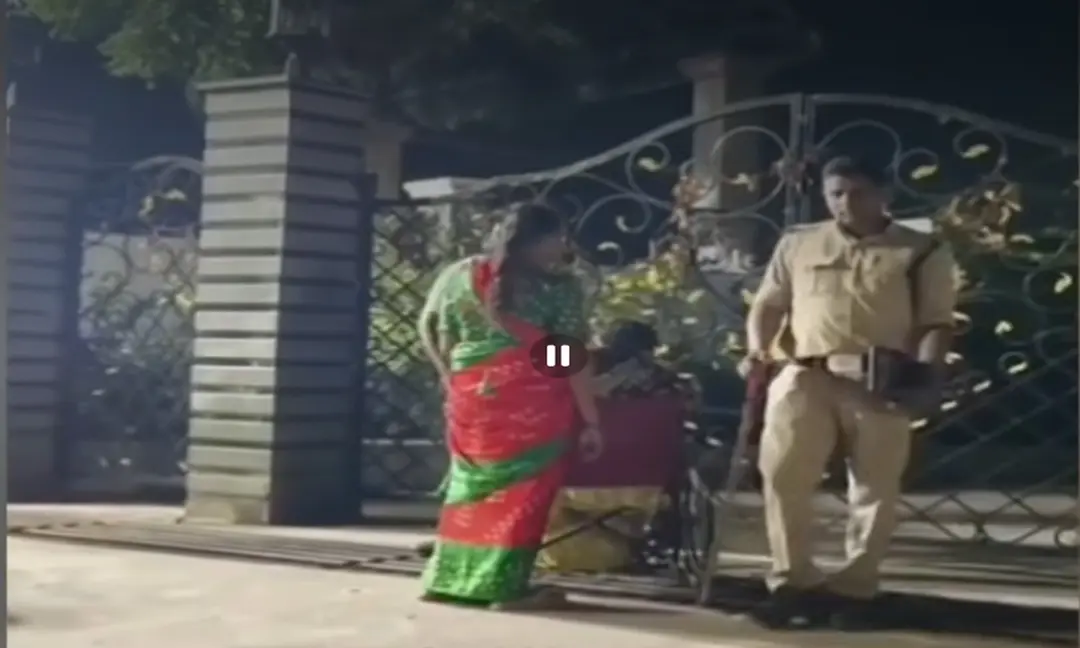
Son wheels ailing mother 2 km to MLA's house over denied treatment
A man pushed his ailing mother in a wheelchair for about 2 km along the road to the residence of local MLA Premsagar Rao after she received no treatment at the Mancherial district government hospital. Bhukya Bujji (55) of Pulimadugu village in Mandamarri mandal has long suffered kidney disease. Her son Raj Kumar alleged staff kept her in a wheelchair nearly five hours without treatment or a bed. The hospital's RMO assured treatment and they returned. Visuals circulated on social media.
Source
Mancherial — politics · read the original report ↗
Desk check · some claims need care
What the desk checked (5)
- Bhukya Bujji (55) of Pulimadugu village, Mandamarri mandal, has long suffered kidney disease and was taken to Mancherial District Government Hospital on Tuesday night. — Details appear in source, attributed to 'reports'; not externally verified.
- Staff kept her seated in a wheelchair nearly five hours without treatment or a bed. — Presented as an allegation by her son Raj Kumar; no hospital response in source.
- Raj Kumar pushed her about 2 km to MLA Premsagar Rao's residence. — Stated as fact in source; distance is approximate.
- The Resident Medical Officer assured treatment, after which mother and son returned to the hospital. — Attributed to the RMO; no direct quote provided.
- Visuals shared on social media sparked outrage. — Asserted in source without platform detail or verification of footage.
Analysts’ view opinion
This is less a single family's misfortune than a signal of last-mile delivery failure in the public health system. When triage, bed allocation and referral pathways for chronic kidney patients do not function at the district hospital level, the only grievance mechanism left to a poor family is an MLA's gate or a social media feed. That treatment was assured only after the RMO intervened suggests services are being unlocked by individual pressure rather than by routine process.
- Policy design in health tends to focus on buildings and insurance cover, but what failed here is process — waiting times, triage and bed allocation in daily hospital management.
- If the allegation of five hours in a wheelchair holds, it points to internal accountability tools (registers, token systems, grievance cells) not working as intended.
- Poor patients from rural and tribal backgrounds have the least 'voice' in such systems, so elected-representative intervention becomes their substitute route — an equity problem, not a solution.
- Chronic conditions like kidney disease need structured follow-up and dialysis referral pathways; waiting until they become an emergency-room crisis is the costlier model.
- The familiar pattern of redress arriving only after visuals circulate is media-driven grievance redressal, not a durable policy fix.
What to watch — Watch whether the district administration stops at action against individual staff or moves to process changes — audits of waiting time and bed allocation, and a functioning complaints channel.
The story does not carry the hospital's account, nor the patient load, bed availability or staffing on that night; what exists so far is the family's allegation, not the finding of a verified inquiry.
Deep dive
Research brief · 7 facts · 5 dates · exam-readyThe brief
Context
A man in Mancherial district of Telangana pushed his critically ill mother in a wheelchair for more than 2 km on a public road to the local MLA's residence after she allegedly got no treatment at the Mancherial District Government Hospital. Bhukya Bujji (55), a kidney patient from Pulimadugu village in Mandamarri mandal, was brought to the hospital on Tuesday night by her son Raj Kumar as her condition worsened. He alleged she was left seated in a wheelchair for nearly five hours without treatment or a bed. The hospital's Resident Medical Officer later assured treatment and the family returned; video of the episode spread on social media.
Key facts
- Bhukya Bujji, aged 55, of Pulimadugu village in Mandamarri mandal, has been suffering from kidney disease for a long time.
- Her son Raj Kumar brought her to the Mancherial District Government Hospital on Tuesday night as her condition worsened.
- Raj Kumar alleged hospital staff kept his mother seated in a wheelchair for nearly 5 hours without treatment or a bed.
- He then pushed her wheelchair along the road for about 2 km to the residence of local MLA Premsagar Rao.
- The Resident Medical Officer (RMO) of the district hospital spoke to the family and assured that treatment would be provided.
- Raj Kumar and Bujji returned to the hospital after the RMO's assurance.
- Visuals of the son pushing his mother's wheelchair were shared on social media, sparking public outrage.
Timeline
- Tuesday nightRaj Kumar brings his mother Bhukya Bujji to Mancherial District Government Hospital as her kidney condition worsens.
- Nearly 5 hours later (as alleged)With no treatment or bed provided, Raj Kumar wheels his mother out of the hospital.
- Same episodeHe pushes the wheelchair over 2 km along the road to MLA Premsagar Rao's residence.
- After the matter came to lightThe district hospital's RMO assures the family of treatment; mother and son return to the hospital.
- SubsequentlyVisuals of the incident circulate on social media, triggering outrage.
Who has a stake
- Bhukya Bujji (55), patient — A long-standing kidney disease patient whose worsening condition needed urgent care and a hospital bed.
- Raj Kumar, her son — Primary caregiver forced to wheel his mother 2 km to seek political intervention for medical care.
- Mancherial District Government Hospital staff — Accused of ignoring the patient for nearly five hours without treatment or a bed.
- Resident Medical Officer (RMO), district hospital — Administrative authority who intervened and assured treatment after the incident surfaced.
- MLA Premsagar Rao — Local elected representative whose residence became the destination for a grievance against a public hospital.
- Residents of Pulimadugu and Mandamarri mandal — Depend on the district government hospital for tertiary and emergency care.
Why it matters
A district hospital is the referral backbone for rural patients who cannot afford private care, and a five-hour wait without a bed for a chronic kidney patient points to gaps in triage, bed availability and accountability. That a family had to seek an MLA's intervention to get admitted suggests grievance redress inside the public health system is not working as intended. Such incidents, amplified on social media, erode trust in government hospitals precisely among those most dependent on them.
UPSC angle
Prelims pointers
- Incident location: Mancherial District Government Hospital, Telangana; patient from Pulimadugu village, Mandamarri mandal.
- Patient: Bhukya Bujji, 55, long-term kidney disease; son Raj Kumar pushed her wheelchair over 2 km.
- Alleged wait without treatment or bed: nearly 5 hours, starting Tuesday night.
- Resident Medical Officer (RMO) is the in-house medical administrative officer who intervened and assured treatment.
- Local MLA named in the story: Premsagar Rao.
Mains framing
The Mancherial episode illustrates how service-delivery failures at the district hospital level convert a routine medical emergency into a public spectacle. As reported, a 55-year-old chronic kidney disease patient was allegedly left in a wheelchair for nearly five hours without a bed or treatment, and her son had to push her more than 2 km to an MLA's residence before the Resident Medical Officer intervened. The proximate causes visible in the account are inadequate triage of a seriously ill patient, apparent unavailability of beds, and the absence of an accessible in-hospital grievance mechanism, so that political intervention becomes the fastest route to care. The implications are twofold: chronic disease patients in rural areas bear the cost of delay in the form of worsened outcomes, and repeated viral incidents deepen distrust in public facilities. The way forward, grounded in what this case reveals, lies in enforceable emergency triage protocols, transparent real-time bed and duty-roster information, a functioning patient grievance desk with time-bound response, and accountability inquiries when such allegations surface, so that citizens do not have to publicise their suffering to be treated.
Key terms
- Resident Medical Officer (RMO)
- The resident medical administrative officer of a hospital; in this case he spoke to the family and assured treatment.
- District Government Hospital
- The main public referral hospital of a district, here Mancherial, serving patients from surrounding mandals and villages.
- Mandal
- An administrative sub-district unit in Telangana; the patient is from Mandamarri mandal.
- Kidney disease
- The long-standing illness of the patient Bhukya Bujji, which worsened and prompted the hospital visit.
- MLA
- Member of Legislative Assembly; the local MLA Premsagar Rao's residence was where the son took his mother.
Practice questions
- Denial or delay of emergency care in public hospitals often ends as a viral video rather than a formal complaint. Examine what this says about grievance redress in India's district health system.
- Discuss the challenges district government hospitals face in providing timely care to chronic disease patients in rural areas, using the Mancherial case as an illustration.
- Should there be a statutory, time-bound right to emergency treatment in public hospitals? Argue with reference to incidents where patients sought political intervention for admission.
Grounded only in the source report — figures and dates are the source's, not inferred.