
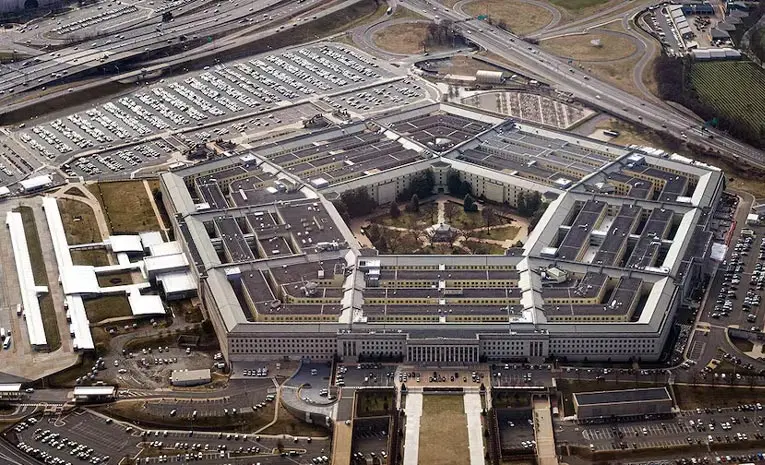
Cyberattack on Pentagon database exposes 30.5 lakh records
Officials have found that unauthorised users accessed the US Defense Department's Defense Manpower Data Center system from October 2025 to July 2026. Personal details of 27.6 lakh living and 2.94 lakh deceased individuals were exposed, including names, Social Security numbers, dates of birth, contact and employment information, which was stored without encryption. The Pentagon said the flaw was fixed immediately on detection, no misuse has been found, and victims will get one year of free credit monitoring.
Source
Sakshi (సాక్షి) · read the original report ↗
Desk check · some claims need care
What the desk checked (5)
- Unauthorised users accessed the Defense Manpower Data Center system from October 2025 to July 2026. — Attributed to officials in the source; no named official or document cited.
- Personal details of 27.6 lakh living and 2.94 lakh deceased individuals were exposed, about 30.5 lakh in total. — Figures appear in the source and add up internally; sourced only to unspecified 'information'.
- Leaked data included names, Social Security numbers, dates of birth, contact and employment details, and was unencrypted. — Stated in source without named attribution.
- The Pentagon fixed the flaw immediately after detecting it in July 2026 and will offer victims one year of free credit monitoring and identity protection. — Attributed to the Pentagon in the source.
- No evidence of misuse of the leaked data or financial loss has been found so far. — Attributed to officials; investigation described as ongoing.
Analysts’ view opinion
This is not an ordinary data leak — unauthorised access persisting for roughly nine months (October 2025 to July 2026) inside the US Defence Department's central personnel records system is a failure best read through a counter-intelligence lens. The Pentagon's statement that there is no evidence of misuse is reassuring as far as it goes, but foreign intelligence services typically hoard such data quietly rather than monetise it quickly. Combine military employment details with dates of birth and contact information, and you have not merely an identity-theft problem but strategic raw material for targeted recruitment approaches, coercion and spear-phishing.
- Nine months of undetected access is more alarming than the intrusion itself: it points to a detection and monitoring failure, not just a breached perimeter.
- The story notes the DMDC holds more than 60 million records; 3.05 million exposed is a fraction of that, which raises the obvious question of how well the remainder is protected.
- Storing Social Security numbers without encryption suggests a governance and process shortfall rather than a purely technical one.
- Employment information tied to service members' duties and responsibilities gives hostile services a way to identify, pressure and approach individuals — a risk that credit monitoring cannot address.
- With attribution still unresolved, it is hard to calibrate the response: a profit-driven criminal operation and a state-backed espionage effort demand very different countermeasures.
What to watch — Watch for three things: whether investigators offer any attribution assessment, whether an independent audit of the remaining DMDC holdings follows, and whether personnel who work alongside allied forces were among those exposed.
The story does not establish who was behind the intrusion, what their intent was, or whether any foreign government was involved — and "no evidence of misuse" is not proof that misuse has not occurred.
Deep dive
Research brief · 8 facts · 4 dates · exam-readyThe brief
Context
The US Department of Defense's Defense Manpower Data Center (DMDC) — the Pentagon's central repository of personnel records — was breached by unauthorised users who had access from October 2025 to July 2026. The DMDC holds records of serving soldiers, reservists, civilian employees, contractors, retirees, veterans and military family members, with more than 6 crore records in the system. Personal data of about 30.5 lakh people was exposed, and the data was stored without encryption. The Pentagon says it fixed the flaw as soon as it was detected in July 2026 and that no evidence of misuse has surfaced so far.
Key facts
- Unauthorised users accessed the Defense Manpower Data Center (DMDC) system from October 2025 to July 2026.
- Personal details of 27.6 lakh living individuals and 2.94 lakh deceased individuals were exposed — about 30.5 lakh people in all.
- Leaked data included names, Social Security numbers, dates of birth, contact details and employment-related information.
- The exposed data was stored without encryption, raising the risk further.
- The DMDC system holds more than 6 crore records covering soldiers, reservists, civilian staff, contractors, retirees, veterans and military families.
- The flaw was detected in July 2026 and corrected immediately, according to the Pentagon.
- Officials say no evidence of misuse of the leaked data or financial loss has been found so far.
- Affected individuals will be given one year of free credit monitoring and identity protection services.
Timeline
- October 2025Unauthorised access to the Pentagon's DMDC system begins, as later identified by officials.
- October 2025 to July 2026Illegal access continues for months, exposing records of about 30.5 lakh people.
- July 2026The flaw in the system is detected and immediately corrected by the Pentagon.
- After detectionInvestigation into the identity and motive of the attackers continues; victims offered one year of free credit monitoring.
Who has a stake
- US Department of Defense (Pentagon) — Owner of the breached DMDC database; must fix security gaps, investigate the intrusion and protect victims.
- Defense Manpower Data Center (DMDC) — The central personal records hub holding over 6 crore records; its data integrity and credibility are at stake.
- Serving soldiers, reservists, civilian employees and contractors — Their employment details being exposed is seen as a national security concern; duties and responsibilities could be useful to hostile states.
- Retirees, veterans, military family members and families of deceased personnel — Risk of identity theft, fraudulent messages and phishing attacks from exposed Social Security numbers and dates of birth.
- Cybersecurity experts — Recommend stronger encryption, regular security audits and multi-level authentication in government systems.
Why it matters
Employment details of military personnel becoming public is treated as a national security concern, since information about their duties and responsibilities could be useful to hostile countries or cyber criminals. The fact that unauthorised access continued for months raises questions about the US government's cybersecurity architecture, and the absence of encryption on such sensitive data underlines how basic safeguards were missing.
UPSC angle
Prelims pointers
- Defense Manpower Data Center (DMDC) is the US Defense Department's main personal records centre, with over 6 crore records.
- Breach window: October 2025 to July 2026; flaw detected and fixed in July 2026.
- Records exposed: 27.6 lakh living and 2.94 lakh deceased persons, about 30.5 lakh in total.
- Data exposed included names, Social Security numbers, dates of birth, contact and employment details — stored without encryption.
- Pentagon remedy: one year of free credit monitoring and identity protection for victims.
- Expert-suggested safeguards: strong encryption, regular security audits, multi-level (multi-factor) authentication.
Mains framing
The DMDC breach illustrates how a defence establishment's personnel database can become a strategic vulnerability rather than a mere privacy lapse. The immediate causes visible in this case are the storage of highly sensitive identifiers — Social Security numbers, dates of birth, contact and employment data — without encryption, and a detection lag that allowed unauthorised access to continue from October 2025 to July 2026. The implications are twofold: at the individual level, roughly 30.5 lakh serving personnel, veterans, contractors and family members face risks of identity theft, fraudulent messaging and phishing; at the state level, information about military personnel's duties and responsibilities could be exploited by hostile countries or organised cyber criminals, which is why the leak is framed as a national security concern even though no misuse or financial loss has yet been documented. The response so far has been corrective rather than preventive — the flaw was fixed on detection, an investigation into the attackers' identity and motive continues, and victims are being offered a year of free credit monitoring and identity protection. The way forward suggested by experts is systemic: mandatory strong encryption of personnel data at rest, regular and independent security audits, and multi-level authentication, combined with advisories asking personnel to stay alert to suspicious calls and emails.
Key terms
- Defense Manpower Data Center (DMDC)
- The US Defense Department's central personal records centre, holding over 6 crore records of military and associated personnel.
- Encryption
- Converting stored data into coded form so it is unreadable without a key; the breached Pentagon data lacked it.
- Social Security Number
- A unique US identification number whose leak enables identity theft and financial fraud.
- Phishing
- Fraudulent calls, emails or messages using personal details to trick victims into revealing more information.
- Multi-level authentication
- Security requiring more than one proof of identity before system access; recommended by experts to prevent such breaches.
- Credit monitoring
- A service tracking a person's credit activity to flag misuse; offered free for one year to breach victims.
Practice questions
- The Pentagon data breach shows that data security in the defence sector is a national security question, not only a privacy question. Discuss with reference to the DMDC case.
- Unauthorised access to a sensitive government database continued undetected for months. What does this reveal about detection and audit gaps in state cybersecurity systems, and what remedies do experts suggest?
- Examine how the leak of identifiers such as Social Security numbers and dates of birth translates into risks of identity theft and phishing for individuals, and what post-breach mitigation measures are adequate.
Grounded only in the source report — figures and dates are the source's, not inferred.