
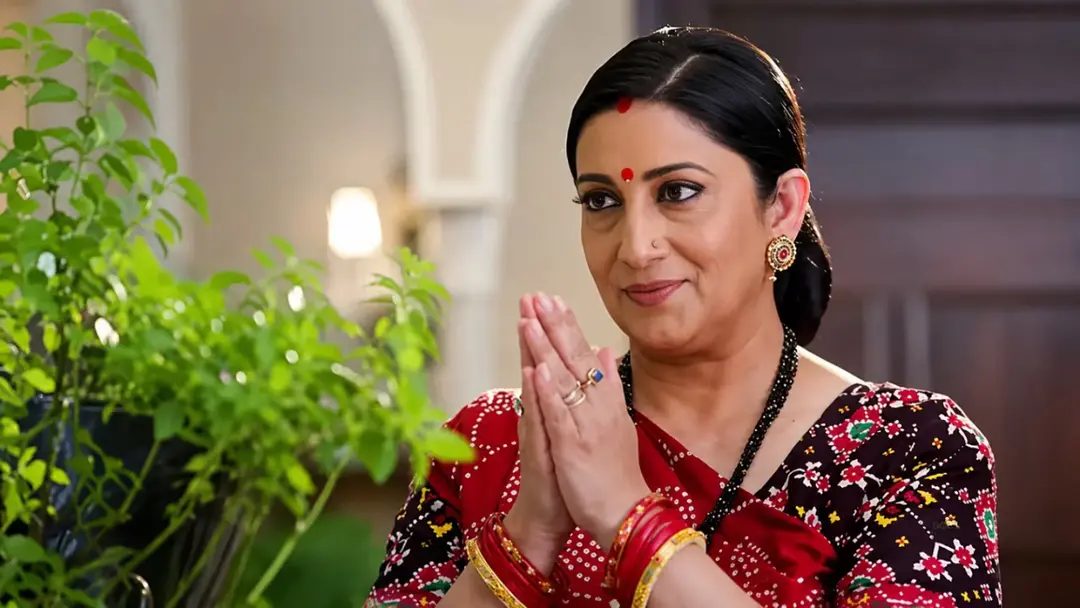
Smriti Irani among names for UP Rajya Sabha polls: Report
The BJP is likely to field national general secretaries Smriti Irani and Harish Dwivedi in the Rajya Sabha election for 10 Uttar Pradesh seats on October 16, an NDTV report said. The names of Varun Gandhi, Sanjeev Baliyan and Satyapal Singh are also under discussion. Nominations begin Tuesday. The BJP is certain of seven seats and may push for an eighth. The Samajwadi Party may field three candidates, though its strength secures only two. A BJP core committee meets in Lucknow.
Source
BJP (official) · read the original report ↗
Desk check · some claims need care
What the desk checked (5)
- BJP is likely to field Smriti Irani and Harish Dwivedi in the UP Rajya Sabha election; Varun Gandhi, Sanjeev Baliyan and Satyapal Singh are also under discussion. — Attributed in source to an NDTV report; speculative, no named official confirmation.
- Ten Rajya Sabha seats in Uttar Pradesh go to election on October 16, with nominations beginning Tuesday. — Dates appear in the source; no issuing authority named.
- 37 first-preference votes are needed to win one seat, with 396 sitting MLAs out of 403 assembly seats. — Figures appear in the source; arithmetic basis not explained and not independently verifiable here.
- BJP is certain to win seven seats and may push for an eighth; Samajwadi Party may field three candidates though its strength secures only two. — Attributed to the NDTV report and unnamed sources; projection, not a result.
- BJP holds a core committee meeting in Lucknow today, with names to be finalised by the Central Election Committee in three to four days. — Stated in source without named attribution.
Analysts’ view opinion
The ten Rajya Sabha seats in Uttar Pradesh are less about upper-house arithmetic than about the social coalition the BJP wants to rebuild before next year's assembly election. The circulation of national general secretaries like Smriti Irani and Harish Dwivedi, alongside talk of Brahmin, non-Yadav OBC, non-Jatav Dalit and Jat representation, reads as an attempt to win back voter blocs that drifted in the Lok Sabha polls. If the BJP, already certain of seven seats, pushes for an eighth, that is a political statement about opposition fault lines rather than a hunt for numbers.
- Reaching for an eighth seat despite seven being secure is a classic move to open the door to cross-voting and stress-test opposition discipline.
- The Samajwadi Party fielding three candidates when its strength supports only two would itself be a loyalty test and a bid to probe support from other parties.
- The way the shortlist is being balanced by caste — holding the Brahmin base while reclaiming non-Yadav OBCs such as Kurmis and non-Jatav Dalits — amounts to an early sketch of the party's assembly-election strategy.
- Talk of returning Hardeep Singh Puri with Punjab's election in mind shows how the Rajya Sabha doubles as a tool for managing the political careers of union ministers.
- The reported consideration of Varun Gandhi, if it holds, would trigger a larger conversation about internal equations and dynastic politics — but at this stage it remains speculative.
What to watch — Watch the final list from the Central Election Committee due within days of the Lucknow core committee meeting — its caste, gender and age mix, and whether the BJP actually files an eighth candidate.
All of this rests on a single news report of names under discussion; the story does not establish any official BJP nomination or a settled decision to contest the eighth seat.
Deep dive
Research brief · 8 facts · 5 dates · exam-readyThe brief
Context
Ten Rajya Sabha seats from Uttar Pradesh go to the polls on October 16, with nominations opening on Tuesday. Rajya Sabha members from states are elected by MLAs through a single transferable vote system, so party strength in the 403-member UP Assembly decides the outcome. With 396 sitting MLAs at present, 37 first-preference votes are needed to win one seat. The BJP is comfortably placed for seven seats and is weighing a push for an eighth, setting up a contest with the Samajwadi Party for the tenth seat ahead of the UP assembly elections.
Key facts
- Ten Rajya Sabha seats from Uttar Pradesh go to election on October 16; nominations begin Tuesday.
- The UP Legislative Assembly has 403 seats; currently 396 MLAs, so 37 first-preference votes are needed to win one Rajya Sabha seat.
- BJP national general secretaries Smriti Irani and Harish Dwivedi are likely to be fielded, per an NDTV report.
- Names of Varun Gandhi, Sanjeev Baliyan, Satyapal Singh, Suresh Rana, Amit Malviya and Rajbir Singh are also under discussion in the BJP.
- The BJP is certain of winning seven seats and is considering pushing for an eighth, opening the field to cross-voting.
- The Samajwadi Party may field three candidates although its strength secures only two; Ram Gopal Yadav, former IAS officer Alok Ranjan and Salim Iqbal are named.
- Terms of OBC MPs Geeta Shakya and BL Verma, and of Union Minister Hardeep Singh Puri, are ending; Puri may be sent back in view of Punjab's assembly elections next year.
- A BJP core committee meeting is being held in Lucknow; final names are to be cleared by the Central Election Committee in three to four days.
Timeline
- Today (day of report)BJP core committee meets in Lucknow to discuss potential Rajya Sabha candidates.
- TuesdayNomination process for the Uttar Pradesh Rajya Sabha seats begins.
- Within three to four daysBJP Central Election Committee to finalise candidate names.
- October 16Election to 10 Rajya Sabha seats from Uttar Pradesh.
- Next yearAssembly elections in Punjab, cited as a reason to re-elect Hardeep Singh Puri.
Who has a stake
- Bharatiya Janata Party — Certain of seven seats, aiming for an eighth; using the list to balance caste, youth and women representation before assembly polls.
- Samajwadi Party — May field three candidates though its numbers assure only two, risking a contest for the tenth seat.
- Smriti Irani and Harish Dwivedi — BJP national general secretaries likely to be nominated for Rajya Sabha berths.
- Sitting MPs whose terms are ending (Geeta Shakya, BL Verma, Hardeep Singh Puri, Brijlal) — Face re-nomination or replacement; Brijlal may be replaced by a younger Dalit leader.
- Neeraj Shekhar and Arun Singh (current MPs) — May be asked to contest the assembly elections instead of returning to the Rajya Sabha.
- UP MLAs — Their first-preference votes decide the seats; a contest for the eighth/tenth seat raises cross-voting pressure.
- Caste groups: Brahmins, non-Yadav OBCs (Kurmis), non-Jatav SCs, Jats — Candidate selection is aimed at retaining or winning back their support.
Why it matters
Rajya Sabha nominations from India's largest state double as a signal of party strategy months before the UP assembly elections, revealing which caste blocs and leaders each party wants to court. A BJP bid for an eighth seat against an SP attempt at a third would force a contested election and open the door to cross-voting, testing party discipline in the Assembly. The choices also shape who represents UP in the Upper House and which Union ministers retain their parliamentary seats.
UPSC angle
Prelims pointers
- Rajya Sabha members from states are elected by MLAs; UP Assembly strength is 403, currently 396 MLAs.
- Quota in this election: 37 first-preference votes per Rajya Sabha seat for 10 UP seats.
- Polling date for the 10 UP Rajya Sabha seats: October 16; nominations start Tuesday.
- BJP candidate names are cleared by its Central Election Committee after a state core committee meeting.
- Union Ministers named in the story: BL Verma and Hardeep Singh Puri, whose Rajya Sabha terms are ending.
- Cross-voting becomes possible when a party contests more seats than its assured quota.
Mains framing
The Uttar Pradesh Rajya Sabha election illustrates how the Upper House's indirect election system becomes an extension of state-level electoral arithmetic and social engineering. With 396 sitting MLAs and a quota of 37 first-preference votes per seat, the BJP is assured of seven of the ten seats and the Samajwadi Party of two; both parties' decision to contest beyond their assured numbers converts a routine election into a contest where cross-voting and the loyalty of individual MLAs become decisive. The reported shortlists — national general secretaries Smriti Irani and Harish Dwivedi, Jat leaders Sanjeev Baliyan and Satyapal Singh, OBC names such as BL Verma, Geeta Shakya and Prakash Pal, and the possible replacement of Dalit leader Brijlal with a younger face — show that nominations are being calibrated to retain Brahmin support and win back non-Yadav OBC (notably Kurmi) and non-Jatav SC voters who drifted away in the Lok Sabha elections, while also accommodating youth and women. The wider implication is that Rajya Sabha berths are used both to secure ministers a seat in Parliament, as in the case of Hardeep Singh Puri with Punjab's polls due next year, and to send caste signals ahead of assembly elections. The way forward lies in transparent candidate selection, respect for the anti-defection and secret-ballot norms that govern such polls, and ensuring that nominees bring legislative expertise to a House designed as a chamber of states rather than only electoral utility.
Key terms
- Rajya Sabha election (state seats)
- Indirect election in which a state's MLAs elect its members of the Upper House by single transferable vote.
- First-preference votes
- The quota of MLA votes a candidate must secure to win a seat; here 37 per seat for 10 UP seats.
- Cross-voting
- MLAs voting against their own party's candidate, which becomes likely when parties contest more seats than their numbers assure.
- BJP core committee
- State-level BJP body, meeting in Lucknow, that discusses and shortlists potential candidates.
- Central Election Committee
- The BJP's apex body that gives final approval to candidate names, due to meet in three to four days.
- Non-Yadav OBC / non-Jatav SC
- Backward and Dalit sub-groups, such as Kurmis, whose support the BJP is trying to win back after the Lok Sabha elections.
Practice questions
- Explain the process of electing Rajya Sabha members from the states and discuss how party strength in an assembly determines outcomes, with reference to the 2025 Uttar Pradesh election to 10 seats.
- "Rajya Sabha nominations have become instruments of state-level social engineering rather than of federal representation." Critically examine in the light of recent candidate selection in Uttar Pradesh.
- What is cross-voting in Rajya Sabha elections, and what institutional safeguards exist against it? Discuss with reference to parties contesting more seats than their assured quota.
Grounded only in the source report — figures and dates are the source's, not inferred.