
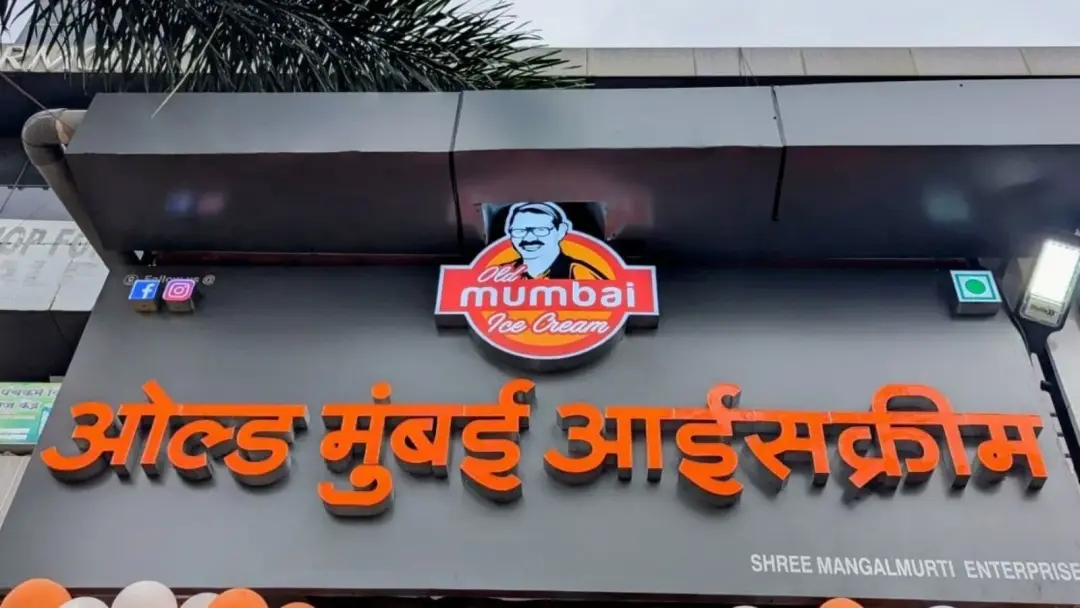
Army aspirant's ice cream brand grows to over 25 stores
Rambabu Ramraj Sharma travelled from Rajasthan to Belgaum in 1978 for an Army recruitment interview and cleared every stage, but could not enlist as his father withheld permission. He chose not to return home, took up odd jobs and learnt ice cream making, formalising the business as Old Mumbai Ice Cream in 1981. From first outlets in Ichalkaranji and Sangli, it now has over 25 stores nationwide. Son Netrapal cites Malai Kulfi, Badam Shake and Kesar Kurma as favourites.
Source
Indian Express — Cities · read the original report ↗
Desk check · compared with the source
What the desk checked (5)
- Rambabu Ramraj Sharma travelled from Rajasthan to Belgaum in 1978 for an Army recruitment interview and did not join after his father withheld permission. — Narrative detail in source, based on family account; no documentary sourcing given.
- The brand Old Mumbai Ice Cream was formalised in 1981. — Figure appears in source; attributed to the company's own history.
- The chain began in Ichalkaranji and Sangli and now has over 25 stores across India. — Stated in source and consistent with the son's account; no independent verification.
- Signature offerings include Malai Kulfi, Kaju Shake, Badam Shake, Mixed Ice Cream and Kesar Kurma with saffron procured from Kashmir. — Attributed to Netrapal Ram Babu Sharma; product descriptions are the writer's assessment.
- Sonu Sonar, manager of the Kondhwa franchise, has worked there since 2019. — Direct quote attributed by name and role in source.
Analysts’ view opinion
This is more than a personal story — it is a window into how India's largely unorganised food business creates livelihoods and small-scale capital. Starting with one outlet in 1981 and reaching more than 25 stores over four decades points to slow, largely self-funded growth built on quality and word of mouth rather than heavy marketing spend. The wider economic lesson is that low entry-barrier trades like ice cream and kulfi remain a genuine route into the economy for migrants without formal credentials.
- Expansion began from Tier-2/3 towns like Ichalkaranji and Sangli, a reminder that discretionary consumption demand is not confined to metros.
- Dependence on pure milk, Kashmiri saffron, almonds and cashews leaves margins exposed to dairy and dry-fruit price swings.
- A franchise model, as at the Kondhwa outlet, allows expansion with limited own capital while generating local employment.
- Relying on quality over advertising keeps costs low, but it also caps the speed of scaling against well-funded national brands and quick-commerce dessert delivery.
- The owners capture the profit, but dairy suppliers, local staff and franchise operators are also stakeholders in this value chain.
What to watch — Watch whether the brand passes rising milk and dry-fruit costs on to prices or absorbs them in margins, and whether quality stays consistent as franchising widens.
The story gives no revenue, profit, employment or investment figures, so the actual economic size of the business cannot be assessed.
Deep dive
Research brief · 8 facts · 6 dates · exam-readyThe brief
Context
Old Mumbai Ice Cream is a family-run Indian ice cream brand born out of a failed Army ambition. In 1978, Rambabu Ramraj Sharma travelled from Rajasthan to Belgaum (then part of the erstwhile Bombay Presidency, now in Karnataka) for an Army recruitment interview and cleared every stage, but could not enlist because his father did not give permission. Instead of returning home, he took up odd jobs, learnt ice cream making in the old Bombay region and formalised the business as Old Mumbai Ice Cream in 1981. Starting with outlets in Ichalkaranji and Sangli, the brand today has over 25 stores across India and is run by his son Netrapal Ram Babu Sharma.
Key facts
- In 1978, Rambabu Ramraj Sharma travelled by bus from Rajasthan to Belgaum for an Army recruitment interview and cleared every requisite stage.
- He could not join the Army because permission from his father never came; he was asked to find another job.
- Sharma chose not to return home and spent years in drifting and odd jobs before learning ice cream making.
- He formalised the business in 1981, naming it Old Mumbai Ice Cream after the old Bombay region where he learnt the craft.
- The first outlet was in Ichalkaranji, followed soon by a second in Sangli.
- Old Mumbai Ice Cream Company today has over 25 stores across India.
- Signature offerings include Malai Kulfi, Kaju Shake, Badam Shake, Mixed Ice Cream and Kesar Kurma, which uses saffron procured from Kashmir.
- Netrapal Ram Babu Sharma, 40, now heads the brand and says the USP is not marketing but integrity of food quality and values.
Timeline
- 1978Rambabu Ramraj Sharma travels from Rajasthan to Belgaum for an Army recruitment interview, clears all stages but cannot enlist without his father's permission.
- After 1978He decides not to return home; years of odd jobs follow, during which he learns ice cream making in the old Bombay region.
- 1981The business is formalised and named Old Mumbai Ice Cream.
- After 1981First outlet opens in Ichalkaranji, followed soon by a second in Sangli.
- 2019Sonu Sonar begins working as manager of the Kondhwa franchise.
- PresentOld Mumbai Ice Cream Company operates over 25 stores across India, helmed by Netrapal Ram Babu Sharma, 40.
Who has a stake
- Rambabu Ramraj Sharma — Founder; turned a rejected Army ambition into a self-taught ice cream craft and brand in 1981.
- Netrapal Ram Babu Sharma (40) — Second-generation head of the brand; responsible for preserving food quality and values while scaling to over 25 stores.
- Franchise managers and staff, such as Sonu Sonar of the Kondhwa outlet — Livelihoods and daily customer engagement; Sonar has worked with the brand since 2019.
- Customers and regulars — Access to flavours like Malai Kulfi, Badam Shake and Kesar Kurma made from slow-boiled milk rather than artificial ingredients.
- Suppliers, including Kashmiri saffron sources — Demand for dry fruits and saffron used in premium flavours such as Kesar Kurma.
Why it matters
The story shows how India's small-town food entrepreneurship can scale nationally without heavy marketing, relying instead on product consistency and word of mouth. It is also a case study in family-run enterprise and generational transfer, where the founder's craft and quality standards become the core asset passed to the next generation.
UPSC angle
Prelims pointers
- Belgaum was part of the erstwhile Bombay Presidency and is now in Karnataka.
- Old Mumbai Ice Cream was formalised in 1981 by Rambabu Ramraj Sharma.
- The brand's first two outlets were in Ichalkaranji and Sangli (Maharashtra).
- The chain now has over 25 stores across India.
- Kesar Kurma uses saffron procured from Kashmir.
- The brand is currently headed by Netrapal Ram Babu Sharma, aged 40.
Mains framing
The rise of Old Mumbai Ice Cream from two shops in Ichalkaranji and Sangli to over 25 stores across India illustrates how micro and small enterprises in India's tier-2 and tier-3 towns grow: through skill acquired informally, low-capital entry into food processing, and reputational trust rather than advertising spend. The founder's trajectory - an Army aspirant in 1978 who cleared every stage but was blocked by lack of parental permission and then reinvented himself in an unfamiliar region - also highlights the role of migration and occupational improvisation in Indian self-employment. The brand's stated differentiator, quality and values over marketing, points to the durability of product integrity as an intangible asset, while the use of pure slow-boiled milk and Kashmiri saffron shows backward linkages to dairy and horticulture supply chains. The challenge ahead, as the source suggests through its emphasis on unchanged "soul", is preserving consistency during franchise expansion, where scale can dilute the very quality on which the brand rests. A way forward, consistent with what the story records, lies in the second generation institutionalising the founder's quality standards across franchised outlets while retaining local flavour identity.
Key terms
- Old Mumbai Ice Cream
- Ice cream brand formalised in 1981, named after the old Bombay region where its founder learnt the craft.
- Bombay Presidency
- Erstwhile British-era administrative province of which Belgaum was once a part; Belgaum is now in Karnataka.
- Malai Kulfi
- The brand's defining flavour, described as dense, creamy and rich, made from slow-boiled milk.
- Kesar Kurma
- Premium flavour combining dry fruits with saffron procured from Kashmir.
- Franchise
- Outlet operated under the brand name by a local manager, such as the Kondhwa franchise managed by Sonu Sonar since 2019.
- USP
- Unique selling proposition; here stated as integrity of food quality and values rather than marketing.
Practice questions
- Trace how Old Mumbai Ice Cream grew from its first outlets in Ichalkaranji and Sangli to over 25 stores across India, and identify the factors its promoters credit for that growth.
- Discuss how small-town food enterprises in India build brand value without large marketing budgets, using the case of Old Mumbai Ice Cream.
- Examine the challenges of maintaining product quality during franchise-led expansion in family-run food businesses.
Grounded only in the source report — figures and dates are the source's, not inferred.