
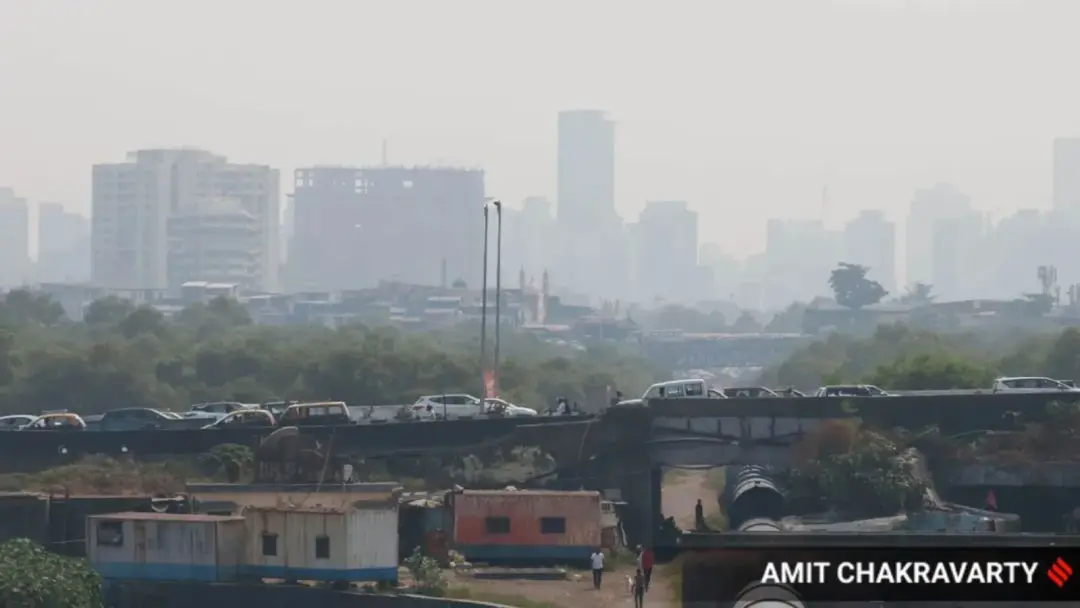
BMC announces 15-day air pollution campaign in Mumbai from October 1
With the monsoon nearing its end, the Brihanmumbai Municipal Corporation has announced a special 15-day campaign from October 1 to prevent Mumbai's air quality from worsening during the festive season and winter. At a review meeting on Friday, Municipal Commissioner Ashwini Bhide directed officials to strictly implement the 28-point guidelines. Nodal officers will monitor dust at major infrastructure work sites. The National Clean Air Programme ranked Mumbai 28th among 48 cities.
Source
Indian Express — Cities · read the original report ↗
Desk check · compared with the source
What the desk checked (5)
- BMC has announced a special 15-day air pollution campaign from October 1. — Attributed to the BMC in the source; dates and duration appear as given.
- Municipal Commissioner Ashwini Bhide directed officials to strictly implement 28-point air pollution guidelines. — Attributed in source to a review meeting held on Friday; figure of 28 points appears in source.
- The National Clean Air Programme ranked Mumbai 28th among 48 major metropolitan cities, against 25th last year, 28th the year before and 10th in 2023. — Figures appear in the source and are attributed to a Union ministry release; internally consistent.
- Mumbai has recorded satisfactory air quality since June and AQI is likely to worsen after monsoon withdrawal, further under El-Nino conditions. — First part attributed to the CPCB dashboard; the deterioration outlook is a projection with no specific source named.
- Nodal officers will be appointed to monitor dust emissions at major infrastructure work sites. — Attributed to BMC plans in the source; no numbers or names given.
Analysts’ view opinion
On the surface this is an administrative measure, but its timing is politically telling. The BMC announced its 15-day campaign within a week of Mumbai being ranked 28th among 48 cities under the National Clean Air Programme — a sequence that reads as an attempt to seize the initiative before criticism hardens. In a civic body currently run by officials rather than an elected corporator council, such announcements carry political signalling weight alongside administrative accountability.
- Announcing the drive days after the NCAP ranking suggests a pre-emptive, defensive communications posture rather than a purely seasonal routine.
- The trajectory — 10th in 2023, then 28th, 25th and 28th again — hands critics an easy 'performance has slipped' line regardless of methodology debates.
- Appointing nodal officers at major infrastructure sites is politically delicate, since those same projects are showcased as development wins; dust control versus construction pace will be the real test.
- Officials stressing that air quality is currently 'under control' builds a narrative of foresight while also insulating the administration if the AQI worsens later.
- A 15-day window invites the obvious question of whether this is sustained policy through Diwali and winter or a limited campaign burst.
What to watch — Watch whether the 28-point guidelines stay enforced beyond October 15, whether action against violators is disclosed publicly, and who blames whom if AQI dips during the festive season.
The story reports no party reactions, political criticism or electoral context, and gives no detail on funding, enforcement machinery or the outcomes of earlier similar drives.
Deep dive
Research brief · 8 facts · 7 dates · exam-readyThe brief
Context
As the monsoon withdraws from Mumbai, the city typically sees its air quality worsen through the festive season and winter, when rain no longer washes out pollutants. The Brihanmumbai Municipal Corporation (BMC) has announced a special 15-day campaign starting October 1 to pre-empt this deterioration. The move follows the Union ministry's release of the National Clean Air Programme ranking, in which Mumbai was placed 28th among 48 major metropolitan cities. Dust from large infrastructure project sites is a key focus of the civic drive.
Key facts
- BMC has announced a special 15-day air pollution campaign in Mumbai beginning October 1.
- The National Clean Air Programme ranking released by the Union ministry placed Mumbai 28th among 48 major metropolitan cities.
- Mumbai's earlier NCAP positions: 25th last year, 28th the year before, and 10th in 2023.
- Municipal Commissioner Ashwini Bhide, at a review meeting on Friday, ordered strict implementation of the BMC's 28-point guidelines on air pollution control.
- Nodal officers will be appointed across Mumbai to monitor dust emissions at major infrastructure project work sites.
- The Central Pollution Control Board dashboard shows Mumbai has recorded satisfactory air quality since June, aided by rain washing away pollutants.
- The BMC campaign comes a week after the Union ministry released the NCAP ranking.
- Bhide also reviewed implementation of the BMC's 'Pedestrian First' campaign at Friday's meeting.
Timeline
- 2023Mumbai ranked 10th in the National Clean Air Programme list of cities.
- Two years before the latest rankingMumbai stood at 28th position.
- Last yearMumbai stood at 25th position.
- Since June (current year)Mumbai recorded satisfactory air quality, as per the CPCB dashboard, with monsoon rain washing away pollutants.
- About a week before the BMC announcementThe Union ministry released the National Clean Air Programme ranking, placing Mumbai 28th of 48 cities.
- FridayReview meeting chaired by Municipal Commissioner Ashwini Bhide; officials told to strictly enforce the 28-point guidelines; 'Pedestrian First' campaign also reviewed.
- October 1BMC's special 15-day air pollution prevention campaign begins.
Who has a stake
- Brihanmumbai Municipal Corporation (BMC) — Civic body running the 15-day campaign and enforcing its 28-point guidelines to stop air quality from worsening in winter.
- Ashwini Bhide, Municipal Commissioner — Directed strict implementation of guidelines and reviewed both the pollution measures and the 'Pedestrian First' campaign.
- Nodal officers — To be appointed across Mumbai to monitor dust emissions at major infrastructure work sites.
- Major infrastructure project executors — Their work sites will be monitored for dust emissions that could further deteriorate air quality.
- Mumbai's citizens — Face the health and quality-of-life impact if AQI deteriorates during the festive season and winter.
- Central Pollution Control Board (CPCB) — Maintains the dashboard tracking Mumbai's air quality index readings.
- Union ministry / National Clean Air Programme — Released the ranking of 48 metropolitan cities that placed Mumbai 28th, framing the civic response.
Why it matters
Mumbai's air quality is currently satisfactory only because monsoon rain suppresses pollutants; once the monsoon withdraws, construction dust and festive-season activity can push the AQI sharply higher. The city's slide in the NCAP ranking from 10th in 2023 to 28th now signals that gains are not holding. A pre-emptive 15-day civic drive tests whether enforcement of dust norms at infrastructure sites can protect public health before winter sets in.
UPSC angle
Prelims pointers
- BMC's special air pollution campaign: 15 days, starting October 1.
- National Clean Air Programme (NCAP) ranking: Mumbai 28th among 48 major metropolitan cities.
- Mumbai's NCAP trend: 10th in 2023, 28th, then 25th last year, 28th now.
- BMC uses a 28-point set of guidelines to control air pollution.
- Central Pollution Control Board (CPCB) dashboard tracks Air Quality Index (AQI); Mumbai satisfactory since June.
- Ashwini Bhide is Mumbai's Municipal Commissioner; also reviewed the 'Pedestrian First' campaign.
Mains framing
Mumbai's air pollution problem is seasonal in appearance but structural in cause: monsoon rain masks emissions for months, while dust from large infrastructure projects, combined with festive-season activity and adverse winter meteorology, degrades air once the rains withdraw. The source notes that under El-Nino climatic conditions the situation is set to deteriorate further, making meteorology a compounding rather than causal factor. The city's NCAP ranking slipping from 10th in 2023 to 28th among 48 cities suggests that episodic drives have not translated into sustained improvement. The BMC's response - a 15-day campaign from October 1, strict enforcement of 28-point guidelines, and nodal officers to monitor dust at major work sites - is preventive and enforcement-led, which is its strength and its limit: short campaigns depend on continuous site-level accountability to matter. A credible way forward, on the evidence available, lies in year-round dust control at construction sites, transparent AQI monitoring through the CPCB dashboard, and integrating air quality goals with urban mobility initiatives such as the 'Pedestrian First' campaign reviewed alongside it.
Key terms
- BMC (Brihanmumbai Municipal Corporation)
- Mumbai's civic body, which has announced the 15-day air pollution campaign and enforces the 28-point guidelines.
- National Clean Air Programme (NCAP)
- Union ministry programme whose recent release ranked Mumbai 28th among 48 major metropolitan cities.
- AQI (Air Quality Index)
- Index measuring air quality; Mumbai's AQI is currently under control but expected to worsen after the monsoon.
- Central Pollution Control Board (CPCB)
- Central body whose dashboard shows Mumbai recording satisfactory air quality since June.
- 28-point guidelines
- BMC's set of air pollution control measures that officials have been told to implement strictly.
- 'Pedestrian First' campaign
- A BMC initiative whose implementation was also reviewed at Friday's meeting by the Municipal Commissioner.
Practice questions
- Mumbai's NCAP ranking has fallen from 10th in 2023 to 28th among 48 cities. Examine the causes of this slide and assess whether short-duration civic campaigns can deliver lasting improvement in urban air quality.
- Construction and infrastructure dust is a major contributor to urban air pollution. Discuss the institutional mechanisms, such as nodal officers and dust-control guidelines, available to municipal bodies and their limitations.
- How do seasonal and meteorological factors, including monsoon withdrawal and El-Nino conditions, interact with anthropogenic emissions to shape air quality in Indian coastal cities?
Grounded only in the source report — figures and dates are the source's, not inferred.