
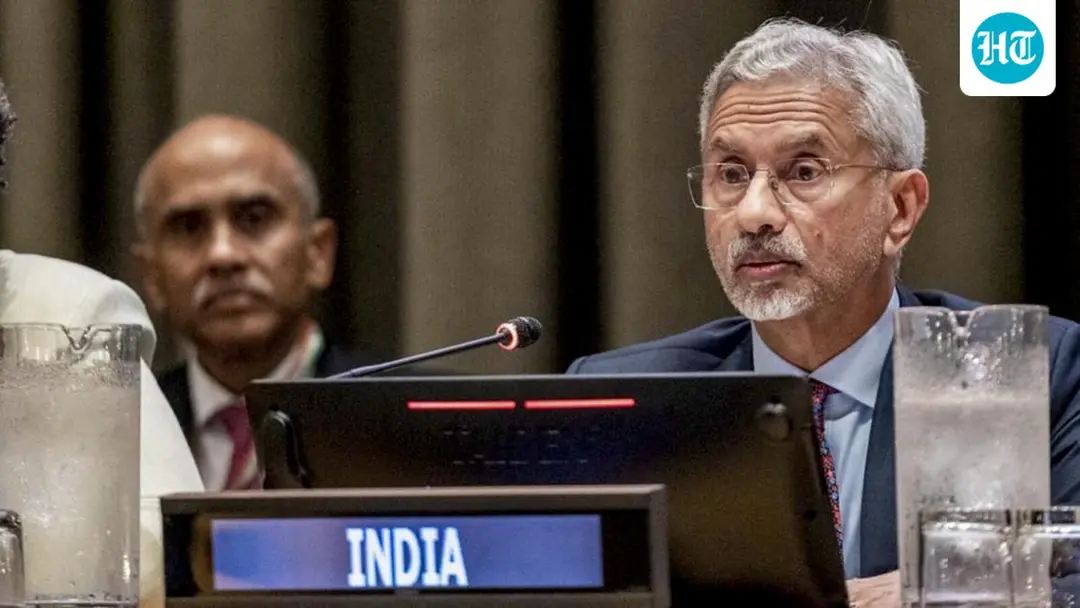
India joins new multilateralism platform launched at UN Assembly
India joined the European Union, Australia, Brazil and Canada in launching a platform for multilateralism, international law, peace and prosperity at the inaugural P4M Summit in New York on September 21, on the margins of the UN General Assembly. External affairs minister S Jaishankar said the global order was under stress and called for participative deliberations and transparent decision-making. A joint declaration by the seven signatories sought reform of UN institutions.
Source
Hindustan Times — India · read the original report ↗
Desk check · compared with the source
What the desk checked (5)
- India joined the EU, Australia, Brazil and Canada to launch the P4M platform on the margins of the UN General Assembly. — Stated in source; event described as inaugural P4M Summit in New York on September 21.
- Participants included Jaishankar, Antonio Costa, Anthony Albanese, Mario Vieira, Mia Mottley, Mark Carney and William Ruto. — Names appear in source text as attendees of the summit.
- Jaishankar said reformed multilateralism is essential and the global order is 'under stress'. — Direct quotes attributed to Jaishankar at the meeting.
- The joint declaration called the UN Charter-based multilateral system 'indispensable' but in need of renewal and reform. — Quoted from the joint declaration in the source.
- Seven signatories tasked senior officials with setting up a coordination channel and invited other countries to join. — Figure and action appear in source; no further sourcing given.
Analysts’ view opinion
P4M is best read not as a bloc but as an exercise in strategic hedging: middle powers closing ranks to keep the rules-based system intact at a moment when great-power competition is straining it. India's decision to come in as a co-sponsor gives it another, broader platform to press its long-standing demand for UN reform while preserving its strategic autonomy. Jaishankar's language on "chokepoint dominance", de-risking and diversification reveals the initiative's real economic-security core.
- The founders' explicit insistence that this is not "another exclusive bloc" signals deliberate diplomatic caution about being read as alliance-building.
- India's presence changes the group's character: alongside Brazil, Kenya and Barbados it looks less like a Western caucus and more like a North-South coalition, which strengthens the political case for Security Council reform.
- Supply-chain diversification, de-risking and guardrails for emerging technologies amount to an economic-security agenda aimed at reducing strategic dependencies without naming any country.
- India's emphasis on the fallout of conflicts on fuel, food, fertilisers and finance is consistent with its established positioning as a voice for Global South interests.
- For now this remains declaratory — beyond tasking officials with a coordination channel, the story establishes no implementation machinery, funding or decision-making authority.
What to watch — Watch which priority areas the senior-officials coordination channel picks, and which additional countries accept the open invitation — especially from Asia and Africa — as the real test of the platform's weight.
The story does not establish what institutional structure, resources or timeline P4M will have, nor whether it can shift UN reform in practice or how other major powers will respond.
Deep dive
Research brief · 8 facts · 3 dates · exam-readyThe brief
Context
On the margins of the UN General Assembly in New York, India joined the European Union, Australia, Brazil, Canada, Barbados and Kenya to launch a new grouping called Partners for Multilateralism, International Law, Peace and Prosperity (P4M) at its inaugural summit on September 21. The initiative was first outlined in a joint op-ed by European Council President Antonio Costa, Canadian PM Mark Carney, Kenyan President William Ruto and Brazilian President Inacio Lula da Silva, who stressed it was not meant to be "another exclusive bloc" but a push to reform the UN and other multilateral institutions. External affairs minister S Jaishankar, leading the Indian delegation, said India was glad to join as a co-sponsor at a time when the global order is "under stress". A joint declaration by the seven signatories called the UN Charter-based system "indispensable" but in need of renewal and reform.
Key facts
- The inaugural P4M (Partners for multilateralism, international law, peace and prosperity) Summit was held in New York on September 21, on the margins of the UN General Assembly.
- India joined as a co-sponsor alongside the European Union, Australia, Brazil and Canada; seven signatories in all signed the initiative.
- Leaders present: EAM S Jaishankar, European Council President Antonio Costa, Australian PM Anthony Albanese, Brazil's foreign minister Mario Vieira, Barbados PM Mia Mottley, Canadian PM Mark Carney and Kenyan President William Ruto.
- The initiative was first outlined in a joint op-ed by Costa, Carney, Ruto and Brazilian President Inacio Lula da Silva, who said the aim is UN reform, not "another exclusive bloc".
- Carney helped catalyse the initiative, building on his remarks at the World Economic Forum in Davos in January urging middle powers to close ranks to defend multilateralism.
- Jaishankar said "Reformed multilateralism is therefore essential. More participative deliberations and more transparent decision-making are both overdue."
- The joint declaration called the multilateral system founded on the UN Charter "indispensable" but said it "should be renewed and reformed to be more effective, representative, inclusive and fit for purpose".
- The seven signatories tasked senior officials with establishing a coordination channel and identifying priority areas, and invited other countries to join.
Timeline
- January (World Economic Forum, Davos)Mark Carney urges middle powers to close ranks to defend multilateralism, remarks that later catalysed the initiative.
- Before the summit (date not stated in the source)Costa, Carney, Ruto and Lula da Silva outline the initiative in a joint op-ed article, pledging support for UN reform rather than a new exclusive bloc.
- September 21Inaugural P4M Summit held in New York on the margins of the UN General Assembly; India joins as co-sponsor and a joint declaration is issued.
Who has a stake
- India (represented by EAM S Jaishankar) — Joins as co-sponsor; long-standing pursuit of "reformed multilateralism", more participative deliberation and transparent decision-making in the UN system.
- European Union / European Council President Antonio Costa — Co-launcher; seeks to turn confrontation into cooperation and build a global network based on multilateral cooperation and international law.
- Canada / PM Mark Carney — Helped catalyse the platform, following his Davos call for middle powers to defend multilateralism.
- Brazil, Kenya, Barbados, Australia — Signatories represented by Lula/foreign minister Mario Vieira, President William Ruto, PM Mia Mottley and PM Anthony Albanese; stake in more representative global institutions.
- United Nations and other multilateral institutions — Targets of proposed reform so they are more effective, representative, inclusive and "fit for tomorrow's world".
- Other countries and regional organisations — Invited to join; declaration commits to closer partnerships with regional organisations and support for regional integration.
Why it matters
India's decision to co-sponsor P4M places it inside a cross-continental coalition of middle powers pushing UN reform at a time of extreme competition, geopolitical tensions and conflicts. The platform's stated intent is to reform existing institutions rather than create an exclusive bloc, which aligns with India's long-standing demand for reformed multilateralism and greater voice for the Global South. Its agenda — supply chain diversification, de-risking against chokepoints, climate finance, AI guardrails, pandemic preparedness and counter-terrorism — touches directly on India's economic and security priorities.
UPSC angle
Prelims pointers
- P4M = Partners for Multilateralism, International Law, Peace and Prosperity; inaugural summit New York, September 21, on UNGA margins.
- India joined with the EU, Australia, Brazil and Canada; seven signatories in all, also including Barbados and Kenya.
- India was represented by External Affairs Minister S Jaishankar, who led the Indian delegation to the UN General Assembly.
- Initiative traced to a joint op-ed by Antonio Costa (European Council), Mark Carney (Canada), William Ruto (Kenya) and Lula da Silva (Brazil).
- Costa's three priorities: defending the UN Charter and peaceful settlement of disputes; climate finance, sustainable development and AI; reform of global institutions.
- Joint declaration backs reform of the multilateral trading system and an improved international financial architecture.
Mains framing
The launch of P4M reflects a structural problem: the UN Charter-based order, described in the joint declaration as \"indispensable\", is seen as insufficiently representative and effective amid what Jaishankar called a global order \"under stress\" — marked by extreme competition, geopolitical tensions and conflicts that have disrupted an ongoing rebalancing of the international order. The response chosen by this group of middle powers and regional actors is notable for what it avoids: its founders explicitly framed it as support for reforming the UN and other institutions rather than \"another exclusive bloc\", and the declaration commits to cooperation that is open, networked and practical, with closer partnerships with regional organisations. The stated work programme is functional rather than declaratory — international security, climate justice, emerging technologies, development finance, resilient supply chains, pandemic preparedness and counter-terrorism, plus addressing conflict-driven disruptions in fuel, food, fertilisers and finance. Jaishankar's emphasis on \"frameworks and guardrails\" for new capabilities and on \"de-risking and diversifying\" against chokepoint dominance links reform of global governance to economic security. The way forward set out at the summit is modest but concrete: senior officials to set up a coordination channel, identify priority areas for deliverables, and keep the platform open to new members — with the credibility test being whether it produces results while insisting that international law, rules and norms are scrupulously observed.
Key terms
- P4M
- Partners for Multilateralism, International Law, Peace and Prosperity — new platform launched at its inaugural summit in New York on September 21.
- Reformed multilateralism
- Jaishankar's framing: multilateral institutions renewed through more participative deliberations and more transparent decision-making.
- UN Charter
- Founding treaty of the UN; the declaration calls the system founded on it "indispensable" and Costa lists defending it as a priority.
- European Council
- EU body whose President, Antonio Costa, co-launched the initiative and attended the P4M Summit.
- De-risking and diversifying
- Jaishankar's prescription for reducing exposure where there is a threat of chokepoint dominance and disruption, including via resilient supply chains.
- Middle powers
- States neither superpowers nor small states; Carney at Davos in January urged them to close ranks to defend multilateralism.
Practice questions
- What does "reformed multilateralism" mean in India's foreign policy vocabulary, and how far does the P4M platform advance that agenda?
- Groupings of middle powers are proliferating even as they claim not to be exclusive blocs. Critically examine whether P4M can strengthen rather than fragment the UN system.
- Discuss how economic security concerns — supply chain resilience, chokepoints, AI guardrails and development finance — are reshaping the agenda of multilateral diplomacy.
Grounded only in the source report — figures and dates are the source's, not inferred.