
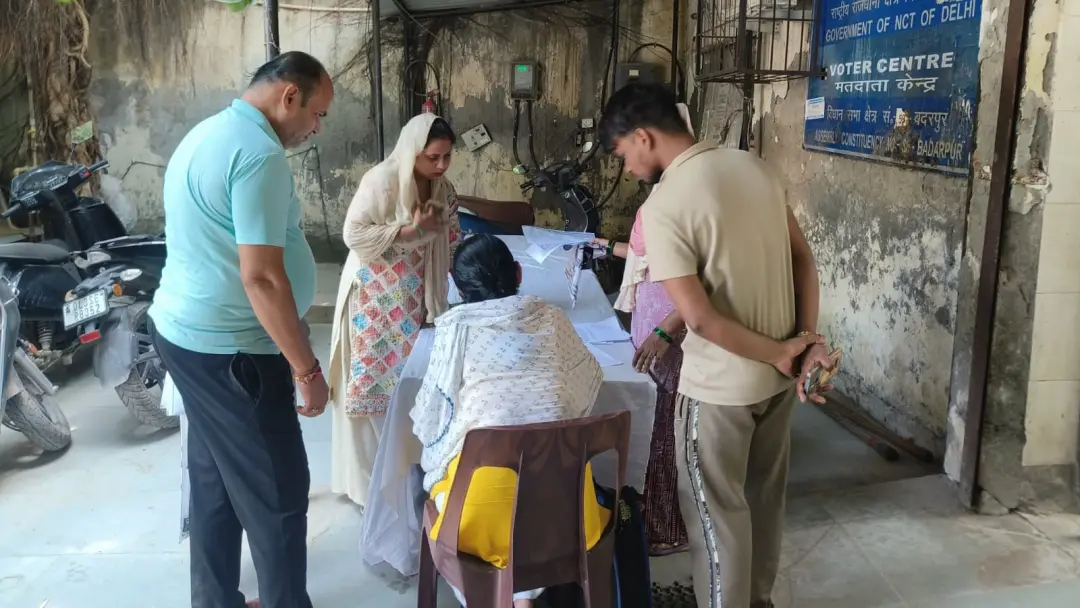
SIR notices to 44% of electors in Delhi's Badarpur seat
Around 87,000 electors, or 44%, in Southeast Delhi's Badarpur Assembly seat are being served notices under the ongoing Special Intensive Revision, officials said, as their details could not be linked to the 2002 SIR roll or showed anomalies in enumeration forms. Booth Level Officers are holding hearings at polling stations and homes to spare voters a trip to the electoral office. Badarpur had 3.44 lakh electors before SIR; 1.98 lakh made the August 31 draft rolls.
Source
Indian Express — Cities · read the original report ↗
Desk check · compared with the source
What the desk checked (5)
- Notices are being issued to around 87,000 or 44% of electors in Badarpur. — Attributed to officials in the source; figure appears in source text.
- Badarpur has the highest percentage of electors served notices among Delhi Assembly seats. — Attributed to unnamed officials; not independently verifiable.
- Badarpur had 3.44 lakh electors before SIR; 1.98 lakh made the August 31 draft rolls and 1.46 lakh forms were marked 'uncollectible'. — Figures stated in source; internally consistent with the 44% notice figure.
- BLO Sumit Bhati was allotted 1,000 electors, of whom 701 made the draft roll and about 240 will get notices. — Attributed to the named BLO and reporter's on-site observation.
- High deletions are due to renters in unauthorised colonies and settlements that did not exist in 2002. — Explanation attributed to an unnamed local election office official.
Analysts’ view opinion
బదర్పూర్లో ఎస్ఐఆర్ ప్రభావం కేవలం సాంకేతిక ప్రక్రియ కాదు — 3.44 లక్షల ఓటర్లలో ముసాయిదా జాబితాకు 1.98 లక్షలే చేరడం, మిగిలిన వారిలో 44 శాతానికి నోటీసులు అనేది ఏ నియోజకవర్గంలోనైనా రాజకీయంగా పేలుడు సామగ్రి లాంటిదే. అధికారుల వివరణ ప్రకారం ఇక్కడ అద్దె ఇళ్లు, అనధికార కాలనీలు, ఫరీదాబాద్ సరిహద్దు వలసలు ఎక్కువ — అంటే తొలగింపుల భారం ప్రధానంగా శ్రామిక, దిగువ మధ్యతరగతి ఓటర్లపై పడుతోంది, ఇది ఏ పార్టీకి లాభం, ఏ పార్టీకి నష్టం అనే వాదనను తప్పనిసరిగా రేపుతుంది. అధికార యంత్రాంగం ఇళ్ల వద్దే, పోలింగ్ కేంద్రాల్లోనే విచారణలు నిర్వహిస్తూ ఇబ్బంది తగ్గించే ప్రయత్నం చేస్తున్నా, "ఏళ్ల తరబడి ఓటేసినా ఇప్పుడు ఎందుకు?" అనే ఓటరు ఆగ్రహమే ప్రతిపక్షాలకు సిద్ధమైన రాజకీయ ఆయుధం.
- ఢిల్లీలో అత్యధిక శాతం నోటీసులు అందుకున్న అసెంబ్లీ స్థానంగా బదర్పూర్ నిలవడం, ఎస్ఐఆర్ చర్చను ఒక్క నియోజకవర్గం చుట్టూ కేంద్రీకరించే అవకాశం ఇస్తుంది.
- తొలగింపులు ఎక్కువగా అద్దెదారులు, తరచూ ఇళ్లు మారేవారు, 2002లో లేని కాలనీల నివాసులపై పడుతుండటం — ఈ వర్గాల ఓటింగ్ తీరుపై పార్టీల మధ్య భిన్న అంచనాలకు దారి తీస్తుంది.
- అధికారుల వాదన సాంకేతికం — పేర్ల స్పెల్లింగ్ తేడాలు, 2002 జాబితాతో లింక్ కుదరకపోవడం వంటివి; బీఎల్ఓ స్థాయిలోనే పరిష్కారమవుతాయని చెబుతున్నారు, ఇది ప్రక్రియ పారదర్శకతపై యంత్రాంగం రక్షణ వాదన.
- అదే సమయంలో పదే పదే వేర్వేరు పత్రాలు అడుగుతున్నారన్న ఓటర్ల ఫిర్యాదు, ప్రక్రియను 'వేధింపు'గా చిత్రించే రాజకీయ కథనానికి ముడిసరుకు అవుతుంది.
- 1.46 లక్షల ఎన్యుమరేషన్ ఫారాలు 'సేకరించలేనివి'గా గుర్తించడం అనే గణాంకమే, తుది జాబితా వెలువడే వరకు క్షేత్రస్థాయి రాజకీయ ఘర్షణకు కేంద్ర బిందువుగా ఉండనుంది.
What to watch — నోటీసులు అందుకున్న 87,000 మందిలో ఎంత మంది విచారణకు హాజరై తిరిగి జాబితాలో చేరతారు — ఆ సంఖ్యే ఎస్ఐఆర్ను "శుద్ధీకరణ" అని చెప్పే వాదననో, "ఓటుహక్కు తొలగింపు" అనే ఆరోపణనో బలపరుస్తుంది; పార్టీల అభ్యంతరాలు, ఎన్నికల సంఘం స్పష్టీకరణలు, కోర్టు జోక్యం అవకాశాలను గమనించాలి.
ఈ కథనం నోటీసులు, తొలగింపుల ప్రక్రియను మాత్రమే వివరిస్తుంది — తుది జాబితాలో ఎంత మంది పేర్లు తొలగిపోతాయి, ఏ పార్టీకి ఎంత లాభం లేదా నష్టం, ఇందులో రాజకీయ ఉద్దేశం ఉందా లేదా అనే విషయాలను ఇది నిర్ధారించడం లేదు; ఏ పార్టీ అధికారిక ప్రతిస్పందనా ఇక్కడ నమోదు కాలేదు.
Deep dive
Research brief · 8 facts · 3 dates · exam-readyThe brief
Context
The Election Commission is conducting a Special Intensive Revision (SIR) of electoral rolls in Delhi, in which electors' details are matched against the 2002 SIR electoral roll — the last time such an exercise was carried out. Electors whose enumeration forms show anomalies, or who cannot establish a link to the 2002 roll, are served hearing notices and must produce documents or face deletion from the rolls. In Southeast Delhi's Badarpur Assembly seat, officials say around 87,000 electors (44%) are being served such notices, the highest share among Delhi's Assembly seats. Booth Level Officers (BLOs) are holding hearings at polling stations and at electors' homes, though final approval rests with the Electoral Registration Officer (ERO).
Key facts
- Around 87,000 electors, or 44%, in Badarpur Assembly seat are being served SIR hearing notices — the highest percentage among Delhi Assembly seats, officials say.
- Notices were issued because electors' details could not be linked to the 2002 SIR electoral roll, or due to anomalies in their enumeration forms.
- Badarpur had 3.44 lakh electors before SIR began; 1.98 lakh names made the draft rolls published on August 31.
- Enumeration forms of 1.46 lakh Badarpur electors were marked 'uncollectible' and their names were struck off.
- BLO Sumit Bhati, a Hindi teacher, was allocated 1,000 electors; 701 made the draft roll and around 240 will be served notices, mostly for name-spelling mismatches.
- By around 2.30 pm on Monday at Panchsheel Public School, Bhati had already conducted 36 hearings.
- Per the EC's communication to Delhi's Chief Electoral Officer, the eligibility inquiry must be conducted by the ERO or Assistant ERO; the ERO has discretion over the hearing venue.
- Officials attribute Badarpur's high deletions and notices to widespread rented accommodation in unauthorised colonies, frequent shifting, and settlements that did not exist in 2002; the area borders Faridabad.
Timeline
- 2002The last Special Intensive Revision of electoral rolls was carried out; its roll is now the reference base for linking electors.
- August 31Draft electoral rolls published — 1.98 lakh of Badarpur's 3.44 lakh electors made it; 1.46 lakh forms marked 'uncollectible' and struck off.
- Monday (as reported)Hearings underway at Panchsheel Public School and a voter registration centre in Badarpur; BLO Bhati completes 36 hearings by 2.30 pm.
Who has a stake
- Electors of Badarpur — Around 87,000 face possible deletion from rolls unless they attend hearings and submit documents linking them to the 2002 roll or correcting form anomalies.
- Booth Level Officers (BLOs) — Frontline staff, often teachers, conducting hearings at polling stations and homes, scanning and uploading documents; Bhati handles 1,000 electors.
- Electoral Registration Officer / Assistant ERO — Legally mandated to conduct the eligibility inquiry and grant final approval; decides hearing venue subject to logistics.
- Election Commission and Delhi Chief Electoral Officer — Responsible for the SIR's integrity and for communicating procedure; accountable for large-scale deletions.
- Migrant and rented-accommodation residents in unauthorised colonies — Most exposed to deletion because of frequent shifting and settlements that did not exist in 2002.
Why it matters
The right to vote depends on being on the electoral roll, and in one Delhi seat nearly half the electors must now prove their eligibility or risk deletion — with 1.46 lakh names already struck off as 'uncollectible'. The burden falls heaviest on renters, labourers and residents of unauthorised colonies who cannot be traced to a 2002 roll, raising questions of exclusion of the poor and mobile urban population. How the ERO-led hearings are conducted will determine whether the revision cleans up the rolls or disenfranchises legitimate voters.
UPSC angle
Prelims pointers
- Special Intensive Revision (SIR): intensive electoral roll revision; the previous SIR in Delhi was in 2002, now used as the linkage base.
- Badarpur (Southeast Delhi) had 3.44 lakh electors pre-SIR; 1.98 lakh in the August 31 draft rolls; 1.46 lakh struck off as 'uncollectible'.
- Around 87,000 (44%) Badarpur electors served notices — highest share among Delhi Assembly seats, per officials.
- As per EC communication to Delhi's CEO, eligibility inquiry must be done by the Electoral Registration Officer (ERO) or Assistant ERO.
- BLOs collect and upload documents, but final approval on retaining a name rests with the ERO.
- Enumeration form: the SIR document electors fill; forms not collected are marked 'uncollectible'.
Mains framing
Delhi's ongoing Special Intensive Revision illustrates the tension between purifying electoral rolls and protecting the franchise of the urban poor. In Badarpur, 44% of electors — around 87,000 — face hearing notices because their details could not be linked to the 2002 SIR roll or because of anomalies such as name-spelling mismatches, while 1.46 lakh of 3.44 lakh names were already struck off after forms were marked 'uncollectible'. Officials themselves link this to structural causes: unauthorised colonies, labourers and lower-middle-class families living on rent, frequent shifting, proximity to the Faridabad border, and settlements that simply did not exist in 2002 — meaning the reference roll is a poor benchmark for a mobile population. The administrative response — BLOs holding hearings at polling stations and homes so electors need not travel to the electoral office, with ERO retaining final approval — reduces access costs, but voters' complaints about repeated and shifting document demands point to weak communication. The way forward lies in clear, uniform document lists publicised in advance, simple remedies like undertakings for clerical mismatches, adequate BLO training and logistics, transparent publication of deletion reasons with time-bound appeals, and special outreach in unauthorised colonies and rental settlements so that procedural default does not become de facto disenfranchisement.
Key terms
- Special Intensive Revision (SIR)
- An intensive revision of electoral rolls; the last such exercise before the present one was in 2002, whose roll is used for linking electors.
- Booth Level Officer (BLO)
- Local official, often a teacher, who collects enumeration forms, conducts hearings at homes or polling stations and uploads documents to the portal.
- Electoral Registration Officer (ERO)
- Officer legally responsible for the roll; conducts eligibility inquiry (with Assistant ERO), decides hearing venue and grants final approval.
- Enumeration form
- The form electors fill during SIR; forms that could not be collected are marked 'uncollectible' and the names struck off the draft roll.
- Draft electoral roll
- The provisional roll published during revision — in Badarpur it carried 1.98 lakh names on August 31 — before claims and objections are settled.
- Chief Electoral Officer (CEO)
- State-level head of election machinery; the Election Commission communicated the SIR inquiry procedure to Delhi's CEO.
Practice questions
- Examine how the use of a 2002 electoral roll as the linkage base for Special Intensive Revision can affect voters in rapidly changing urban settlements. Suggest safeguards.
- Discuss the respective roles of Booth Level Officers and Electoral Registration Officers in electoral roll revision, and the procedural safeguards needed before a name is deleted.
- 'Electoral roll purification and voter inclusion need not be in conflict.' Critically analyse in the light of the Delhi SIR experience in Badarpur.
Grounded only in the source report — figures and dates are the source's, not inferred.