
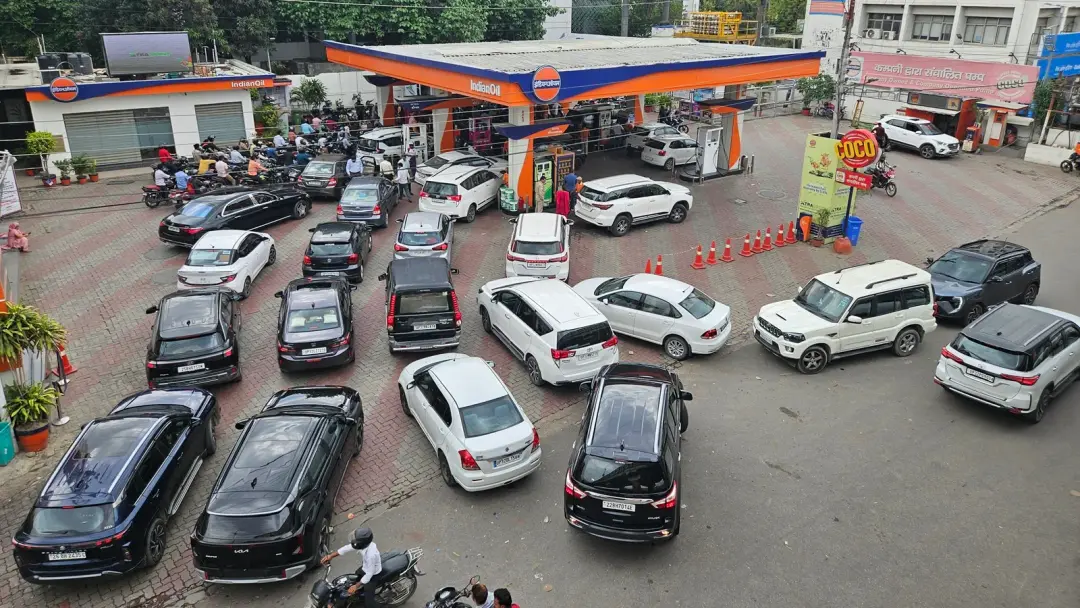
Mumbai petrol pumps warn of halting UPI payments over MDR
The Petrol Dealers Association of Mumbai has warned that petrol pumps may discontinue UPI payments from October 15 if fuel retailers are not exempted from the revised merchant discount rate (MDR) on UPI transactions above Rs 2,000. It wrote to the RBI and Finance Ministry on Wednesday seeking a complete waiver. The Centre has imposed a 0.4 percent MDR on person-to-merchant UPI transactions above Rs 2,000, with exemptions for certain small and micro merchants. The association said over 60 percent of fuel sales at its outlets are digital.
Source
Indian Express — Cities · read the original report ↗
Desk check · compared with the source
What the desk checked (5)
- Petrol pumps in Mumbai may stop UPI payments from October 15 if fuel retailers are not exempted from the revised MDR. — Attributed to the Petrol Dealers Association of Mumbai's letter and warning as reported in the source.
- The Centre has introduced a 0.4 percent MDR on person-to-merchant UPI transactions above Rs 2,000, with exemptions for certain small and micro merchants. — Stated in the source without naming a specific government notification or official.
- More than 60 percent of fuel sales at association outlets are through digital payments. — Attributed to the association and quoted by its president Chetan Modi.
- Dealer commissions have remained unchanged for nearly a decade while operating and compliance costs have risen. — Attributed to dealers collectively; no figures or documentation given in the source.
- Only 17% of merchants surveyed were willing to bear the 0.4% MDR while over 41 percent opposed it. — Figure appears in source, attributed to a recent LocalCircles study; sample size and date not specified.
Analysts’ view opinion
At its core this is a margin fight. With fuel prices regulated and dealer commissions unchanged for close to a decade, petrol pumps say they have no room to pass a 0.4 percent MDR on to customers and would have to absorb it themselves. The counter-argument, implicit in the policy, is that someone has to fund the cost of running digital payments infrastructure — and with more than 60 percent of sales at these outlets already digital, an unresolved standoff would be felt directly by everyday consumers.
- A 0.4 percent charge bites hardest in a high-ticket, thin-margin business, and a typical full-tank purchase routinely crosses the Rs 2,000 threshold.
- In a price-regulated segment there is no easy way to raise prices, so dealers argue the cost lands squarely on their fixed commission.
- Investments in digital infrastructure made on the assurance of a zero-MDR regime now look like sunk costs to dealers, which risks denting confidence in future digital spending.
- If UPI is actually withdrawn, the pain is widely spread: inconvenience and cash dependence for customers, cash-handling costs for pumps, and a setback for digital payment adoption.
- The LocalCircles finding that only 17 percent of surveyed merchants are willing to bear the charge suggests this is not a petrol-pump-specific grievance.
What to watch — Watch whether the RBI or Finance Ministry offers an exemption, partial relief or clarity on who bears the charge before the October 15 deadline, and whether dealer associations in other cities take up the same demand.
This story records a warning from one association — it does not establish that UPI will actually be switched off, what the government or RBI response will be, who receives the MDR revenue, or the precise rupee cost to a dealer.
Deep dive
Research brief · 8 facts · 3 dates · exam-readyThe brief
Context
India's UPI person-to-merchant payments have so far operated in a zero-MDR (merchant discount rate) environment, meaning merchants paid no fee on digital collections. The Centre has now introduced a 0.4 percent MDR on person-to-merchant UPI transactions above Rs 2,000, with exemptions for certain small and micro merchants. Petrol pumps, whose bills often cross that threshold, say they cannot absorb the charge because fuel prices are regulated and dealer commissions are fixed. The Petrol Dealers Association of Mumbai has written to the RBI and the Finance Ministry seeking a full waiver and has threatened to stop accepting UPI.
Key facts
- The Centre has introduced a 0.4 percent MDR on person-to-merchant UPI transactions above Rs 2,000, with exemptions for certain small and micro merchants.
- Petrol pumps across Mumbai may discontinue UPI payments from October 15 if fuel retailers are not exempted from the revised MDR.
- The Petrol Dealers Association of Mumbai wrote to the RBI and the Finance Ministry on Wednesday seeking a complete waiver for petrol pumps.
- The association says more than 60 percent of fuel and diesel sale transactions at its outlets are now digital.
- Chetan Modi, President of the Petrol Dealers Association of Mumbai, said the revised implementation creates an 'existential crisis' for retailers.
- Dealers said their commissions have remained unchanged for nearly a decade while operating and compliance costs have risen.
- With fuel prices regulated, dealers say transaction charges cannot be passed on to customers and the MDR would have to be absorbed.
- A LocalCircles study found only 17% of surveyed merchants were willing to bear the 0.4% MDR on UPI transactions above Rs 2,000, while over 41 percent opposed bearing the charges.
Timeline
- Not dated in the sourceCentre introduces 0.4 percent MDR on person-to-merchant UPI transactions above Rs 2,000, with exemptions for certain small and micro merchants.
- Wednesday (report dated Sep 17)Petrol Dealers Association of Mumbai writes to the RBI and Finance Ministry seeking a complete MDR waiver for petrol pumps.
- October 15Deadline from which Mumbai petrol pumps may discontinue UPI payments if no exemption is granted.
Who has a stake
- Petrol Dealers Association of Mumbai — Seeks complete MDR waiver; says fixed commissions and regulated fuel prices leave no room to absorb the 0.4 percent charge.
- Reserve Bank of India — Regulator addressed in the dealers' representation on UPI transaction charges.
- Union Finance Ministry — Policy authority behind the revised MDR and the exemptions for small and micro merchants.
- Fuel consumers in Mumbai — Could lose the UPI payment option at petrol pumps from October 15 if the threat is carried out.
- Merchants at large — LocalCircles study shows only 17% willing to bear the 0.4% MDR; over 41 percent opposed.
- Petrol pump dealers nationally — High-value transactions above Rs 2,000 are routine, exposing them to recurring MDR costs.
Why it matters
UPI's mass adoption was built on a zero-MDR promise, and merchants invested in digital infrastructure on that assurance; reintroducing a fee on high-value transactions tests that trust. If large-volume, thin-margin retailers such as petrol pumps withdraw UPI, consumers in a major metro lose a routine payment option and India's digital payments push could see partial reversal.
UPSC angle
Prelims pointers
- MDR (merchant discount rate): fee a merchant pays for processing a digital payment.
- New rule: 0.4 percent MDR on person-to-merchant UPI transactions above Rs 2,000, with exemptions for certain small and micro merchants.
- Petrol Dealers Association of Mumbai wrote to RBI and Finance Ministry; threatened to stop UPI from October 15.
- Association claims over 60 percent of its outlets' fuel sales are digital.
- LocalCircles survey: only 17% of merchants willing to bear the 0.4% MDR; over 41 percent opposed.
- Fuel retail margins are dealer commissions on regulated prices, unchanged for nearly a decade per dealers.
Mains framing
The Mumbai petrol dealers' threat to stop UPI acceptance from October 15 illustrates the tension between making digital payments financially sustainable and preserving the zero-cost adoption that drove UPI's spread. The Centre's 0.4 percent MDR on person-to-merchant UPI transactions above Rs 2,000 spares certain small and micro merchants, but hits categories such as fuel retail where individual bills routinely cross the threshold, margins are set as commissions on administered prices, and charges cannot be passed to customers. Dealers argue they digitalised over 60 percent of sales through infrastructural deployment on the explicit assurance of a zero-MDR environment, while commissions stayed flat for nearly a decade against rising operating and compliance costs — a case of regulatory expectations being reset after sunk investment. Wider merchant resistance is evident in the LocalCircles finding that only 17% would bear the charge and over 41 percent oppose it. A way forward, consistent with the demands on record, would involve the RBI and Finance Ministry examining sector-specific exemptions or calibration for regulated-price, high-ticket, low-margin trades, alongside clarity on who bears payment-system costs so that acceptance infrastructure already built is not withdrawn.
Key terms
- MDR (Merchant Discount Rate)
- The charge a merchant pays for accepting a digital payment; now set at 0.4 percent for P2M UPI transactions above Rs 2,000.
- Person-to-merchant (P2M) UPI transaction
- A UPI payment made by a customer to a business, as distinct from person-to-person transfers.
- Zero-MDR regime
- The earlier arrangement in which merchants paid no fee on UPI collections, cited by dealers as the basis for their digital investments.
- Petrol Dealers Association of Mumbai
- Body of city fuel retailers, headed by Chetan Modi, that has sought a full MDR waiver from the RBI and Finance Ministry.
- LocalCircles
- Consumer community platform whose study found only 17% of merchants willing to bear the 0.4% MDR.
Practice questions
- Discuss the implications of reintroducing MDR on high-value UPI transactions for India's digital payments ecosystem, using the case of fuel retailers.
- Should merchants or the state bear the cost of digital payment infrastructure? Examine with reference to the 0.4 percent MDR on P2M UPI transactions above Rs 2,000.
- How do administered pricing and fixed dealer commissions limit the ability of fuel retailers to absorb new transaction costs? Explain.
Grounded only in the source report — figures and dates are the source's, not inferred.