
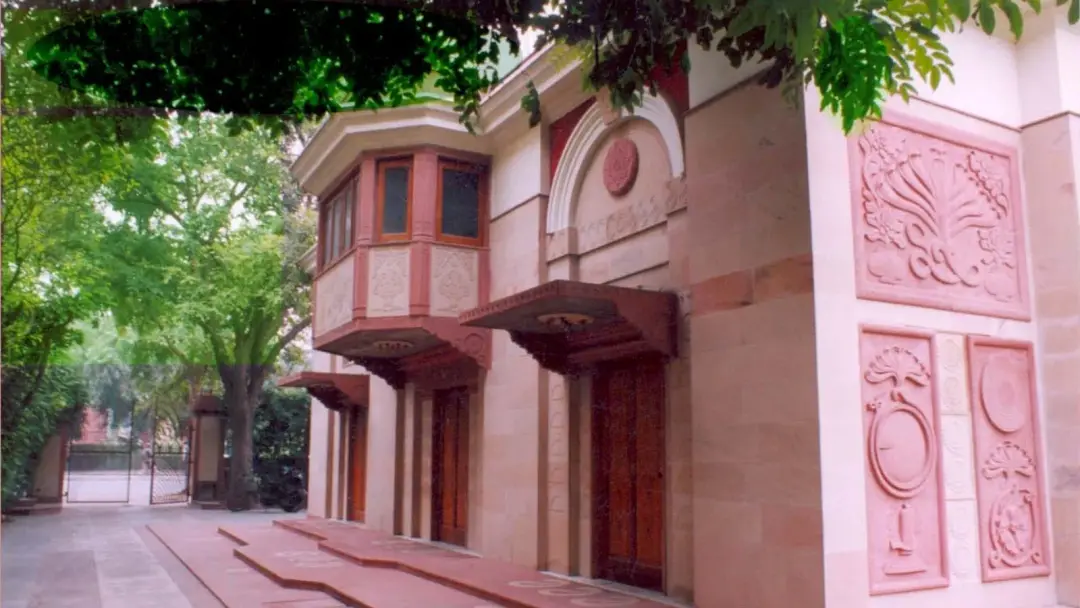
Delhi HC stays eviction proceedings against Akshara Theatre
The Delhi High Court last Friday stayed proceedings initiated by the Land and Development Office of the Union Ministry of Housing and Urban Affairs to evict the 54-year-old Akshara Theatre from its premises on Baba Kharak Singh Marg, adjacent to Ram Manohar Lohia Hospital. Founded by Gopal Sharman and Jalabala Vaidya, it opened on March 11, 1972 with 50 seats and was expanded in 1994. Their daughter Anasuya Vaidya is leading the campaign to save the 0.72-acre venue.
Source
Indian Express — Cities · read the original report ↗
Desk check · compared with the source
What the desk checked (5)
- The Delhi High Court last Friday stayed eviction proceedings initiated by the Land and Development Office of the Union Ministry of Housing and Urban Affairs against Akshara Theatre. — Stated as fact in the source; court order not directly quoted and the exact date is not given.
- Akshara Theatre opened on March 11, 1972 as a 50-seater and was expanded in 1994; it stands on a 0.72 acre plot next to Ram Manohar Lohia Hospital. — Specific figures and dates appear in the source without documentary citation.
- In 1976, during the Emergency, Akshara staged the satirical play 'Let's Laugh Again' targeting PM Indira Gandhi and other leaders. — Historical account presented by the source; no independent record cited.
- Earlier eviction and demolition notices during the Emergency and the Janata government period were set aside, once after Jalabala Vaidya was invited to tea by Indira Gandhi. — Attributed to Anasuya Vaidya, the founders' daughter; not independently documented in the text.
- Akshara is possibly the only brick-and-mortar theatre in India to stage the Ramayana on Dussehra and Ram Navami for over 50 years continuously. — Attributed to theatre personality Sunit Tandon and hedged with 'possibly'.
Analysts’ view opinion
The Akshara Theatre case looks like a property dispute, but for the performing-arts economy it is really a question of whether small, affordable stages can survive in the national capital. For 54 years this has been an entry point — young actors, stand-up comics and college troupes took their first steps here — so losing the space would mean closing a career doorway, not just shuttering a building. The High Court stay is immediate relief rather than a settlement, and the theatre's own history shows eviction notices have come and gone before.
- Because the 0.72-acre plot falls under action by the Land and Development Office of the Union Housing and Urban Affairs Ministry, the case sits between two legitimate claims: public land administration and cultural preservation.
- Delhi has few genuinely affordable intimate venues, so the loss of a space like Akshara would further narrow the room young performers have to experiment.
- With Gopal Sharman and Jalabala Vaidya both gone and their daughter Anasuya Vaidya leading the fight, the story highlights the succession fragility of family-run cultural institutions.
- Its record of hosting politically edgy satire, a Pakistani play dropped elsewhere in 2013, and children's programming gives the venue an unusually broad base of public sympathy.
- Having been patronised across governments and prime ministers, the issue carries a cross-party cultural dimension rather than a purely political one.
What to watch — Watch how the case proceeds after the stay, what justification the government offers for the eviction move, and whether the theatre community's public backing builds into sustained pressure.
The story does not set out the government's stated grounds for eviction, the tenancy or lease terms, or how long the stay will hold — so nothing here settles the eventual legal outcome.
Deep dive
Research brief · 8 facts · 10 dates · exam-readyThe brief
Context
Akshara Theatre, on Baba Kharak Singh Marg next to Ram Manohar Lohia Hospital in Delhi, is a 54-year-old independent theatre founded by playwright-director Gopal Sharman and actor-director Jalabala Vaidya, who were given land by the government after their pioneering 1969-70 European tour of their production Full Circle. Built by hand with carved Dholpur stone and designed like a musical instrument, it opened on March 11, 1972 as a 50-seater and was expanded in 1994 on a 0.72-acre plot. The Land and Development Office (L&DO) of the Union Ministry of Housing and Urban Affairs has moved to evict the theatre from the premises. Last Friday the Delhi High Court stayed those proceedings, in a fight now led by the founders' daughter, filmmaker-theatreperson Anasuya Vaidya.
Key facts
- The Delhi High Court last Friday stayed eviction proceedings initiated by the Land and Development Office (L&DO) of the Union Ministry of Housing and Urban Affairs against Akshara Theatre.
- Akshara opened on March 11, 1972 as a 50-seater theatre; it was expanded in 1994 after the government gave it more space, and now stands on a 0.72-acre plot.
- The theatre is 54 years old and is older than Mumbai's Prithvi Theatre.
- Founders Gopal Sharman (died 2016) and Jalabala Vaidya (died 2023) set up Akshara as a 'home for the mind'; daughter Anasuya Vaidya now leads the campaign to save it.
- In 1976, during the Emergency, Akshara staged the satirical play 'Let's Laugh Again' targeting PM Indira Gandhi and other leaders, with shows at 9.30 am, 3.30 pm, 6.30 pm and sometimes 9.30 pm.
- In 1969-70, Sharman and Jalabala performed 'Full Circle' in Europe and the UK, among the earliest Indian theatre tours of the West.
- In 2013, after the National School of Drama cancelled two Pakistani plays, Ajoka Theatre's 'Kaun Hai Yeh Gustakh', on Saadat Hasan Manto, was staged at Akshara.
- Theatre personality Sunit Tandon says Akshara is possibly the only brick-and-mortar theatre in India to have staged the Ramayana on Dussehra and Ram Navami continuously for over 50 years.
Timeline
- 1969-70Sharman and Jalabala Vaidya tour Europe and the UK with 'Full Circle'; the Indian government agrees to give them accommodation in Delhi.
- March 11, 1972Akshara Theatre opens as a 50-seater; the first play performed is the Ramayana.
- 1975-76 (Emergency)A government notice says the theatre is in line for demolition; an intervention by Indira Gandhi's minister Y B Chavan saves it.
- 1976Akshara stages the satirical play 'Let's Laugh Again' during the Emergency.
- Some months into the Janata governmentA fresh eviction notice arrives; action is deferred again.
- After Indira Gandhi returns to powerAnother government letter arrives, but the order is set aside after Jalabala is invited to tea by the Prime Minister.
- 1980sAkshara takes its theatre to Hyderabad, Visakhapatnam, Chandigarh and Jammu, among other cities.
- 1994The theatre is expanded after the government gives it more space; the present structure dates from this.
- 2013Ajoka Theatre's 'Kaun Hai Yeh Gustakh' is staged at Akshara after NSD cancels two Pakistani plays.
- 2016 and 2023Gopal Sharman dies in 2016 and Jalabala Vaidya in 2023; daughter Anasuya Vaidya takes up the fight.
Who has a stake
- Akshara Theatre and Anasuya Vaidya — Survival of the 0.72-acre venue and the family's 54-year-old institutional legacy; she is leading the campaign against eviction.
- Land and Development Office (L&DO), Ministry of Housing and Urban Affairs — Custodian of the government land; it initiated the eviction proceedings now stayed by the court.
- Delhi High Court — Adjudicating the dispute; its stay currently protects the theatre from eviction.
- Young and struggling artists, stand-up comedians, college theatre groups — Loss of an open, affordable and intimate performance space; stand-up comedy in Delhi took its first steps here.
- Delhi's cultural community — Preservation of a landmark that hosted the Nehru-Gandhi family and former PMs Vajpayee, I K Gujral, Morarji Desai and P V Narasimha Rao as patrons.
Why it matters
Akshara is one of the few affordable, independent performance spaces in the capital, a launchpad for young performers and stand-up comedy and a venue that hosted work others refused, such as the NSD-cancelled Pakistani play on Manto. Its eviction battle raises the question of how the state treats cultural institutions built on public land, especially when, as Anasuya Vaidya argues, Indian culture is sustained by artists who need protection. The court's stay buys time but does not settle the underlying land dispute.
UPSC angle
Prelims pointers
- Akshara Theatre, Baba Kharak Singh Marg, Delhi: founded by Gopal Sharman and Jalabala Vaidya; opened March 11, 1972 with 50 seats; plot size 0.72 acre.
- Land and Development Office (L&DO) functions under the Union Ministry of Housing and Urban Affairs and manages Central government land.
- 'Let's Laugh Again' (1976) was a satirical play staged at Akshara during the Emergency (1975-76) targeting PM Indira Gandhi.
- Ajoka Theatre's 'Kaun Hai Yeh Gustakh', on Saadat Hasan Manto, was staged at Akshara in 2013 after the National School of Drama cancelled it.
- Akshara is older than Mumbai's Prithvi Theatre; its first production was the Ramayana, staged on Dussehra and Ram Navami for over 50 years.
- Y B Chavan, a minister under Indira Gandhi, intervened during the Emergency to stop Akshara's demolition.
Mains framing
The Akshara Theatre case illustrates the fragile tenure of cultural institutions housed on Central government land: the space was allotted after the founders' pioneering 1969-70 Western tour, built by hand in Dholpur stone with acoustically designed teak, rosewood and softwood interiors, expanded with additional government land in 1994, yet has faced repeated demolition and eviction notices since the Emergency, each time averted by political intervention rather than by any durable legal or heritage protection. The present move by the L&DO of the Ministry of Housing and Urban Affairs, stayed by the Delhi High Court last Friday, reveals the absence of a framework that recognises the public value of such venues: Akshara has been, in Sunit Tandon's words, an open and affordable space welcoming young talent, the cradle of Delhi's stand-up comedy, a host for plays cancelled elsewhere, and a site of work with underprivileged children. The tension is between the state's proprietary interest in prime urban land and the cultural commons that such spaces constitute. A way forward, consistent with what the source supports, lies in resolving the tenure question transparently through the courts while recognising long-standing, publicly valuable cultural institutions rather than treating them purely as land-use encroachments, since, as Anasuya Vaidya notes, culture is sustained by artists who must be protected.
Key terms
- Land and Development Office (L&DO)
- Office under the Union Ministry of Housing and Urban Affairs that manages Central government land; it initiated the eviction proceedings against Akshara.
- Akshara Theatre
- Delhi's 54-year-old independent theatre on Baba Kharak Singh Marg, opened on March 11, 1972, conceived by its founders as a 'home for the mind'.
- Full Circle
- The Sharman-Vaidya production performed in Europe and the UK in 1969-70, among the earliest Indian theatre tours of the West.
- Let's Laugh Again
- Satirical play staged at Akshara in 1976 during the Emergency, targeting Prime Minister Indira Gandhi and other leaders.
- Kaun Hai Yeh Gustakh
- Ajoka Theatre group's play on the life and legacy of Saadat Hasan Manto, staged at Akshara in 2013 after the NSD cancelled it.
- Stay of proceedings
- A court order halting ongoing action, here the Delhi High Court's freeze on the L&DO's eviction process against Akshara.
Practice questions
- Cultural institutions built on public land often lack durable legal protection. Examine this with reference to the eviction proceedings against Akshara Theatre and suggest a balanced approach for the state.
- How have independent theatre spaces contributed to freedom of expression in India? Illustrate with examples from Akshara Theatre's history since 1972.
- Discuss the role of judicial intervention in protecting cultural heritage, using the Delhi High Court's stay on the Land and Development Office's eviction move as a case study.
Grounded only in the source report — figures and dates are the source's, not inferred.